- Starting price
- $15.99 paperback
- Free tier
- No
- Platforms
- Print · Kindle · Audiobook · Audible
- Developer
- Chosen Books / Baker (current); Hodder & Stoughton (original)
- Launched
- 1967 (35th Anniversary Edition 2014)
- Updated
- May 25, 2026
The verdict
God’s Smuggler has quietly become the book Christians hand to anyone learning that their faith might cost them something. It is more biography than theology, more travelogue than treatise - but it has done more to shape Western awareness of the persecuted church than any single volume since the Reformation.
Try God’s Smuggler ↗Opens opendoorsus.org
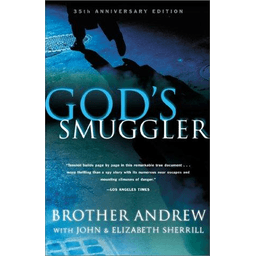
God’s Smuggler is the autobiographical account of Anne van der Bijl - known to the world as Brother Andrew - a young Dutch missionary who, beginning in 1955, began driving Bibles across the Iron Curtain in a baby-blue Volkswagen Beetle. First published in 1967 with co-author John Sherrill, the book has sold more than 10 million copies in over thirty languages and has remained continuously in print for nearly six decades.
It is not a polished theological work. It is not a missions textbook. It is not even, in the strict sense, an adventure story - though the border crossings, the close calls, and the famous prayer at the checkpoint will keep most readers up past midnight. What it is, instead, is a first-person record of one man learning that God can be trusted with the impossible - and the slow, fifteen-year discovery that an entire underground church behind the Iron Curtain had been waiting for someone to remember they existed.
Brother Andrew died in 2022 at age 94. The ministry he founded - Open Doors - now serves the persecuted church in more than sixty countries. But the book that started it all reads exactly the way it did in 1967: a quiet, almost embarrassed account of a Dutch farm boy who said yes to God when no one else would, and watched borders open in front of him for the next fifty years.
✓ The good
- Genre-defining missionary memoir - set the template for nearly every Cold War-era persecuted-church narrative that followed
- Reads like a thriller - the Yugoslav and Romanian border-crossing chapters are some of the most quietly suspenseful pages in Christian publishing
- Theologically gentle and broadly received - Catholic, Reformed, Wesleyan, Anglican, and free-church readers all return to it without doctrinal friction
- The “seeing eyes blind” prayer at the Iron Curtain - has become a generational shorthand for trusting God in genuinely impossible situations
- Pairs beautifully with the Open Doors ministry - readers who finish the book usually want to do something, and Open Doors is the natural next step
- Sherrill’s co-authorship gives it craft - the prose is clean, the pacing is patient, and the dialogue never feels embellished
- Strong appeal across ages - Young Readers Adaptation makes it usable from middle school through adult small groups without rewriting anything
✗ Watch out
- Cold War setting can feel distant - readers under thirty may need a paragraph of context on the Soviet bloc before chapter one lands
- Light on doctrinal scaffolding - this is a story about trust, not a systematic case for missions, and readers wanting theology will need a companion volume
- Some 1950s-era cultural framing - a few descriptions of Eastern European believers read a touch quaint by 2026 standards
- Sequels are less famous - “The Ethics of Smuggling” and “Light Force” are excellent but harder to find, and the book ends before Brother Andrew’s later Middle East work
- Audio editions vary - the older recording is serviceable; the newer Brilliance Audio version is noticeably better but costs more
Best for
- Christians discovering the persecuted church for the first time
- Small groups and youth ministries studying faith under pressure
- Readers who loved The Hiding Place or Through Gates of Splendor
- Anyone weighing what radical obedience actually looks like
Avoid if
- You want a systematic theology of missions
- You prefer contemporary settings to mid-century history
- You want a critical scholarly biography of Brother Andrew
- You bounce off first-person spiritual memoir as a genre
What God’s Smuggler is
God’s Smuggler is a 270-page autobiography, written in the first person and co-authored with American journalist John Sherrill (who also collaborated on The Cross and the Switchblade and The Hiding Place). It tracks Anne van der Bijl from his childhood in Witte, a tiny Dutch village outside Alkmaar, through a wounding in the Dutch colonial war in Indonesia, a conversion at age twenty, missionary training in Glasgow, and the first of what would become hundreds of trips behind the Iron Curtain to deliver Bibles to underground churches.
The book is divided into roughly three movements: Brother Andrew’s conversion and call, the early smuggling years through Poland, Czechoslovakia, Hungary, and Yugoslavia, and the expansion into the Soviet Union and East Germany. It ends in the mid-1960s with Open Doors becoming an organized ministry. Sequels - “The Ethics of Smuggling,” “For the Love of My Brothers,” and “Light Force” - extend the story into China, the Middle East, and Brother Andrew’s later work, but God’s Smuggler is the canonical entry point.
Why readers across every tradition still pick up God’s Smuggler
The single biggest practical difference between God’s Smuggler and most missionary memoirs is that it isn’t trying to recruit you. Brother Andrew never lectures, never moralizes, and almost never connects his experiences to a doctrinal framework. He simply tells you what happened. The result is a book that Catholic, Reformed, Wesleyan, Anglican, Pentecostal, and non-denominational readers have all claimed as their own - because the story is about a man learning to trust God, and that story belongs to no single tradition.
The book also reads as quietly as Brother Andrew lived. There is no triumphalism. There is no cinematic showdown with the secret police. There are just long drives, prayers whispered at checkpoints, suitcases full of Bibles, and underground believers in Bucharest and Sofia and Moscow weeping over a single printed Gospel of John. The thoughtful reader’s missionary memoir - the model that respects your work of reading rather than performing for you.
The Iron Curtain smuggling narrative: a Volkswagen, a suitcase, and a closed border
The core of the book - roughly chapters seven through eighteen - covers Brother Andrew’s smuggling runs across the closed borders of Eastern Europe. He drove a baby-blue Volkswagen Beetle stuffed with Bibles, tracts, and Christian literature in any language he could find, and crossed into countries where possession of a single Bible could land a believer in prison. The geographic sweep is enormous: Poland, Czechoslovakia, Hungary, Romania, Bulgaria, Yugoslavia, East Germany, and eventually the Soviet Union itself.
What makes these chapters land is the refusal to dramatize them. Brother Andrew never claims he was brave. He repeatedly says he was terrified. The famous scene at the Romanian border - where he prays “Lord, in my hands I take these papers for which I have prayed; please make seeing eyes blind” and watches guards inspect everything but the stacks of Bibles in plain view - works precisely because he doesn’t tell you it’s a miracle. He just tells you what happened and lets you decide. That restraint is rarer in Christian publishing than it should be.
The founding of Open Doors: how a one-man trip became a sixty-country ministry
Roughly the last third of the book traces the moment when Brother Andrew stopped being a lone smuggler and started being the founder of something larger. Other Dutch believers began joining the trips. Vans replaced the Volkswagen. Routes multiplied. By the time the book ends, what had started in 1955 as one man’s response to a single missions conference had become an organized ministry with vehicles, volunteers, supply chains, and a name: Open Doors.
The Open Doors story is important because the book is not a closed loop. Brother Andrew’s ministry didn’t end with the fall of the Berlin Wall - Open Doors today serves the persecuted church in more than sixty countries, including the closed nations of the Middle East, North Korea, and Central Asia, and publishes the annual World Watch List of the fifty hardest places in the world to follow Jesus. Readers who finish God’s Smuggler often want to do something next, and the ministry the book describes is still running. For most, that is the natural bridge from reading to action.
Brother Andrew’s prayer and his theology of trust
The famous prayer - “Lord, in my hands I take these papers for which I have prayed; please make seeing eyes blind” - is the single most quoted line in the book, and it captures something distinctive about Brother Andrew’s spiritual instincts. He was Dutch Reformed evangelical by background, but his working theology was almost monastic in its simplicity: God can be trusted with the next ten minutes, the next ten miles, the next checkpoint. Plan what you can. Pray for what you can’t. Drive forward either way.
That posture - trust as something practiced at the wheel of a car, not argued in a seminar room - is why the book travels so well across traditions. It doesn’t require you to share Brother Andrew’s exact theology to recognize the shape of the prayer. It’s an extraordinarily portable spirituality, and it’s the reason the book is still being handed to college students, missionaries, and grandparents alike sixty years after publication.
Pricing
Paperback
~$15.99
The standard Chosen Books edition. The format most readers buy and pass along.
Hardcover
~$23
Sturdier binding for small-group sets and church libraries. Same text as the paperback.
Kindle
~$10
The cheapest way in. Fine for solo reading; loses the cover art most people remember.
Audible / Audiobook
~$15
Roughly nine hours unabridged. The border-crossing scenes are unexpectedly cinematic read aloud.
Young Readers Adaptation
~$12
Lightly condensed and modernized for middle-grade readers. The story survives the trim intact.
35th Anniversary Edition
~$17
Adds a new afterword from Brother Andrew. The version to buy if you want the fullest text.
God’s Smuggler is one of those books where the cheap edition is genuinely fine and the expensive one is a small upgrade rather than a step change. The standard Chosen Books paperback runs around $15.99 and is what most readers buy, lend, and replace when it doesn’t come back. The hardcover at roughly $23 is worth it only for church libraries and small-group leaders who plan to hand the same copy out repeatedly.
Kindle hovers around $10 and is the cheapest way in. The Audible edition runs about $15 for roughly nine hours of narration - unexpectedly strong, especially in the border-crossing chapters, where reading aloud lets the suspense breathe. The Young Readers Adaptation at about $12 is the right buy for middle-school readers or family read-alouds; it trims the prose without losing the story.
The 35th Anniversary Edition at around $17 adds a new afterword from Brother Andrew written before his death and is the version we’d point most adult readers toward if they want the fullest text. Most readers do not need to track down multiple editions - pick the format you’ll actually finish.
Where God’s Smuggler falls behind
No contemporary geopolitical analysis. The book ends in the mid-1960s and only the anniversary afterword reaches forward. Readers wanting a current map of where the persecuted church stands in 2026 will need a companion resource - the Open Doors World Watch List is the natural pairing.
Light on the spiritual disciplines side. Brother Andrew prays constantly, but the book never pauses to teach you how he prayed, what he read, or how he sustained the inner life through fifteen years of border crossings. The interior architecture is implied rather than explained.
No real engagement with the broader missions debate. The book predates most of the contemporary conversation about indigenous-led missions, contextualization, and the ethics of Western missionaries in non-Western contexts. Brother Andrew himself addressed some of this in later books, but God’s Smuggler does not.
Sequels are uneven and harder to find. “The Ethics of Smuggling” (1974) is excellent and rarely stocked. “Light Force” (2004), about the ministry in the Middle East, is the natural next read but not on most church bookshelves. Open Doors’ own resources fill some of the gap, but the literary continuity is broken.
Real gaps, but they’re worth knowing about going in rather than dealbreakers. God’s Smuggler is a 1967 book doing 1967 work. It is not pretending to be a 2026 missions textbook, and judging it against that standard would miss what the book actually is.
God’s Smuggler vs. The Hiding Place vs. Through Gates of Splendor
Three books, three of the great twentieth-century Christian testimonies, and three different shapes of obedience. God’s Smuggler is the active book - a young man saying yes and driving toward the danger. The Hiding Place is the passive book - a Dutch watchmaker’s family hiding Jews in Haarlem and being arrested for it. Through Gates of Splendor is the costly book - five young American missionaries killed by the Waorani in Ecuador in 1956, told by Elisabeth Elliot from the survivors’ side.
Different strengths. God’s Smuggler is better at the long obedience of repeated small trips. The Hiding Place is better at the spiritual weight of suffering you didn’t choose. Through Gates of Splendor is better at the costliness and the long arc of forgiveness that followed.
If a reader has only one slot, God’s Smuggler is the easiest entry point - fastest to read, broadest in appeal, least theologically demanding. The Hiding Place is the next step if they want to sit with suffering rather than action. Through Gates of Splendor is the third, and the most spiritually demanding of the three. Together, the trio is something close to a syllabus on what twentieth-century Christian faithfulness actually looked like in extremis.
The bottom line
God’s Smuggler is the rare missionary memoir that has outlived its original setting without losing any of its force. The Iron Curtain is gone; Brother Andrew is gone; and the book still does exactly what it did in 1967 - it shows a quiet Dutchman saying yes to God in front of armed border guards and dares the reader to imagine what their own yes might look like. Ten million copies are not an accident. If you have never read it, start with the paperback, set aside two evenings, and meet the man who taught a generation what trust looks like at sixty miles an hour.
Alternatives to God’s Smuggler
 The Hiding PlaceCorrie ten Boom’s memoir of her family hiding Jews in Nazi-occupied Haarlem and surviving Ravensbrück. The other great Dutch testimony of the twentieth century.
 Bonhoeffer (Metaxas)Eric Metaxas’s 600-page biography of Dietrich Bonhoeffer - pastor, theologian, and martyr of the German resistance. A heavier read than God’s Smuggler, but in the same moral universe.
 Open DoorsThe ministry Brother Andrew founded. World Watch List, prayer resources, and the natural next step for readers who want to do something after finishing the book.
 Voice of the MartyrsRichard Wurmbrand’s ministry to the persecuted church - parallel to Open Doors, with a Romanian-Lutheran founding story that complements Brother Andrew’s.
Frequently asked questions
Who actually wrote God’s Smuggler - Brother Andrew or John Sherrill?
Both. Brother Andrew lived the story and provided the voice; American journalist John Sherrill shaped the manuscript. The same Sherrill (with his wife Elizabeth) co-authored The Cross and the Switchblade and The Hiding Place, which is why all three books share a similar narrative restraint.
Is the famous prayer at the border real?
Yes - Brother Andrew prayed it at multiple Eastern Bloc checkpoints in the 1950s and 1960s. The wording most commonly quoted is “Lord, in my hands I take these papers for which I have prayed; please make seeing eyes blind.” The book describes several variations across different border crossings.
Is God’s Smuggler still accurate now that the Iron Curtain is gone?
The historical setting is fixed in the 1950s and 1960s, but the book has never been a guide to current geopolitics. It’s a spiritual memoir, and the persecuted church it describes still exists - just in different countries. Open Doors’ annual World Watch List is the natural companion for current data.
What edition should I buy?
For most adult readers, the 35th Anniversary Edition at around $17 is the fullest text. The standard Chosen Books paperback at $15.99 is what most people actually buy. The Young Readers Adaptation is the right choice for middle-school readers or family read-alouds.
What tradition was Brother Andrew from?
He was raised in the Dutch Reformed tradition and was evangelical in his working theology, though his ministry crossed denominational lines from the start. He served Catholic, Orthodox, and Protestant believers behind the Iron Curtain without distinction, and the book is read warmly across the full range of Christian traditions today.
Are the sequels worth reading?
Yes, especially “The Ethics of Smuggling” (1974) and “Light Force” (2004), which covers the Middle East work. Both are harder to find than the original, but neither requires reading the first book to make sense. “For the Love of My Brothers” is also worthwhile for readers wanting more on the early years.
What happened to Brother Andrew?
Anne van der Bijl died on September 27, 2022, at age 94, in the Netherlands. Open Doors, the ministry he founded in the 1950s, continues to serve the persecuted church in more than sixty countries.
Sources & further reading
More Christian Biographies
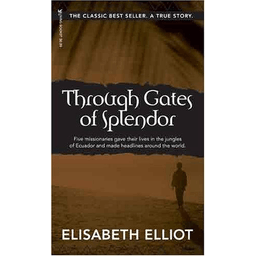 Through Gates of SplendorElisabeth Elliot’s account of five young missionaries killed reaching the Waorani of Ecuador in 1956 - the book that sent a generation toward the mission field, told by one of the widows.
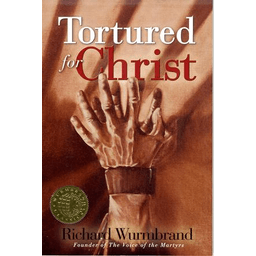 Tortured for ChristThe Romanian pastor’s 1967 account of fourteen years in communist prisons - written in three days after his release, and the book that launched Voice of the Martyrs.
 JoniJoni Eareckson Tada’s account of the diving accident that left her a quadriplegic at seventeen - and the long, unglamorous climb out of despair that followed - told without flinching and without tidy answers.
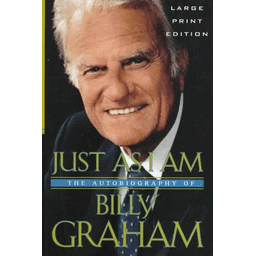 Just As I AmBilly Graham’s own account of a North Carolina farm boy who became the twentieth century’s best-known evangelist - the crusades, the presidents, and the doubts in between.
 The Cross and the SwitchbladeThe skinny country preacher who left rural Pennsylvania for the gang-run streets of 1950s New York - and the conversion of switchblade-carrying gang leader Nicky Cruz that turned one man’s hunch into a worldwide ministry.
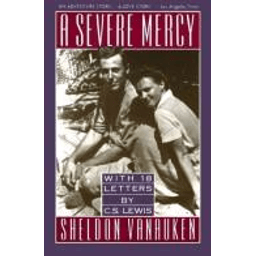 A Severe MercySheldon Vanauken’s memoir of a great love, a shared turn toward faith at Oxford, a friendship with C.S. Lewis, and the early death that gave the book its name - the rare grief memoir that has outlived its decade.