- Starting price
- ~$10 paperback
- Free tier
- No
- Platforms
- Print · Kindle · Audiobook
- Developer
- Chosen Books
- Launched
- 1963
- Updated
- May 31, 2026
The verdict
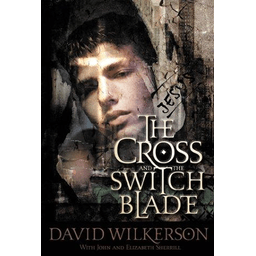
The Cross and the Switchblade is the book that taught a generation what street ministry could look like. It is more testimony than treatise - a fast, raw, mid-century account of a rural pastor walking into New York’s gang violence and addiction with almost nothing but nerve and prayer. Tens of millions of copies later, it remains the entry point for anyone who wants to understand where Teen Challenge came from and why Nicky Cruz’s name still gets quoted in youth ministries.
Try The Cross and the Switchblade ↗Opens teenchallengeusa.org
The Cross and the Switchblade has quietly become the book Christians hand to anyone who thinks the gospel can’t reach the hardest places. It is the first-person account of David Wilkerson - a thin, twenty-six-year-old Assemblies of God pastor from Phillipsburg, New Jersey, ministering in tiny Philipsburg, Pennsylvania - who in 1958 saw a magazine photo of seven teenage boys on trial for murder in New York City, felt an unaccountable pull to go to them, and drove four hundred miles to a courtroom where he was thrown out almost immediately.
It is not a polished work of theology. It is not a manual for urban missions. It is not even, in the strict sense, a success story for most of its length - Wilkerson spends the early chapters getting humiliated, ejected from a courtroom, splashed across a newspaper, and wondering whether he had misread God entirely. What it is, instead, is a record of a country preacher slowly learning the streets of Brooklyn, the Bronx, and Harlem: the gangs, the heroin, the territorial knife fights, and the teenagers nobody else was trying to reach.
Written with veteran journalists John and Elizabeth Sherrill and first published in 1963, the book has sold tens of millions of copies across dozens of languages and was adapted into a 1970 film with Pat Boone as Wilkerson and Erik Estrada as Nicky Cruz. The ministry it describes - which became Teen Challenge - now runs hundreds of addiction-recovery centers around the world. But the book that started it reads the way it did in 1963: urgent, plainspoken, and astonished at its own story.
✓ The good
- Genre-defining urban-ministry testimony - it set the template for nearly every inner-city, addiction, and gang-outreach narrative that followed
- Reads fast and lands hard - the gang fights, the courtroom ejection, and the Nicky Cruz confrontation move with the pace of a thriller
- The Nicky Cruz conversion is one of the most-retold scenes in modern Christian publishing - “you could cut me in a thousand pieces and every piece would still love you” has become its own shorthand
- Documents the birth of Teen Challenge - readers get the origin story of a real, still-operating worldwide addiction-recovery ministry
- Sherrill co-authorship gives it craft - the same journalists behind God’s Smuggler and The Hiding Place keep the prose clean and the pacing patient
- Honest about failure - Wilkerson spends as much time on his missteps and self-doubt as on the breakthroughs, which keeps the book from feeling like a highlight reel
- Pairs naturally with a next step - readers who finish it usually want to know what happened to Teen Challenge and to Nicky Cruz, and both stories continued
✗ Watch out
- The 1950s-60s urban framing shows its age - the slang, the gang vocabulary, and some descriptions of New York neighborhoods read as artifacts of their era
- Dramatic testimony style - the book leans hard into vivid scenes and emotional turning points, which some readers find stirring and others find overheated
- The charismatic elements reflect the ministry’s tradition - speaking in tongues and dramatic answered prayer feature prominently, and readers from other traditions will read those as that tradition’s framing
- Light on doctrinal scaffolding - this is a story about calling and conversion, not a worked-out theology of addiction, evangelism, or the city
- Period attitudes surface - a few descriptions of race, neighborhoods, and addiction reflect mid-century assumptions that a 2026 reader will notice
- The follow-up is thin inside the book itself - what became of many of the converts, and the long arc of Teen Challenge, lives mostly in later books and sequels rather than these pages
Best for
- Readers discovering urban and addiction ministry for the first time
- Youth groups and small groups studying calling and risk
- Anyone curious where Teen Challenge and Nicky Cruz’s story began
- Readers who loved God’s Smuggler or The Hiding Place
Avoid if
- You want a systematic theology of evangelism or addiction
- You prefer contemporary settings to mid-century history
- You want a critical, sourced biography of David Wilkerson
- You bounce off dramatic first-person spiritual testimony as a genre
What The Cross and the Switchblade is
The Cross and the Switchblade is a roughly 220-page first-person memoir, co-written with American journalists John and Elizabeth Sherrill (the same team behind God’s Smuggler and The Hiding Place). It follows David Wilkerson from his small Pennsylvania pulpit in 1958 - and the magazine photograph that pulled him toward seven boys on trial for murder in New York - through several years of trial-and-error ministry on the city’s streets, ending with the early establishment of the work that became Teen Challenge.
The book moves in roughly three stages: Wilkerson’s first failed forays into the city and the courtroom that ejected him, his growing immersion in the world of New York’s street gangs and heroin addiction, and the conversions - most famously gang leader Nicky Cruz of the Mau Maus - that convinced him the work needed a permanent home. Wilkerson ministered out of an Assemblies of God background, and the Pentecostal texture of the story is present throughout, but the spine of the book is the street-level narrative rather than any doctrinal argument.
Why readers across traditions still pick up The Cross and the Switchblade
The single biggest practical difference between The Cross and the Switchblade and most ministry memoirs is the gap between the man and the mission field. Wilkerson was not a streetwise insider. He was a skinny country preacher who got robbed, mocked, and arrested before he learned a single thing about how the city worked. The book’s power comes from watching someone with no obvious qualifications keep showing up anyway - and that arc of unlikely persistence belongs to no single tradition.
The book also refuses to pretend the work was clean. Gangs kept fighting after Wilkerson preached to them. Addicts relapsed. His own confidence collapsed more than once. The famous confrontation with Nicky Cruz lands precisely because the surrounding pages are full of failure, so the breakthrough feels earned rather than scripted. The thoughtful reader’s ministry memoir - the model that respects your work of reading rather than performing for you - even as it tells a story that, by any measure, is dramatic.
The streets of 1950s New York: gangs, heroin, and a preacher learning the city
The heart of the book - roughly the first two-thirds - is Wilkerson’s slow education in a world he knew nothing about. He arrives expecting to walk into a courtroom and pray with seven accused teenagers; instead he is photographed, splashed across a newspaper as a Bible-waving intruder, and sent home humiliated. He comes back anyway, and the book becomes a map of mid-century New York’s underside: the territorial gangs with names like the Mau Maus and the Bishops, the heroin that ran through the tenements, the knife fights, and the teenagers aging into prison or the morgue before they turned twenty.
What makes these chapters work is how lost Wilkerson lets himself look. He doesn’t arrive with answers. He gets things wrong, misreads people, walks into danger he doesn’t understand, and repeatedly wonders whether he heard God at all. The street vocabulary and the geography are very much of their decade, and a reader in 2026 will feel the distance - but the human core, a man out of his depth who keeps coming back, is the reason the book outlived its setting. It reads less like a strategy and more like a stubborn refusal to give up on a few hundred kids everyone else had written off.
The conversion of Nicky Cruz: the book’s unforgettable confrontation
The scene the book is remembered for is Wilkerson’s encounter with Nicky Cruz, a young leader of the Mau Maus gang. Cruz, by his own later account, was violent, hardened, and contemptuous of the preacher. The exchange most readers quote - Wilkerson telling Cruz that he loved him and that “you could cut me in a thousand pieces and lay them in the street and every piece would love you” - is the hinge of the narrative. Cruz’s eventual conversion, and his turn from gang leader to evangelist, became the single most-retold episode in the book and the basis for his own bestselling memoir, Run Baby Run.
The episode matters because it is the proof of concept for everything Wilkerson believed. If the gospel could reach Nicky Cruz, the argument ran, it could reach anyone the city had given up on. Cruz went on to a decades-long ministry of his own, which is part of why the scene carries weight beyond the page - readers can trace what happened next. Wilkerson tells it without softening Cruz’s hostility or pretending the change was instant, and that restraint is a large part of why the moment still lands sixty years on.
The birth of Teen Challenge: from one man’s trips to a worldwide ministry
The final stretch of the book traces the moment Wilkerson’s scattered street work started to need a permanent home. Converts - especially addicts trying to stay clean - needed somewhere to live, eat, and be discipled away from the neighborhoods that had nearly killed them. Out of that need came the first residential center in Brooklyn and the name that stuck: Teen Challenge. The book ends near the beginning of that institution rather than at its peak, which keeps the story grounded in its origins.
The Teen Challenge thread is what gives the memoir its long tail. The ministry did not stay a single Brooklyn house - Teen Challenge today operates hundreds of addiction-recovery centers in the United States and around the world, and the organization remains tied to the Assemblies of God tradition Wilkerson came from. Readers who finish the book often want to know what became of the work, and the answer is that it is still running. For many, that continuity is the bridge from reading the story to taking its claims about transformed lives seriously.
Pricing
Paperback
~$10
The standard mass-market edition. The copy most readers buy, lend, and replace.
Kindle
~$8
The cheapest way in. Searchable and highlight-syncs; fine for solo reading.
Audiobook
~$15
Around six hours unabridged. The fast-moving street scenes read well aloud.
Anniversary / repackaged edition
~$15
Periodically reissued with added forewords or afterwords on the ministry’s later decades.
The Cross and the Switchblade is one of those classics where the cheap edition is genuinely fine and the pricier ones are modest upgrades rather than step changes. The standard paperback runs around $10 and is what most readers buy, lend out, and replace when it doesn’t come back. Because the book has been in print for six decades, used copies are everywhere - thrift stores, library sales, and church giveaway shelves routinely have one for a dollar or two.
The Kindle edition hovers around $8 and is the cheapest new way in; it loses the vintage cover art many longtime readers remember but keeps the text intact and searchable. The audiobook runs roughly $15 for about six hours of narration, and the book’s short, scene-driven chapters hold up well read aloud - the gang confrontations in particular gain something from being heard rather than skimmed.
Periodically reissued anniversary or repackaged editions land around $15 and sometimes add a foreword or afterword reflecting on Teen Challenge’s later decades or Wilkerson’s death in 2011. Those extras are nice but not essential. Most readers do not need to hunt for a specific edition - pick the format you will actually finish, since the core 1963 text is the same across all of them.
Where The Cross and the Switchblade falls behind
Dated urban framing. The book is fixed in the late 1950s and early 1960s, and the slang, the gang names, and the descriptions of New York neighborhoods read as artifacts of that moment. Most of it isn’t an obstacle, but a first-time reader in 2026 will hit passages - on race, on addiction, on the city - that feel distinctly of their era and occasionally land awkwardly.
Light theological scaffolding. Wilkerson is telling a story about calling and conversion, not building a case. On the questions a thoughtful reader might bring - how addiction recovery actually works, what discipleship looks like long-term, how to think about evangelism and the city - the book gestures rather than argues. It is a starting point, not an ending point, on those subjects.
The charismatic texture. Speaking in tongues, dramatic answered prayer, and vivid spiritual experiences feature throughout, reflecting the Assemblies of God tradition Wilkerson ministered from. Readers in that tradition will read it as home; readers from other traditions will read it as that tradition’s framing. Either way, it is woven through the narrative rather than set apart, so it is worth knowing the book’s flavor going in.
Thin follow-through inside the covers. The memoir ends near Teen Challenge’s founding, so what became of most of the converts, and the long institutional arc of the ministry, lives in later books and in the work itself rather than these pages. Nicky Cruz’s Run Baby Run and Wilkerson’s own subsequent writing fill some of that gap, but the original book closes before the larger story unfolds.
Real gaps, but they’re worth knowing about going in rather than dealbreakers. The Cross and the Switchblade is a 1963 book doing 1963 work. It is not pretending to be a 2026 study of urban ministry or addiction, and judging it against that standard would miss what the book actually is.
The Cross and the Switchblade vs. Run Baby Run vs. God’s Smuggler
These three mid-century testimonies sit close together, and the first two literally share a story. The Cross and the Switchblade (Wilkerson, 1963) is told from the preacher’s side - the outsider walking into New York’s gangs and watching, among many others, Nicky Cruz convert. Run Baby Run (Nicky Cruz, 1968) is the same conversion from the inside - Cruz’s own account of the violence he came from and the turn that changed his life. God’s Smuggler (Brother Andrew, 1967), co-authored by the same John and Elizabeth Sherrill, is the parallel European story: a Dutchman running Bibles past the Iron Curtain rather than a preacher running toward the Brooklyn streets.
Different strengths. The Cross and the Switchblade is better at the founder’s-eye view - the doubt, the false starts, and the institution being born. Run Baby Run is better at the interior of a single dramatic conversion and what it costs to leave a gang behind. God’s Smuggler is better at the long, repeated obedience of small trips into danger over many years.
If a reader has only one slot and wants the origin of Teen Challenge and the Nicky Cruz story, The Cross and the Switchblade is the entry point. Run Baby Run is the natural companion for the same events from the other side. God’s Smuggler is the next step for a reader who liked the genre and wants a different theater entirely. Together they form a compact picture of what mid-century Christian risk-taking looked like on two continents.
The bottom line
The Cross and the Switchblade is the rare ministry memoir that outlived its setting without losing its punch. The gangs it describes are gone, the slang is dated, and David Wilkerson died in 2011 - but the book still does exactly what it did in 1963: it drops an unlikely country preacher into a city that terrifies him and dares the reader to believe the hardest cases are reachable. Tens of millions of copies are not an accident. If you have never read it, start with the paperback, set aside an evening or two, and meet the story that launched Teen Challenge and gave a generation its picture of street ministry.
Alternatives to The Cross and the Switchblade
 Born AgainChuck Colson’s account of his Watergate fall and conversion - another landmark testimony of a hardened man undone by grace.
 God’s SmugglerBrother Andrew’s account of smuggling Bibles past the Iron Curtain, written by the same Sherrill team. The European companion to Wilkerson’s New York story.
 JoniJoni Eareckson Tada’s memoir of a diving accident, quadriplegia, and faith forged through suffering - another mid-century testimony that became a movement.
 Tortured for ChristRichard Wurmbrand’s account of imprisonment for his faith in Communist Romania and the founding of Voice of the Martyrs - testimony under a very different kind of pressure.
Frequently asked questions
Who actually wrote The Cross and the Switchblade - David Wilkerson or the Sherrills?
All three. David Wilkerson lived the story and supplied the voice; American journalists John and Elizabeth Sherrill shaped the manuscript. The same Sherrill team co-authored God’s Smuggler and The Hiding Place, which is why all three books share a similar narrative restraint and clean pacing.
Is the story of Nicky Cruz true, and what happened to him?
Nicky Cruz was a real leader of the Mau Maus street gang in 1950s New York. After his conversion, described in the book, he became an evangelist and later wrote his own bestselling memoir, Run Baby Run. He went on to decades of ministry, so readers can trace what happened to him well beyond the pages of Wilkerson’s account.
What is Teen Challenge, and does it still exist?
Teen Challenge is the addiction-recovery and youth ministry that grew out of Wilkerson’s street work in New York. It began with a single residential center in Brooklyn and today operates hundreds of centers in the United States and around the world. It remains connected to the Assemblies of God tradition Wilkerson came from.
What tradition was David Wilkerson from?
Wilkerson ministered out of the Assemblies of God, a Pentecostal denomination, and the book carries that tradition’s texture - including speaking in tongues and accounts of dramatic answered prayer. The story itself is broadly read across many Christian traditions, but readers should know its background going in.
Is there a movie of The Cross and the Switchblade?
Yes. A 1970 film adaptation starred Pat Boone as David Wilkerson and Erik Estrada as Nicky Cruz. The book remains the fuller and more widely recommended version of the story, but the film introduced it to a large additional audience.
Is The Cross and the Switchblade still worth reading in 2026?
Yes, with realistic expectations. The 1950s-60s setting and slang have aged, and the charismatic framing reflects Wilkerson’s tradition. But the core story - an unlikely outsider persisting with people everyone else had given up on - still reads fast and still resonates, which is why it has stayed in print for six decades.
What should I read after The Cross and the Switchblade?
Run Baby Run by Nicky Cruz is the natural next read - the same events from the inside. God’s Smuggler by Brother Andrew, by the same writing team, is a strong companion in the same genre. For testimony under a different kind of pressure, Joni by Joni Eareckson Tada and Tortured for Christ by Richard Wurmbrand are both frequently recommended alongside it.
Sources & further reading
More Christian Biographies
God’s SmugglerThe Dutch missionary’s 1967 memoir about driving a blue Volkswagen Beetle full of Bibles past Soviet border guards - and the prayer that became a generation’s shorthand for trusting God in impossible places. Through Gates of SplendorElisabeth Elliot’s account of five young missionaries killed reaching the Waorani of Ecuador in 1956 - the book that sent a generation toward the mission field, told by one of the widows.Tortured for ChristThe Romanian pastor’s 1967 account of fourteen years in communist prisons - written in three days after his release, and the book that launched Voice of the Martyrs.JoniJoni Eareckson Tada’s account of the diving accident that left her a quadriplegic at seventeen - and the long, unglamorous climb out of despair that followed - told without flinching and without tidy answers.
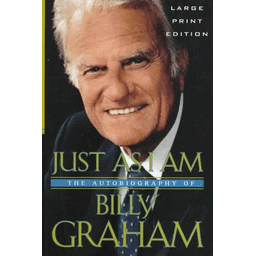 Just As I AmBilly Graham’s own account of a North Carolina farm boy who became the twentieth century’s best-known evangelist - the crusades, the presidents, and the doubts in between.
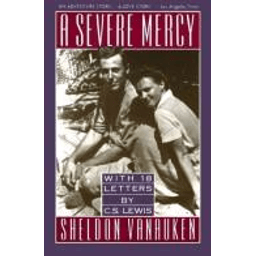 A Severe MercySheldon Vanauken’s memoir of a great love, a shared turn toward faith at Oxford, a friendship with C.S. Lewis, and the early death that gave the book its name - the rare grief memoir that has outlived its decade.