- Starting price
- ~$16 paperback
- Free tier
- No
- Platforms
- Print · Kindle · Audiobook
- Developer
- Chosen Books
- Launched
- 1976
- Updated
- May 31, 2026
The verdict
Born Again is the conversion memoir that put a phrase into the national vocabulary. Charles Colson - Richard Nixon’s sharpest-elbowed aide - wrote the rare account of a powerful man broken open in public, and it still reads with the immediacy of someone who has only just stopped reeling. If you read one twentieth-century American conversion story, read this one.
Try Born Again ↗Opens bakerpublishinggroup.com
Born Again is the memoir of Charles W. Colson - “Chuck” to the men who later worked alongside him in prison ministry, “the hatchet man” to the Washington press corps that covered the Nixon White House. As special counsel to the President from 1969 to 1973, Colson was the aide other aides were afraid of: combative, fiercely loyal, willing to do the things no one else would. He was, by his own later account, a man who had reached the top of American political power and found nothing there worth keeping.
It is not a political memoir, exactly. It does not settle scores. It does not relitigate Watergate point by point. It does not try to rehabilitate the administration it describes. What it does instead is something harder - it lets a proud, hard-driving man narrate his own undoing in real time: the late-night conversation in a friend’s driveway, the paperback copy of C. S. Lewis’s Mere Christianity he could not put down, the tears that embarrassed him, the guilty plea, and the months behind a federal prison fence where the whole story finally turned.
Published in 1976 by Chosen Books, written within two years of the events it describes, Born Again sold in the millions and helped make “born again” a phrase ordinary Americans suddenly recognized - Newsweek would soon declare 1976 “the year of the evangelical.” The book launched a second life for Colson that outlasted the first by decades: out of the prison experience came Prison Fellowship, which grew into one of the largest prison ministries in the world. This review is for anyone deciding whether to start - fifty years on - with this particular story of a fall and what came after.
✓ The good
- Best-in-class as a modern conversion memoir - written with the pace of a political thriller because the author lived it as one
- Unusually candid about its narrator’s own faults - Colson does not flatter himself, and the self-portrait of a proud man coming apart is the engine of the book
- The C. S. Lewis thread is one of the most-cited examples of Mere Christianity changing a reader’s life - a natural pairing for anyone who has read Lewis
- A firsthand window onto Watergate from inside the Nixon White House - a primary source historians and general readers both still reach for
- Widely read across Christian traditions - assigned in evangelical churches, Catholic discussion groups, and Latter-day Saint book clubs, because the conversion is told through experience rather than tribal language
- The prison chapters quietly set up Prison Fellowship - you watch a worldwide ministry being born in a bunk-bed conversation, which gives the memoir a forward-looking weight most conversion stories lack
- Short and propulsive - most readers finish it in a few sittings and remember it for years
✗ Watch out
- Heavy on 1970s Watergate-era political detail - names, hearings, and Washington machinery that some readers in 2026 find dated or hard to track without context
- Written soon after the events, with that immediacy - the rawness is a strength, but there is little of the distance or second-guessing a memoir written decades later might bring
- It is one man’s specific story of political redemption - readers wanting a general theology of conversion or repentance will need to read further
- Light on doctrinal framework - Born Again is a testimony, not a treatise, so readers wanting a worked-out account of salvation should pair it with something like Mere Christianity or Knowing God
- The supporting cast of senators, reporters, and aides can blur together for readers who did not live through the era - a Watergate primer alongside it helps
Best for
- Readers drawn to dramatic real-life conversion stories
- Anyone who has read Mere Christianity and wants to see its effect on a life
- Small groups studying repentance, pride, or starting over
- Readers interested in Watergate from an inside vantage point
Avoid if
- You want a neutral, footnoted history of Watergate
- You prefer a memoir written with decades of hindsight
- You want a systematic theology of salvation or repentance
- You have no interest in 1970s American politics and would rather skip the political detail
What Born Again is
Born Again is a first-person memoir written by Charles W. Colson and first published in 1976. It runs roughly 350 pages and covers the arc from Colson’s years as special counsel inside Richard Nixon’s White House, through the unraveling of the Watergate scandal, to a late-1973 conversation with a Christian friend that set him reading C. S. Lewis and, soon after, praying alone in a parked car. The middle of the book follows the legal reckoning - Colson’s decision to plead guilty to obstruction of justice in the Daniel Ellsberg case - and the final third takes the reader inside Maxwell federal prison camp in Alabama, where the title’s promise of new life is tested against the daily reality of incarceration.
It is published by Chosen Books, the imprint historically associated with Baker Publishing Group, and has stayed in print across multiple editions since its release. The book is the foundation stone of what became Prison Fellowship, the ministry to prisoners and their families that Colson launched in 1976 after his release and led until his death in 2012. Born Again was itself adapted into a 1978 film, and its title became a cultural touchstone for an entire wave of public conversions in the mid-1970s.
Why readers across every tradition keep returning to Born Again
The single biggest practical difference between Born Again and most conversion memoirs is the height of the fall. Colson was not a struggling everyman who found faith in a hard season. He was one of the most powerful unelected men in America - the aide a sitting President trusted to handle what no one else would touch - and the book lets you watch that man lose everything: the access, the reputation, the self-image of the tough operator who never broke. The conversion lands because the pride being broken is so vividly real. You believe the tears in the driveway because you have spent a hundred pages with the man who would have been mortified by them.
That arc - from the White House to the parked car to the prison bunk - is the reason readers across every Christian tradition return to this book. Colson writes in a register that evangelicals, Catholics, Latter-day Saints, Orthodox, and mainline Protestants have all received as their own, because the turning point is rendered through experience rather than doctrine. It is the thoughtful person’s memoir of starting over: a story not about a man getting religion but about a man being remade against his own resistance, and then spending the rest of his life on the people the culture had written off.
Inside the Nixon White House: the making of a “hatchet man”
Roughly the first third of the book covers Colson’s years as special counsel to President Nixon, and it functions as the setup the whole memoir depends on. Colson does not soften the portrait. He recounts the long hours, the bare-knuckle political instincts, the reputation he cultivated as the man willing to do whatever the President needed - the operative of whom it was said, only half in jest, that he would walk over his own grandmother to reelect Nixon. He writes about the access and the adrenaline of proximity to power, and about the quiet emptiness underneath it that he could not name until much later. The Watergate scandal builds in the background of these chapters as colleagues are subpoenaed, stories break, and the administration begins to come apart.
Colson recounts this recent political history factually rather than as a defense brief. He was at the center of events that reshaped American public life, and he neither minimizes his role nor uses the page to settle accounts with the prosecutors, reporters, and former colleagues who populate the story. The result is a rare thing - an insider’s account of Watergate that is interested less in who was right than in what the whole episode did to the man telling it. For readers who lived through 1973 and 1974, these chapters are a firsthand vantage point; for younger readers, they are a vivid, if dense, tour of how a scandal swallows the people inside it.
The conversion: a friend, a parked car, and a borrowed C. S. Lewis
The hinge of the book is a conversation in the late summer of 1973. Colson visits Tom Phillips, a business executive and friend who has recently become a Christian, and finds him changed in a way Colson cannot account for. Over the evening Phillips reads aloud from C. S. Lewis’s Mere Christianity - the chapter on pride, “The Great Sin,” which describes the very vice Colson had spent his career perfecting - and the words land with uncomfortable force. Colson takes a copy with him. Sitting alone in his car in the driveway before driving home, he finds himself unable to leave, overcome by something he had no category for, and he weeps. It is the scene the book is named for, and Colson narrates it without melodrama, which is exactly what makes it land.
What follows over the next chapters is not a tidy before-and-after. Colson, a lawyer by training and a skeptic by temperament, works through his doubts deliberately, reads more Lewis, prays haltingly, and slowly comes to a settled faith even as his legal situation worsens. The detail that the moral law in Lewis’s argument was what first pierced him gives the conversion an intellectual spine that distinguishes Born Again from purely emotional testimonies. For the many readers who have themselves been handed Mere Christianity, this is one of the most cited real-world examples of that small book doing what it was written to do.
The guilty plea and prison: where new life met a federal fence
The final third of Born Again is its proving ground. As the legal net tightens, Colson - now a professed Christian - makes a decision that surprised even his own attorneys: rather than fight the charges that were likely beatable, he pleads guilty to obstruction of justice in connection with the Daniel Ellsberg case, telling the court he could not in conscience contest a charge he believed reflected what he had done. He is sentenced to prison and serves several months at Maxwell federal prison camp in Alabama. The chapters inside are unsentimental about what incarceration is - the boredom, the indignities, the separation from family, the men around him with no advocates and no prospects.
It is inside the fence that the memoir turns from a story about one man’s soul to a story about a calling. Colson begins meeting with other inmates, praying with them, and turning over a conviction that would define the rest of his life: that the men the country had locked away were exactly the people the gospel was for, and that someone had to go back in after them. Out of that prison-yard conviction came Prison Fellowship, founded in 1976, which Colson built into a worldwide ministry to prisoners and their families. Born Again ends not with vindication but with vocation - the rare conversion memoir whose last act is the beginning of the author’s real work.
Pricing
Paperback
~$16
The standard Chosen Books anniversary paperback - the copy most readers own, and the one most groups buy in bulk.
Used paperback
~$1-5
Earlier printings are everywhere secondhand. Church libraries and thrift stores turn up copies constantly for the price of a coffee.
Kindle / ebook
~$12
The full text in digital form - searchable, with highlight-syncing that suits a study group working across cities.
Audiobook
~$18
Narrated unabridged. The thriller-paced prose carries well in audio, and the courtroom and prison scenes hold a listener’s attention.
Anniversary edition
~$17
A later edition with added afterword material reflecting on the decades of prison ministry that followed - the reread-it-for-life copy.
For a book that sold in the millions, Born Again is genuinely inexpensive. The standard Chosen Books paperback runs around $16 new, and because so many copies were printed across the 1970s and 1980s, used editions turn up in church libraries and thrift stores for a dollar or two - which is how a great many readers still acquire their first copy.
The Kindle edition at roughly $12 is the right pick for highlighters and small groups working across cities - Colson is quotable, and the digital text makes key passages easy to flag and share. The audiobook at around $18 suits the source material unusually well, because the prose was built for momentum and the courtroom and prison sequences carry a listener through.
If you want the fullest version of the story, the later anniversary edition at about $17 adds afterword material reflecting on the decades of prison ministry that grew out of the events in the book - useful context that the original 1976 printing could not yet have. Most readers do not need it. The standard paperback is the balanced default and the copy most groups reach for.
Where Born Again falls behind
Dated political detail. Born Again was written for readers who were living through Watergate, and a great deal of its middle assumes you already know the players - the senators, the hearings, the machinery of a 1970s Washington scandal. Most of it is still followable, but a first-time reader in 2026 will hit stretches of names and procedure that slow the pace and may want a short Watergate primer alongside.
Written too close to the events for hindsight. Colson finished the book within roughly two years of the story it tells. That immediacy is its great strength - you feel the rawness of someone still processing - but it also means there is little of the perspective, qualification, or self-correction a memoir written decades later might offer. The reader gets the experience as Colson understood it then, not as he might have weighed it from a distance.
A specific story, not a general theology. This is one man’s account of one particular redemption - a powerful political operator brought low and remade. It is not a systematic treatment of conversion, repentance, or grace. Readers wanting the doctrine underneath the experience should pair it with something like C. S. Lewis’s Mere Christianity (the very book that moved Colson) or J. I. Packer’s Knowing God.
Light on the other side of the story. Because the memoir stays tightly on Colson’s inner experience, the people around him - adversaries, former colleagues, the wider cast of Watergate - appear mostly as they figured in his own reckoning. Readers who want a fuller, multi-sided account of the scandal itself will need a dedicated history; this book is the view from one chair.
Born Again vs. The Cross and the Switchblade vs. God’s Smuggler
These three Chosen Books titles form a recognizable family of twentieth-century first-person Christian narratives, and each does something different. Born Again (Colson, 1976) is the conversion-from-power story - a man at the summit of political influence brought down by scandal and remade, told with the pace of a thriller because that is how the author lived it. The Cross and the Switchblade (David Wilkerson, 1963) is the conversion-of-the-streets story - a country preacher who moves into the gang world of 1950s New York and watches hardened young men change. God’s Smuggler (Brother Andrew, 1967) is the call-to-the-impossible story - a Dutch missionary running Bibles past Iron Curtain border guards on nothing but nerve and prayer.
Different strengths. Born Again is the best on pride and public failure - the rare book that lets you watch a self-made hard man come apart and be put back together. The Cross and the Switchblade is the best on faith reaching the people a city has given up on. God’s Smuggler is the best on trusting God at the edge of what seems possible. All three were shaped, in part, by the same writing hands - John and Elizabeth Sherrill collaborated on Switchblade and Smuggler - and all three carry the readability that house was known for. Most readers who love one eventually read the others.
All three are read widely across Catholic, Protestant, Latter-day Saint, and other Christian traditions, because each tells its story through lived experience rather than tradition-specific argument. If you are starting from the question “can a hard, successful person really change?”, Born Again is the one to begin with. If your question is about reaching people on the margins, start with one of the other two.
The bottom line
Born Again is the rare conversion memoir that earns its place in the cultural memory. It is short enough to read in a few sittings, dramatic enough to hold a reader who came only for the Watergate angle, and honest enough that the turning point in a parked car still lands fifty years on. Charles Colson is not asking you to admire him - he spends the book dismantling the man who once expected admiration - but to look at what happened when a borrowed copy of C. S. Lewis met a proud man at the end of his rope, and at the prison ministry that grew out of it. If you read one twentieth-century American conversion story, this is the one. Real gaps for readers who want neutral history or decades of hindsight, but they are worth knowing about going in rather than dealbreakers.
Alternatives to Born Again
 The Cross and the SwitchbladeDavid Wilkerson’s account of bringing faith into 1950s New York gang life - a sibling Chosen Books classic of street-level conversion.
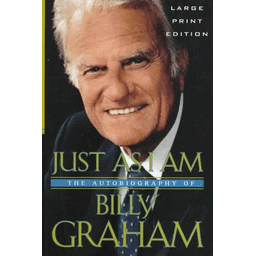 Just As I AmBilly Graham’s own autobiography - the full-length life story of the evangelist who shaped the era Colson’s conversion belonged to.
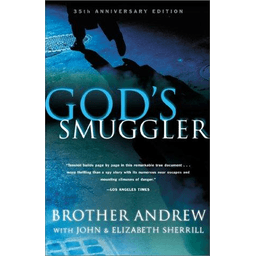 God’s SmugglerBrother Andrew’s memoir of smuggling Bibles past the Iron Curtain - the same publisher and the same thriller-paced witness as Born Again.
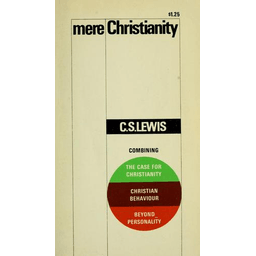 Mere ChristianityC. S. Lewis’s wartime broadcasts in one volume - the very book that helped lead Colson to faith, and the natural companion read.
Frequently asked questions
Is Born Again a true story?
Yes. It is the first-person memoir of Charles W. Colson, special counsel to President Richard Nixon, published in 1976 and written within about two years of the events it describes - his conversion during the Watergate scandal, his guilty plea, and his prison time.
Who was Chuck Colson?
Charles “Chuck” Colson (1931-2012) was a lawyer who served as special counsel to President Nixon from 1969 to 1973, known in Washington for his hard-edged loyalty. After his conversion and prison sentence in connection with Watergate, he founded Prison Fellowship in 1976 and spent the rest of his life in ministry to prisoners and their families.
What did C. S. Lewis have to do with Colson’s conversion?
A friend read aloud to Colson from Lewis’s Mere Christianity - the chapter on pride - and lent him a copy. Lewis’s argument struck Colson, a skeptical lawyer, with unusual force, and it is widely cited as one of the clearest real-world examples of that book leading a reader to faith. Mere Christianity is reviewed on this site and is a natural companion read.
Does the book take a partisan position on Watergate?
No. Born Again recounts Watergate from inside the Nixon White House, but it is a personal conversion memoir rather than a political defense or attack. Colson recounts his own role factually and turns the focus to what the events did to him, rather than relitigating the scandal or settling scores.
Is the political detail hard to follow in 2026?
It can be. The middle of the book assumes familiarity with the Watergate era - its figures, hearings, and Washington machinery. Most readers manage fine, but a short primer on Watergate alongside it helps younger readers keep track of the supporting cast.
What tradition does Colson write from?
Colson became an evangelical Protestant Christian, and that is the framing of his testimony. The book itself, though, is written through lived experience rather than tradition-specific argument, which is why it has been read and valued across Catholic, Protestant, Latter-day Saint, and Orthodox readers alike.
What should I read after Born Again?
For the book that moved Colson himself, read C. S. Lewis’s Mere Christianity. For sibling conversion classics from the same publisher, The Cross and the Switchblade and God’s Smuggler both fit. For Billy Graham’s full life story from the same era, Just As I Am is the natural pairing. Colson also wrote later books, including Loving God, that develop the faith Born Again describes.
Sources & further reading
More Christian Biographies
God’s SmugglerThe Dutch missionary’s 1967 memoir about driving a blue Volkswagen Beetle full of Bibles past Soviet border guards - and the prayer that became a generation’s shorthand for trusting God in impossible places.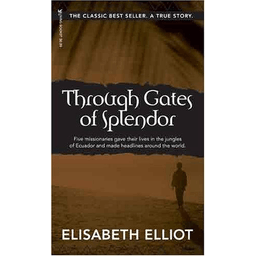 Through Gates of SplendorElisabeth Elliot’s account of five young missionaries killed reaching the Waorani of Ecuador in 1956 - the book that sent a generation toward the mission field, told by one of the widows.
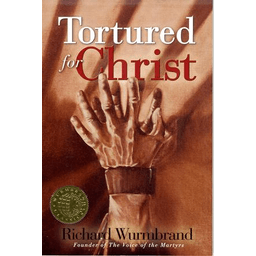 Tortured for ChristThe Romanian pastor’s 1967 account of fourteen years in communist prisons - written in three days after his release, and the book that launched Voice of the Martyrs.
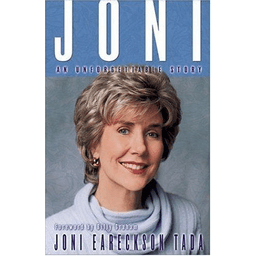 JoniJoni Eareckson Tada’s account of the diving accident that left her a quadriplegic at seventeen - and the long, unglamorous climb out of despair that followed - told without flinching and without tidy answers.Just As I AmBilly Graham’s own account of a North Carolina farm boy who became the twentieth century’s best-known evangelist - the crusades, the presidents, and the doubts in between.The Cross and the SwitchbladeThe skinny country preacher who left rural Pennsylvania for the gang-run streets of 1950s New York - and the conversion of switchblade-carrying gang leader Nicky Cruz that turned one man’s hunch into a worldwide ministry.