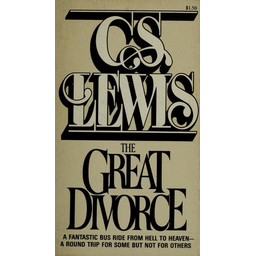
- Starting price
- ~$15 paperback
- Free tier
- No
- Platforms
- Print · Kindle · Audiobook
- Developer
- HarperOne
- Launched
- 1945
- Updated
- May 31, 2026
The verdict
Eighty years on, The Great Divorce is still the book people reach for when they want to feel an idea instead of just understand it. Lewis takes the oldest question - why would anyone refuse joy? - and answers it as a story rather than an argument, in fewer than 150 pages. It is read warmly across Catholic, Protestant, Orthodox, and Latter-day Saint shelves, and Lewis is careful to tell you up front that the geography is a fantasy, not a map. If you want one short Lewis book that stays with you, this is a strong pick.
Try The Great Divorce ↗Opens cslewis.com
The Great Divorce has quietly become the Lewis title that people press on each other after they have already read Mere Christianity. It is shorter, stranger, and harder to summarize - a dream-vision rather than a course of radio talks - and that is exactly why it lingers. Catholic readers quote it. Evangelical small groups work through it. Orthodox writers point to it. Latter-day Saints find lines in it that read like their own teachers. For a book this odd, that is a remarkable spread of readers, and it comes from the same instinct that drove Mere Christianity: Lewis is aiming at something every Christian tradition recognizes.
The premise is simple enough to fit on a postcard. A man finds himself in a drab, rainy, endless grey town, queues for a bus, and rides it up to the bright outskirts of heaven. There the passengers - thin, ghostly, see-through against the unbearably solid grass - are met by shining figures who knew them in life and who beg them to stay and walk on toward the mountains. Most of them will not. It does not preach at you. It does not argue with you. It does not hand you a doctrine of the afterlife. It simply watches person after person turn joy down, and lets you feel how it happens.
What you actually get is a short novella - under 150 pages depending on edition - framed as a dream the narrator wakes from at the end. Lewis is explicit in his preface that none of it is meant as a literal picture of what happens after death; it is an imaginative supposal, a 'fantasy,' built to make a moral point clear. The title is a deliberate jab at William Blake's The Marriage of Heaven and Hell: where Blake suggested good and evil might finally be wedded, Lewis insists they cannot, that the two roads genuinely fork, and that no amount of wishful blurring will marry them. It is the most accessible thing Lewis ever wrote about choice, and it earns that reputation every time someone finishes it in an afternoon and then sits very still for a while.
✓ The good
- The most re-readable short book Lewis wrote - under 150 pages, finishable in an afternoon, and people return to it for decades
- Read warmly across Catholic, Protestant, Orthodox, and Latter-day Saint readers - its picture of the human heart is recognizable in nearly every tradition
- Lewis tells you himself it is imaginative fiction, not a literal map of the afterlife - which frees readers of every tradition to take the point without arguing the geography
- The character vignettes are unforgettable - the grumbler, the famous artist, the possessive mother, the man with the lizard on his shoulder all land like short stories
- Turns an abstract idea - that hell is something a person chooses and keeps choosing - into something you feel rather than merely follow
- George MacDonald appears as Lewis's guide, which makes the book a quiet tribute and an on-ramp to an older strain of Christian imagination
- Short enough to read aloud in a group and dense enough to discuss for weeks - a small-group favorite for good reason
✗ Watch out
- It is very short, and some readers want more - the vignettes end just as you want them to deepen, by design, but it can feel like a sketchbook rather than a finished canvas
- It is allegory, not exposition - readers who want a clear, literal treatment of heaven, hell, and judgment will find Lewis deliberately impressionistic instead
- The 1940s idiom shows in places - a few references and turns of phrase read like artifacts of the decade Lewis wrote in
- The dream-frame keeps everything at arm's length - Lewis repeatedly reminds you it is only a fantasy, which protects the book from being read as doctrine but can feel like he is hedging
- Lighter on argument than Mere Christianity - if you came to Lewis for reasoned apologetics, this is a different mode entirely and may not scratch that itch
Best for
- Readers who loved Mere Christianity and want the next short Lewis book
- Small groups wanting a brief, discussable read with vivid characters
- Anyone who thinks better in stories and images than in arguments
- Long-time believers wanting a meditation on repentance that still stings
Avoid if
- You want a literal, systematic teaching on the afterlife - this is fiction by design
- You prefer Lewis in argument mode and find allegory frustrating
- You want a long, immersive novel - this is a slim novella, not Narnia
- You bounce off mid-century British prose and want a fully contemporary voice
What The Great Divorce is
The Great Divorce is a short allegorical novella by C.S. Lewis, first serialized in 1944-45 and published as a book in 1945. It runs under 150 pages and is framed as a dream. The unnamed narrator boards a bus in a vast, grey, twilit town and rides it up to the green outskirts of heaven, where the bus's ghostly passengers are met by bright 'Solid People' who urge them to stay and journey deeper in. The book is built almost entirely out of conversations - each ghost confronted with the one thing keeping them from joy, and most of them choosing, in some small or proud or self-justifying way, to keep it and return to the grey town.
It is not a doctrinal statement about the afterlife, and Lewis is unusually insistent on that point. In his preface he calls the book a 'fantasy' and warns the reader not to treat its picture of the next life as speculation about the real one - the geography is a device, chosen to make a moral truth vivid. The title pushes back on William Blake's The Marriage of Heaven and Hell: Lewis's claim is that good and evil are not, in the end, reconcilable, that the fork in the road is real, and that no clever blending of the two will save anyone the choice. That single idea - that joy must be chosen, and that people refuse it for reasons that feel reasonable to them - is the whole engine of the book.
Why readers reach for the story, not the sermon
Most books about heaven, hell, and repentance are written in the key of argument - premises, objections, conclusions. The Great Divorce works in a completely different register. Lewis does not tell you that pride or self-pity or possessive love can keep a person from joy; he shows you a ghost doing it, in real time, with dialogue so exact you recognize people you know - and, uncomfortably, yourself. The famous lizard on the man's shoulder, the mother who has turned her love for her son into a weapon, the artist who came to care about painting heaven more than about heaven itself: these are arguments turned into people, and people are harder to forget than premises.
That story-first approach is also what lets the book travel across traditions. Because Lewis frames the whole thing as an admitted fantasy rather than a teaching about the mechanics of the next life, a Catholic reader, an Orthodox reader, a Protestant reader, and a Latter-day Saint reader can all take the point - that the human heart can refuse its own good - without first having to agree on the doctrines the dream borrows from. Lewis hands you the image and steps back. What you do with the theology behind it is left, deliberately, to you.
The bus ride: hell as a choice, not a sentence
The book's central image is the bus. The grey town the narrator starts in is dreary but not, at first, obviously hellish - it is just endless, rainy, and empty, a place where people drift apart from each other and build new houses farther and farther out because they cannot bear their neighbors. When the bus rises into the light, the reader slowly realizes what the town is: not a prison anyone was thrown into, but a place people keep choosing, ride after ride, because the alternative would cost them something they will not give up. Lewis's quiet, devastating suggestion is that the door to that town is, in a sense, locked from the inside.
This is the idea the whole book exists to deliver, and the bus delivers it without ever stating it as doctrine. Lewis is careful - in the preface and through the mouth of his guide - to keep the picture from hardening into a literal claim about who is saved or how the afterlife is arranged. He is making one point and one point only: that a soul can prefer its grievance, its pride, or its self-image to joy itself, and that this preference, indulged long enough, becomes a kind of self-made exile. Readers across traditions return to the bus ride because it reframes hell from a punishment imposed from outside into a refusal sustained from within - a reframing that lands as conviction rather than threat.
The ghosts: vignettes that read like short stories
Structurally, The Great Divorce is a string of encounters, and the encounters are the reason people press the book on their friends. Each ghost off the bus meets a Solid Person - usually someone who knew them in life - and is invited to walk up into the mountains. Each refuses, or nearly does, for a reason so specific and so human that it stops being abstract. The Big Ghost cannot accept heaven from a man he considered beneath him. The possessive mother insists her smothering love for her son is the highest thing in the universe. The grumbling woman has complained so long that there may be almost no one left inside to stop complaining. The most famous of them - the ghost with a red lizard of lust whispering on his shoulder - finally lets an angel kill the thing, and watches it transformed into something glorious the moment he surrenders it.
What makes the vignettes work is that Lewis never lets the sinners be strangers. Each refusal is recognizable, even sympathetic - the reader keeps thinking 'I understand exactly why he won't let go,' which is the whole trap. The lizard episode in particular has become one of the most-cited passages in all of Lewis, a small parable about how the thing we are most afraid to lose may be the very thing whose death sets us free. Read alone, the vignettes are arresting. Read in a group, they are nearly impossible not to talk about, because everyone at the table sees a different ghost in the mirror.
George MacDonald as guide: a tribute and an on-ramp
Partway through the dream the narrator is taken in hand by a guide - and Lewis, in a move that is half homage and half confession, makes that guide George MacDonald, the 19th-century Scottish minister and fantasist whose writing Lewis credited with 'baptizing' his imagination years before his conversion. MacDonald walks the narrator through what he is seeing, explains why the ghosts choose as they do, and gently corrects the narrator's instinct to demand a tidy system. It is Lewis playing Dante to MacDonald's Virgil, an older Christian imagination leading a younger one up the mountain.
The MacDonald sections are where the book does its closest thing to teaching, and even here Lewis keeps it conversational rather than systematic. MacDonald warns the narrator repeatedly against treating the vision as a literal report, and against the very human urge to settle questions - about time, choice, and finality - that mortals are not positioned to settle. For many readers the guide is also a door: meeting MacDonald here sends them off to read Phantastes and Lilith and the sermons, opening up an older, stranger strain of Christian imagination that runs underneath a lot of Lewis's own work. As a tribute it is generous; as an on-ramp it has quietly recruited a couple of generations of readers.
Pricing
Paperback
~$15
The standard HarperOne edition. The copy most people own and lend out.
Kindle
~$12
Searchable, highlight-syncs to your account. Handy for a book this quotable.
Audiobook
~$15
Multiple recordings exist; the Robert Whitfield / Simon Vance narration is widely praised. Often included with an Audible membership.
Hardcover
~$23
Gift-grade edition. The one you hand to someone who liked Mere Christianity.
Boxed Lewis set
~$45+
Bundled with The Screwtape Letters and other signature works - the value pick if you want several Lewis titles at once.
The Great Divorce is not free. Because it is short and endlessly assigned, used copies are everywhere - thrift stores, library sales, the bottom of a friend's bag - for a couple of dollars, which is how a lot of people get their first one. A new HarperOne paperback runs around $15, call it the everyday default, and it is the edition most quotations in print are keyed to.
The Kindle edition runs a little under the paperback, around $12, and highlighting syncs across devices - genuinely useful for a book this quotable. The audiobook runs around $15 or comes with an Audible membership; the narration most listeners cite is excellent, and because the book is built almost entirely from dialogue it works unusually well read aloud.
If you are buying a gift - and this is a common gift book for someone who just finished Mere Christianity - the ~$23 hardcover is the natural pick. Most readers do not need anything fancier than the paperback. If you suspect you will keep going through Lewis, a boxed set that bundles The Great Divorce with The Screwtape Letters and other signature titles (around $45 and up) is the value play, since you will almost certainly read those next anyway.
Whatever edition you choose, the cost-per-reread on this one is absurdly low. It is the kind of book people finish, set down, and pick up again a year later - and it is short enough that doing so costs you an afternoon.
Where The Great Divorce falls behind
Length. The Great Divorce is deliberately brief, and that brevity cuts both ways. The vignettes end right when you want them to open up, the dream wakes the narrator just as the vision deepens, and some readers close the book wishing Lewis had given each ghost another ten pages. That is a feature of the design - Lewis wanted a sketch, not a portrait gallery - but readers who want immersion can feel short-changed.
Allegory over exposition. Anyone coming to the book for a clear, literal account of heaven, hell, judgment, or the state of the soul after death will be frustrated on purpose. Lewis works in images, and he repeatedly warns the reader not to mistake the images for a map. That is the right call for the book he was writing. It does mean The Great Divorce is a meditation, not a manual, and readers wanting a more literal treatment will need to look elsewhere.
The dream-frame's distance. Lewis bookends the story as a dream and salts the middle with reminders that none of it should be taken as speculation about the real afterlife. This protects the book from being read as doctrine - which is exactly why it travels so well across traditions - but it can also feel like Lewis is holding the material at arm's length, refusing to commit to the very picture he has drawn so vividly.
The 1940s idiom. Lewis was writing in mid-century Britain, and a handful of references, names, and turns of phrase carry the dust of the decade. None of them are obstacles, but a first-time reader in 2026 will hit a sentence or two that feels like it arrived from another era.
It is not the argument book. If your need is reasoned apologetics - premises you can hand a skeptic - this is the wrong Lewis. The Great Divorce persuades by image and recognition, not by syllogism, and a reader expecting Mere Christianity's moral argument will find a different instrument entirely.
The Great Divorce vs. The Screwtape Letters vs. The Problem of Pain
These three are the Lewis shortlist people usually reach for after Mere Christianity, and they do genuinely different jobs. The Great Divorce (1945) is the dream-vision - a story about why people refuse joy, told in vignettes you feel rather than follow. The Screwtape Letters (1942) is the satire - letters from a senior devil to his nephew on how to corrupt an ordinary human, funny and sharp and unsettling in equal measure. The Problem of Pain (1940) is the straight argument - Lewis's attempt to reckon, in essay form, with why a good and powerful God permits suffering.
Different strengths. The Great Divorce is the most imaginative and the most re-readable - the one you return to for the images. Screwtape is the wittiest and the most quotable in everyday life, the book whose lines you find yourself repeating about your own temptations. The Problem of Pain is the most rigorous, the one to hand someone whose question about suffering is intellectual rather than emotional. If you want a story, take The Great Divorce. If you want satire that doubles as self-examination, take Screwtape. If you want a reasoned treatment of suffering, take The Problem of Pain.
All three are read across Catholic, Protestant, Orthodox, and Latter-day Saint audiences, and all three carry Lewis's habit of aiming at the shared center rather than denominational distinctives. The Great Divorce leans hardest on that habit, since its dream-frame lets it borrow imagery from various traditions without committing to any one tradition's doctrine of the afterlife - which is precisely why it sits comfortably on so many different shelves.
The bottom line
The Great Divorce is the short Lewis book that does its work on the imagination instead of the intellect, and it does that work better than almost anything else of its length. In under 150 pages Lewis turns the question of why anyone would refuse joy into a procession of unforgettable people, tells you plainly that the whole thing is a fantasy and not a map, and then trusts you to feel the point. It is read warmly across traditions, it is finishable in an afternoon, and it rewards a reread for the rest of your life. If a friend just finished Mere Christianity and wants the next Lewis to hand them, this is a very easy book to recommend.
Alternatives to The Great Divorce
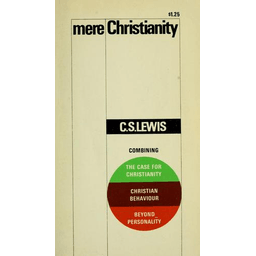 Mere ChristianityLewis's wartime radio apologetic and the most-recommended modern intro to the faith - the book most readers come to The Great Divorce from.
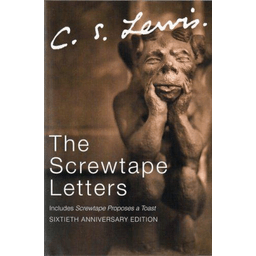 The Screwtape LettersLetters from a senior devil to his apprentice - Lewis at his wittiest, a satirical companion piece on temptation and self-deception.
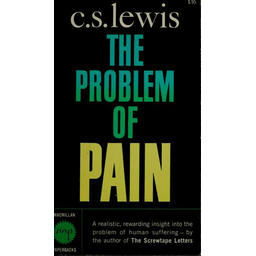 The Problem of PainLewis's reasoned essay on why a good God permits suffering - the argument-mode counterpart to The Great Divorce's storytelling.
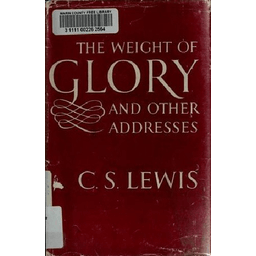 The Weight of GloryLewis's collected sermons and addresses, including the famous title essay on longing and heaven - short, dense, and deeply quoted.
Frequently asked questions
What is The Great Divorce actually about?
It is a short allegorical novella in which the narrator takes a bus ride from a grey town - a picture of hell, or perhaps a kind of waiting-place - up to the outskirts of heaven. There the ghostly passengers are invited to stay and journey deeper in, but most of them cling to the very sins, grievances, and self-deceptions that keep them from joy. It is a meditation on choice and repentance: how and why people refuse heaven even when it is offered to them.
Is The Great Divorce meant to describe the real afterlife?
No, and Lewis says so directly. In his preface he calls the book a 'fantasy' and warns readers not to take its picture of the next life as speculation about the actual one. The geography of the grey town and the bright country is a device to make a moral point vivid, not a literal map of heaven and hell. Readers of every tradition can take the point - that the human heart can refuse its own good - without treating the imagery as doctrine.
Why is it called The Great Divorce?
The title is a deliberate response to William Blake's The Marriage of Heaven and Hell. Where Blake suggested good and evil might ultimately be wedded or reconciled, Lewis argues the opposite: that the two are not finally reconcilable, that the road genuinely forks, and that no blending of the two will spare a person the choice. The 'divorce' is Lewis's insistence on that separation.
Do I need to read Mere Christianity first?
No. The Great Divorce stands completely on its own and requires no prior Lewis. That said, many readers come to it right after Mere Christianity, because the two pair naturally - one is the argument, the other is the story - and finishing one tends to send people looking for the other.
Who is the guide in the book?
Partway through, the narrator is led by George MacDonald, the 19th-century Scottish minister and fantasy writer whom Lewis credited with shaping his imagination long before his conversion. Making MacDonald the guide is Lewis's tribute to him - Lewis plays the role of a student being led up the mountain by an older Christian imagination, a bit like Dante led by Virgil.
Is The Great Divorce read across different Christian traditions?
Yes. Like most of Lewis, it is read warmly by Catholic, Protestant, Orthodox, and Latter-day Saint audiences. Because Lewis frames the whole story as an admitted fantasy rather than a teaching about the mechanics of the afterlife, readers across traditions can take its central insight - that a soul can refuse joy - without first having to agree on the doctrines the dream borrows from.
Where should I go after The Great Divorce?
For more Lewis in a similar vein, The Screwtape Letters and The Weight of Glory are the natural next reads, and The Problem of Pain if you want him in straight argument mode. The book also functions as an on-ramp to George MacDonald - many readers go on to his Phantastes, Lilith, or sermons after meeting him as the guide here.
Sources & further reading
More Modern Christian Classics
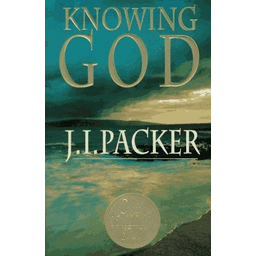 Knowing GodJ.I. Packer’s 1973 classic on the doctrine of God has sold more than 1.5 million copies and is still the book most pastors hand to laypeople who want theology that goes somewhere - here’s what it actually does and who it’s for.
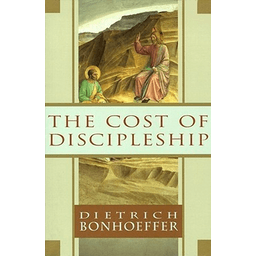 The Cost of DiscipleshipDietrich Bonhoeffer’s 1937 exposition of the Sermon on the Mount, written for pastors training under a regime that wanted them silent - and still the sharpest book in print on what following Jesus actually costs.
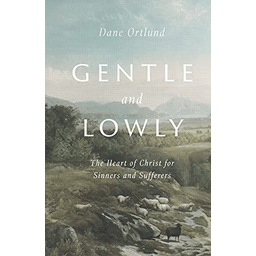 Gentle and LowlyDane Ortlund’s 23 short chapters on Matthew 11:29 have quietly become the most-given new Christian book of the decade - and the reason is not what you’d guess.
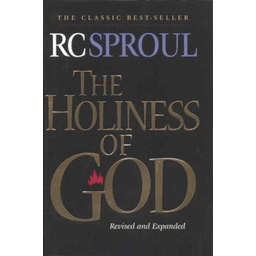 The Holiness of GodR.C. Sproul’s career-defining book on the one attribute of God the church most forgets - and the vision in Isaiah 6 he believed everything else flows from.The Weight of GloryThe 1941 sermon many call Lewis's single finest piece of writing - "there are no ordinary people" - gathered with eight other addresses into one slim, uneven, unforgettable collection.
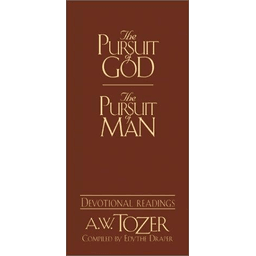 The Pursuit of GodA.W. Tozer’s ten-chapter wake-up call on knowing God personally - short, severe, and the one devotional Reformed, Wesleyan, Catholic, and Orthodox readers all seem to keep on the nightstand.