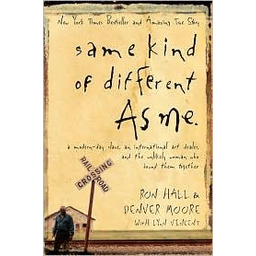
- Starting price
- ~$16 paperback
- Free tier
- No
- Platforms
- Print · Kindle · Audiobook
- Developer
- Thomas Nelson
- Launched
- 2006
- Updated
- May 31, 2026
The verdict
Same Kind of Different as Me has quietly become the memoir small groups reach for when the subject is poverty, mercy, or grief. Told in two alternating first-person voices, it is more an emotional witness than an analysis - but the unlikely friendship at its center is real, the writing is plain and warm, and the arc earns its tears honestly. If you read one book about a friendship across the widest social distance America has, read this one.
Try Same Kind of Different as Me ↗Opens harpercollins.com
Same Kind of Different as Me is the joint memoir of two men who, by every ordinary measure, should never have met. Ron Hall was a self-made international art dealer who moved Picassos and private-jetted between Fort Worth and Manhattan and Beijing. Denver Moore was a homeless man in his fifties who had grown up working a Louisiana cotton plantation under conditions that looked, by his own account, a great deal like slavery a century after it was abolished. The two were brought together at the Union Gospel Mission in Fort Worth, where Ron’s wife Deborah volunteered - and where she became convinced, before anyone else did, that the angry, silent man the other volunteers were afraid of was the one God had sent her to befriend.
It is not a how-to book. It does not lecture. It does not hand you a program for ending homelessness. What it does instead is alternate, chapter by chapter, between two voices recorded and shaped with the help of writer Lynn Vincent - Ron’s polished, self-aware, occasionally self-mocking prose, and Denver’s plainspoken, proverb-dense first person, rendered in his own cadence. You get the same years from two sides: the mission, the friendship, Deborah’s diagnosis, the long illness, and what the two men became to each other after she was gone.
Published in 2006 by Thomas Nelson, the memoir spent years on the bestseller lists, sold several million copies, and was adapted into a 2017 film starring Greg Kinnear, Djimon Hounsou, and Renée Zellweger. It is one of those rare books that gets handed around church small groups and secular book clubs alike, recommended by people who volunteer at shelters and by people who have never set foot in one. This review is for anyone trying to decide whether to start with this particular copy - and whether the two-voice, rags-and-riches structure is the right fit for them.
✓ The good
- Best-in-class as a friendship memoir across social distance - the gap between a globe-trotting art dealer and a formerly enslaved-in-all-but-name cotton picker is about as wide as American life gets, and the book closes it slowly and credibly
- The two-voice structure is genuinely distinctive - Ron and Denver narrate alternating chapters, and Denver’s plainspoken, proverb-rich first person is the part readers quote for years afterward
- Co-written with Lynn Vincent - a professional collaborator - which gives it the readability of a novel while keeping both men’s actual cadence intact
- Deborah Hall’s faith drives the whole story without sermonizing - you watch a conviction become action become a deathbed request, all through scene rather than statement
- Widely beloved across Christian traditions - read in Catholic parishes, Protestant small groups, and Latter-day Saint book clubs alike, because the mercy at its center needs no denominational translation
- Handles race and poverty in the American South with specificity rather than slogans - Denver’s account of plantation life and the Jim Crow he lived through is told from the inside
- Short and propulsive - most readers finish it in a few sittings, and the back half is hard to put down
✗ Watch out
- The two-voice format that many readers love strikes others as uneven - Ron’s sections are more polished, Denver’s are more vivid, and the tonal gap between them can feel like two different books
- It is an emotional and inspirational memoir, not an analysis - readers wanting a rigorous treatment of homelessness, poverty, or systemic injustice will need a companion volume
- The rags-and-riches arc is dramatic by design - the contrast between Ron’s wealth and Denver’s destitution is heightened for effect, and a few readers find the framing leans sentimental
- Some of Denver’s recollections of the distant past are presented at face value - the events are decades old and filtered through memory, so readers who want documented chronology should know that going in
- Light on theological framework - the faith is rendered through Deborah’s actions and Denver’s homespun wisdom rather than any worked-out doctrine of suffering or charity
Best for
- Small groups studying mercy, poverty, or grief
- Readers who love memoir told through unlikely friendship
- Volunteers and donors at shelters and rescue missions
- Anyone grieving a loss and looking for company in it
Avoid if
- You want a researched study of homelessness with data and policy
- You dislike alternating dual-narrator structures
- You prefer fiction over memoir
- You want a systematic theology of suffering or charity
What Same Kind of Different as Me is
Same Kind of Different as Me is a dual-voice memoir written by Ron Hall and Denver Moore with Lynn Vincent and first published in 2006. It runs roughly 240 pages and alternates first-person chapters between the two men. Ron tells the story of his rise from a modest Texas upbringing to a lucrative career as an international art dealer, his marriage to Deborah, and the strain his own infidelity once put on it. Denver tells the story of growing up working a cotton plantation near Red River Parish, Louisiana - a sharecropping arrangement he describes as bondage in everything but name - his years riding freight trains, a prison stretch, and the long stretch of homelessness that landed him at the Fort Worth mission. The two narratives converge there and run together through Deborah’s cancer diagnosis, her death, and the friendship that the two men carried forward.
It is published by Thomas Nelson, a Christian publishing house now part of HarperCollins, and has been continuously in print since release. The book is the basis for the 2017 Paramount film of the same name, directed by Michael Carney and starring Greg Kinnear as Ron, Djimon Hounsou as Denver, and Renée Zellweger as Deborah. It has sold several million copies and spawned several follow-up books from the two authors, including What Difference Do It Make? and Workin’ Our Way Home.
Why readers across every Christian tradition keep returning to Same Kind of Different as Me
The single biggest practical difference between Same Kind of Different as Me and most inspirational memoirs is that it refuses to flatten either man into a lesson. Ron is not a saintly philanthropist; he is, in his own telling, a man who cheated on his wife and had to be dragged toward the mission by her. Denver is not a grateful object of charity; he is wary, plainspoken, and entirely capable of telling a rich man exactly what he thinks of rich men’s catch-and-release approach to the poor. One of Denver’s lines - that he doesn’t want to be the kind of friend you catch, look at, weigh, and throw back, but the kind you keep - became the moral hinge of the whole book and the reason it gets quoted from pulpits.
That arc - from a mission soup line to a tentative friendship to a shared grief to a bond that outlasts the woman who started it - is why readers across every Christian tradition return to this book. The faith in it is Deborah’s and Denver’s, rendered through what they do rather than what they argue, and Catholics, Latter-day Saints, Orthodox, evangelicals, and mainline Protestants have all received it as their own. It is the thoughtful person’s memoir of mercy.
Two voices, one story: the alternating-chapter structure
The defining formal choice of the book is its dual narration. Ron Hall and Denver Moore tell the same span of years in alternating first-person chapters, and the contrast is the engine of the whole thing. Ron’s voice is educated, ironic, and self-aware - he knows how absurd his world of gallery openings and seven-figure paintings looks from the outside, and he plays the contrast for both humor and shame. Denver’s voice, shaped from recorded conversations by collaborator Lynn Vincent, is rendered in his own cadence and dialect: short declarative sentences, hard-won proverbs, and a way of looking straight through Ron’s wealth to the man underneath it. You hear the same events - the first wary meeting at the mission, a fishing trip, Deborah’s decline - from two angles that rarely line up the way you expect.
For most readers this is the book’s great strength. The structure lets you watch a friendship form in stereo, with each man revealing what the other could not see, and it gives Denver - who could easily have been reduced to a supporting character in a rich man’s redemption story - equal authorial standing. It is also, honestly, the thing some readers struggle with. The polish of Ron’s chapters and the rawness of Denver’s can read as two different books stitched together, and a reader who wants a single seamless voice may find the seams. Whether the alternation reads as a feature or a friction is the most reliable predictor of how someone will rate the book.
Denver’s Louisiana: race, poverty, and the cotton plantation
The most historically weighty chapters belong to Denver. He describes growing up in Red River Parish, Louisiana, in the mid-twentieth century, working cotton under a sharecropping arrangement he calls bondage outright - no wages he could keep, debts he could never clear, a landowner he refers to as “the Man,” and a level of isolation so complete that he did not, for many years, understand that the wider world had changed. He recounts the violence of the Jim Crow South he passed through, the hopping of freight trains, a stretch in Angola prison, and the slow slide into the homelessness that finally brought him to Fort Worth. He tells it from the inside, in his own words, without softening and without inviting pity.
The book handles this material descriptively rather than as argument, and that restraint is part of why it has traveled so widely. Denver is not making a policy case; he is telling you what his life was, and letting the reader sit with the distance between his upbringing and Ron’s. The specificity is the point - the named parish, the cotton sacks, the particular fears - and it keeps the story from becoming an abstraction about “poverty” or “the homeless.” Readers who want a researched, sourced history of sharecropping or mass homelessness will need to look elsewhere; what this book offers is one man’s testimony, which it treats with dignity and lets stand on its own weight.
Deborah’s faith and the grief that bound two men together
The third thread, and the one that turns the book from an interesting odd-couple story into something readers return to, is Deborah Hall. A devout woman who volunteered at the Union Gospel Mission, she was the one who singled Denver out - who insisted, against the other volunteers’ caution, that this particular angry man was the one her family was meant to know. She pressed Ron into the friendship before he wanted it, and she did so out of a faith the book conveys almost entirely through her choices: where she spent her time, whom she refused to give up on, what she asked for as she was dying. When she was diagnosed with cancer, the friendship she had engineered became the thing that carried both men through her decline.
Her death is the book’s emotional center, and Denver’s response to it is its most quoted material. He keeps a vigil. He grieves alongside Ron in a way that erases what was left of the distance between them, and he frames her loss in the homespun theology that runs through all his chapters - that life is a journey, that mercy is owed, that you stay with people through the hard part. The grief is what fuses the two men permanently; the friendship Deborah started becomes, after she is gone, the legacy the two of them carry into a shared ministry. The faith never gets argued. It gets lived, and then it gets mourned, and the reader is left to draw the conclusions.
Pricing
Paperback
~$16
The standard Thomas Nelson trade paperback - the copy most readers own, and the one small groups buy in bulk.
Kindle
~$12
The full text in digital form - highlighting and note-syncing make it a strong pick for study groups working across cities.
Audiobook
~$18
Narrated with separate voices for Ron and Denver, which suits the alternating-chapter structure unusually well - many readers prefer it to the page for that reason.
Hardcover
~$25
Library-quality binding for readers who want a keepsake edition, or a copy to pass down.
Young Readers / illustrated editions
~$15
Adapted and illustrated versions exist for younger and family audiences, including a picture-book retelling drawn from the same true story.
For a book that has sold several million copies, Same Kind of Different as Me is inexpensive and easy to find. The standard Thomas Nelson trade paperback runs around $16 new, and used copies turn up in church libraries, thrift stores, and little free libraries for a dollar or two - it is one of the most-donated inspirational titles of the last twenty years.
The Kindle edition at roughly $12 is the right pick for highlighters and small groups working across cities; the quotable lines, especially Denver’s, sync cleanly across devices.
The audiobook at around $18 is unusually well-suited to this particular book. Because the chapters alternate between two narrators, hearing two distinct voices for Ron and Denver actually clarifies the structure that some readers find confusing on the page - a number of people who bounced off the print version say the audio is what won them over.
For keepsake or gift purposes the ~$25 hardcover is the natural pick, and adapted illustrated editions (~$15) exist for younger and family readers who want the story without the full memoir. Most readers do not need anything beyond the paperback - it is the balanced default and the copy most groups buy in bulk.
Where Same Kind of Different as Me falls behind
Not a study of homelessness. Readers who want data, policy, and a sourced account of poverty or chronic homelessness will need a companion volume. This is one shelter, two men, and one family - pair it with something like When Helping Hurts if you want the analysis underneath the anecdote.
An uneven pair of voices, by design. The two-narrator structure is the book’s signature, and it is also its most common complaint. Ron’s chapters are smoother and more self-conscious; Denver’s are rawer and more vivid. The gap is part of the point, but a reader who wants one consistent voice will feel the seam, and the audiobook handles it better than the page.
A heightened rags-and-riches frame. The contrast between Ron’s wealth and Denver’s destitution is sharpened for effect, and the redemption arc moves where you expect it to. Most readers find the emotion earned; a minority find the framing sentimental, and it is fair to know which kind of reader you are before you start.
Memory, not documentation. Denver’s recollections of his Louisiana childhood and his years on the road are decades old and filtered through one man’s memory. The book treats them as testimony rather than verified record, which is the honest way to present them - but readers who want a strictly documented chronology should know that going in.
Light on worked-out theology. The faith here is enacted, not argued. There is no treatise on suffering, charity, or providence - Deborah lives it and Denver speaks it in proverbs. Readers wanting the doctrine behind the practice should pair it with a fuller theological book; this one shows what mercy looks like, not the framework that explains it.
Same Kind of Different as Me vs. Heaven Is for Real vs. When Helping Hurts
These three are the books a small group most often weighs against each other when the subject is mercy, the afterlife, or how Christians should respond to need - and each does something different.
Same Kind of Different as Me is the friendship memoir, told in two first-person voices by the men who lived it, built around the distance between a wealthy art dealer and a homeless man and the dying woman who closed it. Heaven Is for Real (Todd Burpo, 2010) is a first-person family account of a small boy’s reported near-death experience and what he says he saw - a shorter, gentler book aimed squarely at readers wrestling with the hope of heaven and the loss of loved ones. When Helping Hurts (Steve Corbett and Brian Fikkert) is the analytical counterpart to both - not a memoir at all, but a widely used study of poverty alleviation that argues for dignity-preserving, relationship-based help over one-directional charity.
Different strengths. Same Kind of Different as Me is the best on friendship and grief as lived experience. Heaven Is for Real is the best for readers focused on the hope of heaven and comfort in bereavement. When Helping Hurts is the best if your actual question is how to help well rather than how a single friendship felt. The memoir and the study pair especially naturally: read Same Kind of Different as Me for the heart of it, then When Helping Hurts for the practice of it. If you can only start with one and you want the story, it is the Hall-and-Moore memoir.
The bottom line
Same Kind of Different as Me is the rare inspirational memoir that earns its reputation rather than coasting on it. It is short enough to read in a weekend, plain enough for a teenager, and weighty enough that a comfortable reader can finish it unsettled in the best way. Ron Hall and Denver Moore are not asking you to admire them - they are asking you to look at what one woman’s stubborn faith set in motion at a Fort Worth mission, and at the friendship that outlived her. The two-voice structure works for most readers and frustrates a few; the emotion runs hot by design. If you want one book about a friendship across the widest distance American life offers, this is the one. Real gaps for anyone wanting analysis or documentation, but they are worth knowing about going in rather than dealbreakers.
Alternatives to Same Kind of Different as Me
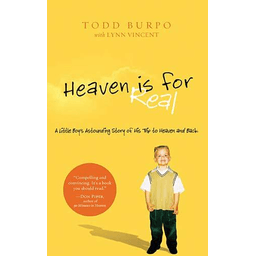 Heaven Is for RealTodd Burpo’s account of his young son’s reported glimpse of heaven - a gentler, shorter family memoir aimed at readers wrestling with the hope of heaven and the loss of loved ones.
 Born AgainCharles Colson’s memoir of his fall in the Watergate scandal and his conversion - another dramatic real-life redemption story, told in a single first-person voice.
 JoniJoni Eareckson Tada’s memoir of the diving accident that left her quadriplegic and the faith she found afterward - a first-person account of suffering and hope.
 When Helping HurtsSteve Corbett and Brian Fikkert’s widely used study of poverty alleviation - the analytical companion that asks how to help the poor in ways that preserve dignity.
Frequently asked questions
Is Same Kind of Different as Me a true story?
Yes. It is a joint memoir by Ron Hall, a Fort Worth art dealer, and Denver Moore, a formerly homeless man, written with collaborator Lynn Vincent and published in 2006. It recounts their real friendship, formed through the Union Gospel Mission where Ron’s wife Deborah volunteered, and her death from cancer.
Who are the two narrators, and why does the book switch between them?
The book alternates first-person chapters between Ron Hall and Denver Moore. Ron narrates his life as a wealthy art dealer and his marriage to Deborah; Denver narrates growing up working a Louisiana cotton plantation, his years homeless, and how he came to the Fort Worth mission. The two-voice structure lets each man tell the shared story from his own side.
How long is the book, and is it a hard read?
It runs about 240 pages and most readers finish it in a few sittings. It is plain-spoken and propulsive, especially in the back half. The one thing to know is the alternating-narrator format - some readers love it and some find the two voices uneven, and the audiobook, which uses separate readers, smooths that out.
Does the book deal with race and the American South honestly?
Denver’s chapters describe his childhood working a cotton plantation in Red River Parish, Louisiana, under sharecropping conditions he calls bondage, and the Jim Crow South he lived through. The book tells this from his own first-person perspective and treats it descriptively, as testimony, rather than as a researched history. Readers wanting documented historical analysis will need a companion source.
What tradition do the authors write from?
It is published by Thomas Nelson, a Christian publisher, and the faith in the book is rendered mostly through Deborah Hall’s actions and Denver Moore’s homespun wisdom rather than any tradition-specific doctrine. As a result it has been read and loved across Catholic, Protestant, Orthodox, and Latter-day Saint readers.
Is the 2017 film worth watching?
Yes - the Paramount film stars Greg Kinnear as Ron, Djimon Hounsou as Denver, and Renée Zellweger as Deborah, and it follows the memoir closely. As with most book-to-film adaptations, it is best watched after reading rather than instead of it, since the book’s two-voice intimacy is hard to reproduce on screen.
What should I read after Same Kind of Different as Me?
Ron Hall and Denver Moore wrote follow-ups, including What Difference Do It Make? and Workin’ Our Way Home. For the practical question of how to help the poor well, When Helping Hurts is the natural pairing. For more first-person stories of suffering and redemption, Joni by Joni Eareckson Tada and Born Again by Charles Colson both fit.
Sources & further reading
More Christian Biographies
 God’s SmugglerThe Dutch missionary’s 1967 memoir about driving a blue Volkswagen Beetle full of Bibles past Soviet border guards - and the prayer that became a generation’s shorthand for trusting God in impossible places.
 Through Gates of SplendorElisabeth Elliot’s account of five young missionaries killed reaching the Waorani of Ecuador in 1956 - the book that sent a generation toward the mission field, told by one of the widows.
 Tortured for ChristThe Romanian pastor’s 1967 account of fourteen years in communist prisons - written in three days after his release, and the book that launched Voice of the Martyrs.JoniJoni Eareckson Tada’s account of the diving accident that left her a quadriplegic at seventeen - and the long, unglamorous climb out of despair that followed - told without flinching and without tidy answers.
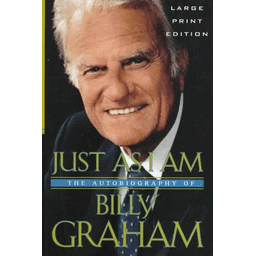 Just As I AmBilly Graham’s own account of a North Carolina farm boy who became the twentieth century’s best-known evangelist - the crusades, the presidents, and the doubts in between.
 The Cross and the SwitchbladeThe skinny country preacher who left rural Pennsylvania for the gang-run streets of 1950s New York - and the conversion of switchblade-carrying gang leader Nicky Cruz that turned one man’s hunch into a worldwide ministry.