- Starting price
- ~$17 paperback
- Free tier
- No
- Platforms
- Print · Kindle · Audiobook
- Developer
- Thomas Nelson
- Launched
- 2010
- Updated
- May 31, 2026
The verdict
Heaven Is for Real is the book that turned a family's story into a cultural moment - a short, plainly told account of what the Burpos say their son experienced, embraced by millions of readers and approached more cautiously by other Christians. Whether it belongs on your shelf depends on what you want it to be: a tender family memoir, or something more.
Try Heaven Is for Real ↗Opens thomasnelson.com
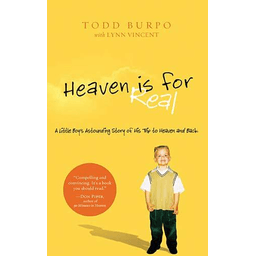
Heaven Is for Real has quietly become one of the bestselling Christian books of the century, with tens of millions of copies sold and a 2014 film that pushed it into living rooms that never set foot in a Christian bookstore. The premise is simple enough to fit on the cover: during emergency surgery at not-quite-four years old, Colton Burpo reportedly experienced a visit to heaven, and over the months and years that followed he described it to his parents in fragments - at the dinner table, in the car, in the offhand way small children mention enormous things. His father, a pastor in Imperial, Nebraska, wrote it down.
The book does not hide what it is. It doesn't dress itself up as theology. It doesn't argue a case. It doesn't pretend to be anything other than a father recounting what his son told him, in the order he came to understand it. That single editorial decision - a parent reporting a child's account in the child's own plainspoken vocabulary - is both the source of the book's enormous warmth and the center of every conversation around it. To many readers it is one of the most comforting books they have ever picked up. To other Christians, including a number of pastors and writers, it raises questions worth asking out loud about how personal experience and Scripture relate.
This review tries to do what a lot of the internet does poorly with Heaven Is for Real: take both responses seriously without adjudicating the underlying claim. The book's appeal is real and easy to understand. The caution some readers bring to it is also real and worth understanding. We will lay out what the book is, how it reads, who wrote it and why, where the genre conversation lives, and who is most and least likely to be glad they read it. What you make of Colton's account is, in the end, yours to decide.
✓ The good
- Deeply comforting to grieving readers - the section in which Colton describes meeting a sister his mother lost to miscarriage is the passage people most often press on a friend in mourning
- Short and plainly told - a fast, gentle read of around 160 pages, the kind of book a reader will actually finish in an evening or two
- The family-memoir texture is genuine - the Burpos' small-town life, financial strain, and Todd's own crisis of health and faith give the story a grounded, human frame
- Colton's account is reported in a child's voice - the details arrive the way a four-year-old would mention them, which readers consistently describe as the book's most disarming quality
- Accessible to readers far outside church culture - its crossover into the general market is exactly why so many people have read it who would never pick up a devotional
- A well-regarded audiobook and a kids' edition extend it to listeners and to families who want to share the story with younger children
- Points readers toward hope and reconciliation - many describe finishing it more tender toward family, faith, and the people they have lost
✗ Watch out
- It rests entirely on a young child's recounted experience, mediated through his father's retelling - readers across traditions will weigh that kind of first-person account very differently, and the book asks you to take it on those terms
- The "heaven tourism" / near-death-visit genre is itself debated among Christians - some embrace these books warmly, others approach them with caution, and Heaven Is for Real sits squarely inside that conversation
- Theologically light by design - it is a story, not a study, and it makes no attempt to test Colton's descriptions against Scripture or to engage the questions a careful reader will have
- Very short and simply written - readers who want depth, argument, or sustained reflection will find the book over almost before it begins
- The franchise and film tie-ins (a kids' edition, study materials, the movie) can blur the line between the family's quiet account and a marketed property
- A few specific details - the descriptions of what Colton says he saw - are the parts readers find most moving and the parts other readers find hardest to know what to do with
Best for
- Readers in grief - especially anyone who has lost a child or a pregnancy - looking for a tender, hopeful story
- People who want a short, accessible read rather than a work of theology
- Families wanting to share a gentle, hope-filled account, including through the kids' edition
- Readers drawn to first-person faith memoirs and real-life family stories
Avoid if
- You are uneasy with books built on a personal near-death or visionary account
- You want descriptions of heaven examined carefully against Scripture rather than simply recounted
- You prefer substantial theology, argument, or depth over a short narrative
- You find marketed franchises and film tie-ins off-putting in a book like this
What Heaven Is for Real is
Heaven Is for Real is a first-person family memoir, published by Thomas Nelson in 2010 and written by Todd Burpo with co-author Lynn Vincent. It centers on an episode from 2003, when Burpo's son Colton, just shy of four years old, underwent emergency surgery after a ruptured appendix that had gone undiagnosed. Colton recovered. In the months and years that followed, the Burpos recount, he began describing what he said he experienced during that time - a visit to heaven - in scattered, matter-of-fact comments that his parents gradually pieced together. The book is Todd's account of those conversations and of the family's own journey through a terrifying medical crisis.
It is short - roughly 160 pages - and written for a general reader, not a theological one. The narrative braids two threads: the Burpos' ordinary life in Imperial, Nebraska, with its financial pressure and Todd's own string of health scares, and the slowly emerging picture of what Colton described. The book grew into a substantial franchise, including a kids' edition, study and discussion materials, and a 2014 feature film that carried the story to a far broader audience than the printed page ever would have on its own.
Why so many readers reach for Heaven Is for Real
The honest answer is the grief. More than any argument, what moves readers is a single thread: the Burpos recount that Colton described meeting a sister he had never been told about - a daughter Sonja Burpo had lost to miscarriage years before he was born. For a reader who has stood in that particular kind of loss, that passage lands with a force most books never reach. People do not pass this book around because it is well-argued. They pass it around because they handed it to someone in mourning and it helped.
The second answer is the voice. The account arrives in a child's vocabulary, reported by a father who plainly did not know what to do with it at first. There is no polish, no system, no attempt to convince. Colton mentions enormous things the way a small boy mentions anything - sideways, between other sentences, while coloring or riding in the car. That texture is exactly what readers describe as disarming. Whether you receive the account as literal, as a child's tender imagination, or as something you simply hold loosely, the manner of its telling is the engine of the book's reach.
The account itself: what Colton described, in a child's words
The heart of the book is a series of conversations rather than a single dramatic scene. Over months and years, the Burpos recount, Colton mentioned details about what he said he experienced - that he had met family members, that he had seen things during the surgery he could not otherwise have known about, that he encountered the sister his parents had never mentioned to him. Todd reports each piece as it surfaced, often in the middle of an ordinary day, and describes his own reaction: surprise, hesitation, the instinct any parent would have to test what a small child says before building anything on it.
What makes this section distinctive is the refusal to dramatize. Colton's descriptions are reported plainly, in the vocabulary of a four-year-old, and the book lets them sit there. It does not stage them for maximum effect or stack them into a tidy theological picture. Readers will weigh these passages very differently - some receive them as a literal account, some as the tender imaginings of a child recovering from trauma, some as something they simply hold without resolving. The book itself stays with the family's experience: this is what our son told us, in the order he told it. It does not ask you to do more with that than you are able to. That restraint is part of why the account travels so far, and part of why it provokes such different responses.
The genre conversation: near-death-visit books and how Christians receive them
Heaven Is for Real did not arrive in a vacuum. It sits inside a whole genre - sometimes called "heaven tourism" - of books recounting reported near-death visits to the afterlife, a category that includes a number of bestsellers before and after it. That genre is received very differently across the Christian world, and any honest review has to name that plainly. Many readers and churches embrace these books warmly, finding in them comfort, encouragement, and a vivid sense of hope. Other Christians, including a number of pastors and writers, approach the genre with real caution, on the grounds that they weigh personal experience and Scripture differently and are wary of building too much on an individual account of the next life.
It is worth being clear about what that caution is and is not. It is generally not an accusation against the Burpo family, whose sincerity few readers question. It is a question about a category - about how much weight any reader should place on a private experience of heaven, however moving, and about how such accounts relate to what Scripture says. Readers in different traditions resolve that question in different ways, and they hold those positions in good faith. This review does not try to settle it. The point is simply that the genre conversation is part of the package: a buyer should know, going in, that Heaven Is for Real is one of the most-discussed books in a category that thoughtful Christians have approached from more than one direction for years.
Todd Burpo and the family memoir underneath the story
It is easy to forget that Heaven Is for Real is, structurally, a memoir of a hard year. Todd Burpo was a bivocational pastor in Imperial, Nebraska - leading a small church while also running a garage-door business and serving as a volunteer firefighter and wrestling coach - when the events of the book unfolded. Before Colton's surgery, the family had already been through a punishing run: Todd recounts a shattered leg, kidney stones, and a diagnosis that frightened them, all stacked into a short span. The book opens not in heaven but in a family under genuine financial and physical strain, which is part of why so many ordinary readers see themselves in it.
That context matters for how the book reads. The Burpos are not presented as mystics or professional storytellers; they are presented as a stretched small-town family blindsided by a medical emergency and then, slowly, by their son's account of it. Todd writes as a father working out in real time what he believes and why, and co-author Lynn Vincent keeps the prose simple and grounded. Readers who connect with the book often say it is the human frame - the marriage, the worry, the small-town ordinariness - as much as the central account that kept them turning pages. Taken as a family memoir of grief, fear, and hope, that frame is the most universally accessible thing about it.
Pricing
Paperback
~$17
The standard Thomas Nelson trade paperback - the edition most readers own and the one most often handed from person to person.
Kindle
~$10.99
The least expensive way in, and a good way to read the full account in an evening. Loses the pass-it-along feel of the paperback that drives so much of this book's reach.
Audiobook / Audible
~$19
Full narration of the original account, often included with an Audible membership. A natural fit for a story this conversational - many listeners prefer hearing it read aloud.
Kids' edition
~$11
A shorter, illustrated retelling aimed at younger readers and family read-alouds. A separate purchase from the main book, with the story pared down for children.
Movie tie-in / deluxe
~$16
Editions released around the 2014 film, sometimes bundled with bonus material or study questions. Content of the core account is the same as the standard paperback.
There is no free tier - this is a book, and like any book the price is the price.
For most readers, the standard Thomas Nelson paperback at around $17 is the right purchase. It is the edition almost everyone owns, it is easy to hand to a friend, and pass-it-along reading is exactly how this book reached the numbers it did. If you only buy one version, buy this one.
The Kindle edition at around $10.99 is the least expensive way in and a fine way to read the whole account in a single evening, though it loses the give-it-away quality that drives so much of the book's reach. The audiobook at around $19 - or included with an Audible membership - suits the conversational style well, and a lot of listeners say hearing it read aloud is the way they would recommend taking it in.
Two specialty editions are worth knowing about. The kids' edition at around $11 is a shorter, illustrated retelling for younger readers and family read-alouds - a separate purchase, not a substitute for the main book. The movie tie-in and deluxe editions released around the 2014 film, at roughly $16, sometimes add bonus or study material, but the core account is identical to the standard paperback. Most readers do not need more than the paperback.
Where Heaven Is for Real falls behind
No engagement with Scripture. The book recounts what Colton described but never pauses to weigh those descriptions against the Bible or to work through the questions a careful reader will inevitably raise. That is a deliberate choice - it is a memoir, not a study - but it means the reader is left to do all of that work alone, and many will want a companion resource to do it with.
No room for the skeptic's questions. The account is told from inside the family's belief, and the book makes no real attempt to address how a doubting reader might understand a small child's recovered-memory testimony. Readers who need those questions taken up directly will not find them here; the book simply reports the experience and leaves interpretation to you.
Very little depth. At around 160 pages of plain prose, Heaven Is for Real is over quickly. There is no sustained reflection, no theology of the afterlife, no argument to chew on - by design. Readers who want substance rather than story will close it feeling it ended almost before it started.
A blurred line between memoir and franchise. The kids' edition, the study materials, and the 2014 film turned a quiet family account into a marketed property, and some readers find that the surrounding apparatus sits uneasily with the intimacy of the original story. None of that changes the text itself, but it is part of the experience of encountering the book in 2026.
Heaven Is for Real vs. 90 Minutes in Heaven vs. Heaven (Randy Alcorn)
These three are the books readers most often compare when the subject of heaven comes up, and they do genuinely different jobs. Heaven Is for Real (Todd Burpo, 2010) is the family memoir - a father's account of his young son's reported visit, told in a child's plainspoken voice and aimed squarely at the heart. 90 Minutes in Heaven (Don Piper, 2004) is the adult near-death narrative - Piper recounts his own reported experience after a catastrophic car accident, and spends much of the book on the long, painful recovery that followed. Both belong to the near-death-visit genre that Christians receive in more than one way.
Different jobs. Heaven (Randy Alcorn, 2004) is the outlier of the three and a useful contrast: rather than recounting a personal visit, Alcorn works systematically through what Scripture says about the afterlife, building a long, footnoted study rather than a story. A reader who wants comfort through a personal account will gravitate toward Burpo or Piper; a reader who specifically wants heaven examined through the text of the Bible will be far better served by Alcorn. The two approaches are not competitors so much as answers to different questions.
For a reader weighing which to pick up: choose Heaven Is for Real if you want a short, tender, hope-filled family story, especially in a season of grief. Choose Alcorn if your question is doctrinal and you want depth and scriptural grounding over narrative. And know going in that the personal-account books sit inside the genre conversation described above, while Alcorn's study deliberately sits outside it.
The bottom line
Heaven Is for Real is the bestselling book of its kind for understandable reasons - it is short, it is warm, it is built around a moment of grief that has met millions of readers in their own loss, and it is told with a child's disarming plainness. It is also a book that rests entirely on a personal account, in a genre that thoughtful Christians have approached from more than one direction, and the most honest thing a review can do is hand you both of those facts at once. If you can receive Colton's story as the Burpos offer it - as their family's experience, held tenderly - this book has real comfort to give. If you would rather see heaven examined against Scripture, there are excellent books on the next shelf that do exactly that.
Alternatives to Heaven Is for Real
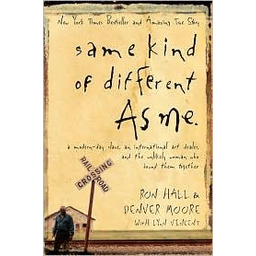 Same Kind of Different as MeThe unlikely true friendship of a homeless man and an art dealer - another crossover Christian memoir built on a real-life story rather than argument.
 JoniJoni Eareckson Tada's memoir of the diving accident that left her quadriplegic and the faith she built afterward - a grounded, hard-won testimony of suffering and hope.
 A Severe MercySheldon Vanauken's memoir of love, loss, and faith - a more literary meditation on grief and the afterlife for readers who want depth alongside emotion.
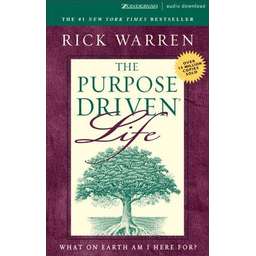 The Purpose Driven LifeRick Warren's 40-day guided reading on the purpose of human life - not a memoir, but the book most often paired with a hopeful story when readers want some teaching alongside it.
Frequently asked questions
What is Heaven Is for Real actually about?
It is a 2010 family memoir by pastor Todd Burpo (with co-author Lynn Vincent) recounting what his young son Colton described after emergency surgery at not-quite-four years old - a reported visit to heaven that Colton mentioned in fragments over the following months and years. The book braids that account with the Burpos' own story of a difficult, frightening year.
Is the story in Heaven Is for Real true?
The book is the Burpo family's firsthand account of what their son told them and what they experienced, written by Todd Burpo. It is reported as their own testimony. Readers across different traditions weigh personal accounts of this kind in different ways, and the book leaves the interpretation to you rather than arguing a case - what you make of Colton's account is yours to decide.
Why do some Christians have reservations about this book?
Heaven Is for Real belongs to a genre - sometimes called "heaven tourism" - of books recounting reported near-death visits to the afterlife. Many readers and churches embrace these books warmly; other Christians, including a number of pastors and writers, approach the genre with caution because they weigh personal experience and Scripture differently. The reservation is usually about the category as a whole, not the family's sincerity. It is a real, ongoing conversation worth knowing about before you buy.
Is there a kids' edition?
Yes. A shorter, illustrated kids' edition retells the story for younger readers and family read-alouds, with the account pared down for children. It is a separate purchase from the main book, not a replacement for it. There is also a 2014 feature film, which carried the story to a much wider audience than the book alone.
How long does it take to read?
Not long. At roughly 160 pages of plain, conversational prose, most readers finish Heaven Is for Real in an evening or two. The brevity is part of its reach - it is built to be read quickly and passed along.
Which edition should I buy?
For most readers the standard Thomas Nelson paperback at around $17 is the right choice - it is the edition almost everyone owns and the easiest to hand to a friend. The Kindle at around $10.99 is the cheapest way in, the audiobook at around $19 suits the conversational style, and the kids' edition at around $11 is a separate, illustrated retelling for younger readers.
What should I read alongside or after it?
Readers who want heaven examined against Scripture rather than recounted through a personal story often turn to Randy Alcorn's Heaven, a long, footnoted study of what the Bible says about the afterlife. For more real-life faith memoirs in a similar vein, Joni by Joni Eareckson Tada and A Severe Mercy by Sheldon Vanauken are common next reads.
Sources & further reading
More Christian Biographies
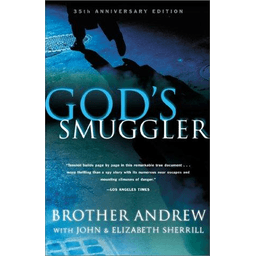 God’s SmugglerThe Dutch missionary’s 1967 memoir about driving a blue Volkswagen Beetle full of Bibles past Soviet border guards - and the prayer that became a generation’s shorthand for trusting God in impossible places.
 Through Gates of SplendorElisabeth Elliot’s account of five young missionaries killed reaching the Waorani of Ecuador in 1956 - the book that sent a generation toward the mission field, told by one of the widows.
 Tortured for ChristThe Romanian pastor’s 1967 account of fourteen years in communist prisons - written in three days after his release, and the book that launched Voice of the Martyrs.JoniJoni Eareckson Tada’s account of the diving accident that left her a quadriplegic at seventeen - and the long, unglamorous climb out of despair that followed - told without flinching and without tidy answers.
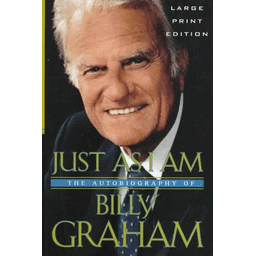 Just As I AmBilly Graham’s own account of a North Carolina farm boy who became the twentieth century’s best-known evangelist - the crusades, the presidents, and the doubts in between.
 The Cross and the SwitchbladeThe skinny country preacher who left rural Pennsylvania for the gang-run streets of 1950s New York - and the conversion of switchblade-carrying gang leader Nicky Cruz that turned one man’s hunch into a worldwide ministry.