- Starting price
- ~$16 paperback
- Free tier
- No
- Platforms
- Print · Kindle · Audiobook
- Developer
- HarperOne
- Launched
- 1977
- Updated
- May 31, 2026
The verdict
A Severe Mercy has quietly become the memoir people press on each other when love and grief and faith are all bound up in the same story. It is beautifully written, unhurried, and built around a real friendship with C.S. Lewis whose letters Vanauken prints in full. If you want one literary memoir about a marriage, a conversion, and a loss, this is the one to start with - provided you have patience for its slow, elegiac pace.
Try A Severe Mercy ↗Opens harpercollins.com
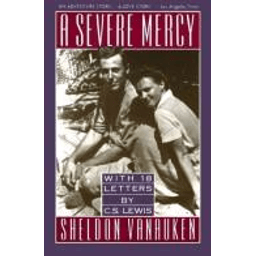
A Severe Mercy is the memoir of Sheldon Vanauken - “Van” to almost everyone in the book - and his wife Jean, whom he always calls Davy. It is, first, the story of a love affair so intense the two of them built a deliberate philosophy around it, a vow they named the “Shining Barrier” meant to keep anything, even children or careers, from coming between them. It is, second, the story of how that same love carried both of them, almost against their will, from cheerful skepticism into Christian faith during their years as students at Oxford in the early 1950s. And it is, third and finally, the story of Davy’s death from a sudden illness at the age of forty, and of the grief that followed - a grief Vanauken spent years learning to read as something other than pure loss.
It is not a theology book. It does not argue. It does not systematize. It does not try to prove the faith it describes. What it does instead is something slower and more personal - it lets a grieving, literary, slightly self-aware man tell you what it was like to fall in love, to sail a small boat, to sit up all night talking about poetry, to walk into belief through the back door of friendship, and then to lose the person the whole story was built around. The prose is unhurried and frankly beautiful; Vanauken was a writer to his fingertips, and the book reads the way he meant it to - like a long letter from a friend who has decided to tell you everything.
Published in 1977 by Harper & Row (now HarperOne), the memoir has sold well over a million copies, won a National Book Award nomination in its category, and stayed continuously in print for almost fifty years. Part of its enduring draw is the friendship at its center: while at Oxford, Vanauken corresponded with C.S. Lewis, and the book prints eighteen of Lewis’s letters in full - including the one in which Lewis calls Davy’s death “a severe mercy,” the phrase Vanauken took for his title. This review is for anyone trying to decide whether to start with this particular book - and whether its romantic idealism and its elegiac pace are the right fit for the reader holding it.
✓ The good
- One of the most beloved literary memoirs of love and faith of the last fifty years - short, elegant, and emotionally honest in a way most spiritual memoirs never reach
- The C.S. Lewis connection is real and substantial - Vanauken prints eighteen of Lewis’s actual letters in full, including the one that gave the book its title, which is reason enough for many readers to pick it up
- The prose is genuinely fine - Vanauken was a careful, lyrical writer, and the sentences hold up as literature, not just as testimony
- The conversion is rendered as a lived process, not an argument - you watch two skeptics talk and read and resist their way into belief, which lands harder than any tract
- The grief section ("A Severe Mercy" proper) is among the most quoted modern writing on bereavement - Vanauken is unsparing about his own self-deceptions in mourning
- Loved across Christian traditions - read in Catholic reading groups, Protestant book clubs, and Latter-day Saint circles alike, because the story is told through experience rather than tradition-specific language
- Pairs naturally with Lewis’s own books - readers who love A Grief Observed or Surprised by Joy find this the obvious companion
✗ Watch out
- It is slow and reflective - this is an elegy, not a plot-driven memoir, and readers expecting forward momentum will find long passages of conversation, sailing, and rumination
- The romantic idealism is intense and not to every taste - the "Shining Barrier" philosophy of total, exclusive devotion strikes some readers as moving and others as airless
- The mid-century Oxford milieu shows - the world of punts, sherry parties, and literary undergraduates is charming to some and remote to others
- It is a memoir, not a record - Vanauken reconstructs decades-old conversations and his own interior states, and readers who want documented chronology will need to read it as one man’s shaped recollection
- Light on theological framework - the faith is experienced, not explained, so readers wanting doctrine on suffering or providence will need a companion volume
- The author’s self-awareness cuts both ways - Vanauken examines his own motives so thoroughly that a few readers find the introspection wearying over 250 pages
Best for
- Readers who love literary memoir and unhurried, beautiful prose
- Anyone drawn in by the C.S. Lewis friendship and his letters
- Readers processing grief or the loss of a spouse
- Book groups discussing love, marriage, and faith together
Avoid if
- You want a fast, plot-driven narrative
- You bounce off intense romantic idealism and interior reflection
- You want a documented biography with citations and chronology
- You are looking for a systematic theology of suffering
What A Severe Mercy is
A Severe Mercy is a first-person memoir written by Sheldon Vanauken and first published in 1977. It runs roughly 250 pages and traces the arc of his marriage to his wife Davy: their courtship in the American South, the deliberate philosophy of total mutual devotion they called the "Shining Barrier," their sailing years aboard a schooner named Grey Goose, their move to Oxford in 1950 for graduate study, the slow conversion to Christian faith that overtook them both there, their return to the United States, and Davy’s sudden illness and death in 1955 at the age of forty. The closing chapters record Vanauken’s grief and the long work of understanding it.
It is published by HarperOne, an imprint of HarperCollins, and has remained continuously in print for nearly fifty years. The book’s most distinctive feature is documentary: during the Oxford years Vanauken corresponded with C.S. Lewis, then a fellow at Magdalen College, and the memoir reproduces eighteen of Lewis’s letters in full. One of them, written after Davy’s death, describes the loss as "a severe mercy" - a phrase Vanauken adopted as both his title and the lens through which he eventually came to read his bereavement.
Why readers across every tradition keep returning to A Severe Mercy
The single biggest practical difference between A Severe Mercy and most spiritual memoirs is that Vanauken refuses to separate the love story from the faith story. He does not write a romance and then a conversion and then a bereavement as three tidy acts. He writes them as one thing - a marriage so intense it forced the question of whether such a love could be ultimate, and a God who, in Vanauken’s telling, answered that question by taking Davy and leaving him to learn what the answer cost. The whole book turns on the title phrase: C.S. Lewis, writing to console him, called the death "a severe mercy," and the rest of the memoir is Vanauken slowly coming to see why.
That arc - from the Shining Barrier to Oxford to the empty house - is the reason readers across every Christian tradition return to the book. Vanauken tells the story through scene and letter and remembered conversation rather than through tradition-specific doctrine, and the result has been received as their own by Catholics, Latter-day Saints, Orthodox, evangelicals, and mainline Protestants alike. It is the thoughtful person’s memoir of love and loss, and the Lewis letters give it a documentary weight that almost no comparable book can claim.
The Shining Barrier: a love story rendered as philosophy
Roughly the first third of the book covers Van and Davy’s courtship and the deliberate philosophy they built around their marriage. Both were bright, literary, and skeptical of the conventional married life they saw around them - the slow drift into separate interests and separate friends. So they made a pact they named the "Shining Barrier": they would share everything, refuse anything that could not be shared, and let nothing - not careers, not other friendships, not even children - come between them. They learned each other’s subjects, read each other’s books, and at one point sailed a schooner together precisely because a small boat forces two people to live entirely in each other’s company. Vanauken records all of this with a candor that is part confession, part celebration.
It is the most polarizing material in the book, and Vanauken knows it. To some readers the Shining Barrier is one of the most moving portraits of marriage ever written - a love that took itself seriously enough to build a discipline around. To others it reads as airless, even idolatrous, and Vanauken himself comes to suspect by the end that the very totality of the love was part of what had to be broken. He does not resolve the tension so much as live inside it, and the honesty of that - the willingness to question the thing he loved most - is what keeps the section from curdling into mere sentiment. The reader watches a man both defend and indict his own great achievement.
Oxford, C.S. Lewis, and the conversion that overtook them
The middle of the book moves to Oxford, where Van and Davy arrived in 1950 for graduate study and where, almost to their own surprise, they began to be drawn toward Christian faith. Vanauken is careful to show it as a process rather than a moment - late-night arguments with believing friends, the discovery that the Christians they met were not the dull literalists they had imagined, a slow erosion of the assumption that intelligent modern people simply could not believe. Into this came C.S. Lewis, then teaching at Magdalen College, with whom Vanauken struck up a correspondence and, eventually, a friendship. The book reproduces eighteen of Lewis’s letters in full, and they are the documentary heart of the memoir - Lewis arguing, encouraging, gently pressing, and at one point declining to make the decision easy.
This is the section most readers come for, and it earns the attention. The Lewis letters are not the warmed-over apologetics of the public Lewis; they are personal, occasionally sharp, addressed to a specific doubting friend. Davy converted first, which complicated the Shining Barrier in ways Vanauken records with painful honesty - for the first time there was something she had that he did not. His own conversion followed, and the memoir treats both as real turns rather than as the foregone conclusions a tidier book might have made them. For readers who already love Lewis, watching him work on a real correspondent in real time is worth the price of the book on its own.
Davy’s death and "A Severe Mercy": grief, examined without flinching
The final third of the book covers Davy’s sudden illness - a liver disease that took her within months - and her death in 1955 at the age of forty. Vanauken writes the dying without melodrama, which is what makes it land, and then turns to the grief itself with a self-scrutiny that has made these chapters among the most quoted modern writing on bereavement. He records the things grief does that no one warns you about: the way the mind keeps reaching for the absent person, the temptation to enshrine the dead, the strange guilt of going on living. He is unsparing about his own self-deceptions, naming the ways he tried to keep Davy present that were really ways of refusing to let her go.
The title comes from this section. Writing to console him, C.S. Lewis suggested that the very intensity of the love - the Shining Barrier itself - might have become something that stood between Van and God, and that the loss, terrible as it was, might therefore be "a severe mercy": a grief that was also, somehow, a gift. Vanauken does not accept this easily or quickly. The rest of the book is his slow, resisting movement toward seeing what Lewis meant - toward the possibility that a love can be so good it must be surrendered before it can be received rightly. It is the idea the whole memoir has been building toward, and it is the reason the book has outlived the decade that produced it.
Pricing
Paperback
~$16
The standard HarperOne edition - the copy most readers own and the one book groups buy in bulk. The everyday default.
Kindle
~$13
The full text in digital form. Highlighting and note-syncing make it a strong pick for a book this quotable, especially for groups reading across cities.
Audiobook
~$18
Narrated unabridged. Vanauken’s long, lyrical sentences carry well aloud, and the Lewis letters land with real weight when read.
Hardcover
~$28
Library-quality binding for readers who want a keepsake edition, or who expect to reread it across decades.
For a book that has sold well over a million copies, A Severe Mercy is inexpensive. The standard HarperOne paperback runs around $16 new, and used copies routinely turn up in library sales and secondhand shops for a few dollars. It is the edition most quotations in print are keyed to and the copy most book groups buy in bulk.
The Kindle edition at roughly $13 is the right pick for highlighters and for groups reading across cities - and this is a book people highlight heavily, both the Lewis letters and Vanauken’s own lines on grief. Highlights and notes sync cleanly across devices.
The audiobook at around $18 suits the source material unusually well. Vanauken wrote long, lyrical sentences meant to be heard, and a good narrator carries the cadence in a way the page sometimes flattens. The Lewis letters in particular gain weight read aloud.
If you are buying a gift or expect to reread it for life, the ~$28 hardcover is the natural pick. Most readers do not need it - the paperback is the balanced default and the copy you will reach for again. There is no free tier; this is a book you buy, but it is a cheap one for what it contains.
Where A Severe Mercy falls behind
Slow, elegiac pacing. This is the most common stumbling block. A Severe Mercy is a reflective memoir, not a plot-driven one, and long stretches are given over to conversation, sailing, and Vanauken’s interior weather. Readers who want narrative momentum will feel the drag, especially in the courtship section. Push through - the patience the early chapters ask for is what makes the grief chapters land.
Intense romantic idealism. The Shining Barrier - the philosophy of total, exclusive devotion - is the book’s engine and also its most divisive feature. Some readers find it the most beautiful portrait of marriage they have ever read; others find it suffocating or even self-regarding. Vanauken eventually questions it himself, but a reader who recoils early may not stay long enough to see him do it.
A mid-century Oxford world. The milieu of punts, undergraduate sherry, and literary dons is part of the book’s charm and part of its distance. Readers who delight in that vanished world will love it; readers who find it precious or remote should know the texture going in.
Memoir, not documentation. Vanauken reconstructs decades-old conversations and his own past interior states, and shapes them with a novelist’s hand. The Lewis letters are primary documents; much of the rest is one man’s remembered, edited account. Readers who want footnotes and verifiable chronology should read it as the crafted recollection it is.
Light on theological framework. The faith here is lived and felt, not argued. Readers wanting a theology of suffering or providence will need a companion volume - Lewis’s own A Grief Observed is the natural pairing, and Confessions sits behind both as the older model of the examined, God-directed life.
A Severe Mercy vs. A Grief Observed vs. Surprised by Joy
These three books form a natural shelf - a memoir and two short Lewis volumes that circle the same questions of love, faith, and loss - and each does something different.
A Severe Mercy is the full memoir: a first-person account of a marriage, a conversion, and a bereavement, told at length and built around a real correspondence with C.S. Lewis. A Grief Observed (Lewis, 1961) is the rawest of the three - Lewis’s own journal kept in the weeks after his wife’s death, short, unstructured, and almost unbearably honest about the way grief tests belief; it is the book Vanauken’s grief chapters are most often read alongside. Surprised by Joy (Lewis, 1955) is the conversion memoir - Lewis’s account of his own slow journey from atheism to faith, more intellectual and less elegiac than Vanauken, and the closest parallel to A Severe Mercy’s Oxford chapters.
Different strengths. A Severe Mercy is the most complete as a story - it carries you from courtship to graveside in one arc. A Grief Observed is the most concentrated on grief itself and the shortest, an afternoon’s reading that leaves a mark. Surprised by Joy is the best on the intellectual texture of coming to believe. Most readers who love one eventually own all three; if you can start with only one and want the fullest human story, A Severe Mercy is it - and the Lewis letters inside it make the other two feel like companions already.
The bottom line
A Severe Mercy is the rare grief memoir that earns its long reputation. It is beautiful to read, unhurried, and built around a love and a loss that Vanauken refuses to simplify. The friendship with C.S. Lewis - and the eighteen letters printed in full - give it a documentary weight few comparable books can claim, and the title phrase, "a severe mercy," names an idea about love and surrender that readers carry for years. It is slow, it is romantic to a degree not every reader will share, and it asks for patience. Give it that patience and it gives a great deal back. If you read one literary memoir about a marriage, a conversion, and a loss, this is the one.
Alternatives to A Severe Mercy
 Surprised by JoyC.S. Lewis’s own account of his journey from atheism to faith - the closest parallel to the Oxford conversion chapters, from the friend at the center of A Severe Mercy.
 A Grief ObservedLewis’s short, raw journal of bereavement after his wife’s death - the natural companion to Vanauken’s grief chapters, and the rawest of the three.
 Mere ChristianityC.S. Lewis’s gathered wartime broadcasts - the public, argued faith standing behind the personal letters Vanauken prints in full.
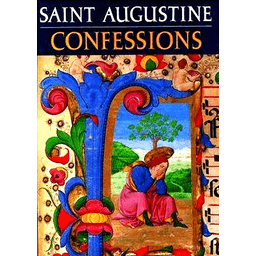 ConfessionsAugustine’s fourth-century memoir of a restless heart turning toward God - the ancient model of the examined, God-directed life that A Severe Mercy quietly stands in.
Frequently asked questions
Is A Severe Mercy a true story?
Yes. It is the first-person memoir of Sheldon Vanauken, published in 1977, about his marriage to his wife Davy, their conversion to Christian faith at Oxford, and her death in 1955. The eighteen letters from C.S. Lewis reproduced in the book are real correspondence.
What is the connection to C.S. Lewis?
While studying at Oxford in the early 1950s, Vanauken corresponded with C.S. Lewis, who was teaching there, and the two became friends. The book prints eighteen of Lewis’s letters in full. The title comes from a phrase in one of them: writing after Davy’s death, Lewis called the loss "a severe mercy."
What does the title "A Severe Mercy" mean?
It is a phrase C.S. Lewis used in a letter to Vanauken after Davy died. Lewis suggested that the very intensity of their love might have come between Vanauken and God, so that the grief - terrible as it was - could also be understood as a kind of mercy. The book is largely Vanauken’s slow movement toward seeing what Lewis meant.
How long is the book and is it a hard read?
About 250 pages. It is not difficult in vocabulary - Vanauken’s prose is clear and lyrical - but it is slow and reflective rather than fast-paced. Readers who love literary memoir tend to finish it quickly; readers expecting a plot-driven story should know it lingers in conversation and reflection.
What tradition does Sheldon Vanauken write from?
Vanauken became a Christian during his Oxford years and was later received into the Catholic Church. The memoir itself, however, is told through experience, scene, and letter rather than tradition-specific doctrine, and it has been read and loved across Catholic, Protestant, Orthodox, and Latter-day Saint readers alike.
Is A Severe Mercy a sad book?
It is, in part - the final third deals directly with Davy’s death and Vanauken’s grief. But it is also a love story and a conversion story, and the grief is framed by the title’s suggestion that the loss carried meaning. Many readers describe it as moving and ultimately consoling rather than simply sad.
What should I read after A Severe Mercy?
The natural next reads are by C.S. Lewis himself: A Grief Observed, his own short journal of bereavement, and Surprised by Joy, his conversion memoir. Augustine’s Confessions sits behind both as the older model of the examined life. For Lewis’s public, argued faith, Mere Christianity is the obvious follow-up.
Sources & further reading
More Christian Biographies
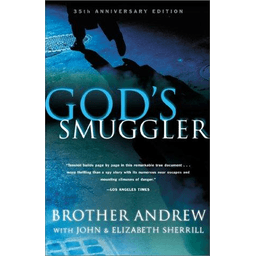 God’s SmugglerThe Dutch missionary’s 1967 memoir about driving a blue Volkswagen Beetle full of Bibles past Soviet border guards - and the prayer that became a generation’s shorthand for trusting God in impossible places.
 Through Gates of SplendorElisabeth Elliot’s account of five young missionaries killed reaching the Waorani of Ecuador in 1956 - the book that sent a generation toward the mission field, told by one of the widows.
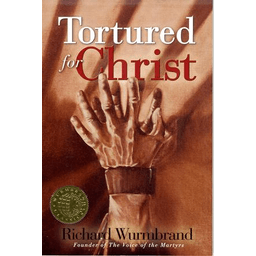 Tortured for ChristThe Romanian pastor’s 1967 account of fourteen years in communist prisons - written in three days after his release, and the book that launched Voice of the Martyrs.
 JoniJoni Eareckson Tada’s account of the diving accident that left her a quadriplegic at seventeen - and the long, unglamorous climb out of despair that followed - told without flinching and without tidy answers.
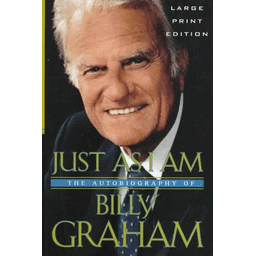 Just As I AmBilly Graham’s own account of a North Carolina farm boy who became the twentieth century’s best-known evangelist - the crusades, the presidents, and the doubts in between.
 The Cross and the SwitchbladeThe skinny country preacher who left rural Pennsylvania for the gang-run streets of 1950s New York - and the conversion of switchblade-carrying gang leader Nicky Cruz that turned one man’s hunch into a worldwide ministry.