- Starting price
- $10.99 paperback
- Free tier
- No
- Platforms
- Print · Kindle · Audiobook
- Developer
- Zondervan
- Launched
- 2002
- Updated
- May 24, 2026
The verdict
The Purpose Driven Life is the rare Christian book that earned its sales. The 40-day structure makes it finishable, the five-purposes framework gives it shape, and Warren's pastoral voice keeps it warm. Theologically it stays broad and applied rather than deep - which is exactly the design, and exactly why it works for most readers.
Try The Purpose Driven Life ↗Opens pastorrick.com
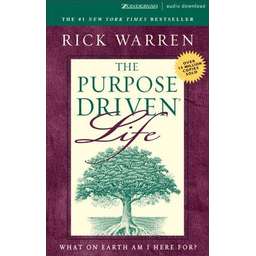
The Purpose Driven Life has quietly become the book that gets handed to people who don't read Christian books. Pastors give it to new believers. Spouses give it to spouses. Friends give it to friends in a hard season. Since its 2002 release, Zondervan has shipped more than 50 million copies - making it one of the best-selling non-fiction hardcovers in publishing history, and arguably the single most-circulated piece of evangelical Protestant writing of the last quarter century.
The pitch is simple. Forty short chapters, one per day, each ending with a verse and a "point to ponder." Five large sections, each devoted to one of the "purposes" Warren argues God designed every human life around - worship, fellowship, discipleship, ministry, and mission. It isn't a memoir. It isn't a survey of Christian doctrine. It isn't a deep biblical-theology textbook. It's a guided 40-day conversation with a pastor about why you are here and what you are supposed to do about it.
Whether that pitch sounds compelling or thin depends on what you want a Christian book to do. The Purpose Driven Life is not the right choice for everyone. But for the audience Warren actually wrote it for - the everyday reader looking for a structured on-ramp into a more intentional spiritual life - it has proven, at industrial scale, to deliver on what it promises.
✓ The good
- The 40-day structure is the killer feature - bite-sized daily chapters make it the rare Christian book most readers actually finish
- Pastoral, warm voice - Warren writes like someone who has spent decades counseling normal people, not like an academic
- Five-purposes framework gives the spiritual life a memorable shape - worship, fellowship, discipleship, ministry, mission
- Heavily verse-anchored - every chapter pulls from Scripture, often quoting multiple translations side by side
- Broad ecumenical appeal - has been read in small groups across denominational lines without major friction
- Built-in study apparatus - each day ends with a point to ponder, a verse to remember, and a question to apply
- Companion ecosystem - devotional editions, journals, small-group curriculum, and an expanded edition keep it usable in groups
✗ Watch out
- Theologically light by design - readers wanting deep doctrinal exposition will find it more applied than systematic
- Translation-hopping - Warren quotes from many paraphrases (notably The Message), which some readers find energizing and others find loose
- Sentence-level prose is functional, not literary - this is not C.S. Lewis-grade writing and doesn't try to be
- Some chapters lean self-helpy - the "you were planned for God's pleasure" framing lands beautifully for some, feels thin for others
- Dated cultural references in spots - twenty-plus years on, a few illustrations show their age
- Not a substitute for Scripture study - best treated as a companion to Bible reading, not a replacement (yet many readers use it that way)
Best for
- New believers and seekers wanting an accessible on-ramp
- Small groups looking for a 40-week or 6-week study with a built-in arc
- Readers who have started and abandoned a dozen Christian books
- Pastors and ministry leaders looking for a giveaway book
Avoid if
- You want rigorous systematic or biblical theology
- You prefer literary prose in the C.S. Lewis or Marilynne Robinson tradition
- You are deeply suspicious of paraphrase translations like The Message
- You've already worked through it twice and want something deeper
What The Purpose Driven Life is
The Purpose Driven Life is a 40-day devotional book by Rick Warren, founding pastor of Saddleback Church in Lake Forest, California. First published by Zondervan in 2002, it is organized into 40 short chapters meant to be read one per day over roughly six weeks. Each chapter runs about 8-10 pages, opens with a Scripture quotation, develops a single idea in a pastoral voice, and closes with a verse to remember, a thought to ponder, and a question to apply.
The 40 days are grouped into five sections - what Warren calls the "five purposes" of human life: you were planned for God's pleasure (worship), formed for God's family (fellowship), created to become like Christ (discipleship), shaped for serving God (ministry), and made for a mission (evangelism and mission). The book's thesis, repeated in different forms across all 40 chapters, is that life only makes sense when those five purposes are oriented toward God rather than self.
Why everyday readers prefer The Purpose Driven Life
The single biggest practical difference between The Purpose Driven Life and most other widely-read Christian books is finishability. Most readers don't complete the Christian books they start. The 40-day structure - short chapters, daily cadence, an obvious finish line - solves that problem at the format level rather than at the content level. The book doesn't demand a reading habit you already have. It builds one in the act of reading.
The second differentiator is voice. Warren writes like a pastor who has spent four decades sitting across coffee tables from anxious, distracted, normal people. The tone is not academic and not performative. It assumes you are tired, slightly overwhelmed, and uncertain whether any of this is for you - and then it invites you in without condescension. That voice, more than any specific argument, is what 50 million copies suggests resonates.
The 40-day structure: why the format worked
Warren did not invent the 40-day spiritual journey - the Bible itself uses 40-day periods constantly, from the flood to the wilderness to Christ's temptation. But he packaged it for the modern reader more effectively than almost anyone before him. Forty chapters, one per day, each short enough to read in 15 minutes and structured enough that missing a day feels like skipping a step rather than abandoning a book. There is a visible finish line from day one, which changes the psychology of the read.
This sounds like a small thing. In practice it's transformative. The vast majority of Christian non-fiction is bought, started, and shelved around chapter three. The 40-day frame - paired with the cultural permission Warren gives readers to use the book in groups, in pairs, or alone - produces completion rates that are, by Christian-publishing standards, extraordinary. Whatever you think of the content, the format is the reason it's on so many bookshelves actually creased open past the introduction.
The "five purposes" framework
Warren's organizing claim is that every human life is built around five God-given purposes: worship, fellowship, discipleship, ministry, and mission. The book devotes roughly a week of daily chapters to each - first defining the purpose, then unpacking what it looks like in ordinary life, then pressing the reader to act on it. The framework predates the book; Warren had been preaching it at Saddleback for years and built his earlier Purpose Driven Church (1995) around the same five categories applied to congregational life.
The framework's strength is that it gives diffuse spiritual aspirations a memorable shape. Most readers can't list five categories that organize their inner life. After 40 days with this book, they can. The framework's limit is the same as its strength - it's a frame, not a full theology. Readers looking for a comprehensive account of, say, the doctrine of God or the nature of the church will find the five-purposes structure helpful but incomplete, and that's the design rather than a flaw. It's scaffolding for the everyday reader, not a substitute for deeper study.
The "you were planned for God's pleasure" framing
The book's most-quoted line - "It's not about you" - opens chapter one, and within a few pages Warren pivots to the inverse claim: you were planned for God's pleasure. The idea, developed across the first seven chapters, is that God created each individual deliberately, takes genuine delight in them, and designed worship as the response that completes the relationship. It is the framing that lands hardest with readers who arrived at the book feeling accidental, replaceable, or invisible.
It's also the framing that gets the most pushback. Critics argue that "God's pleasure" language can drift toward sentimentalism, and that the relentless second-person address ("you were created to...") can make the book feel more therapeutic than theological. Defenders counter that this is precisely the on-ramp many readers need, and that Warren follows the affirmation with 33 chapters that progressively move outward - from self, to community, to service, to mission. Whichever camp you fall into, the framing is unquestionably Warren's signature contribution to popular evangelical writing.
Pricing
Paperback
~$10.99
The standard expanded edition in softcover. The default pick - durable enough for a 40-day read-through and cheap enough to hand out.
Hardcover
~$24.99
The original 2002 format. Sturdier, gift-friendly, and the version most often found on church bookstall tables.
Kindle
~$9.99
Same text, lighter to carry, easier to highlight. The right pick if you read on a phone or tablet most days.
Audible
~$20
Roughly nine hours of narration. Useful for commuters, though the daily-chapter structure works better in print or e-reader than on audio.
Devotional Edition
~$15
A reformatted edition with expanded daily devotional content, journaling space, and prompts. Best for readers who want to slow the pace down and write as they go.
The Purpose Driven Life is one of the easiest Christian books to acquire at a comfortable price. The expanded paperback edition - currently the default in print - runs around $10.99 at most retailers, often less in bulk for church use.
Hardcover sits around $24.99 and is the right pick if it's a gift or you want a copy that survives passing through several readers. Kindle hovers around $9.99 and is a good fit for anyone who already reads on a phone or tablet - the daily chapters work well in e-reader format.
The Audible version runs about nine hours and lands around $20 (less with a credit). It's a fine commuter format, though the book's 40-day cadence is genuinely easier to follow when you can see the chapter numbers on the page.
The devotional edition, around $15, reformats the same material with more journaling space and reflection prompts. It's the right pick if you want to slow the pace and use the book as a structured journal rather than a straight read-through.
Where The Purpose Driven Life falls behind
No deep systematic theology. Warren is explicit about this - the book is applied, not systematic - but readers coming from a Mere Christianity or Knowing God will find the doctrinal density much lower. The Purpose Driven Life is a frame, not a theology textbook, and treats it as such.
Loose translation handling. Warren quotes from a wide swath of translations and paraphrases - including The Message, the Living Bible, and the NLT - sometimes within the same chapter. For many readers this is a feature; it surfaces the text in fresh language. For readers who prefer a single formal-equivalent translation, the variety reads as undisciplined.
Functional prose. Sentence by sentence, this is not literary writing. It's clear, direct, and warm - built to be read quickly by tired people - but it doesn't reward the kind of slow re-reading you give Lewis or Tozer. That's a trade-off the format chose, not a failure.
Limited engagement with hard questions. Suffering, doubt, deconstruction, and the harder edges of Christian intellectual life get touched on but not developed. The book's emotional register is encouragement, not lament or argument, and readers in seasons of acute grief or sharp doubt may need a different companion.
Some cultural dating. Twenty-plus years on, a handful of illustrations and references feel of their moment. The core argument has aged well; the texture occasionally hasn't.
The Purpose Driven Life vs. Mere Christianity vs. Crazy Love
These are three of the most-recommended popular-level Christian books of the last century, and they do genuinely different things.
Different strengths. Mere Christianity is better at intellectual scaffolding - Lewis builds the case for Christianity from reason and moral law upward, and his prose rewards slow reading. The Purpose Driven Life is better at behavior change - Warren takes someone who already believes (or is willing to try) and gives them a 40-day structure for living differently. Crazy Love, Francis Chan's 2008 book, sits between the two - shorter than Warren, more emotionally intense than Lewis, and built around a single confrontational question about whether the reader's life actually reflects what they say they believe.
If you can only read one and want to think harder, pick Lewis. If you want to do something different starting tomorrow morning, pick Warren. If you want to be unsettled in a productive way, pick Chan. Many readers eventually work through all three, and that's probably the right answer - they're complementary, not competing.
The bottom line
The Purpose Driven Life earned its 50 million copies. The 40-day structure makes it finishable in a category where most books aren't, the five-purposes framework gives readers a memorable scaffold for the spiritual life, and Warren's pastoral voice carries the whole thing without strain. It is not deep systematic theology, and it doesn't try to be - readers who want that should reach for a study Bible or a classic. But for the everyday reader looking for a structured, warm, achievable on-ramp into a more intentional faith, it remains, more than two decades on, the easiest book in the category to recommend.
Alternatives to The Purpose Driven Life
 Mere ChristianityC.S. Lewis's defense of the faith from reason upward. Denser and more intellectual than Warren - the book to graduate to.
 Jesus CallingSarah Young's daily devotional written in a first-person "Jesus speaking" voice. Devotional in cadence; different tone and form than Warren's teaching chapters.
 The 5 Love LanguagesGary Chapman's framework for understanding how people give and receive love. Narrower scope than Warren but similar accessibility.
 ESV Study BibleFor readers who finish Warren and want to go deeper into the text itself - extensive notes, maps, and theological articles built around the ESV.
Frequently asked questions
Do I have to read one chapter per day?
No, but the book is designed for it. Each chapter is short, ends with a reflection question, and is meant to be sat with rather than rushed through. Reading in bursts is fine; many small groups cover one section (about a week of chapters) per meeting.
Is The Purpose Driven Life a good fit for someone new to Christianity?
Yes - it's one of the most commonly given books to new believers and curious seekers. The chapters are short, the assumptions about prior knowledge are minimal, and the voice is welcoming rather than technical.
What tradition does Rick Warren write from?
Warren is the founding pastor of Saddleback Church and writes from a broadly evangelical Protestant perspective. The book has nonetheless been used widely across denominational lines, including in Catholic and mainline Protestant small groups.
Is the devotional edition worth it over the regular paperback?
Depends on how you read. The standard expanded edition is more than sufficient for most readers. The devotional edition adds journaling space and expanded prompts and is worth the extra few dollars if you plan to write as you go or use the book as a structured 40-day journal.
Can a small group use this book?
Yes - it has a robust companion ecosystem. Zondervan and Saddleback publish small-group video curricula, leader guides, and journals built around the 40 days, and the book itself is one of the most-used small-group resources in the evangelical world.
How does the audiobook compare to reading it?
The Audible version runs roughly nine hours and is a fine commuter option, but the daily-chapter cadence and the end-of-chapter reflection material work better in print or e-reader. If you go audio, consider keeping a print or Kindle copy nearby for the reflection questions.
Is the book still relevant more than 20 years after release?
The core framework - five purposes, 40-day structure, pastoral voice - has aged well, and the book continues to sell strongly. A handful of cultural references show their early-2000s vintage, but the substance still works for most readers picking it up today.
Sources & further reading
More Christian Living Books
 The Prodigal GodTim Keller’s 130-page reading of Luke 15 has quietly become one of the most-gifted Christian books of the last twenty years - and the reason is the title itself.
 Practicing the WayComer’s 2024 follow-up to The Ruthless Elimination of Hurry has quietly become the default spiritual-formation book in a thousand small groups - and the reasons are worth unpacking.
 Walking with God Through Pain and SufferingTim Keller’s most comprehensive book on suffering - part survey of how every culture has tried to explain pain, part biblical theology, part field manual for the people actually walking through it.
 FerventThe prayer book that turned “strategic, specific prayer” into a fill-in-the-blank battle plan - and rode the War Room moment to the top of the bestseller lists.
 A Grace DisguisedJerry Sittser lost his mother, his wife, and his four-year-old daughter in a single car crash - and the book he wrote about it has quietly become the one grieving people press into each other’s hands, because it refuses to tell you how to get over your loss.
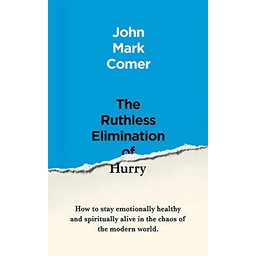 The Ruthless Elimination of HurryJohn Mark Comer’s 2019 breakout - a pastor’s case that hurry is the great spiritual enemy of our age - has quietly become the go-to slow-down book for an exhausted generation of Christians. Here’s what it actually delivers, and where it doesn’t.