- Starting price
- $11.99 paperback
- Free tier
- No
- Platforms
- Print · Kindle · Audiobook · Audible
- Developer
- FaithWords (Hachette)
- Launched
- 1995 (Updated + Expanded 2002, 2011, 2021)
- Updated
- May 24, 2026
The verdict
Battlefield of the Mind has quietly become the go-to Christian self-help book on negative thinking - practical, relentlessly applied, and emotionally credible because Meyer writes from her own recovery. Readers looking for dense theology should know going in that the book is firmly in the popular-Christian-living lane, not the systematic-theology lane.
Try Battlefield of the Mind ↗Opens joycemeyer.org
Battlefield of the Mind is one of the most widely read Christian living books of the last thirty years. First published in 1995 by FaithWords (a Hachette imprint), it has sold more than three million copies, gone through multiple updated and expanded editions - most recently a 2021 reissue - and spawned an entire franchise of spinoff books for kids, teenagers, married couples, and devotional readers. For a category usually measured in tens of thousands of copies, that scale is unusual.
The thesis is simple enough to fit on a Post-it: the real battle a Christian fights is not "out there" but inside the mind, and the way to win it is to "renew" your thoughts to line up with what Scripture says about God, yourself, and your circumstances. Meyer leans on Romans 12:2 ("be transformed by the renewing of your mind") and Ephesians 6 as her structural anchors, then spends most of the book naming specific thought patterns - worry, self-pity, condemnation, doubt, passivity, comparison - and walking through how to confront each one.
Joyce Meyer is one of the most-broadcast Christian women teachers in America. Joyce Meyer Ministries reaches viewers through television, radio, podcasts, a global conference circuit, and a long backlist of books. She comes out of the Charismatic stream and is often classed as Word of Faith-adjacent. That theological location matters for how you read the book - some readers find the framework life-changing, others find it theologically thin - and the review below tries to describe both reactions honestly so you can decide whether the book is for you.
✓ The good
- Genuinely practical - every chapter ends with a specific thought pattern to confront and a Scripture to hold against it
- Emotionally credible - Meyer writes openly about her own history of childhood abuse and the decades-long recovery that followed, which gives the advice weight
- Accessible prose - short chapters, plain vocabulary, no jargon, the kind of book a reluctant reader will actually finish
- Wide ecosystem - kids, teen, marriage, devotional, and Spanish editions mean a family can work through the material together at different levels
- Audiobook works well - Meyer’s conversational style translates cleanly to Audible, and many readers prefer it that way
- Endlessly re-readable - the format is bite-sized enough to pick up again during a hard season without re-reading cover to cover
✗ Watch out
- Light on exegesis - verses are quoted and applied quickly rather than worked through in context, which frustrates readers who want a study
- Charismatic / Word of Faith-adjacent framing - language about the authority of the believer and "speaking" over circumstances will not land the same way in every tradition
- Repetitive across the franchise - once you’ve read Battlefield of the Mind, the spinoffs cover a lot of the same ground
- Light interaction with mental-health language - the book pre-dates most of the current Christian conversation about therapy, trauma, and clinical anxiety (yet)
- Some readers find the tone hard-charging - the "stop feeling sorry for yourself" register is a feature for some, a barrier for others
Best for
- Readers stuck in a loop of anxious, self-critical, or defeated thinking
- People who liked Joyce Meyer’s TV teaching and want the long-form version
- Small groups and women’s ministries looking for an accessible 6-to-12 week book study
- Anyone who has tried denser Christian-living books and bounced off them
Avoid if
- You want a verse-by-verse exegetical study rather than topical application
- You are uncomfortable with Charismatic or Word of Faith vocabulary
- You are looking for a clinically informed book on anxiety, depression, or trauma
- You prefer a single careful read over a repeatable, dip-in-and-out format
What Battlefield of the Mind is
Battlefield of the Mind is a popular-level Christian living book about the believer’s thought life. It is organized in short, topical chapters - around forty in the expanded editions - grouped into sections that move from a general case for "the mind is a battlefield" into specific categories of unhealthy thinking and concrete responses to each one. The book is not a memoir, not a Bible study in the technical sense, and not a systematic treatment of spiritual warfare. It is a practical handbook with the emotional cadence of a friend who has been through it.
Meyer writes from inside the Charismatic stream of American Protestantism and from her own decades of public ministry. The voice on the page is the same voice viewers know from Joyce Meyer Ministries broadcasts - direct, occasionally blunt, often funny. Readers from more Reformed, Catholic, or liturgical backgrounds sometimes describe the prose as plainspoken to a fault; readers who came to the book through the broadcast tend to describe that same quality as the reason it works.
Why everyday readers prefer Battlefield of the Mind
The single biggest practical difference between Battlefield of the Mind and most other books in its category is that it treats negative thought patterns as something to actively fight, not just notice. Meyer’s frame - drawn from Romans 12:2 and Ephesians 6 - is that the mind is contested ground and that the believer has both responsibility and tools to do something about it. That posture is part of what makes the book stick. Readers who finish it tend to walk away with a short list of specific thoughts they have decided to push back on, and a verse or two attached to each one.
The other thing that sets the book apart is Meyer herself. She writes openly about growing up in an abusive home and about the long recovery that followed her conversion. That backstory gives the practical advice an authority it would not have from a teacher who had not lived it. When she tells a reader to stop entertaining a thought of worthlessness, the reader knows she is not theorizing. Whether or not you align with every doctrinal move in the book, that lived credibility is most of why people hand it to a struggling friend.
The "renewing the mind" framework: spiritual warfare anchored in Romans 12
The structural spine of Battlefield of the Mind is the idea that "renewing the mind" - Paul’s phrase in Romans 12:2 - is the believer’s primary job in spiritual warfare. Meyer pairs that with Ephesians 6 (the armor passage) and 2 Corinthians 10:5 ("taking every thought captive") to argue that thoughts are not neutral background noise but actively shape behavior, emotion, and circumstance. The book then catalogs categories of thinking - wandering, doubtful, anxious, condemned, passive, comparative, self-pitying - and gives each one a short chapter with a diagnostic, a Scripture, and a counter-thought.
This sounds like a small thing. In practice it is the engine of the whole book. Readers describe finishing chapters and noticing the exact thought pattern Meyer named showing up in their own week. The framework also lines up - accidentally or not - with a lot of what cognitive behavioral therapy says about thought-feeling-behavior loops, which is part of why secular readers sometimes pick the book up too. The theological frame is Charismatic and warfare-shaped rather than clinical, and Meyer does occasionally use the kind of "speak it over your life" language associated with Word of Faith teaching. Readers from cessationist or Reformed backgrounds will want to read with that in mind; readers already inside that stream will hear it as home.
Joyce Meyer’s personal story: why the advice carries weight
Battlefield of the Mind is not a memoir, but Joyce Meyer’s personal history is never far from the page. She has written and spoken publicly about being sexually abused by her father throughout her childhood, about an early failed marriage, and about the years of anger, depression, and self-loathing that followed her conversion as an adult. That backstory is woven through the book in short asides - when she describes a thought pattern, she usually mentions having lived inside it for years.
That biographical honesty is most of why the book has the emotional credibility it does. Plenty of Christian living books on the mind have been written by pastors and counselors who learned the material in seminary. Meyer learned hers, by her own account, in a much harder classroom. Readers who would politely tune out a tidier teacher tend to keep reading Meyer because she sounds like someone who has actually been on the floor and gotten back up. That credibility does not automatically settle the theological questions some readers have about her broader teaching, but it is the engine of the trust the book earns chapter by chapter.
The franchise: kids, teen, marriage, devotional, and Spanish editions
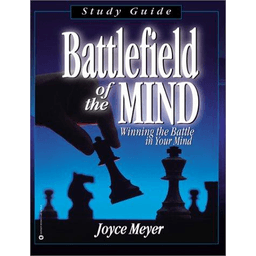
Battlefield of the Mind was successful enough that FaithWords built a small franchise around it. Battlefield of the Mind for Kids and Battlefield of the Mind for Teens adapt the core ideas at age-appropriate reading levels, with shorter chapters and more story-driven examples. Battlefield of the Mind for Marriage applies the renewing-the-mind frame specifically to the way spouses think about each other. The Battlefield of the Mind Devotional turns the book’s themes into a year of short daily readings. There is also a widely used Spanish edition and a study guide / workbook tied to the original.
The practical effect is that a family or a small group can work through the material in parallel at different levels. A mother can read the original while her teenager reads the teen edition; a couple can use the marriage book in counseling; a Sunday school class can run the devotional. The honest tradeoff is that once you have read Battlefield of the Mind itself, the spinoffs cover a lot of overlapping ground - they are scaffolding for new audiences more than they are new material. For most adult readers, the original paperback (or the audiobook) is the one to start with, and the rest of the franchise is optional based on situation.
Pricing
Paperback
~$11.99
The standard updated-and-expanded edition. The version most readers buy and most small groups assign.
Hardcover
~$24
Gift edition, often picked up for a friend going through a hard season.
Kindle
~$10
Same text as the paperback, with highlights that sync across devices.
Audible / Audiobook
~$15
Unabridged narration. A popular format for this book - many readers say Meyer’s voice on TV and the page is the same voice, and audio fits her style.
Devotional Edition
~$13
Battlefield of the Mind Devotional - short daily readings drawn from the book’s themes, designed for a year-long pass.
Spanish Edition
~$13
El Campo de Batalla de la Mente - a full translation widely used in Spanish-speaking churches and conference circuits.
The paperback is the version almost everyone buys. As of writing, it runs around $11.99 at major retailers, less when discounted, and it is the edition small groups and women’s ministries assign. Unless you specifically want a gift copy, the paperback is the right starting place.
The Kindle edition runs around $10 and is worth it if you tend to read on a phone or tablet and want highlights and notes to sync. The text is identical to the paperback. The audiobook, around $15 on Audible, is a real option for this book - Meyer’s style is conversational, and a meaningful share of readers say they prefer hearing it.
Beyond the original, the Devotional Edition (~$13) and Spanish Edition (~$13) cover the obvious adjacent use cases. The kids, teen, and marriage spinoffs sit in a similar price range and are best thought of as situational add-ons rather than required reading.
There is no free tier - this is a trade book from a major publisher, not an app - but used copies are easy to find under five dollars, and library copies are common.
Where Battlefield of the Mind falls behind
Light exegesis. Battlefield of the Mind is a topical, applied book, not a verse-by-verse study. Verses get quoted, paraphrased, and pressed into service quickly. Readers who want to see the original-language work, the historical context, or the surrounding chapter unpacked will need to bring a study Bible alongside.
Pre-dates most of the current trauma and mental-health conversation. The original came out in 1995 and even the expanded editions stop short of engaging with what Christian counselors now routinely say about the role of therapy, medication, and clinical diagnosis alongside spiritual practice. Readers dealing with diagnosed anxiety or depression should treat the book as one input, not the whole plan.
Theological location is not for everyone. Meyer’s framework draws on neuroscience-flavored Christian living and the spiritual-warfare emphases common to the Charismatic stream. Some readers find that combination life-changing; others find it theologically thin. Cessationist, Reformed, Catholic, and Orthodox readers especially should know going in that the book speaks from inside a particular tradition.
Heavy on application, light on rest. The book’s default register is "do something about your thoughts," which is exactly what some readers need to hear. For readers in a season of exhaustion or grief, a companion volume with more emphasis on God’s nearness to the weary - something like Gentle and Lowly - pairs well.
Battlefield of the Mind vs. Get Out of Your Head vs. The Mind of Christ
Different strengths. Battlefield of the Mind (Joyce Meyer, 1995) is the warfare-framed, hard-charging, Charismatic-stream book - the one that treats negative thought patterns as enemy ground to be retaken. Get Out of Your Head (Jennie Allen, 2020) covers a lot of the same territory but in a more recent register, leaning explicitly on cognitive psychology language and aimed at an evangelical-women audience that grew up with social media. The Mind of Christ (T.W. Hunt, 1995) is the older, more deliberate book - Southern Baptist in origin, built as a workbook study, and more focused on contemplating Christ’s own mind than on counter-attacking specific thoughts.
Meyer’s book is better at urgency. Allen’s is better at modern reference points and language an under-forty reader will recognize. Hunt’s is better at slow, structured study with a group. They are not really competitors - readers who like one of them often work through all three over a few years.
If you only read one, pick Meyer if you want momentum and a friend-who-has-been-there voice; pick Allen if you want a recent, social-media-aware framing; pick Hunt if you want a structured workbook study with a class. Most small groups that have run all three end up putting Battlefield of the Mind first because it is the most accessible entry point.
The bottom line
Battlefield of the Mind has earned its three million copies. It is the thoughtful person’s starting place for Christian books on the inner life - practical, repeatable, and emotionally credible because the author has clearly lived it. Read it knowing what it is: a popular-level Christian living book from inside the Charismatic stream, not a systematic theology and not a clinical handbook. Inside those limits it does its job well, which is why people keep quietly handing it to a struggling friend three decades after it was written. Real gaps, but worth knowing going in rather than dealbreakers.
Alternatives to Battlefield of the Mind
 Jesus CallingSarah Young’s first-person devotional - a different style entirely, but the other huge-seller in the Christian-living-bestseller bracket Meyer occupies.
 The Purpose Driven LifeRick Warren’s 40-day framework. Different question - why am I here? vs. what am I thinking? - but the same accessible, paragraph-a-page register.
 The 5 Love LanguagesGary Chapman’s relationship classic. Pair with the Battlefield of the Mind for Marriage edition for a small group focused on communication.
 Crazy LoveFrancis Chan’s short, urgent book on God’s love and our lukewarm response. A natural companion read for anyone working through Meyer.
Frequently asked questions
Is Battlefield of the Mind a Bible study?
Not in the formal sense. It is a topical Christian living book that quotes and applies Scripture chapter by chapter rather than working through a passage in context. There is an official workbook / study guide for groups that want a more structured experience.
Which edition should I buy?
For most readers, the updated and expanded paperback (around $11.99) is the right starting place. Pick the audiobook if you prefer to listen - Meyer’s conversational style works well in that format - or the Spanish edition if that is your primary language.
Is Joyce Meyer controversial?
Meyer is associated with the Charismatic stream and is often described as Word of Faith-adjacent, which makes her teaching contested in some Reformed, cessationist, and Catholic circles. Many readers across traditions still find Battlefield of the Mind useful as a practical book on the thought life. Read it aware of where it sits theologically and bring your own tradition’s frame to it.
How does it compare to Get Out of Your Head by Jennie Allen?
Same territory, different decade. Meyer wrote in 1995 from a Charismatic, spiritual-warfare frame. Allen wrote in 2020 with explicit cognitive-psychology language for a social-media-shaped reader. Many small groups read both - Meyer first for momentum, Allen second for modern reference points.
Is this book a substitute for therapy or counseling?
No. It pre-dates most of the current Christian conversation about clinical mental health, and Meyer would not claim that role for it. Readers managing diagnosed anxiety, depression, or trauma should treat it as one input alongside professional care.
Are the kids, teen, and marriage editions worth it?
Situationally. They re-package the core ideas at different reading levels and use cases - useful if a family or couple wants to work through the material together, optional otherwise. Most adult readers only need the original.
How long does it take to read?
Most readers finish the paperback in two to three weeks of regular reading, less on audiobook. The chapters are short enough to read one at a time, which is also how most small groups pace it across a 6 to 12 week study.
Sources & further reading
More Christian Living Books
 The Prodigal GodTim Keller’s 130-page reading of Luke 15 has quietly become one of the most-gifted Christian books of the last twenty years - and the reason is the title itself.
 Practicing the WayComer’s 2024 follow-up to The Ruthless Elimination of Hurry has quietly become the default spiritual-formation book in a thousand small groups - and the reasons are worth unpacking.
 Walking with God Through Pain and SufferingTim Keller’s most comprehensive book on suffering - part survey of how every culture has tried to explain pain, part biblical theology, part field manual for the people actually walking through it.
 FerventThe prayer book that turned “strategic, specific prayer” into a fill-in-the-blank battle plan - and rode the War Room moment to the top of the bestseller lists.
 A Grace DisguisedJerry Sittser lost his mother, his wife, and his four-year-old daughter in a single car crash - and the book he wrote about it has quietly become the one grieving people press into each other’s hands, because it refuses to tell you how to get over your loss.
 The Ruthless Elimination of HurryJohn Mark Comer’s 2019 breakout - a pastor’s case that hurry is the great spiritual enemy of our age - has quietly become the go-to slow-down book for an exhausted generation of Christians. Here’s what it actually delivers, and where it doesn’t.