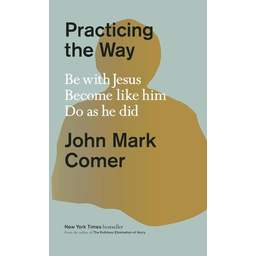
- Starting price
- $22.99 hardcover
- Free tier
- No
- Platforms
- Print · Kindle · Audiobook · Audible
- Developer
- WaterBrook (Penguin Random House)
- Launched
- 2024
- Updated
- May 24, 2026
The verdict
A short, pastoral, deeply intentional book on becoming an apprentice of Jesus, organized around nine classic practices. Not the most original framework in print, but possibly the most accessible one written this decade - and the free companion site multiplies its value.
Try Practicing the Way ↗Opens practicingtheway.org
Practicing the Way has quietly become the default spiritual-formation book in evangelical small groups since its release in early 2024. It sold more than a million copies in its first year, took ECPA Christian Book of the Year in 2025, and now sits on the same shelf as Mere Christianity and The Cost of Discipleship in a lot of church bookstores - which is unusual company for a book that is, in fairness, two years old.
It is not a study Bible. It is not a systematic theology. It is not, in any rigorous sense, a new framework. What it is: a short, carefully paced argument that the Christian life is best understood as apprenticeship to Jesus - being with him, becoming like him, doing as he did - and that this apprenticeship is formed through nine specific practices the church has used for two thousand years.
Comer is the founding pastor of Bridgetown Church in Portland and now leads the Practicing the Way nonprofit full-time. His sources are not hidden - Dallas Willard, Eugene Peterson, Ruth Haley Barton, Bonhoeffer, the desert fathers. The contribution here is not novelty. It is tone, and it is the companion infrastructure. Both matter more than the table of contents would suggest.
✓ The good
- Genuinely readable - short chapters, clean prose, paced for evenings rather than seminars
- The nine practices are recognizable across traditions - Sabbath, solitude, prayer, fasting, Scripture, community, generosity, service, witness
- Free companion content at practicingtheway.org is unusually generous - videos, guides, and full small-group curriculum at no cost
- Pastoral rather than scolding - the book reads like a long conversation, not a lecture about screen time
- Comer’s vocabulary ("apprenticeship to Jesus") sits comfortably across Reformed, Wesleyan, Anglican, and Catholic readers
- Footnotes and "Going Deeper" notes point readers to Willard, Peterson, Foster, Barton - the formation canon, made findable
- Companion Guide (separate purchase) turns the book into a usable 8-week practice for individuals or groups
✗ Watch out
- Not a doctrinal book - readers looking for systematic depth on union with Christ or the work of the Spirit will need to bring it from elsewhere
- Some of the cultural diagnosis ("hurry," "distraction") will already feel familiar to readers of Comer’s earlier work
- Heavy reliance on Dallas Willard - readers who already know Willard will recognize most of the framework
- Treatment of fasting and confession is gentle by design and may feel thin to readers from more liturgical traditions
- Audiobook is well-narrated but loses the practice-by-practice formatting that makes the print edition usable as a workbook
Best for
- Small groups looking for a shared 8-10 week formation arc
- Readers who loved The Ruthless Elimination of Hurry and want the next step
- Pastors looking for a discipleship framework that lands across denominational lines
- Anyone who has read about spiritual disciplines but never actually built a rule of life
Avoid if
- You want a verse-by-verse exposition of a biblical book
- You want a systematic theology of sanctification
- You are already deep in Willard, Foster, and Barton - this will feel like review
- You prefer a "five steps to a better life" tone - Comer is intentionally slower than that
What Practicing the Way is
Practicing the Way is a short trade book - about 250 pages in hardcover - built around a single thesis: that the Christian life is best understood as apprenticeship to Jesus, and that apprenticeship has always been shaped by a specific set of practices. Comer lays out three goals (be with Jesus, become like him, do as he did) and nine practices (Sabbath, solitude, prayer, fasting, Scripture, community, generosity, service, witness) that the historic church has used to form those goals into actual life.
It is positioned as the follow-up to Comer’s 2019 book The Ruthless Elimination of Hurry, which diagnosed the problem (a hurried, distracted, formation-poor life). Practicing the Way is the prescription. It is written for what Comer calls "post-Christian" readers - people inside and outside the church who feel the weight of the cultural moment and suspect that the Christian tradition has something to say about it. It assumes very little prior reading.
Why this book broke through where other formation books didn’t
The single biggest practical difference between Practicing the Way and the dozens of spiritual-formation books in its lineage is the companion infrastructure. Comer’s nonprofit (practicingtheway.org) publishes a complete small-group video curriculum, leader guides, and per-practice toolkits - and gives them away. No login wall, no premium tier, no church-license fee. A small group can run the entire 8-week arc using only the website. This is not the model that most Christian publishers use, and it has changed how the book is adopted.
The other piece is the tone. Comer is pastoral rather than prescriptive - he does not tell readers they are doing it wrong, and he does not perform urgency. He reads as the thoughtful person’s formation writer, leaning more on Bonhoeffer and Willard than on conference-circuit motivational rhythms. For readers who have grown tired of "five steps" Christian publishing, that restraint is the thing that makes the book usable. The triplet works here: it doesn’t shame. It doesn’t hurry. It doesn’t pretend formation is easy.
Apprenticeship and the nine practices: the framework
The structural argument of the book is that "apprentice of Jesus" is a more accurate translation of the New Testament word usually rendered "disciple" - and that an apprentice is, by definition, someone who learns a trade by being near the master, watching, imitating, and slowly taking on the master’s way of being. Comer draws this directly from Dallas Willard, whose phrase "the disappearance of moral knowledge" runs underneath the whole book. Apprenticeship has three goals: be with Jesus, become like him, do as he did. Each one anchors a section.
The nine practices - Sabbath, solitude, prayer, fasting, Scripture, community, generosity, service, witness - are presented not as a checklist but as the historic means by which apprentices have actually been formed. None of them are new. What is useful is the assembly. Most readers have heard chapters on a few of these scattered across other books; having them organized into a single rule, with reasons for each, is the part that makes a small group able to actually try them.
The Practicing the Way nonprofit and the free companion site
In 2021, before the book released, Comer stepped down from leading Bridgetown Church to run a nonprofit called Practicing the Way full-time. The nonprofit publishes - at practicingtheway.org - a complete set of small-group materials: video sessions, leader guides, a "rule of life" tool, and individual practice toolkits for each of the nine practices. All of it is free. Donations fund it.
This matters for how the book functions in real life. A church or small group can buy the book, optionally buy the Companion Guide, and then run a full 8-week formation course using the free site - no licensing fee, no per-seat pricing, no premium video tier. That is rare in the Christian publishing world, where small-group video curricula typically run $100-$300 per series. The free companion is the reason adoption rates have been what they are.
Comer’s tone: the actual differentiator
The thing that is hardest to describe and most important to name is Comer’s tone. He writes slowly. He repeats himself on purpose. He uses white space. The chapters end where a normal trade-book chapter would still have three more pages of application - and that restraint is the point. Readers describe the book as feeling more like a retreat than a read, which is intentional. The closest cousin in tone is probably Bonhoeffer’s Life Together, though the theological depth is not the same.
For readers who have spent years inside evangelical publishing - the bullet points, the action steps, the "what now" call-outs - this is a different mode. It is the thoughtful person’s discipleship book. That tone is also the reason the book travels well across traditions: there is nothing in it that requires the reader to be Reformed, or charismatic, or Catholic, or anything in particular. Comer’s vocabulary - apprenticeship, practice, rule of life - sits comfortably in Reformed, Wesleyan, Anglican, and Catholic reading rooms, and that is part of why the book has crossed lines other formation books did not.
Pricing
Hardcover
~$22.99
The main edition - clothbound, sized for marking up, the format the book was designed in.
Kindle
~$14
Full text, searchable, syncs with the Kindle app on every device.
Audible / Audiobook
~$15
Read by Comer himself - pastoral, slow, well-paced for commute listening.
Companion Guide
~$15
Separate paperback workbook that turns the book into an 8-week practice for individuals or groups.
practicingtheway.org content
Free
Full small-group videos, leader guides, and practice tools - no account or paywall required.
The hardcover is the format the book was designed for - short chapters, real white space, room in the margins to mark practices the reader wants to try. Around $22.99 at most retailers, often discounted to $15-$18 at Christianbook or Amazon. For most readers, this is the version to buy.
Kindle is around $14 and gives you searchable text - useful if you plan to come back to specific passages on prayer or Sabbath later. The audiobook (around $15 on Audible) is narrated by Comer himself and is genuinely well-paced for commute listening, but it loses the chapter-by-chapter formatting that makes the print edition function as a workbook.
The separate Companion Guide (about $15) is essentially a paperback workbook with prompts, exercises, and a 30-day on-ramp for each practice. Most readers do not need it for a first read, but small-group leaders almost always end up buying it.
The under-publicized fact: practicingtheway.org publishes the full small-group curriculum - videos, leader guides, practice toolkits - for free. Most users do not realize the companion site exists. It is the highest-leverage way to use the book.
Where Practicing the Way falls behind
Not a theology book. Readers looking for a careful account of justification, sanctification, union with Christ, or the work of the Spirit will need to read this alongside something denser - Knowing God by J. I. Packer, or Calvin’s Institutes, or a systematic theology. Comer is doing pastoral writing, not theological construction.
Heavy Willard dependence. If you have already read Willard’s The Spirit of the Disciplines or Renovation of the Heart, the framework here will feel familiar - Comer is, by his own admission, translating Willard for a wider audience. That is a strength for new readers and a redundancy for veteran ones.
Light on liturgy and sacrament. The treatment of confession, Eucharist, and the liturgical calendar is gentle and brief by design. Readers coming from Catholic, Orthodox, Anglican, or LDS traditions where sacramental and liturgical practice is central will find the framework compatible but underdeveloped on those points.
Some recycled cultural diagnosis. Comer’s 2019 book The Ruthless Elimination of Hurry already made the case that contemporary life is corrosive to formation. The opening chapters of Practicing the Way restate parts of that argument for readers who haven’t read it. Those who have may want to skim those sections.
Not a quick read in the way it might appear. The book is short but is built to be read slowly, ideally over weeks, with the practices tried in real time. Treating it as a weekend read flattens what the format is doing.
Practicing the Way vs. The Ruthless Elimination of Hurry vs. The Cost of Discipleship
Different books for different stages of the same question. The Ruthless Elimination of Hurry (2019) is the diagnosis - it argues that contemporary life is structured against formation and offers four practices to slow down. Practicing the Way (2024) is the prescription - it widens the lens from hurry to apprenticeship and lays out the nine practices. Bonhoeffer’s The Cost of Discipleship (1937) is the older voice in the room - it asks what discipleship costs when "cheap grace" has hollowed it out, and is theologically heavier than either Comer book.
Different strengths. Hurry is better at naming the cultural problem. Practicing the Way is better at giving readers something to actually do about it. Cost of Discipleship is denser, slower, and more theologically demanding than either - it does not give you a rule of life, but it changes how you think about the word "follow."
How to sequence them: read Hurry if you are still trying to name what is wrong with your week. Read Practicing the Way if you have named it and want to start somewhere. Read Bonhoeffer once a year for the rest of your life. Comer himself cites Bonhoeffer throughout - the two books are designed to live on the same shelf.
The bottom line
Practicing the Way is not the most original book in its category - it is, openly, a pastoral translation of Dallas Willard for a wider audience - but it is probably the most accessible spiritual-formation book written this decade. The free companion infrastructure at practicingtheway.org multiplies its value well beyond what the cover price suggests, and the tone is pitched almost perfectly for readers tired of louder Christian publishing. Worth buying. Worth reading slowly. Worth running through with a group, which is what it was designed for. Real gaps on doctrinal depth and liturgical practice, but they are worth knowing about going in rather than dealbreakers.
Alternatives to Practicing the Way
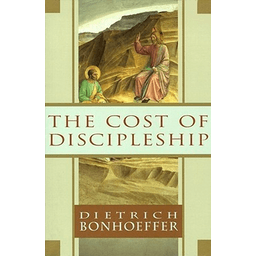 The Cost of DiscipleshipBonhoeffer’s 1937 classic on what discipleship actually costs - denser and more theologically demanding than Comer, and explicitly cited throughout Practicing the Way.
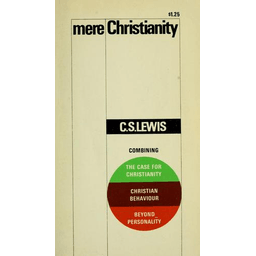 Mere ChristianityC. S. Lewis’s entry-level case for the Christian faith - broader in scope than Comer, and the natural pairing for readers wanting the "why" alongside the "how."
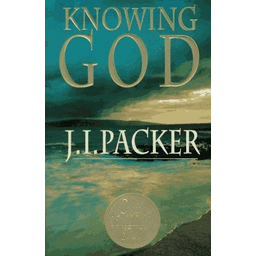 Knowing GodJ. I. Packer’s 1973 classic on the character of God - the doctrinal companion to Comer’s pastoral one, focused on who God is rather than what to practice.
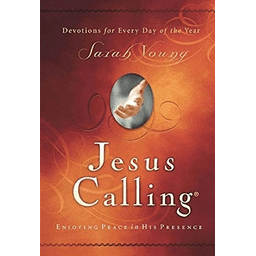 Jesus CallingSarah Young’s daily devotional, written in a first-person voice from Jesus - a very different format and approach, but often on the same nightstand.
Frequently asked questions
Do I need to read The Ruthless Elimination of Hurry first?
No. Practicing the Way stands on its own, and Comer briefly recaps the cultural diagnosis from the earlier book in the opening chapters. If you have already read Hurry, expect some overlap up front. If you haven’t, you’ll get enough of the argument here to follow along.
Is this book denominationally specific?
Comer writes from a broadly evangelical pastoral background, drawing on the Dallas Willard / Eugene Peterson stream of spiritual-formation writing. The framework - apprenticeship to Jesus, the nine practices - uses vocabulary that sits comfortably across Reformed, Wesleyan, Anglican, and Catholic readers. Readers from other traditions report finding it compatible, though they often note it does not develop liturgical or sacramental themes in depth.
What is actually free at practicingtheway.org?
A complete small-group video curriculum, leader guides, individual practice toolkits for each of the nine practices, and a "rule of life" builder. No login wall, no premium tier, no church-license fee. It is funded by donations to the Practicing the Way nonprofit.
Do I need the Companion Guide?
Not for a first read. The Companion Guide (about $15) is a paperback workbook with prompts and a 30-day on-ramp for each practice, and it is genuinely useful if you are leading a small group or want a more structured personal practice. Most individual readers do fine with just the book and the free site.
How long is the book?
About 250 pages in hardcover, organized into short chapters and three main sections (be with Jesus, become like him, do as he did). It is designed to be read slowly, ideally over several weeks while trying the practices in real time, rather than in one sitting.
Is the audiobook worth it?
It is well-narrated - Comer reads it himself and the pacing is good for commute listening. The tradeoff is that the print edition is formatted with white space and chapter breaks that function as a workbook, and that structure is harder to follow in audio. Many readers end up with both.
Is this a Bible study?
No. Practicing the Way is a spiritual-formation book that draws on Scripture throughout but is not a verse-by-verse study of any biblical text. For a chapter-by-chapter study of the Bible itself, pair it with a study Bible or a guided reading plan.
Sources & further reading
More Christian Living Books
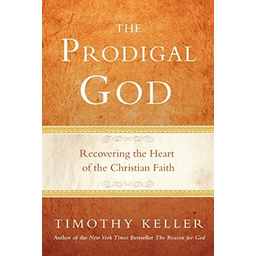 The Prodigal GodTim Keller’s 130-page reading of Luke 15 has quietly become one of the most-gifted Christian books of the last twenty years - and the reason is the title itself.
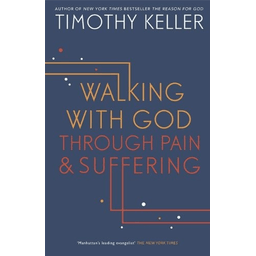 Walking with God Through Pain and SufferingTim Keller’s most comprehensive book on suffering - part survey of how every culture has tried to explain pain, part biblical theology, part field manual for the people actually walking through it.
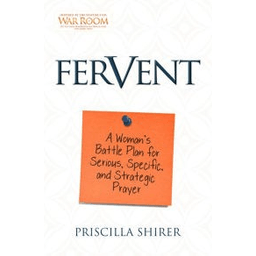 FerventThe prayer book that turned “strategic, specific prayer” into a fill-in-the-blank battle plan - and rode the War Room moment to the top of the bestseller lists.
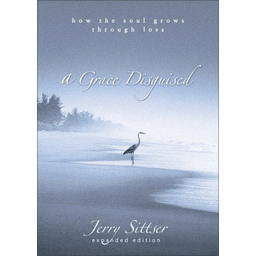 A Grace DisguisedJerry Sittser lost his mother, his wife, and his four-year-old daughter in a single car crash - and the book he wrote about it has quietly become the one grieving people press into each other’s hands, because it refuses to tell you how to get over your loss.
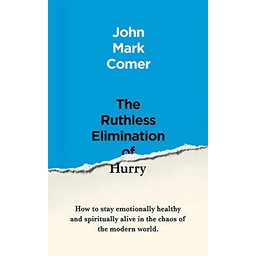 The Ruthless Elimination of HurryJohn Mark Comer’s 2019 breakout - a pastor’s case that hurry is the great spiritual enemy of our age - has quietly become the go-to slow-down book for an exhausted generation of Christians. Here’s what it actually delivers, and where it doesn’t.
 Don't Waste Your LifeJohn Piper's 2003 manifesto against drifting through a comfortable life has quietly become the book that wrecks twenty-somethings in the best possible way - and it's still free as a PDF.