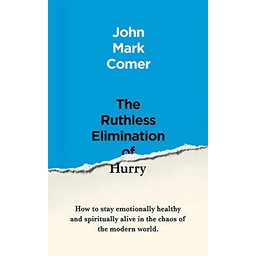
- Starting price
- $22.99 hardcover
- Free tier
- No
- Platforms
- Print · Kindle · Audiobook · Audible
- Developer
- WaterBrook (Penguin Random House)
- Launched
- 2019
- Updated
- May 24, 2026
The verdict
A short, pastoral, deeply practical book on slowing down that has earned its million-plus-copy reputation. The thesis isn’t original - Comer is forthright that he’s reworking Dallas Willard - but the synthesis is unusually accessible and has launched a much larger formation ecosystem in Practicing the Way.
Try The Ruthless Elimination of Hurry ↗Opens waterbrookmultnomah.com
The Ruthless Elimination of Hurry has quietly become the favorite of a certain kind of reader: the Christian who knows their phone is forming them more than their Bible is, who feels guilty about Sabbath, and who senses that their spiritual life is being slowly strip-mined by the calendar. John Mark Comer - at the time the lead pastor of Bridgetown Church in Portland - wrote it in 2019 after his own near-collapse in vocational ministry, and it sold past a million copies almost without traditional marketing. Word of mouth did the work.
It does not pretend to be original. It doesn’t claim to be exhaustive. It doesn’t even claim to be Comer’s own thesis. The title is borrowed verbatim from a line Dallas Willard reportedly said to a young pastor - "You must ruthlessly eliminate hurry from your life" - and the book is, in effect, a pastoral, accessible, story-driven unpacking of Willard’s spiritual-formation theology for readers who would never pick up The Divine Conspiracy. That’s its great strength and the source of most critiques.
In 2026, with Comer’s follow-up Practicing the Way now its own ecosystem (apprenticeship guides, church-wide curricula, an app), this is the book that started it. If you’re trying to decide whether to read Hurry, read Practicing the Way, or jump straight to the workbook - or whether Comer is the right voice for you at all - this review walks through the thesis, the four practices at the book’s core, and where it sits next to the other modern formation books people actually read.
✓ The good
- Short and readable - under 300 pages, conversational, finishable in a weekend, which is rare for a formation book
- Names the actual problem - hurry as the spiritual condition under anxiety, distraction, and burnout, not just a productivity issue
- Borrows from a deep well - Dallas Willard, Eugene Peterson, Henri Nouwen, Walter Brueggemann are woven throughout without name-dropping fatigue
- Concrete practices, not just diagnosis - half the book is "here’s what to actually do," organized as silence/solitude, Sabbath, simplicity, and slowing
- Audiobook narrated by Comer himself - the Audible version (about 5 hours) is genuinely well-produced and many readers prefer it to the print
- Works across traditions - Reformed, Wesleyan, Catholic, and even some Orthodox readers find a lot to use here, because the practices are catholic in the older sense
- Functions as the on-ramp to a larger ecosystem - Practicing the Way (book, app, church curriculum) extends every theme here into longer-form formation
✗ Watch out
- Not theologically heavy - Comer is a pastor, not a systematic theologian, and readers wanting careful doctrinal exposition will feel underfed
- Heavy reliance on Willard - some readers feel the book is a long footnote to Willard rather than a stand-alone contribution
- Anecdotal pacing - the personal-story-to-principle ratio is high, which is the point, but readers who prefer Keller-style density will get impatient
- Sabbath chapter sparks denominational friction - Comer’s Sabbath theology is broadly evangelical-with-formation-flavor and won’t fully satisfy strict-Sabbatarian or Adventist readers (or, on the other end, those who reject any continuing Sabbath obligation)
- Practical advice is suggestive, not systematic - you get rhythms and questions more than a regimented rule of life (the Practicing the Way workbook fills this gap)
- Hipster-pastor voice - the prose has a Portland-coffee-shop register that some readers love and others find grating
Best for
- Burned-out Christians who already sense hurry is the problem
- Pastors and ministry leaders facing pace-of-life collapse
- Readers new to the spiritual-formation tradition (Willard, Foster, Nouwen)
- Small groups wanting a 4-6 week shared read with discussion
Avoid if
- You want rigorous systematic theology rather than pastoral synthesis
- You’ve already read deeply in Willard, Foster, and Peterson and want new ground
- You distrust formation-tradition language (rule of life, practices, rhythms)
- You want a strict Sabbatarian or strict anti-Sabbatarian treatment of the fourth commandment
What The Ruthless Elimination of Hurry is
The Ruthless Elimination of Hurry is a short pastoral book on spiritual formation, structured around the claim that hurry is "the great enemy of spiritual life in our day." Comer’s argument has two halves. The first half is the diagnosis: modern life has accelerated to a pace that is incompatible with the way Jesus actually lived and the way human beings actually grow in love. The second half is the prescription: four ancient practices - silence and solitude, Sabbath, simplicity, and slowing - that retrain the soul to operate at a sustainable speed.
Stylistically it sits between memoir and manual. Comer tells the story of his own ministry burnout in Portland, his decision to step away from the megachurch trajectory, and the practices he and his family rebuilt around. The structure is loose: four big movements, short chapters, lots of pull quotes, generous white space. It is intentionally written to be read on an airplane, in a coffee shop, or in the back of a sanctuary - not in a seminary library.
Why readers across traditions keep recommending Hurry
The single biggest reason this book traveled so far is that it gives readers permission to name something they already felt but couldn’t articulate. Most Christian readers know they are tired. They suspect that the tiredness is doing something to their faith. What they didn’t have was a vocabulary for it - and they didn’t have a pastor figure saying, "Yes, the speed is the problem, and you are allowed to slow down." Comer supplies both, and he does it without scolding.
The other reason it travels is that the practices Comer recommends are catholic in the small-c sense. Silence, solitude, Sabbath, simplicity - these belong to no single tradition. Reformed readers can find them in the Puritans, Wesleyan readers in the holiness tradition, Catholic readers in the desert fathers and Ignatius, Orthodox readers in the hesychasts. By rooting the prescription in pre-modern Christian practice rather than in a particular post-Reformation theology, Comer wrote a book that an unusually wide range of churches could put on their reading list without controversy.
The Dallas Willard thesis: hurry as the spiritual enemy
The book opens with the story behind the title. A young pastor - eventually understood to be John Ortberg - asks Dallas Willard what he needs to do to stay spiritually healthy in vocational ministry. Willard pauses and says, "You must ruthlessly eliminate hurry from your life." The pastor asks what else. Willard says, "There is nothing else." Comer takes that exchange as his thesis and spends the first half of the book defending it: hurry, not sin in the abstract, is the operating condition under which most modern Christians become anxious, distracted, and slowly de-formed.
The move that makes this work pastorally - rather than just rhetorically - is Comer’s insistence that hurry is incompatible with love, because love requires presence and presence requires unhurried time. Once that connection is made, the practical implications cascade. Calendar management becomes a spiritual issue. Phone use becomes a spiritual issue. Saying yes to a third commitment becomes a spiritual issue. The Willard thesis is not original to Comer, but Comer is the one who carried it from the formation guild into the mass-market church.
The four practices: silence and solitude, Sabbath, simplicity, slowing
The back half of the book is organized around four practices that Comer offers as a starter rule of life. Silence and solitude is the practice of regular time alone with God, off the phone, without input - Comer suggests starting at minutes per day, not hours. Sabbath is a weekly 24-hour stop, framed broadly enough that readers from very different denominational backgrounds can adopt it without forcing one specific theology of the fourth commandment. Simplicity is a posture toward possessions, consumption, and ambition - less Marie Kondo, more Richard Foster. Slowing is the most underrated of the four: it’s a set of small disciplines (driving in the slow lane, picking the longest grocery line, leaving your phone in the other room) designed to train you out of the reflex to optimize every moment.
None of these are new. Comer doesn’t claim they are. What he does - and does well - is make them feel actionable rather than aspirational. Each practice gets a chapter with examples, suggested starting points, and honest acknowledgment that the early weeks feel uncomfortable. Readers who finish the book usually walk away having tried at least one of the four, which is a much higher conversion rate than most spiritual-formation books achieve. The companion workbook turns these into a structured eight-week experiment for groups.
Practicing the Way: the successor book and the formation ecosystem
Hurry isn’t a standalone artifact anymore. In 2024 Comer released Practicing the Way, a fuller treatment of the same formation vision, plus an extensive free curriculum (the Practicing the Way Course) designed for churches to run small-group cohorts, plus an app, plus printable rule-of-life templates. If Hurry is the diagnosis and the on-ramp, Practicing the Way is the long-form apprenticeship guide - and most churches that adopted Hurry as a book-club read in 2020-2022 have migrated their formation programming to the Practicing the Way materials since.
That changes how to think about Hurry in 2026. It’s no longer "the Comer book" - it’s the introduction to a much larger body of work, and it’s the easiest entry point. Many readers do Hurry first (because it’s short and finishable), then move to Practicing the Way for the deeper system, then pull in the church-wide curriculum if they’re leading a group. The order matters less than knowing the ecosystem exists; reading Hurry alone gives you the thesis, but the practices land deeper when paired with the structured Practicing the Way materials.
Pricing
Hardcover
~$22.99
The original 2019 edition - clean typography, the version most book clubs use.
Paperback
~$17
Released after the hardcover sold through - same content, lower price, the most-shipped format.
Kindle / eBook
~$13
Searchable, syncs notes, and the cheapest way to underline the Willard quotes.
Audible / Audiobook
~$15
About 5 hours, narrated by Comer himself - many readers prefer this format and it’s the one that actually gets finished.
Companion Workbook
~$15
Group-study guide with chapter questions and practice prompts - useful if you’re doing this with a small group or church cohort.
The book is sold in the usual four formats. Hardcover (around $22.99) is the original and the version most church book clubs ordered in bulk; if you want a single copy to mark up and lend, this is the one.
Paperback (around $17) appeared after the hardcover sold through and is now the most-shipped format on Amazon. Kindle (around $13) is the cheapest entry and the most practical if you want to highlight and sync notes across devices.
The Audible edition (around $15, or one credit) is narrated by Comer himself, runs about five hours, and is the version many readers actually finish. If you commute or walk, this is the format to pick.
The companion workbook (around $15) is optional but the right add-on for small groups and church cohorts - it turns the four practices into an eight-week structured experiment with discussion questions per chapter.
Where The Ruthless Elimination of Hurry falls behind
No deep theological exposition. Comer is writing as a pastor for general readers, not as a theologian for theologians. If you want a careful biblical-theology treatment of Sabbath or simplicity, this book will frustrate you - pair it with something like Walter Brueggemann’s Sabbath as Resistance or Richard Foster’s Celebration of Discipline.
Heavy reliance on a single influence. Dallas Willard’s fingerprints are on nearly every chapter, and readers who have read Willard directly sometimes feel they are getting the trade-paperback version of material they already own. That’s not a flaw if you haven’t read Willard; it’s a feature. But if you have, the diminishing returns are real.
Light on the harder Sabbath questions. Comer’s Sabbath chapter is broadly evangelical with formation-tradition flavor - a weekly 24-hour stop, framed flexibly. It does not engage strict Sabbatarian arguments (Seventh-day Adventist, some Reformed) or strict anti-Sabbatarian arguments (some dispensational and new-covenant theology readers). Different traditions read the fourth commandment very differently; Hurry stays inside one register.
Limited application beyond the individual. The practices are framed largely at the personal and family level. The book has relatively little to say about how communities, churches, or institutions should be restructured to be less hurried - that work has shifted into the Practicing the Way curriculum, which is church-shaped from the start.
No engagement with the harder edge cases. Single parents, shift workers, caregivers, and those in acute seasons of crisis often find the Sabbath and solitude prescriptions hard to implement as written. Comer acknowledges this in passing but doesn’t spend serious time on it; readers in those seasons may need to do significant translation work.
The Ruthless Elimination of Hurry vs. Practicing the Way vs. The Common Rule
These three books are the most-recommended modern formation reads, and they’re close enough in territory that readers regularly ask which one to start with. Different strengths. Hurry is the diagnosis and the on-ramp - short, story-driven, and the easiest to finish. Practicing the Way is Comer’s longer, more systematic follow-up - broader scope, more developed framework, designed to be run as a cohort. The Common Rule (Justin Whitmel Earley) is the most concrete of the three - it gives you eight specific daily and weekly habits and tells you to just start.
If you’ve never read a formation book, start with Hurry. It’s short, it lands fast, and it gives you the vocabulary to understand what the others are doing. If Hurry resonated and you want the longer system, move to Practicing the Way - same author, same vision, more structure. If you want something even more practical and less narrative, The Common Rule is the most regimented of the three and the friendliest to people who like checklists.
All three sit in roughly the same theological neighborhood - broadly evangelical, influenced by Dallas Willard and the spiritual-formation tradition, ecumenical enough to be used across Reformed, Wesleyan, and Catholic readerships. None of them is doing systematic theology; all three are doing applied formation. Pick based on length and format preference more than theology.
The bottom line
The Ruthless Elimination of Hurry is the book that earned its million-plus-copy reputation honestly. It’s not the deepest formation book ever written, and it doesn’t claim to be - it’s the most accessible on-ramp to Dallas Willard’s thesis that hurry is the great spiritual enemy of our age, and the four practices it prescribes (silence and solitude, Sabbath, simplicity, slowing) are durable enough that readers across Reformed, Wesleyan, and Catholic traditions can use them without friction. In 2026, the right way to read it is as the introduction to a larger ecosystem - finish it in a weekend, then decide whether to keep going with Practicing the Way.
Alternatives to The Ruthless Elimination of Hurry
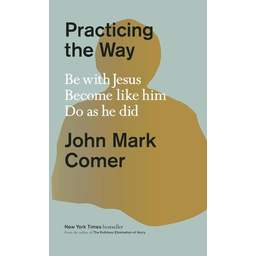 Practicing the WayComer’s longer follow-up - the full apprenticeship framework, designed to be run as a cohort with church-wide materials.
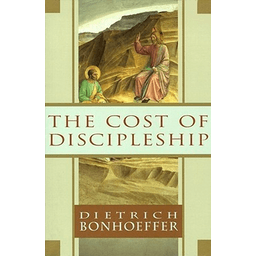 The Cost of DiscipleshipBonhoeffer’s 20th-century classic on what following Jesus actually demands - denser, older, theologically heavier, and the long-form root of much of what Comer popularizes.
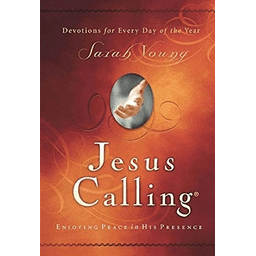 Jesus CallingSarah Young’s first-person devotional - very different genre, but often shelved next to Hurry as the other modern bestseller in everyday Christian living.
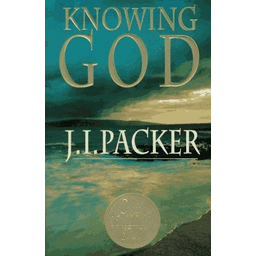 Knowing GodJ.I. Packer’s evangelical classic on the doctrine of God - the theological depth Hurry doesn’t attempt, and a fair pairing if you want substance alongside Comer’s practices.
Frequently asked questions
Is The Ruthless Elimination of Hurry a Christian book?
Yes - it’s explicitly Christian, written by John Mark Comer (then lead pastor of Bridgetown Church in Portland) and rooted in the spiritual-formation tradition of Dallas Willard, Henri Nouwen, and Richard Foster. The practices it teaches are framed around following Jesus, not generic mindfulness.
Do I need to read this before Practicing the Way?
No, but most readers do, and the order works well. Hurry is shorter and is the on-ramp to Comer’s formation vision. Practicing the Way is the longer, more systematic follow-up that builds on the same ideas with a fuller framework and church-cohort materials.
Is this book theologically safe across traditions?
Broadly, yes. The four practices (silence and solitude, Sabbath, simplicity, slowing) are catholic in the older sense - they show up across Reformed, Wesleyan, Catholic, and Orthodox traditions. The Sabbath chapter is the most likely place for denominational friction; readers from strict Sabbatarian or strict anti-Sabbatarian backgrounds may want to read it with their own tradition in view.
How long does it take to read?
Most readers finish it in 5-7 hours of reading, or about 5 hours on Audible. It’s under 300 pages, paced for general readers, and one of the more finishable books in its category.
Is the audiobook worth it?
Yes, and many readers prefer it. Comer narrates the Audible edition himself, the production is clean, and the conversational tone of the book translates well to audio. If you commute or walk, this is the format most likely to actually get finished.
Should I get the companion workbook?
Get it if you’re reading with a small group, a church cohort, or anyone you’ll discuss it with. The workbook turns the four practices into a structured eight-week experiment with chapter questions. If you’re reading solo and just want the book’s thesis, you can skip it.
How is this different from a self-help book about slowing down?
The thesis is theological, not productivity-shaped. Comer’s argument is that hurry is incompatible with love, that love is the goal of the Christian life, and that the practices he prescribes are means of formation into Christlikeness - not lifehacks for a calmer week. Readers looking for secular slow-living advice will find the framing explicitly Christian throughout.
Sources & further reading
More Christian Living Books
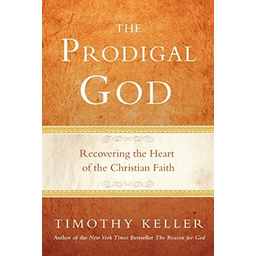 The Prodigal GodTim Keller’s 130-page reading of Luke 15 has quietly become one of the most-gifted Christian books of the last twenty years - and the reason is the title itself.Practicing the WayComer’s 2024 follow-up to The Ruthless Elimination of Hurry has quietly become the default spiritual-formation book in a thousand small groups - and the reasons are worth unpacking.
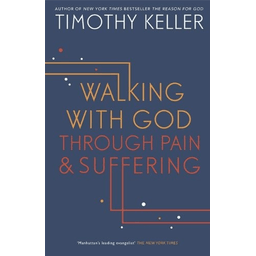 Walking with God Through Pain and SufferingTim Keller’s most comprehensive book on suffering - part survey of how every culture has tried to explain pain, part biblical theology, part field manual for the people actually walking through it.
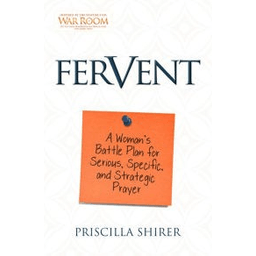 FerventThe prayer book that turned “strategic, specific prayer” into a fill-in-the-blank battle plan - and rode the War Room moment to the top of the bestseller lists.
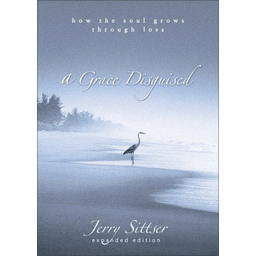 A Grace DisguisedJerry Sittser lost his mother, his wife, and his four-year-old daughter in a single car crash - and the book he wrote about it has quietly become the one grieving people press into each other’s hands, because it refuses to tell you how to get over your loss.
 Don't Waste Your LifeJohn Piper's 2003 manifesto against drifting through a comfortable life has quietly become the book that wrecks twenty-somethings in the best possible way - and it's still free as a PDF.