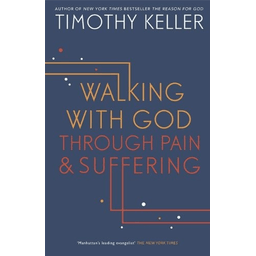
- Starting price
- ~$18 paperback
- Free tier
- No
- Platforms
- Print · Kindle · Audiobook
- Developer
- Dutton / Penguin
- Launched
- 2013
- Updated
- May 31, 2026
The verdict
The most complete single volume Tim Keller wrote on suffering, and one of the most thorough popular treatments in print. It is long and the opening section is genuinely academic before it turns practical - but if you want one book that both explains suffering and walks you through it, this is the deepest of the field. A reader in acute, fresh grief may want to start with the final third or with a shorter book first.
Try Walking with God Through Pain and Suffering ↗Opens penguinrandomhouse.com
Walking with God Through Pain and Suffering has quietly become the book pastors and counselors hand to people who want to understand suffering rather than just survive it. Timothy Keller wrote it in 2013, after more than two decades pastoring Redeemer Presbyterian Church in Manhattan, and it reads like the long-form version of every hospital-room conversation and funeral he ever sat through. It is the most ambitious book Keller wrote - wider in scope than The Reason for God, and far more personal than its reputation as a "thick" book suggests.
It is not a quick comfort read, and it does not pretend to be. It does not open with a story and a tissue. It does not give you five steps. It does not promise that your pain has a tidy explanation waiting at the end of the chapter. Keller instead does something most books on suffering never attempt: he surveys how the major cultures and philosophies of human history - ancient Greek, Buddhist, secular-modern, and others - have tried to make sense of pain, sets the Christian account beside them, and only then turns to Scripture and finally to the practical work of "walking." The structure is the argument.
The book is built in three parts. Part one ("Understanding the Furnace") is the cultural and philosophical survey - the most intellectually demanding section and the one that surprises readers expecting a devotional. Part two ("Facing the Furnace") works through the biblical theology of suffering: what the Bible actually says about why we hurt, what God is doing in it, and how the cross changes the picture. Part three ("Walking with God in the Furnace") is the practical, pastoral, chapter-by-chapter help for someone in the middle of it - on weeping, trusting, praying, thinking, thanking, and walking. Keller draws throughout on his and his wife Kathy’s own experience, including her decades with Crohn’s disease and his own diagnoses, which keeps the academic chapters tethered to a real person in real pain.
✓ The good
- The most comprehensive popular book on suffering in print - few single volumes attempt the cultural survey, the biblical theology, and the practical "walking" chapters all in one place
- Part one’s comparative survey is genuinely educational - Keller lays out how Greek, Buddhist, secular, and other frameworks handle pain and treats each fairly before setting the Christian account beside them
- Intellectually substantial and pastorally warm at once - a rare combination in a genre that usually picks one or the other
- Draws on the Kellers’ own suffering - Kathy’s long illness and Tim’s own diagnoses keep the heaviest chapters grounded in lived experience rather than theory
- Part three is unusually practical - separate chapters on weeping, trusting, praying, thinking, and walking give a hurting reader concrete handholds rather than platitudes
- Heavily sourced - Keller engages philosophers, sociologists, novelists, and theologians, so the cultural register feels educated rather than insular
- Built for re-reading and for groups - the three-part structure lets a reader return to just the section they need, and the book is a common adult-study and counseling resource
✗ Watch out
- Long - at well over 300 pages it is one of Keller’s thickest books, and the page count alone can be daunting for a reader in crisis
- Part one is fairly academic before the book turns practical - a grieving reader expecting immediate comfort has to wade through a philosophy survey first
- Not a first book for acute, fresh grief - someone in the rawest stage may want to start with part three, or with a shorter book like Lewis’s A Grief Observed, and come back to part one later
- Reformed Presbyterian framing surfaces in places - gently, but readers from other traditions will notice it on a few specific points
- The breadth can feel like two or three books bound together - the survey, the theology, and the practical help are each substantial, and not every reader wants all three at once
Best for
- Readers who want to understand suffering, not just be comforted through it
- Pastors, chaplains, and counselors building a recommended-reading shelf
- Adult Sunday school and small groups studying the problem of pain
- Anyone anticipating hard seasons who wants to prepare before the crisis hits
Avoid if
- You are in fresh, acute grief and need something short and immediate today
- You want a quick devotional with daily readings rather than a sustained argument
- You want a purely philosophical theodicy with no pastoral or practical chapters
- You bounce off long books and would not finish a 300-plus-page treatment
What Walking with God Through Pain and Suffering is
Walking with God Through Pain and Suffering is a 300-plus-page general-audience treatment of suffering, written by Timothy Keller and published in 2013 by Dutton, an imprint of Penguin. Keller was the founding pastor of Redeemer Presbyterian Church in Manhattan from 1989 until his retirement in 2017, and the book gathers what he learned across decades of ministering to people in grief, illness, and loss into a single, deliberately complete volume.
The book is organized in three movements. Part one surveys how the major cultures, religions, and philosophies of history have understood and coped with suffering, and sets the distinctively Christian account beside them. Part two builds the biblical theology - the goodness and sovereignty of God, the reality of evil, the role of suffering in a person’s life, and the way the cross reframes the whole question. Part three is the practical, pastoral payoff: a series of chapters on the actual experience of walking through pain - weeping, trusting, praying, thinking, thanking, hoping, and going on.
Why thoughtful readers reach for this one
The single biggest practical difference between this book and most others on suffering is scope. Most books in the genre pick a lane: a tight philosophical theodicy, or a warm devotional, or a memoir of one person’s grief. Keller refuses to pick. He insists that you cannot really comfort someone until you have understood what suffering is, and you cannot understand what suffering is until you have seen how every other framework has tried and failed to make sense of it. So he does all three jobs in sequence - the survey, the theology, the practical help - and lets each one set up the next.
That breadth is the model that respects the reader’s mind and the reader’s wound at the same time. It does not assume you only want feelings. It does not assume you only want arguments. It treats you as the thoughtful person’s sufferer - someone capable of following a real argument about the Greeks and the Buddhists and the secular West, and also someone who may be reading at 3 a.m. because they cannot sleep. Few books attempt to serve both readers in one volume. This one does, which is exactly why it lands on so many counselors’ and pastors’ shelves.
Part one: how every culture has tried to explain pain
Part one - "Understanding the Furnace" - is the section that surprises readers expecting a devotional, and it is the most intellectually demanding part of the book. Keller works through the major ways human cultures have framed suffering: the ancient and Stoic emphasis on rising above it, the Buddhist path of detaching from desire so that loss loses its grip, the secular-modern instinct to manage pain technically and otherwise look away from it, and others besides. He treats each one as a serious attempt by serious people, lays out what it offers a sufferer, and notes where it leaves the sufferer wanting. Only then does he set the Christian account in the same frame.
The reason this section matters is that it reframes the whole conversation before the comfort arrives. By the time Keller turns to Scripture, the reader already understands that "why do we suffer" is not a uniquely Christian problem - it is the human problem, and every culture in history has had to answer it. That makes the book travel unusually well across readers and traditions, because it is not defending a denominational distinctive in these chapters; it is mapping the universal human predicament. A reader in acute grief, though, should know going in that the comfort is back-loaded - this opening section is a philosophy survey, and it asks for patience before it gives consolation.
Part two: the biblical theology of suffering
Part two - "Facing the Furnace" - is where Keller builds the positive account out of Scripture. He works through the tension most readers feel instinctively: the goodness of God and the sovereignty of God set against the sheer reality of evil and pain. He resists the easy shortcuts. He does not reduce suffering to a single tidy cause, and he does not pretend the Bible gives a formula that resolves every case. Instead he traces the several things Scripture actually says suffering can be and do, and centers the discussion on the cross - the claim that God, in Christ, entered suffering rather than explaining it from a safe distance.
This is the theological heart of the book, and it is where Keller’s own tradition shows most clearly. He writes from a Reformed Presbyterian vantage, and readers from Catholic, Orthodox, Wesleyan, Anabaptist, or Latter-day Saint backgrounds will notice the framing on a few specific points - particularly around how he holds divine sovereignty and human suffering together. The underlying material is the shared Christian conviction that the suffering God of the cross changes what suffering means, and that conviction is held across traditions; the particular way Keller assembles it carries his own theological accent.
Part three: the practical work of "walking"
Part three - "Walking with God in the Furnace" - is the practical payoff, and it is the section a hurting reader can open first if they need to. Rather than one undifferentiated chapter of advice, Keller breaks the experience of suffering into its actual movements and gives each one a chapter: weeping, trusting, praying, thinking, thanking, hoping, and walking. The structure mirrors the reality that grief is not one thing you do once - it is a set of things you keep doing, badly and then better, over a long time. The chapters are concrete enough to act on and honest enough not to promise that acting on them will make the pain disappear.
This sounds like a small thing. In practice it is the part readers come back to. Throughout these chapters Keller draws on his and Kathy’s own seasons of illness and loss, which keeps the practical counsel from floating off into the abstract - the man giving the advice is visibly a man who has needed it. For someone in the middle of a hard season, part three functions almost as a standalone book, which is why pastors so often point a grieving person here first and suggest they read parts one and two later, when the worst has passed and there is room again for the long view.
Pricing
Paperback
~$18
The standard Dutton/Penguin trade paperback. The edition most readers and study groups own.
Hardcover
~$28
The original 2013 hardcover. Still around, mostly for gift giving and library shelves.
Kindle
~$13
Identical text; highlights and notes sync across devices. Useful for a book this quotable and this long.
Audiobook
~$20
Roughly fourteen hours, unabridged. A long but workable listen for commutes and walks.
Pricing on a book is simple, and Walking with God Through Pain and Suffering prices roughly where every other Penguin trade paperback prices - around eighteen dollars for the standard paperback, a little under that on Kindle, and roughly twenty on the unabridged audiobook.
For most readers the paperback is the right pick. It is the edition study groups standardize on, it is easy to mark up (and you will mark it up), and a physical copy is friendlier than a screen for a book you may read slowly over weeks during a hard season.
The Kindle edition runs a few dollars cheaper and is the better choice if you want search and syncing highlights across devices - genuinely useful given the book’s length and the number of quotable passages. The hardcover, around twenty-eight dollars, is mostly a gift-grade option now.
The audiobook is the sleeper pick for a long book. At roughly fourteen hours it is a real commitment, but the material holds up read aloud, and listening can be gentler than reading for someone who finds dense pages hard to face in a difficult stretch. Most readers do not need more than one format - the paperback is the balanced default.
Where Walking with God Through Pain and Suffering falls behind
Length. At well over 300 pages this is one of the longest popular books on suffering, and the page count alone can intimidate a reader who is already exhausted. The depth is the point, but depth costs time, and a person in crisis may not have the bandwidth for a long book in the moment.
A slow start for the grieving. Part one is a genuinely academic survey of how cultures and philosophies handle pain, and the consolation is back-loaded into the second and third sections. A reader in fresh, acute grief who opens to page one expecting comfort will instead meet a philosophy survey - which is why the standard advice is to start with part three, or with a shorter book first.
Better as preparation than as emergency aid. The book rewards the reader who comes to it before the crisis, or after the rawest stage has passed, far more than the reader in the first days of loss. For that first moment, a shorter and more immediate book - C.S. Lewis’s A Grief Observed is the usual recommendation - often serves better, with Keller saved for the long work of understanding afterward.
Reformed Presbyterian undertones. Keller writes from the Reformed tradition, and while he keeps the book broadly Christian rather than narrowly denominational, readers from Catholic, Orthodox, Wesleyan, Anabaptist, or Latter-day Saint backgrounds will notice the framing on a few points - most visibly in how part two holds divine sovereignty and suffering together.
Breadth over portability. Because the book does three jobs at once - survey, theology, practical help - it is harder to hand someone for one specific need than a more focused title. A reader who wants only the philosophical case, or only the bedside comfort, is carrying two sections they did not come for.
Walking with God Through Pain and Suffering vs. The Problem of Pain vs. A Grief Observed
These three are the standard recommendations when someone asks for a book on suffering, and they do genuinely different jobs. Walking with God Through Pain and Suffering (Keller, 2013) is the comprehensive one - the cultural survey, the biblical theology, and the practical chapters all in a single, long volume. The Problem of Pain (C.S. Lewis, 1940) is the reasoned classic - a short, philosophical treatment of how a good and powerful God can coexist with suffering, written largely as argument. A Grief Observed (Lewis, 1961) is the personal one - Lewis’s raw journal after his wife’s death, written from inside the grief rather than above it.
Different strengths. Lewis’s Problem of Pain is the tightest philosophical statement and the shortest reasoned entry point. A Grief Observed is the most immediate and the right book for someone in the first days of loss, because it sits in the pain rather than explaining it. Keller is the broadest and the deepest - the book that both explains suffering and walks you through it, at the cost of being much longer than either Lewis title. If you want one book that does everything, it is Keller. If you want the reasoned case in a hundred pages, it is The Problem of Pain. If you are grieving right now and need a companion rather than an argument, it is A Grief Observed.
All three are widely read across Christian traditions. The two Lewis books are the most ecumenical by reputation - Lewis stays on the shared center almost everywhere. Keller writes from a Reformed Presbyterian perspective but reads broadly and is recommended well beyond his own tradition; the comprehensiveness is the reason his book so often anchors a counselor’s or pastor’s shelf even when a shorter Lewis title sits next to it.
The bottom line
Walking with God Through Pain and Suffering is the most complete book Tim Keller wrote, and one of the most thorough popular treatments of suffering anyone has written. It is long, and the opening survey is academic before the book turns warm and practical - but no other single volume so fully explains suffering and then helps you walk through it. If you want one book to understand pain and to keep returning to across a hard season, this is the deepest of the field. The one caveat is timing: if you are in the rawest stage of fresh grief, start with part three or with a shorter book like A Grief Observed, and come back for the full sweep when there is room again for the long view.
Alternatives to Walking with God Through Pain and Suffering
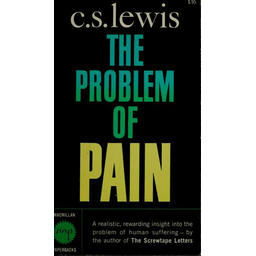 The Problem of PainC.S. Lewis’s 1940 reasoned classic on how a good God can permit suffering. Shorter and more philosophical than Keller - the tight argument rather than the full survey.
 A Grief ObservedC.S. Lewis’s raw journal after his wife’s death. The personal one - written from inside grief, and the usual recommendation for someone in the first days of loss.
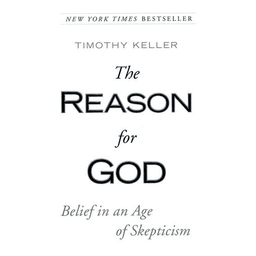 The Reason for GodKeller’s 2008 apologetic. Its longest chapter is on suffering, but the book’s scope is the broader case for faith - the natural companion volume.
 PrayerKeller’s 2014 book on prayer. The same voice and depth applied to the practice that part three of this book keeps returning to.
Frequently asked questions
Is Walking with God Through Pain and Suffering a good book to read while grieving?
It can be, but timing matters. The book is comprehensive and its opening section is a philosophy survey, so a reader in fresh, acute grief is often better starting with part three - the practical "walking" chapters - or with a shorter book like Lewis’s A Grief Observed, then coming back for the full sweep once the rawest stage has passed.
How long is the book?
It is one of Keller’s longest, well over 300 pages, organized in three parts. The audiobook runs roughly fourteen hours unabridged. Most small groups work through it over a couple of months rather than a couple of weeks.
How is it different from C.S. Lewis’s The Problem of Pain?
They do different jobs. Lewis’s Problem of Pain is a short, mostly philosophical argument about how a good and powerful God can coexist with suffering. Keller’s book is far broader - a survey of how cultures explain pain, a biblical theology, and a set of practical chapters - and far longer. Many readers use Lewis for the tight reasoned case and Keller for the comprehensive treatment.
What tradition does Tim Keller write from?
Keller was a Presbyterian Church in America (PCA) pastor in the Reformed tradition. He keeps the book broadly Christian rather than narrowly denominational, but the Reformed framing surfaces gently on a few points - most visibly in how part two holds divine sovereignty and suffering together. The book is read and recommended well beyond his own tradition.
Does Keller draw on his own experience of suffering?
Yes. He writes throughout from his and his wife Kathy’s own seasons of illness and loss, including her long experience with Crohn’s disease and his own health diagnoses. That lived experience keeps even the academic chapters tethered to a real person in real pain.
Is this a good book for a small group or adult study?
Yes. The three-part structure lets a group take the cultural survey, the theology, and the practical chapters in stages, and it is a common adult Sunday school and counseling resource. Plan for a longer study - its length means most groups spend two months or more on it.
If I only want one book on suffering, should this be it?
If you want the single most complete treatment - one that explains suffering and then walks you through it - yes. If you want a short reasoned argument, Lewis’s The Problem of Pain is the pick; if you are grieving right now and want a companion rather than an explanation, Lewis’s A Grief Observed serves better. Keller is the deepest and broadest of the three.
Sources & further reading
More Christian Living Books
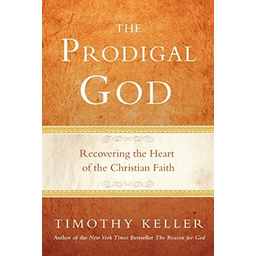 The Prodigal GodTim Keller’s 130-page reading of Luke 15 has quietly become one of the most-gifted Christian books of the last twenty years - and the reason is the title itself.
 Practicing the WayComer’s 2024 follow-up to The Ruthless Elimination of Hurry has quietly become the default spiritual-formation book in a thousand small groups - and the reasons are worth unpacking.
 FerventThe prayer book that turned “strategic, specific prayer” into a fill-in-the-blank battle plan - and rode the War Room moment to the top of the bestseller lists.
 A Grace DisguisedJerry Sittser lost his mother, his wife, and his four-year-old daughter in a single car crash - and the book he wrote about it has quietly become the one grieving people press into each other’s hands, because it refuses to tell you how to get over your loss.
 The Ruthless Elimination of HurryJohn Mark Comer’s 2019 breakout - a pastor’s case that hurry is the great spiritual enemy of our age - has quietly become the go-to slow-down book for an exhausted generation of Christians. Here’s what it actually delivers, and where it doesn’t.
 Don't Waste Your LifeJohn Piper's 2003 manifesto against drifting through a comfortable life has quietly become the book that wrecks twenty-somethings in the best possible way - and it's still free as a PDF.