- Starting price
- $11.99 paperback
- Free tier
- No
- Platforms
- Print · Kindle · Audiobook · Audible
- Developer
- David C. Cook
- Launched
- 2008 (10th anniversary 2013)
- Updated
- May 24, 2026
The verdict
Crazy Love has quietly become the standard small-group book for anyone trying to shake American Christians out of cruise control. It’s short, blunt, and unembarrassed about its convictions - which is exactly why it works for some readers and lands wrong for others.
Try Crazy Love ↗Opens crazylovebook.com
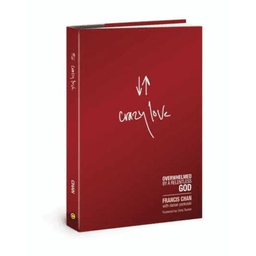
Crazy Love is not a long book. It is barely two hundred pages, written in plain English, by a former megachurch pastor who decided somewhere along the way that he was tired of preaching to people who agreed with everything he said and then went home and changed nothing. That tension - between what American Christians say they believe and how they actually spend their time, money, and attention - is the entire engine of the book.
It doesn’t try to be a systematic theology. It doesn’t try to be a memoir. It doesn’t try to be devotional in the soft, comforting sense. Instead, Francis Chan picks one idea - that God is real and worthy of everything, and most of us treat Him like a hobby - and hammers it for ten chapters. By the end, the reader has either underlined half the book or shelved it in mild irritation. There is not much middle ground, and Chan seems fine with that.
Released in 2008 and expanded for a 10th anniversary edition in 2013, Crazy Love has crossed two million copies sold and become a fixture in college ministries, young-adult small groups, and church-wide reading campaigns. It also spawned a small library of follow-ups - Forgotten God, Erasing Hell, Multiply - but Crazy Love is the one people still hand to a friend who says they want to take their faith more seriously and don’t know where to start.
✓ The good
- Short and readable - ten chapters, around 200 pages, written for a normal adult reader rather than a seminary student
- The lukewarm critique still lands - chapter four’s "Profile of the Lukewarm" is the most-quoted passage in the book for a reason
- Built for small groups - the companion DVD, study guide, and college-ministry curriculum are mature and widely used
- Personal stakes are visible - Chan repeatedly puts his own choices (income, house size, ministry decisions) on the page rather than just prescribing for others
- Unembarrassed urgency - the book treats the Christian life as something that should cost the reader something, and says so without apology
- Free supplementary video for every chapter - Chan recorded short intros that are available on the book’s site and YouTube at no charge
✗ Watch out
- The tone is confrontational by design - readers who prefer warm, encouraging devotional writing will find it abrasive
- Light on exegesis - Chan quotes scripture often but rarely slows down to work through the text the way a commentary or study Bible would
- Some examples have aged - a few statistics and cultural references in the original 2008 edition feel dated even in the 2013 update
- The "what does radical look like" sections can feel prescriptive - readers sometimes hear them as guilt rather than invitation
- Not a discipleship roadmap - the book diagnoses the problem hard but leaves most of the "now what" to a small group or follow-up resources (yet)
Best for
- College and young-adult small groups
- Christians who feel stuck in a faith that has gone numb
- New believers ready for a harder push than a typical devotional
- Church-wide reading campaigns and discipleship pipelines
Avoid if
- You want a gentle, comforting devotional voice
- You prefer verse-by-verse exposition over thematic preaching
- You bristle at direct, confrontational writing
- You are looking for an academic treatment of love, holiness, or sanctification
What Crazy Love is
Crazy Love is a short christian-living book by Francis Chan, originally published in 2008 by David C. Cook and expanded for a 10th anniversary edition in 2013. It is structured as ten chapters that walk the reader from a meditation on who God is, into a diagnosis of "lukewarm" American Christianity, and out the other side into profiles of believers Chan considers actually awake - missionaries, ordinary people who gave up comfort, his own friends and family members.
Chan was a megachurch pastor in Simi Valley, California when he wrote it, leading a church he eventually stepped away from in part because the lifestyle the book critiques was, in his telling, his own. That biographical thread runs through the writing and is part of why the book reads less like a lecture and more like a confession with teeth. It has since become a staple of college ministry shelves, young-adult small groups, and church-wide reading campaigns across a broad evangelical Protestant audience.
Why small-group leaders keep handing out Crazy Love
There is no shortage of books telling Christians to take their faith more seriously. What Crazy Love does differently is keep the pressure on for the entire length of the book without ever getting long enough for the reader to lose the thread. Two hundred pages, ten chapters, plain sentences - it is built to be finished, which sounds like a small thing and in practice is most of the battle for a small group trying to read together.
The other thing it does is refuse to let the reader off the hook with abstractions. Chan keeps pulling the camera back to specifics: how much money you have, what you do on Saturdays, what your prayer life actually looks like when no one is watching. For readers who have read a stack of devotionals that left them feeling vaguely affirmed and unchanged, the specificity is the whole appeal. For readers who came looking for comfort, it is the reason they put the book down.
The lukewarm indictment: the chapter that built the book
Chapter four - "Profile of the Lukewarm" - is the most-quoted, most-photographed, most-pinned passage Chan has ever written. It is a long list of behaviors and attitudes he calls characteristic of lukewarm Christians: people who attend church regularly, give a comfortable percentage, avoid major scandal, and treat God as one priority among several rather than the one their life is actually built around. The list is uncomfortable on purpose. Chan’s argument, drawn from Revelation 3, is that lukewarm faith is not a milder version of real faith but something Jesus speaks about with unusual sharpness.
The reason the chapter has had such a long shelf life is that it names something a lot of readers had felt and could not articulate. Many small-group leaders say it is the section that does the real work - the place where group members go quiet, then start talking honestly. It is also the section critics point to when they say Chan over-reaches, because the list does not draw fine distinctions between a believer struggling and a believer coasting. Most readers seem to decide on the book based on how they react to that single chapter.
Chan’s confrontational voice: the love-it-or-tire-of-it factor
Crazy Love does not sound like most popular Christian writing. There are no soft openings, very few pastoral hedges, and almost no qualifying paragraphs walking back the strong claim that came before. Chan writes the way he preaches - declarative sentences, short paragraphs, the assumption that the reader can handle being told something hard without a cushion. This is the single biggest reason reader response is so polarized. The same prose style that one reader calls "finally, somebody said it" the next reader calls "exhausting."
The voice is also why the book has aged the way it has. A confrontational tone wears differently on a second or third read than a gentle one does. Some readers come back to Crazy Love every couple of years and find it sharpens them; others read it once at twenty-two and feel they have outgrown the register by thirty. Neither reaction is wrong. It is the kind of book that works best when met in a particular season - usually a season where the reader already suspects something needs to change and wants a writer who will not soften the point.
The small-group ecosystem: study guide, DVD, college curriculum
Crazy Love arrived alongside a small-group apparatus most christian-living titles never develop. There is a study guide, a chapter-by-chapter DVD with short Chan-led intros, a free set of online videos for every chapter on the book’s site, and a separate Multiply curriculum that picks up where Crazy Love leaves off. College ministries - Cru, InterVarsity chapters, campus churches - have leaned on this stack for years because it solves the practical problem of "what do we do for the next ten weeks."
The ecosystem is also what has kept the book in print and in active use long after the publishing moment of 2008 passed. Most books of this kind have a two- or three-year run and quietly fade. Crazy Love has held its slot on small-group shelves because the supporting materials make it easy for a volunteer leader with no seminary training to facilitate a real conversation. That is unglamorous infrastructure, and it is most of why the book is still being read.
Pricing
Paperback
~$11.99
The standard mass-market edition. What most small groups buy in bulk, and what most readers end up with on their shelf.
Hardcover
~$22
Gift edition. Same text as the paperback, nicer binding, occasionally discounted around Christmas and graduation season.
Kindle
~$10
Full text, highlights and notes sync across devices. The cheapest way in if you already read on a phone or tablet.
Audible
~$15
Audiobook edition, around five hours. Chan’s preaching cadence translates well to audio; many readers say it lands harder spoken than read.
10th Anniversary Edition
~$13
Updated 2013 edition with a new preface, refreshed examples, and a "Next Steps" appendix. The version most small-group leaders point new readers to.
Crazy Love is inexpensive by any measure. The paperback runs around $11.99 new, often less used or in bulk for a group. The Kindle edition is typically about ten dollars and goes on sale several times a year.
The 10th anniversary edition, released in 2013, sits at roughly $13 and is the version most small-group leaders recommend now. It adds a new preface, refreshes some of the dated examples, and includes a "Next Steps" appendix that points readers toward the follow-up books.
The audiobook on Audible runs about $15 and clocks in around five hours. For readers who already have an Audible credit, this is often the most cost-effective entry point, and Chan’s preaching delivery genuinely changes how the book lands.
For small groups, buying ten or twelve paperbacks plus the DVD is still the most common setup and typically lands under $200 total. Most leaders skip the standalone study guide and use the free chapter videos on crazylovebook.com instead.
Where Crazy Love falls behind
Light scripture work. Chan quotes the Bible frequently, but he rarely slows down to do exegesis the way a commentary or a Bible Project video does. The book assumes the reader already trusts the texts being cited and wants application, not analysis. Readers who want their reading deepened by close textual work will need a study Bible or a commentary alongside it.
No real roadmap. The book is excellent at diagnosis and weaker on prescription. The closing chapters offer profiles of people Chan considers awake, which is inspiring, but the "now what" gap is real. Most readers end the book moved and uncertain what to actually do next, which is part of why the small-group ecosystem and the follow-up Multiply curriculum exist.
Dated examples in places. A handful of statistics and cultural references in the original 2008 text feel of their moment, and even the 2013 update did not refresh everything. The core argument is unaffected by this, but it can pull a younger reader out of the prose briefly.
A single emotional register. The book runs at one volume - urgent, confrontational, high-stakes - for its entire length. That is a feature for some readers and a fatigue for others. Crazy Love does not modulate the way a longer or more pastoral book might.
Crazy Love vs. Radical (Platt) vs. The Purpose Driven Life
These three books get handed out together more often than any of them probably anticipated. All three try to reorient a comfortable American Christian toward a more demanding faith. They go about it very differently.
Different strengths. Crazy Love is the shortest and most confrontational - Chan is willing to make the reader uncomfortable in a way the other two largely are not. Radical, by David Platt, is the closest cousin and pushes a similar thesis with more sustained argument, more global-missions framing, and a tighter focus on money and possessions. The Purpose Driven Life, by Rick Warren, is a different category altogether: forty short chapters built as a forty-day journey, vastly broader audience, much gentler register, more concerned with helping a reader find their place than with shaking them out of one.
In practice, small groups pick between Crazy Love and Radical based on tone - Chan if you want urgency and a personal voice, Platt if you want a more structured argument with a missions throughline. Purpose Driven Life lives in a different lane entirely: it is the book a church gives every new attender, where Crazy Love is the book a small-group leader gives a member who is ready to push.
The bottom line
Crazy Love is the right book for a specific job. If you are a Christian who suspects your faith has gone on autopilot, or a small-group leader trying to wake a room up without spending a year on it, this is still one of the most effective short books on the shelf nearly two decades after its release. If you want gentle encouragement, careful exegesis, or a detailed plan for what to do Monday morning, you should pair it with something else or look elsewhere. The voice is the whole product - readers who can take Chan straight tend to come back to it; readers who can’t, won’t.
Alternatives to Crazy Love
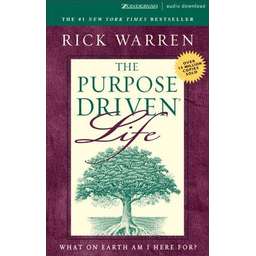 The Purpose Driven LifeRick Warren’s forty-day journey, gentler in tone and broader in audience - the book most churches hand to new attenders.
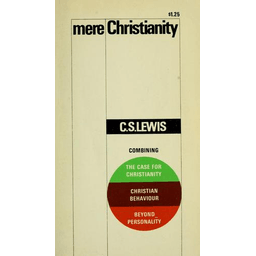 Mere ChristianityC. S. Lewis’s foundational case for the Christian faith - slower, more reasoned, and aimed at the mind rather than the conscience.
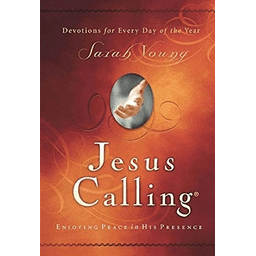 Jesus CallingSarah Young’s widely read daily devotional in first-person voice - calm and reassuring where Crazy Love is confrontational.
 The Five Love LanguagesGary Chapman’s relationship classic - different topic entirely, but the other book small groups read together most often.
Frequently asked questions
Is Crazy Love still relevant nearly twenty years after it came out?
The diagnosis Chan offers - that a lot of churchgoing Christians treat faith as one priority among several rather than the center - is not a 2008 problem. The book still sells steadily, still anchors small-group curricula, and the 10th anniversary edition refreshed the most-dated examples. The core argument has aged well even if a handful of references show their year.
What tradition is Francis Chan writing from?
Chan writes from a broadly evangelical Protestant perspective, with roots in the Baptist tradition and a more charismatic posture at various points in his ministry. Crazy Love itself stays close to themes - God’s holiness, the cost of discipleship, love for neighbor - that most evangelical readers across denominational lines share.
Which edition should I buy?
For most readers, the 10th anniversary edition is the one to get. It includes a new preface, updated examples, and a "Next Steps" appendix that points to follow-up resources. The original 2008 edition is still in print and the core text is the same, but the anniversary edition is the version small-group leaders typically recommend.
Is Crazy Love a good fit for a small group?
Yes - it is one of the most-used small-group books in evangelical college and young-adult ministry. The chapters are short, the supporting DVD and free chapter videos are mature, and the book is built to be finished. Ten chapters maps cleanly to a ten-week study or a six-to-eight-week study that doubles up.
How does Crazy Love compare to Radical by David Platt?
Same general thesis - American Christians have settled for a more comfortable faith than the New Testament describes - handled differently. Chan is shorter, more confrontational, more personal. Platt is more structured, more focused on money and global missions, and reads a little more like a sustained argument. Many readers end up reading both.
Is the book too harsh for new believers?
It depends on the reader. New believers who came in already restless and looking for something demanding tend to love it. New believers who are still finding their footing sometimes find the lukewarm chapter discouraging rather than challenging. A small-group setting where someone can help frame Chan’s point tends to soften that risk.
What follow-up books did Crazy Love lead to?
Chan went on to write Forgotten God (on the Holy Spirit), Erasing Hell (on the doctrine of hell), and Multiply (a discipleship curriculum). Multiply is the most natural next step if Crazy Love resonated and you are looking for a more structured "now what" for a small group.
Sources & further reading
More Christian Living Books
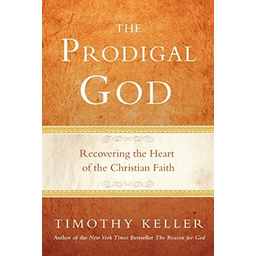 The Prodigal GodTim Keller’s 130-page reading of Luke 15 has quietly become one of the most-gifted Christian books of the last twenty years - and the reason is the title itself.
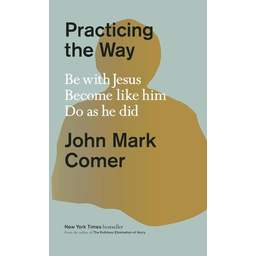 Practicing the WayComer’s 2024 follow-up to The Ruthless Elimination of Hurry has quietly become the default spiritual-formation book in a thousand small groups - and the reasons are worth unpacking.
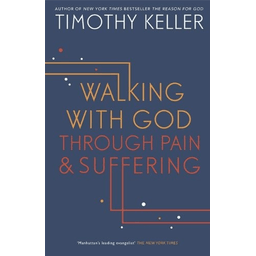 Walking with God Through Pain and SufferingTim Keller’s most comprehensive book on suffering - part survey of how every culture has tried to explain pain, part biblical theology, part field manual for the people actually walking through it.
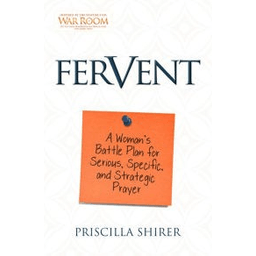 FerventThe prayer book that turned “strategic, specific prayer” into a fill-in-the-blank battle plan - and rode the War Room moment to the top of the bestseller lists.
 A Grace DisguisedJerry Sittser lost his mother, his wife, and his four-year-old daughter in a single car crash - and the book he wrote about it has quietly become the one grieving people press into each other’s hands, because it refuses to tell you how to get over your loss.
 The Ruthless Elimination of HurryJohn Mark Comer’s 2019 breakout - a pastor’s case that hurry is the great spiritual enemy of our age - has quietly become the go-to slow-down book for an exhausted generation of Christians. Here’s what it actually delivers, and where it doesn’t.