- Starting price
- ~$17 paperback
- Free tier
- No
- Platforms
- Print · Kindle · Audiobook
- Developer
- Moody Publishers
- Launched
- 2009
- Updated
- May 31, 2026
The verdict
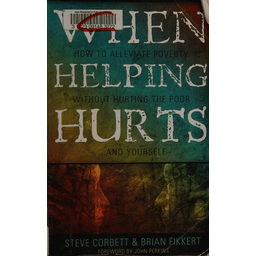
When Helping Hurts has quietly become the default text for churches and missions teams rethinking how they give. Its central move - separating relief, rehabilitation, and development, and locating material poverty inside a web of broken relationships - is genuinely useful and widely adopted. It is a strategy book for practitioners, not a devotional, and it reads like one.
Try When Helping Hurts ↗Opens chalmers.org
When Helping Hurts is the book a missions pastor hands you right after you come back from your first trip convinced you have figured out how to fix something. That timing is not an accident. Steve Corbett and Brian Fikkert wrote it for exactly that reader - the well-meaning North American Christian, the short-term team, the benevolence committee, the nonprofit board - and the entire book is an argument that good intentions are not enough, and can sometimes leave the people being helped worse off than before.
It does not try to be a theology of suffering. It does not try to be a memoir of life among the poor. It does not try to be a fundraising appeal. Instead, Corbett and Fikkert - both connected to the Chalmers Center at Covenant College - pick one practical thesis and develop it for the length of the book: that most material poverty sits on top of broken relationships, and that the help we offer fails when we misread the situation in front of us. By the end, the reader has either reorganized how their church does benevolence or quietly decided the authors are overcomplicating compassion. There is a real divide in how readers receive it.
First published by Moody in 2009, with an expanded and updated edition that circulated through 2012 and 2014, When Helping Hurts has sold well past its publishing moment and become a fixture in seminary missions courses, denominational mission-board training, and the orientation packet for an enormous number of short-term trips. It also anchors a small ecosystem - a Helping Without Hurting companion series, small-group materials, and Chalmers Center training - but the original is the one people still press into the hands of anyone about to spend money trying to do good.
✓ The good
- The relief-rehabilitation-development framework is genuinely clarifying - it gives churches and teams a shared vocabulary for matching the kind of help to the actual situation
- Reframes poverty as relational, not only material - the book’s insistence that material lack usually sits on top of broken relationships is its most-cited and most-useful idea
- Written for practitioners, not academics - the prose is plain, the examples are concrete, and a volunteer benevolence team can read and apply it without specialized training
- Honest about the harm of well-meaning help - the case studies of donated goods undercutting local markets and short-term trips creating dependency are specific and hard to unhear
- Mature supporting ecosystem - the Helping Without Hurting companion books, small-group curriculum, and Chalmers Center training make it easy to move from reading to doing
- Self-implicating rather than finger-pointing - the authors repeatedly turn the critique on the North American church’s own assumptions before turning it outward
- Short enough to be finished - a normal small group or missions team can work through it together without it stalling out
✗ Watch out
- Built for organized ministry, not individuals - the frameworks assume a church, nonprofit, or mission team; a reader looking for personal guidance has to do the translation themselves
- The categories can feel prescriptive - some readers find the relief/rehabilitation/development grid applied so firmly that it flattens situations that do not fit neatly
- It is a strategy book, not a devotional - readers expecting warmth, narrative, or spiritual reflection will find it analytical and program-oriented
- Heavy on diagnosis, lighter on the long middle - the book is sharper at naming what goes wrong than at walking a team through the slow, unglamorous work of doing development well
- A North American frame throughout - the assumed reader is a relatively affluent Western Christian, which is the intended audience but limits how directly it speaks to others
Best for
- Churches and missions committees rethinking how they give
- Short-term missions teams in pre-trip training
- Nonprofit and ministry staff working in benevolence or community development
- Seminary and missions students studying poverty alleviation
Avoid if
- You want a personal devotional rather than a ministry strategy book
- You are looking for a memoir or narrative about life among the poor
- You want a policy treatise arguing a particular position on poverty politics
- You prefer warm, encouraging writing over analytical frameworks and case studies
What When Helping Hurts is
When Helping Hurts is a practical book on poverty alleviation and charity by Steve Corbett and Brian Fikkert, published by Moody in 2009 and expanded in a later updated edition. It is organized to move a reader from foundations - what poverty actually is, and what the goal of helping should be - into a set of working distinctions, chiefly the difference between relief (urgent, temporary aid in a crisis), rehabilitation (restoring people and communities after a crisis), and development (the long, mutual process of change), and then into specific applications for short-term missions, domestic ministry, and benevolence.
The authors are connected to the Chalmers Center at Covenant College, which trains churches and ministries in this approach, and that practitioner orientation runs through the whole book. It reads less like an argument made for its own sake and more like a field manual built from years of watching well-funded, well-intentioned efforts produce results nobody wanted. Its audience is broadly evangelical and primarily North American, and it has become a standard text in missions training, seminary courses, and church benevolence ministries across denominational lines.
Why missions teams keep assigning When Helping Hurts
There is no shortage of books urging Christians to care about the poor. What When Helping Hurts does differently is refuse to stop at the urging and instead hand the reader a diagnostic tool. The single biggest practical difference between this book and most others on charity is that it gives teams a way to ask a better question before they act - not “how much can we give?” but “what kind of help does this situation actually call for?” That reframing sounds modest and in practice reorganizes how a whole ministry operates.
The other thing it does is make harm concrete. Corbett and Fikkert keep pulling the camera back to specifics: the free-shoe drive that puts the local cobbler out of business, the rebuilt house that teaches a community to wait for outsiders, the short-term trip that costs more in airfare than it delivers in value. For a reader who has spent years assuming that generosity is self-evidently good, the specificity is the whole appeal - it is the book that explains a discomfort they had already felt on the ground but could not name. For a reader who wants permission to keep helping the way they always have, it is the reason they argue with it.
Relief, rehabilitation, development: the framework that built the book
The book’s central contribution is a three-part distinction it asks the reader to apply before offering any help. Relief is the urgent, temporary provision of aid to stop the bleeding in a genuine crisis - a flood, a famine, a sudden loss. Rehabilitation is the work of restoring people and communities to where they were before the crisis, ideally with their own participation. Development is the long, two-way process by which people move toward being able to provide for themselves, and it is mutual: the helper is changed by it too. Corbett and Fikkert argue that the most common and most damaging mistake in Christian charity is applying relief - handouts, free goods, one-way giving - to situations that actually call for development.
The reason the framework has had such a long shelf life is that it names a confusion a lot of practitioners had felt and could not articulate. Many missions leaders say it is the section that does the real work - the place where a team stops planning a giveaway and starts asking what local capacity already exists. It is also the section critics point to when they say the authors over-systematize, because real situations rarely sort cleanly into one of three boxes, and a team that applies the grid too rigidly can talk itself out of meeting an obvious need. Most readers seem to decide on the book based on how persuaded they are by this single distinction.
Poverty as broken relationships: the book’s underlying claim
Underneath the practical framework sits a definition the authors return to constantly: poverty is not fundamentally a lack of stuff. Corbett and Fikkert describe material poverty as the visible symptom of deeper broken relationships - with God, with self, with others, and with the rest of creation - and they argue that the North American church tends to see only the material layer because that is the layer money can address. On this reading, the affluent helper and the materially poor person are both broken, just along different fault lines, and a program that fixes only the money while ignoring the relational dimension will not produce the change it promises.
This claim is the book’s most quoted and its most debated. For many readers it is the part that reframes everything - it explains why throwing resources at material need so often fails to change outcomes, and it restores dignity to the person being helped by treating them as a partner rather than a problem. Others find it does too much work, worrying that emphasizing relational and spiritual poverty can soften the simple fact that some people are hungry and need food now. The authors are careful to say relief still has its place. But the relational definition is the lens the entire book looks through, and a reader who rejects it will find little else in the book lands.
Short-term missions and benevolence: where the theory meets the trip
The back half of the book is where the framework gets applied to the things readers actually do, and the chapters on short-term missions and church benevolence are the ones most teams remember. Corbett and Fikkert do not tell readers to stop going on trips or stop helping neighbors in need, but they ask hard questions about both: whether the money spent on a week abroad would do more good handed to local workers, whether the work done by visitors displaces work locals could be paid for, whether a benevolence fund that writes checks without relationship is teaching dependency. The chapters function almost as a checklist for designing efforts that help without hurting.
This is also the section that has shaped practice most visibly. A large share of North American short-term missions orientations now borrow directly from these chapters, and many church benevolence ministries have restructured around them - moving from one-time handouts toward relationship, accountability, and locally led development. It is unglamorous, procedural material, and it is most of why the book is still assigned: it gives a volunteer leader with no development training a concrete way to redesign what their team does next summer. Readers who came for inspiration sometimes find this part dry; readers who came for a plan find it the most valuable thing in the book.
Pricing
Paperback (updated edition)
~$17
The standard Moody edition most churches and classes buy. The copy that ends up on the missions-team shelf.
Kindle
~$13
Full text, searchable, highlights sync across devices. Convenient for a leader pulling quotes for a session.
Audiobook
~$18
Unabridged narration, useful for commuters, though the charts and the relief/rehabilitation/development diagrams are easier to follow in print.
Helping Without Hurting (companion)
~$13-16
The follow-up workbooks (church benevolence, short-term missions) that turn the framework into step-by-step practice. The natural next purchase for a team ready to act.
When Helping Hurts is inexpensive by any measure. The updated paperback runs around $17 new, often less used or in bulk for a class or team, and used copies turn up steadily wherever missions courses are taught. The Kindle edition is typically a few dollars cheaper and goes on sale periodically.
The audiobook lands around $18 and is fine for a commute, with one caveat - the book leans on charts and the relief/rehabilitation/development diagrams to make its case, and those are simply easier to absorb on the page. Listeners often end up buying a print or Kindle copy anyway to follow the framework.
The bigger spend, if the book lands, is the companion material. The Helping Without Hurting series breaks the framework into focused workbooks (one for church benevolence, one for short-term missions) and runs roughly $13-16 each, and the Chalmers Center sells deeper training built on the same model. Most readers do not need the full training stack to get value from the book. For a team that has read When Helping Hurts and is ready to actually redesign what it does, the companion workbook is the natural and worthwhile next purchase.
Where When Helping Hurts falls behind
Built for organizations, not individuals. The frameworks assume a church, a nonprofit, a benevolence committee, or a mission team - an entity with programs to redesign. A single reader who simply wants to know how to respond to the person asking for help on the corner gets principles but little direct, individual-scale guidance, and has to do the translation alone.
Lighter on the long middle. The book is sharpest at diagnosis - naming what goes wrong and why - and at the front-end question of what kind of help fits. It is thinner on the slow, years-long work of actually doing development well, which is the hardest part and the part a team most needs help sustaining. Much of the “now what” is pushed to the companion series and Chalmers training.
The grid can flatten. The relief/rehabilitation/development distinction is the book’s great strength and, applied too rigidly, its weakness. Real situations are messy, and some readers report teams using the categories to over-analyze an obvious, immediate need into paralysis. The authors warn against this; the framework still invites it.
A single analytical register. The book runs at one volume - clear, practical, program-oriented - for its entire length. That is a feature for a team that wants a manual and a fatigue for a reader who wanted narrative or devotional warmth. When Helping Hurts is a strategy book and never pretends otherwise.
A North American vantage point. The assumed reader throughout is a relatively affluent Western Christian, which is precisely the audience the authors set out to address. It does mean the book speaks most directly to that reader and less directly to practitioners or communities working from other contexts.
When Helping Hurts vs. Generous Justice vs. Radical
These three get assigned together more often than any of them probably anticipated, usually in the same missions or discipleship setting, and they do genuinely different jobs. When Helping Hurts (Corbett and Fikkert, 2009) is the practitioner’s manual - it is the most operational of the three, built to change how a church or team actually structures its giving. Generous Justice (Tim Keller, 2010) is the theological case - Keller works through the biblical material on justice and mercy to argue why caring for the poor is integral to faith, with less attention to program design. Radical (David Platt, 2010) is the wake-up call - Platt presses comfortable American Christians to reorder their lives, money, and ambitions toward the global poor and the unreached, with urgency rather than methodology.
Different strengths. Corbett and Fikkert are the most practical - the book you reach for when you have to redesign a benevolence ministry or a short-term trip. Keller is the most foundational - the book that establishes why this matters before you get to how. Platt is the most motivational - the book that unsettles a reader into wanting to do something in the first place. If your question is “how do we help without doing harm?”, it is When Helping Hurts. If your question is “why does Scripture tie faith to justice?”, add Keller. If your question is “why am I so comfortable?”, add Platt.
All three are read across a broad evangelical audience and increasingly beyond it. When Helping Hurts is the most methodological and the one most often used in formal missions and nonprofit training. Generous Justice is the most exegetical. Radical is the most personal and exhortatory. Many teams end up reading more than one, in sequence - motivation, theology, method.
The bottom line
When Helping Hurts is the right book for a specific job. If you lead a church, a missions team, or a ministry that gives, and you want to stop doing harm you cannot see, this is still the most useful short book on the shelf nearly two decades after its release - the relief/rehabilitation/development framework alone is worth the price. If you want a devotional, a memoir, or a personal-scale answer to the person in front of you, you will need to pair it with something else. It is a strategy book aimed at organized ministry, and read as that, it has shaped the field more than almost any title of its kind.
Alternatives to When Helping Hurts
 RadicalDavid Platt’s urgent call to reorder a comfortable American faith toward the global poor and unreached - motivation where When Helping Hurts is methodology.
 Generous JusticeTim Keller’s biblical case for why caring for the poor is integral to faith - the theological foundation under the practical work.
 Crazy LoveFrancis Chan’s short, confrontational push against lukewarm Christianity - a wake-up call rather than a how-to for ministry.
 The Master Plan of EvangelismRobert Coleman’s classic on disciple-making through relationship - a different lens on ministry strategy that pairs well with the development emphasis here.
Frequently asked questions
What is the main idea of When Helping Hurts?
That good intentions are not enough, and that help fails - sometimes leaving people worse off - when it misreads the situation. The book’s core tool is the distinction between relief, rehabilitation, and development, and its underlying claim is that material poverty usually sits on top of deeper broken relationships, so help that addresses only the material layer often does not produce lasting change.
What tradition are Steve Corbett and Brian Fikkert writing from?
Both write from a broadly evangelical Protestant perspective and are connected to the Chalmers Center at Covenant College, which trains churches and ministries in this approach. The book stays close to themes - caring for the poor, dignity, stewardship - that readers across many denominational lines share, and is used widely in missions and benevolence settings.
Which edition should I buy?
The updated edition is the one to get; it refines the framework and refreshes examples from the 2009 original. It is the version most courses and missions teams assign. The companion Helping Without Hurting workbooks are a separate purchase and are the natural next step if you want to turn the framework into step-by-step practice for a specific ministry.
Is When Helping Hurts a good fit for a small group or missions team?
Yes - it is one of the most-used texts in missions training, seminary courses, and church benevolence ministries. The chapters are practical, the framework is easy to discuss, and the book is short enough to finish together. Many teams pair it with the Helping Without Hurting companion materials to move from reading into actually redesigning what they do.
Does the book say we should stop short-term missions and charity?
No. Corbett and Fikkert do not call for stopping short-term trips or charitable giving. They argue for matching the kind of help to the actual situation - using relief for genuine crises and development for long-term change - and for designing efforts so they build local capacity rather than dependency. The aim is to help more wisely, not to help less.
Is When Helping Hurts about poverty politics?
Not primarily. The book is a ministry strategy book focused on how churches, missions teams, and nonprofits can help effectively, not a policy treatise arguing a particular political position on poverty. Its relief-versus-development framework is its own practical argument about how aid works on the ground, distinct from debates about government policy.
Where should I go after When Helping Hurts?
For turning the framework into practice: the Helping Without Hurting companion workbooks and Chalmers Center training. For the theological foundation underneath it: Tim Keller’s Generous Justice. For motivation toward the global poor: David Platt’s Radical. Many teams read these in sequence - a wake-up call, a biblical case, and then the practical method.
Sources & further reading
More Christian Living Books
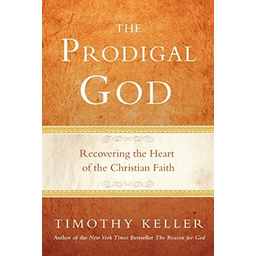 The Prodigal GodTim Keller’s 130-page reading of Luke 15 has quietly become one of the most-gifted Christian books of the last twenty years - and the reason is the title itself.
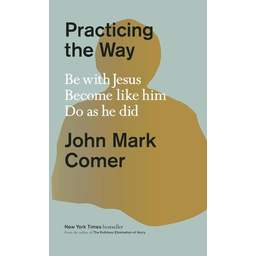 Practicing the WayComer’s 2024 follow-up to The Ruthless Elimination of Hurry has quietly become the default spiritual-formation book in a thousand small groups - and the reasons are worth unpacking.
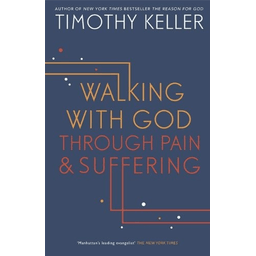 Walking with God Through Pain and SufferingTim Keller’s most comprehensive book on suffering - part survey of how every culture has tried to explain pain, part biblical theology, part field manual for the people actually walking through it.
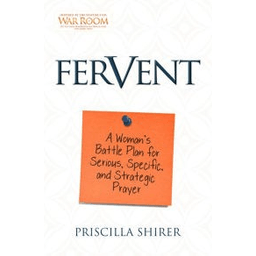 FerventThe prayer book that turned “strategic, specific prayer” into a fill-in-the-blank battle plan - and rode the War Room moment to the top of the bestseller lists.
 A Grace DisguisedJerry Sittser lost his mother, his wife, and his four-year-old daughter in a single car crash - and the book he wrote about it has quietly become the one grieving people press into each other’s hands, because it refuses to tell you how to get over your loss.
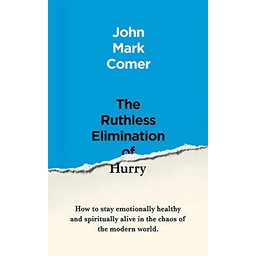 The Ruthless Elimination of HurryJohn Mark Comer’s 2019 breakout - a pastor’s case that hurry is the great spiritual enemy of our age - has quietly become the go-to slow-down book for an exhausted generation of Christians. Here’s what it actually delivers, and where it doesn’t.