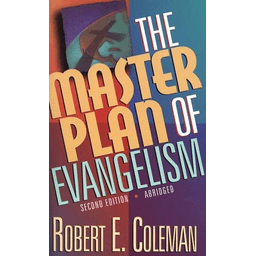
- Starting price
- ~$15 paperback
- Free tier
- No
- Platforms
- Print · Kindle · Audiobook
- Developer
- Revell (Baker)
- Launched
- 1963
- Updated
- May 31, 2026
The verdict
Six decades on, The Master Plan of Evangelism is still the most-assigned book on how Jesus trained the people who would carry His message after Him. Coleman reads straight through the Gospels and pulls out a small set of repeating principles - selection, association, consecration, impartation, demonstration, delegation, supervision, reproduction. It is short, it is concrete, and it has shaped how a generation of churches think about discipleship. Read it for the method, not for a turnkey program.
Try The Master Plan of Evangelism ↗Opens bakerpublishinggroup.com
The Master Plan of Evangelism has quietly become the book ministry leaders reach for when the conversation turns from "what should we teach" to "how did Jesus actually do this?" Pastors assign it to interns. Campus ministers work through it with student leaders. Denominational training programs have kept it on the required-reading list for decades. The reason is simple: Robert Coleman went back to the Gospels not to extract a doctrine but to watch a method, and he wrote down what he saw in language a volunteer small-group leader can use on a Tuesday night.
The book is short - barely 130 pages in most editions - and it makes one argument from start to finish. Jesus, Coleman observes, did not try to reach the crowds first. He chose a few ordinary people, lived alongside them, poured Himself into them over three years, gradually handed them responsibility, checked on how they did, and then sent them out to do the same with others. It is not a book about clever techniques. It is not a book about big events. It is not a book about programs. It is a book about the patient, unglamorous, person-to-person investment that Coleman believes is the actual engine underneath everything else in the Gospels.
First published by Revell in 1963 and still in print through Baker Publishing Group, the book has sold millions of copies and been translated into dozens of languages. Coleman, who spent decades teaching evangelism and discipleship at the seminary level, organized the whole thing around eight guiding principles, each given its own short chapter. Anniversary editions have added study questions and forewords, but the core text has barely changed - which tells you something about how durable the central idea has turned out to be. People still hand it to a friend who has just been asked to lead, and who quietly wonders whether there is a pattern to follow.
✓ The good
- The most-assigned book on Jesus's discipleship method - across denominations and parachurch ministries, almost everyone in ministry training has read it or had it pressed on them
- Built from the Gospel text itself - Coleman works inductively from how Jesus is actually described moving with the Twelve, rather than importing a theory and proof-texting it afterward
- Eight clean, memorable principles - selection, association, consecration, impartation, demonstration, delegation, supervision, reproduction give leaders a shared vocabulary they can teach others
- Genuinely short - around 130 pages, readable in an afternoon, the kind of book a busy lay leader will actually finish
- The "few over many" insight reframes how leaders spend their time - Coleman's case that deep investment in a handful outpaces shallow contact with thousands tends to stay with readers long after the chapters blur
- Translates across contexts - the principles have been used in house churches, college ministries, large congregations, and overseas missions because they describe relationships rather than programs
- The closing chapter on reproduction gives the whole thing a point - disciples who make disciples, not just disciples who attend, is the measure Coleman leaves the reader holding
✗ Watch out
- It is principles, not a program - Coleman names what Jesus did but leaves the reader to design the actual weekly mechanics, which frustrates leaders who wanted a turnkey curriculum
- The 1960s idiom shows in places - some phrasing, illustrations, and assumptions about church life read as artifacts of their decade
- Written from inside evangelical ministry practice - the frame, vocabulary, and examples assume that world, and readers from other traditions may need to translate as they go
- Light on the modern objections - Coleman wrote before most current conversations about consumer culture, digital community, and burnout, so the book does not engage them
- Repetition by design - the single thesis is hammered from eight angles, which is memorable but can feel circular to a reader who got the point in chapter two
Best for
- Pastors and ministry leaders rethinking how they invest their time
- Small-group and discipleship leaders wanting a shared method
- Seminary and ministry-training students
- Anyone newly asked to mentor or disciple a few others
Avoid if
- You want a step-by-step, week-by-week discipleship curriculum
- You want a contemporary voice that engages modern cultural objections
- You want a broad survey of evangelism methods rather than one focused argument
- You bounce off mid-century prose and repeated thesis statements
What The Master Plan of Evangelism is
The Master Plan of Evangelism is Robert E. Coleman's compact study of the way Jesus, as described in the Gospels, went about training the people who would carry His message forward. Published in 1963 and continuously in print since, it is short - roughly 130 pages - and organized around eight guiding principles drawn from observing Jesus's pattern: selection (He chose a few), association (He stayed with them), consecration (He asked for obedience), impartation (He gave Himself away), demonstration (He showed them how), delegation (He assigned them work), supervision (He checked on them), and reproduction (He expected them to do the same with others).
It is a study of method rather than a statement of doctrine. Coleman is not arguing for a particular theology of salvation or church government; he is asking a narrower, practical question - what was the repeatable shape of Jesus's own work with His followers, and what would it look like to organize ministry around that shape today. "Evangelism" in the book's title means the practice of sharing the faith and forming new believers, and Coleman's distinctive claim is that the two are inseparable: the people Jesus reached were also the people He trained to reach others. The book is written from within evangelical ministry practice, and that is its native audience, but its core observation - invest deeply in a few who will in turn invest in many - has traveled far beyond it.
Why ministry leaders still reach for Coleman
Most books on outreach are organized around the author's program - a method to run, a series of steps, an event to host. Coleman's book is organized around the Gospels. He is not selling a system he invented; he is reporting a pattern he believes is already there in the text, visible in how Jesus spends His three years. That gives the book a kind of authority that a how-to manual never has, because the reader is not being asked to trust Coleman's cleverness - they are being asked to look at the same verses Coleman looked at and check whether the pattern is real.
The result is a book that ministry leaders of very different stripes can use without friction. The principles describe relationships - choosing people, staying with them, handing off responsibility, checking back in - rather than prescribing the doctrine or denominational structure those relationships sit inside. A leader in a large congregation, a campus minister with a handful of students, and a small house gathering can each pick the book up and find the same eight ideas usable in their own setting. That portability is rarer than it sounds, and it is a large part of why a sixty-year-old book is still on so many required-reading lists.
Selection and association: the "few over many" core
The first two principles carry most of the book's weight, and Coleman puts them first on purpose. Selection is the observation that Jesus did not begin by trying to reach everyone; He began by choosing a small group of ordinary people and concentrating on them. Association is the observation that He then simply stayed with them - He let them watch Him work, eat with Him, travel with Him, and ask Him questions in the unscripted spaces between the public moments. Coleman's point is that the bulk of the training in the Gospels happens not in sermons but in proximity: the Twelve learned by being near.
This sounds like a small thing. In practice it is the most disruptive idea in the book. It cuts against the natural instinct of any leader to measure ministry by the size of the crowd, and it reframes the leader's calendar around a few names rather than a big number. Readers consistently report that the selection-and-association chapters are the ones that change how they actually spend their week - not because Coleman issues a command, but because once you have seen the pattern in the Gospels, the alternative starts to look like activity without depth. It is the chapter people quote when they explain why they stopped chasing reach and started investing in a handful.
Delegation and supervision: handing off the work
The middle principles trace what Coleman sees as a deliberate progression. After demonstration - Jesus showing the disciples how something is done - comes delegation, where He assigns them real work and sends them out to do it themselves, and then supervision, where He debriefs them, corrects what went wrong, and prepares them for more. Coleman is careful to show that Jesus does not hand off responsibility all at once or abandon the disciples to figure it out alone; the giving-away is gradual, and it is always followed by a return, a question, a recalibration.
For a working leader this is the most practically instructive stretch of the book, because it names the part most ministries get wrong. Either they never delegate - the leader does everything and the followers stay spectators - or they delegate and disappear, dropping people into responsibility with no follow-up. Coleman's reading of the Gospels holds those two failures up against a third way: assign the work, then stay close enough to coach. It is an unglamorous rhythm, and Coleman insists it is the one that actually produces people who can stand on their own.
Reproduction: the principle that gives the rest a point
The eighth and final principle is reproduction, and Coleman saves it for last because it is the measure he wants the reader holding when they close the book. The goal of the whole sequence, he argues, was never that the Twelve would simply follow Jesus or even simply believe rightly; it was that they would go and do with others exactly what He had done with them. A disciple who never makes another disciple, in Coleman's reading, has stopped the pattern one generation short. The fruit Jesus was after was not attendance but multiplication.
This is where the book's argument turns from observation into challenge. It is easy to admire selection and association as nice ideas about mentoring; reproduction asks whether the people a leader has invested in are themselves now investing in others, and whether there is a third and fourth generation behind them. Coleman frames this not as a metric to brag about but as the honest test of whether the method was real. It is the chapter that has made the book a fixture in discipleship-pipeline conversations, because it gives leaders a way to ask whether anything they built will outlast them.
Pricing
Paperback
~$15
The standard Revell/Baker edition. The copy most people own and the one study groups buy in bulk.
Kindle / ebook
~$10
Searchable and highlight-syncing across devices. Usually a few dollars under the paperback.
Audiobook
~$15
A short listen at this length; convenient for commuters working through it on the way to ministry meetings.
Anniversary edition
~$17
Editions with an added foreword and study questions - useful for groups working through it together.
The Master Plan of Evangelism is not free. Used copies are common at church book sales and online for a few dollars, which is how many readers acquire their first one, but a new Revell/Baker paperback runs around $15 - call it the everyday default - and is the edition most quotations and study guides are keyed to.
The Kindle edition usually sits a few dollars under the paperback and adds searchability and synced highlighting, which is handy for a book this quotable and this often cited in lesson prep. The audiobook runs around $15 and is a genuinely short listen at this page count, which makes it an easy companion for a leader working through it on the commute to a ministry meeting.
If you are running a group through it, the anniversary editions (around $17) add a foreword and study questions and are worth the small premium for that use. Most individual readers do not need the anniversary edition - the plain paperback is the balanced default, and at this price the bigger cost is the afternoon it takes to read rather than the cover price.
Where The Master Plan of Evangelism falls behind
Principles, not a program. Coleman tells you what Jesus did; he does not hand you a weekly schedule, a workbook, or a curriculum to run. That is a deliberate choice - the book is a lens, not a kit - but a leader who wanted to open it and start a group next week will have to build the actual mechanics themselves, often by pairing it with a more structured resource.
A dated register. The book was written for 1960s readers, and a handful of its illustrations, phrasings, and assumptions about congregational life read like artifacts of that decade. None of it sinks the argument, but a first-time reader in 2026 will hit sentences that feel of their era, and a few examples that a contemporary author would frame differently.
Written from inside one practice. Coleman writes from within evangelical ministry, and the vocabulary, examples, and assumed setting come from that world. Readers from other traditions can absolutely use the core observation, but they will find themselves translating some of the framing as they go rather than reading it as a neutral, all-purpose text.
Little engagement with modern conditions. Coleman wrote before most of today's conversations about consumer-culture churchgoing, digital and online community, and leader burnout. The book's pattern still speaks to those situations indirectly, but it does not address them on the page, and readers looking for direct treatment of contemporary ministry pressures will need a newer companion.
The Master Plan of Evangelism vs. Discipleship Essentials vs. Multiply
These three are the short list when the topic is making disciples, and they do genuinely different jobs. The Master Plan of Evangelism (Coleman, 1963) is the foundational why - it reads the Gospels for the pattern of Jesus's own method and gives leaders the principles and vocabulary, but stops short of a week-by-week plan. Discipleship Essentials (Greg Ogden) is the structured curriculum - it is built as a workbook with weekly readings, scripture memory, and questions designed to be done in a triad or small group over the better part of a year. Multiply (Francis Chan and Mark Beuving) is the accessible on-ramp - a free, video-paired resource written in plain, urgent language to get an ordinary believer started making disciples without a lot of prerequisites.
Different strengths. Coleman is the deepest and most timeless - the book you keep quoting because it explains the principle behind everything else. Ogden is the most useful if you actually need a curriculum to run starting this month and want the mechanics already built. Chan is the most useful for a brand-new or hesitant leader who needs momentum and a low barrier to entry more than they need depth. If you are starting from zero and want the foundation, it is still Coleman; pair it with Ogden when you need structure, or Chan when you need accessibility.
All three sit within evangelical discipleship practice and assume that setting. Coleman is the most foundational and the most often cited; Ogden is the most program-ready; Chan is the most beginner-friendly. A leader is well served reading Coleman for the method and then choosing one of the other two as the vehicle.
The bottom line
The Master Plan of Evangelism is the standard for a reason. Coleman wrote the short book that took the question of how Jesus trained His followers seriously, read it straight out of the Gospels, and handed leaders a vocabulary they could pass on. It is dated in spots and it is principles rather than a program, but the central insight - invest deeply in a few who will in turn invest in many - has outlasted six decades of changing ministry fashion. If someone newly asked to lead wants one book on how Jesus actually did it, this is still the one to put in their hands.
Alternatives to The Master Plan of Evangelism
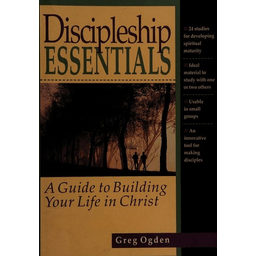 Discipleship EssentialsGreg Ogden's workbook-style discipleship curriculum - the structured year-long companion to Coleman's principles, built for triads and small groups.
 MultiplyFrancis Chan and Mark Beuving's free, video-paired guide to making disciples - the accessible on-ramp for a brand-new leader who wants momentum first.
 Don't Waste Your LifeJohn Piper's short manifesto against drifting through a comfortable life - pairs with Coleman for the motivation behind the method.
 Crazy LoveFrancis Chan's confrontational call out of lukewarm Christianity - a wake-up read for the disciples a leader is hoping to form.
Frequently asked questions
What is the main idea of The Master Plan of Evangelism?
That Jesus's own method, as seen in the Gospels, was to invest deeply in a few ordinary people who would in turn reach and train many others. Coleman distills that method into eight principles - selection, association, consecration, impartation, demonstration, delegation, supervision, and reproduction - and argues that this patient, person-to-person pattern is the engine underneath the rest of Jesus's ministry.
What are the eight principles in the book?
Selection (Jesus chose a few), association (He stayed with them), consecration (He asked for obedience), impartation (He gave Himself to them), demonstration (He showed them how), delegation (He assigned them work), supervision (He followed up and corrected), and reproduction (He expected them to do the same with others). Each gets its own short chapter.
Is The Master Plan of Evangelism still relevant in 2026?
Yes. It remains one of the most-assigned books in ministry and discipleship training. A few illustrations and idioms show their 1960s origin, and it offers principles rather than a step-by-step program, but the core observation about deep investment in a few has held up well and is still widely taught and quoted.
Is this a discipleship program I can run with a group?
Not by itself. The book names the principles behind Jesus's method but leaves the weekly mechanics to the reader. Many leaders read Coleman for the foundation and then pair it with a structured curriculum - Greg Ogden's Discipleship Essentials, for example - or a beginner-friendly resource like Multiply when they need something ready to run.
Who is the book written for?
It is written from within evangelical ministry practice, and pastors, campus ministers, small-group leaders, and ministry-training students are its core audience. That said, its central idea - invest in a few who will invest in many - has been used across a wide range of church settings and contexts, including house churches, large congregations, and overseas missions.
How long is it, and how hard is it to read?
It is short - roughly 130 pages in most editions - and written in plain, accessible language for a general ministry reader rather than an academic one. Most people finish it in an afternoon. The single thesis is repeated from several angles, which makes it memorable but can feel circular if you grasped the point early.
Which edition should I buy?
The standard Revell/Baker paperback (~$15) is the right default for almost everyone. Choose an anniversary edition (~$17) if you are leading a group and want the added foreword and study questions, or the Kindle edition (~$10) if you want a searchable, highlight-syncing copy for lesson prep.
Sources & further reading
More Spiritual Disciplines Books
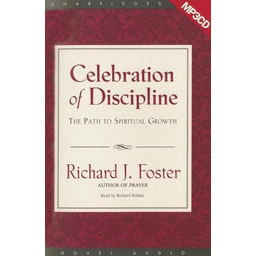 Celebration of DisciplineThe 1978 book that put the words "spiritual disciplines" back into modern Christian vocabulary - still the field guide a generation of pastors hands new readers when they ask how to actually pray, fast, and study.
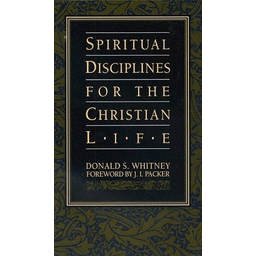 Spiritual Disciplines for the Christian LifeThe textbook-clear survey of the spiritual disciplines that landed on a thousand church-class syllabi - Bible intake, prayer, fasting, silence, stewardship, and more, each pointed at one goal: godliness.
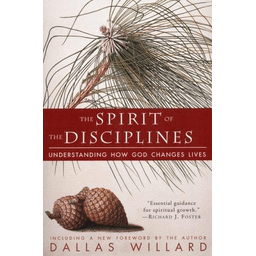 The Spirit of the DisciplinesDallas Willard's case that the spiritual disciplines are the means by which grace actually remakes a person - the philosophically serious book the whole modern formation movement quietly stands on.
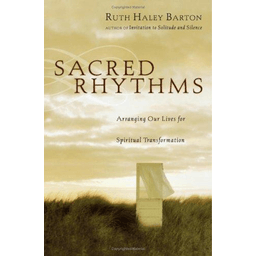 Sacred RhythmsRuth Haley Barton’s practical handbook for arranging an unhurried life around a handful of ancient spiritual practices - the book a lot of burned-out, schedule-shredded Christians get handed when they finally admit the pace isn’t working.
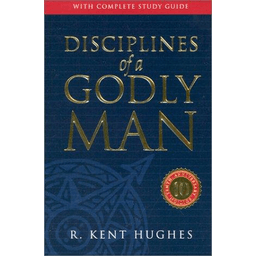 Disciplines of a Godly ManThe men's-group staple that has run through three decades of small groups and church basements - a Reformed-evangelical field manual for the spiritual disciplines, built for accountability and the long haul.MultiplyFrancis Chan's plainspoken disciple-making curriculum, built to be worked through by two people with a free set of teaching videos - the workbook you hand the person you're discipling.