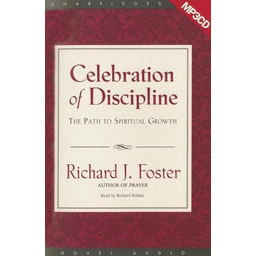
- Starting price
- ~$16 paperback
- Free tier
- No
- Platforms
- Print · Kindle · Audiobook
- Developer
- HarperOne
- Launched
- 1978
- Updated
- May 31, 2026
The verdict
Celebration of Discipline is the book that reintroduced the classic spiritual disciplines to a broad modern Christian readership, and almost fifty years on it is still the standard map. Foster groups twelve practices - prayer, fasting, study, solitude, service, confession, worship, and more - into a clean three-part frame and explains each one plainly enough that a beginner can start this week. It is a survey, not a deep manual on any one practice, and that is exactly its job.
Try Celebration of Discipline ↗Opens harpercollins.com
Celebration of Discipline has quietly become the book people are handed when they finally ask the awkward question out loud: I want to grow, but what do I actually do? For nearly fifty years the answer in a remarkable number of churches - across very different traditions - has been to put Richard Foster's slim paperback in their hands. It is the book that took words like solitude, fasting, and confession out of the museum case and set them back on the kitchen table, written for ordinary people who had never been taught that such practices were even on offer.
Foster wrote it in 1978, and it landed at the right moment. A generation of Christians had inherited plenty of teaching about what to believe and almost none about what to practice. The disciplines - the concrete habits the church had used for two thousand years - had quietly fallen out of common instruction. Foster's contribution was not to invent anything. It was to gather the old practices, organize them, and explain them in plain English, assuming nothing - he takes a reader who is starting from zero and walks them in.
What you actually get is twelve disciplines sorted into three groups. The inward disciplines - meditation, prayer, fasting, and study - are the ones you practice mostly alone, working on the interior life. The outward disciplines - simplicity, solitude, submission, and service - turn that interior work outward into how you live. The corporate disciplines - confession, worship, guidance, and celebration - are the ones the church does together. Foster gives each one a chapter, each chapter a little history, a little theology, and - crucially - a concrete on-ramp. It is the most-recommended modern field guide to the practices, and it earns that status every time another small group works through it together.
✓ The good
- The standard modern map of the spiritual disciplines - the book that reintroduced these practices to a broad readership and is still the first one most people are handed
- The three-part frame (inward, outward, corporate) is genuinely clarifying - it turns a vague pile of "spiritual stuff" into an organized set of twelve namable practices
- Practices shared across Christian traditions - prayer, fasting, study, worship, confession, and service are recognizable to Catholic, Protestant, Orthodox, and Latter-day Saint readers alike
- Every chapter ends with concrete on-ramps - Foster does not just describe a discipline, he tells a beginner how to take the first step this week
- Draws on the wider contemplative tradition across church history - the desert fathers, the medieval mystics, the Reformers, the Quakers - so the practices feel rooted, not invented
- Short and re-readable - around 230 pages, paced for a chapter a sitting, designed to be worked through slowly with a group
- Warm and unintimidating in tone - the title word is celebration, and Foster frames the disciplines as a path to freedom rather than a checklist of duty
✗ Watch out
- A broad survey, not a deep manual - each discipline gets one chapter, so anyone who wants to go deep on, say, prayer or fasting will need a dedicated book afterward
- Some readers from more cautious evangelical backgrounds want clearer boundaries around the contemplative and meditative practices - Foster draws widely on the mystical tradition and is light on caveats
- The 1970s register shows in places - a handful of cultural references and examples read as artifacts of their decade
- Cross-traditional by design - readers who specifically want these practices treated from inside one tradition may prefer a book framed from their own vantage point
- Light on the harder objections - Foster is more interested in getting you started than in answering the skeptic, so the case for why to practice at all is brief
Best for
- Anyone who wants to grow but has never been taught the actual practices
- Small groups looking for a structured, chapter-by-chapter walk through the disciplines
- Readers who want one organized map before going deep on any single practice
- Long-time believers wanting to recover practices they were never formally taught
Avoid if
- You want a deep, single-discipline manual on prayer or fasting specifically
- You want the practices framed strictly from inside one tradition
- You want clear, conservative boundary-setting around contemplative and meditative methods
- You want a rigorous apologetic for the disciplines rather than a warm invitation into them
What Celebration of Discipline is
Celebration of Discipline is Richard J. Foster's 1978 introduction to the classic Christian spiritual disciplines, written for a general readership and continuously in print since, including later revised and anniversary editions. It is short - around 230 pages depending on the printing - and built around twelve practices organized into three families. The inward disciplines (meditation, prayer, fasting, study) work on the interior life. The outward disciplines (simplicity, solitude, submission, service) turn that interior work into a way of living. The corporate disciplines (confession, worship, guidance, celebration) are the practices the gathered church does together. Each gets its own chapter with history, explanation, and concrete steps.
Foster writes from a Quaker background, and the book draws openly and deeply on the wider contemplative tradition across the whole span of church history - the desert fathers, the medieval and Catholic mystics, the Reformers, the Puritans, and the Quakers all appear by name. That is buyer information rather than praise or critique: it means the book is a broad, cross-traditional survey of practices the church has used for two thousand years, not a treatment keyed to any single communion. The practices themselves - prayer, fasting, study, worship, confession - are recognizable across Catholic, Protestant, Orthodox, and Latter-day Saint readers, which is a large part of why the book has traveled so widely.
Why readers still reach for Foster first
Most books on the spiritual life pick one practice and go deep - a whole book on prayer, a whole book on fasting, a whole book on solitude. That is valuable, but it assumes you already know the lay of the land and just want to dig into one corner of it. Foster assumes the opposite. He assumes you have never been handed a map at all, that the word discipline sounds either intimidating or vaguely guilt-inducing, and that what you need first is the overview - here are twelve practices, here is how they relate to each other, here is where to start.
The result is a book that functions as an on-ramp rather than a destination. A Catholic reader recognizes the contemplative practices and the place of confession. A Protestant reader recognizes study and the centrality of Scripture. An Orthodox reader recognizes the ancient sources Foster draws on. A Latter-day Saint reader recognizes prayer, fasting, and service as practices already woven into their own devotional life. Foster keeps the focus on the practices themselves and how to begin them, which is why a pastor, a small-group leader, a spiritual director, and a curious beginner can all confidently start a person here.
The three-part map (inward, outward, corporate): the organizing idea
The structural contribution of Celebration of Discipline is the map itself. Foster sorts twelve disciplines into three families. The inward disciplines - meditation, prayer, fasting, and study - are the practices you mostly do alone, the ones that work on the interior life. The outward disciplines - simplicity, solitude, submission, and service - take that interior formation and turn it into a way of living in the world. The corporate disciplines - confession, worship, guidance, and celebration - are the practices the gathered community does together. Each gets a chapter; each chapter gives a short history, a plain explanation, and concrete next steps.
This sounds like a small thing. In practice it is the reason the book works. Before Foster, a beginner asking how to grow spiritually faced an undifferentiated pile of advice. Foster gives that pile a shape: twelve named practices, three movements, a logic to how they fit together. Readers consistently say the map is what stayed with them - the sense that the spiritual life is not a vague aspiration but a set of specific, learnable habits you can start one at a time.
The inward disciplines: prayer, fasting, study, meditation
The first family is where most readers begin, and where Foster spends some of his best writing. The chapter on prayer treats it as something you learn by doing rather than a gift you either have or lack. The chapter on fasting recovers a practice many modern readers had never been taught at all, and Foster is careful to frame it as an ordinary part of the historic Christian life rather than an extreme feat. The chapter on study distinguishes the discipline from mere reading - it is the deliberate, repeated engagement of the mind with a text until the text begins to shape you. Meditation, which opens the section, Foster presents as the practice of attending to God with the whole self.
What makes these chapters land is the on-ramp at the end of each. Foster does not leave you admiring a practice from a distance; he tells a beginner exactly how to take a first step - a short, achievable, this-week step. Because these practices are shared across Christian traditions, the chapters tend to read as common ground rather than the property of any one communion. Readers from cautious evangelical backgrounds sometimes wish Foster set firmer boundaries around the contemplative and meditative methods he draws on - a fair preference to know going in, and a reason some pair the book with a discipline-specific guide from inside their own tradition.
The corporate disciplines: confession, worship, guidance, celebration
The final family is the one Foster cares about most, and it is where the book's title comes from. The corporate disciplines are the practices the church does together. Confession Foster treats as a means of grace rather than an ordeal - the relief of bringing what is hidden into the light. Worship he frames as the practice of responding to God with the whole gathered community. Guidance is the discipline of seeking direction together rather than alone. And celebration - the discipline the whole book is named for - is Foster's insistence that joy is itself a practice, that the disciplines are a path to freedom and gladness rather than a grim regimen of self-improvement.
Placing celebration last, and naming the book after it, is a deliberate move. Foster knows the word discipline can sound like duty, restriction, willpower. The corporate section is his argument that the opposite is true - that the practices done in community lead somewhere good, and that the destination is joy. Different traditions will fill in the specifics differently: what worship looks like, how confession is practiced, who offers guidance. Foster keeps his treatment broad enough that readers across traditions can recognize their own practice in it, and concrete enough that a beginner can see how to participate.
Pricing
Paperback
~$16
The standard HarperOne edition. The copy most people own and the one small groups order in bulk.
Kindle / ebook
~$13
Searchable and highlight-syncs across devices - useful for a book this quotable and this often worked through in a group.
Audiobook
~$18
Read-aloud edition; pairs well with a commute, though the discipline exercises reward having the text in front of you.
Special / anniversary edition
~$20-25
Revised and anniversary printings with updated front matter and study aids - the gift-grade or group-leader pick.
Celebration of Discipline is not free. Used paperbacks turn up at church book sales and thrift stores constantly - it has sold in the millions over almost fifty years - so a first copy can often be had for a few dollars. A new HarperOne paperback runs around $16, which is the everyday default and the edition most small groups order in bulk when they decide to work through it together.
The Kindle edition runs a little under the paperback, around $13, with highlighting that syncs across devices - genuinely useful for a book this quotable and this often read in a group setting. The audiobook, around $18 or included with some listening subscriptions, reads aloud well, though the end-of-chapter exercises reward having the text in front of you to refer back to.
Revised and anniversary editions show up around $20-25 with updated front matter and study aids; these are the natural pick for a group leader or as a gift. Most readers do not need the special edition - the standard paperback is the balanced default and the copy you will mark up, lend out, and reach for again.
Across formats this is an inexpensive book that rewards slow, repeated reading. The value is less in the page count than in the years of practice the chapters are meant to seed.
Where Celebration of Discipline falls behind
Depth on any single discipline. By design, each of the twelve practices gets one chapter. That is the right call for an introductory map, but it means Celebration of Discipline is a starting point, not an ending point. A reader who falls in love with the chapter on prayer or fasting will quickly want a dedicated book on that one practice - Foster gives you the overview and then hands you off.
Boundary-setting on contemplative methods. Foster draws openly on the wider mystical and contemplative tradition, and he is more interested in inviting you in than in marking the edges. Readers from more cautious evangelical backgrounds sometimes want clearer guardrails around the meditative practices - what to do, what to avoid, how to keep the practice tethered to Scripture. That preference is worth knowing about going in; it is a matter of emphasis, not a defect.
Dated texture. The book is from 1978, and a handful of cultural references and examples read as artifacts of their decade. None are obstacles, but a first-time reader in 2026 will hit a few sentences that feel of their era.
Single-tradition framing. Because Foster writes from a Quaker background and surveys practices across the whole of church history, the book is intentionally cross-traditional rather than keyed to one communion. Readers who specifically want these practices framed from inside their own tradition - with their own vocabulary and authorities - may prefer to pair Foster with a book written from that vantage point.
The apologetic for practicing at all. Foster largely assumes you already want to grow and just need the how. He spends little time persuading the skeptic that the disciplines matter in the first place. For a reader who is not yet convinced, that case has to come from somewhere else.
Celebration of Discipline vs. The Spirit of the Disciplines vs. Sacred Rhythms
These three are the modern spiritual-disciplines shortlist, and they do genuinely different jobs. Celebration of Discipline (Foster, 1978) is the map - the broad, accessible survey that names twelve practices, sorts them into three families, and tells a beginner how to start each one. The Spirit of the Disciplines (Dallas Willard, 1988) is the theology underneath the map - Willard, a philosopher, builds the case for why the disciplines form a person at all, and is the heavier, more argued book. Sacred Rhythms (Ruth Haley Barton) is the practitioner's workbook - a slower, more personal guide to building a rule of life around the practices.
Different strengths. Foster is the best first book - the one you hand someone who has never thought about practices at all. Willard is for the reader who wants the reasoning, the theological spine. Barton is for the reader who has the map and now wants help turning it into a sustainable daily rhythm. If you are starting from zero and want one book, it is still Foster. If you want depth on the theology, add Willard. If you are ready to build a rule of life, add Barton.
All three are read across Christian traditions, and all three draw on the wider contemplative stream of church history. Foster is the most accessible and cross-traditional in framing; Willard the most philosophically rigorous; Barton the most hands-on. Readers frequently move through all three in roughly that order.
The bottom line
Celebration of Discipline is the modern field guide to the spiritual disciplines for a reason. Foster took practices the church had used for two thousand years - prayer, fasting, study, solitude, confession, worship - organized them into a clean three-part map, and explained each one plainly enough that a complete beginner can start this week. It is a survey rather than a deep manual on any single practice, and that is precisely its value: it is the book that hands you the whole landscape before you choose where to dig. If someone asks you where to begin actually practicing the Christian life, this is still the book to put in their hands.
Alternatives to Celebration of Discipline
 The Spirit of the DisciplinesDallas Willard's theological case for why the disciplines form a person - heavier and more argued than Foster, the natural deep follow-up.
 Sacred RhythmsRuth Haley Barton's hands-on guide to building a rule of life around the practices - the practitioner's workbook to Foster's map.
 Practicing the WayJohn Mark Comer's 2024 apprenticeship book - a newer, more pastoral take on many of the same practices, with a free companion site.
 The Pursuit of GodA.W. Tozer's short devotional classic on hungering for God - less a how-to than a stirring of desire, a good companion to Foster's how.
Frequently asked questions
What are the twelve disciplines in Celebration of Discipline?
Foster organizes twelve practices into three groups. The inward disciplines are meditation, prayer, fasting, and study. The outward disciplines are simplicity, solitude, submission, and service. The corporate disciplines are confession, worship, guidance, and celebration. Each gets its own chapter with history, explanation, and concrete first steps.
Who is Richard Foster?
Richard J. Foster is an American author who writes from a Quaker background and founded the spiritual-formation ministry Renovaré. Celebration of Discipline, published in 1978, is his best-known book and is widely credited with reintroducing the classic spiritual disciplines to a broad modern Christian readership.
Is Celebration of Discipline only for one tradition?
No. Foster writes from a Quaker background and draws on the wider contemplative tradition across all of church history - the desert fathers, the medieval mystics, the Reformers, the Puritans, and the Quakers. The practices it teaches, such as prayer, fasting, study, and worship, are recognized across Catholic, Protestant, Orthodox, and Latter-day Saint readers, which is part of why the book has traveled so widely.
Is it a how-to book or a theology book?
Primarily a how-to. Foster assumes you want to grow and need to know what to actually do, so each chapter ends with concrete, beginner-friendly steps. He spends less time arguing the theology of why the disciplines matter - for that heavier case, readers often add Dallas Willard’s The Spirit of the Disciplines.
Is the book still relevant in 2026?
Yes. Almost fifty years on it is still the most-recommended introductory map of the spiritual disciplines, and small groups continue to work through it chapter by chapter. A few 1970s references have aged, but the practices themselves - prayer, fasting, study, confession, worship - are the same ones the church has used for centuries.
Which edition should I buy?
The standard HarperOne paperback (around $16) is the right default for almost everyone and the edition most groups order. Pick a revised or anniversary edition (around $20-25) if you are leading a group or want the added study aids. The ebook (around $13) is handy for highlighting; the audiobook (around $18) reads aloud well, though the exercises reward having the text in front of you.
Where should I go after Celebration of Discipline?
For the theology underneath the practices: Dallas Willard’s The Spirit of the Disciplines. For building an actual daily rhythm: Ruth Haley Barton’s Sacred Rhythms. For a newer, pastoral take on apprenticeship to Jesus: John Mark Comer’s Practicing the Way. And for going deep on any single discipline, most readers pick up a dedicated book on prayer, fasting, or solitude once Foster has shown them the map.
Sources & further reading
More Spiritual Disciplines Books
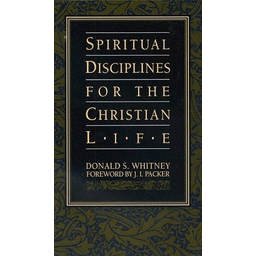 Spiritual Disciplines for the Christian LifeThe textbook-clear survey of the spiritual disciplines that landed on a thousand church-class syllabi - Bible intake, prayer, fasting, silence, stewardship, and more, each pointed at one goal: godliness.
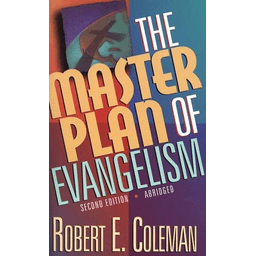 The Master Plan of EvangelismRobert Coleman's sixty-year-old study of how Jesus actually trained the Twelve - still the book ministry leaders hand each other when the question is "how did He do it?"The Spirit of the DisciplinesDallas Willard's case that the spiritual disciplines are the means by which grace actually remakes a person - the philosophically serious book the whole modern formation movement quietly stands on.Sacred RhythmsRuth Haley Barton’s practical handbook for arranging an unhurried life around a handful of ancient spiritual practices - the book a lot of burned-out, schedule-shredded Christians get handed when they finally admit the pace isn’t working.
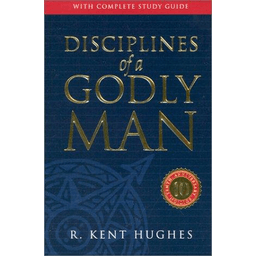 Disciplines of a Godly ManThe men's-group staple that has run through three decades of small groups and church basements - a Reformed-evangelical field manual for the spiritual disciplines, built for accountability and the long haul.
 MultiplyFrancis Chan's plainspoken disciple-making curriculum, built to be worked through by two people with a free set of teaching videos - the workbook you hand the person you're discipling.