- Starting price
- ~$15 paperback
- Free tier
- No
- Platforms
- Print · Kindle · Free companion videos
- Developer
- David C. Cook
- Launched
- 2012
- Updated
- May 31, 2026
The verdict
Multiply is one of the most accessible disciple-making resources in print: a four-part workbook designed for two people to walk through together, with a free set of companion videos that does much of the teaching. It is introductory by design and written from an evangelical approach to Scripture - a starting framework rather than a deep theology. As a tool for one believer to begin discipling another, it is hard to beat for the price.
Try Multiply ↗Opens davidccook.org
Multiply has quietly become one of the most-used entry points into disciple-making for ordinary Christians. It is not aimed at seminary students or professional ministers. It is aimed squarely at the believer who has never discipled anyone, feels unequipped to start, and wants a track to run on. Francis Chan - the author best known for Crazy Love - wrote it with Mark Beuving on a single conviction: that every Christian is called not merely to be a disciple but to make disciples, and that most people have simply never been shown how.
The book is built around a simple, almost stubborn idea. It does not assume you have a theology degree. It does not assume you are a gifted teacher. It does not even assume you are confident - it assumes the opposite, and hands you a structure anyway. The format is deliberate: Multiply is meant to be worked through by two people together, an older believer and a newer one, sitting across a table week by week. To carry the teaching load off the reader, Chan and his team recorded a full set of companion video sessions and put them online free, so the pair can watch, read the corresponding chapter, and discuss.
What you actually get is a workbook in four parts: living as a disciple-maker, the heart of God for the world, an overview of how the Bible fits together, and a walk through how to actually study Scripture. The voice is warm, direct, and unpolished in the way Chan's preaching is - short paragraphs, frequent questions back to the reader, an evident impatience with Christianity that stays comfortable and never reproduces itself. It is less a book you read and more a curriculum you do, and it earns its place every time one person uses it to help another take their first real steps.
✓ The good
- Built for pairs, not solo reading - the whole design assumes one believer walking another through it, which is how disciple-making actually happens
- Free companion video sessions - Chan recorded a full teaching series online at no cost, so the pair gets the instruction without the reader having to be the expert
- Genuinely accessible - written for the believer who has never discipled anyone and feels unqualified, with no assumed theological vocabulary
- Action-oriented - each section ends in discussion and application rather than leaving you with notes you never use
- Covers a lot of ground for a beginner - disciple-making, the heart of God, the storyline of the Bible, and basic study method in one volume
- Chan's voice carries it - the same urgency that made Crazy Love land, pushing the reader past comfortable, consumer Christianity
- Cheap and reproducible - at around $15 you can buy two copies and start, which is the point of a tool meant to multiply
✗ Watch out
- Introductory by design - a starting framework, not a deep treatment of theology, and experienced disciple-makers will find it basic
- Presumes an evangelical approach to Scripture - the study method and framing reflect that tradition, so readers from other traditions will want to adapt it
- Works best with the videos and a partner - read alone without either, it loses much of what makes it effective
- The Bible overview is a flyover - Parts 3 and 4 sketch the storyline of Scripture at high altitude and cannot go deep in the space they have
- Light on the harder questions - accountability, relapse, conflict, and long-term follow-through get less attention than getting started does
Best for
- A believer who wants to disciple someone but has never done it
- A new Christian being walked through the basics by a mentor
- Small groups or churches wanting a simple, reproducible track
- Anyone who learns better with a partner and a video than a book alone
Avoid if
- You want an advanced or academic treatment of discipleship
- You want a resource framed for a non-evangelical tradition out of the box
- You plan to read it solo with no partner and no videos
- You already lead disciple-making and need depth, not an on-ramp
What Multiply is
Multiply is a disciple-making guide and curriculum by Francis Chan, written with Mark Beuving and published by David C. Cook in 2012. It is organized into four parts: living as a disciple-maker, the heart of God, understanding the Bible (an overview of how Scripture fits together), and how to study Scripture (a practical method). Each part is broken into short chapters meant to be read and then discussed, and the book is explicitly designed to be worked through by two people together rather than read alone.
The defining feature is the pairing of the workbook with a free set of companion teaching videos. Chan and his team recorded sessions that line up with the book's chapters and released them online at no cost, so a more experienced believer and a newer one can watch a video, read the corresponding pages, and talk through the questions. It is broadly evangelical in its framing and its approach to Scripture, and it positions disciple-making as the normal calling of every Christian - not a specialized task reserved for pastors or missionaries.
Why disciple-makers reach for Multiply
Most resources on discipleship are written to be read - you finish the book, you feel inspired, and then nothing in your week actually changes. Multiply is built differently. It is a curriculum, not a monologue, and its entire design assumes two people sitting across a table from each other. The reader is not expected to absorb information alone; they are expected to use the book as a track for a relationship, with the free videos carrying the teaching the reader might not feel equipped to deliver themselves.
That lowers the bar to entry dramatically. The biggest reason ordinary Christians never disciple anyone is not unwillingness - it is the quiet conviction that they are not qualified, not knowledgeable enough, not a good enough teacher. Multiply answers that objection structurally. You do not have to be the expert; Chan's videos do that part, and your job is to show up, do the chapters alongside someone, and have the conversation. For a church or a believer who wants a simple, reproducible way to obey the call to make disciples, that is exactly the on-ramp the resource is built to be.
Designed for two: a curriculum you do together, not a book you read alone
The structural heart of Multiply is that it is meant to be worked through by a pair - an older believer and a newer one - rather than consumed solo. Each short chapter is written to be read between meetings and then discussed when the two come together, with questions built in to push the conversation past information and into application. The book is not arranged as a lecture you receive; it is arranged as a path you walk with someone, which is how the New Testament actually pictures disciples being made.
This sounds like a small thing. In practice it is the whole point. A book read alone tends to inform without transforming - you underline a few lines and move on. A curriculum done with another person creates accountability, conversation, and a relationship that outlasts the material. By forcing the format into a pairing, Multiply turns disciple-making from a concept the reader admires into a habit the reader practices, and it gives the more experienced partner a structure so they are never staring at a blank table wondering what to do next.
The free companion videos: the teaching load taken off the reader
Alongside the workbook, Chan and his team produced a full series of companion teaching videos and released them online for free, each session keyed to a part of the book. The intended rhythm is simple: the pair watches a video together, reads the corresponding chapter on their own, and then meets to discuss what they read and saw. The videos do the heavy lifting of explanation, so the more experienced partner does not have to be a polished teacher - they only have to be a present and willing one.
That is a deliberate and unusually generous design choice. The most common reason a willing Christian never disciples anyone is the fear of not knowing enough to teach. By putting the instruction into free videos, Multiply removes that excuse - the cost of entry becomes a roughly fifteen-dollar book and a willingness to show up, not a degree or a gift for public speaking. It is also what makes the resource reproducible: the person being discipled can, in turn, pick up the same book and the same free videos and start the cycle again with someone else.
Four parts: from your calling to the storyline of Scripture to how to study it
The content moves through four parts in a deliberate order. Part one establishes the reader's identity and calling as a disciple-maker, confronting the assumption that making disciples is someone else's job. Part two turns to the heart of God - His character and His desire for the world - to ground the work in who God is rather than in technique. Part three is an overview of how the Bible fits together as a single story, and part four is a practical walk through how to actually study a passage of Scripture for oneself.
The progression matters: Multiply does not want to leave the reader merely motivated, so it tries to put real tools in their hands by the end. The Bible overview and the study method in parts three and four are introductory - a flyover and a starter kit rather than a deep dive - and from a broadly evangelical approach to reading Scripture. But the aim is sound: send the pair out not just inspired to make disciples but with a basic, repeatable way to open the Bible together and keep going long after the workbook is finished.
Pricing
Paperback
~$15
The standard workbook. The copy you buy two of - one to keep, one to hand the person you are discipling.
Kindle / ebook
~$10-12
Searchable and portable. Convenient for the reader, though a printed copy is easier to write in for the person being discipled.
Companion videos
Free
The full set of teaching sessions was made freely available online to pair with each part of the book.
Used / bulk
~$5 and up
Widely available secondhand, and the natural option when a church wants enough copies to run several pairs at once.
Multiply is not free, though one of its best parts is. The paperback workbook runs around $15 new - call it the everyday default - and because the resource is meant to be worked through in pairs, the natural purchase is two copies, one for each person at the table. At that price, equipping yourself and the person you are discipling costs about what a couple of coffees would, which is very much the point of a tool designed to reproduce.
The Kindle edition typically runs a few dollars less than print, around $10-12, and is convenient for the reader who wants it searchable on a phone. The one tradeoff is that the person being discipled often benefits from a printed copy they can write in as they go, so many pairs end up with at least one physical book between them.
The companion video sessions are free. That is the unusual and genuinely valuable piece - the teaching that would normally be the expensive part of a curriculum was put online at no cost, so the only real spend is the book itself. Churches running several pairs at once can also find used copies for a few dollars each, which makes outfitting a whole group inexpensive.
Most pairs do not need anything beyond a paperback each and the free videos. There is no premium tier to buy and no subscription attached. The paperback-plus-free-video combination is the balanced default and is all the resource was ever designed to require.
Where Multiply falls behind
Depth. Multiply is introductory by design, and it shows. It is built to get a first-time disciple-maker started, not to satisfy someone who has been doing this for years, and an experienced reader will move through it quickly and want more. That is the right call for the audience Chan is writing to. It does mean the book is an on-ramp, not a destination.
An evangelical lens. The book's framing - especially its approach to studying Scripture in parts three and four - comes from a broadly evangelical tradition. A reader from a Catholic, Orthodox, or Latter-day Saint background can still use the disciple-making structure and the relational format, but will want to bring their own tradition's framing to the Bible-study portions rather than take them as given.
Dependence on the videos and a partner. Read alone, with no companion watching the sessions and no one to discuss them with, Multiply loses a great deal of what makes it work. It is a curriculum for a relationship, and stripped of the relationship it becomes a fairly basic book. That is a feature when used as intended and a limitation when it is not.
The harder middle miles. Multiply is strongest at getting started and lighter on what comes after - the accountability, the relapses, the awkward conversations, and the long obedience of following someone over years. It points the pair down the road well; it spends less time on the hard stretches further along it.
Multiply vs. The Master Plan of Evangelism vs. Discipleship Essentials
These three are a natural disciple-making shortlist, and they do different jobs. Multiply (Francis Chan, 2012) is the accessible modern curriculum - a four-part workbook with free videos, built for an ordinary believer to walk another through with no special training. The Master Plan of Evangelism (Robert Coleman, 1963) is the foundational classic - a short, much-loved study of how Jesus made disciples by investing deeply in a few, more a set of principles than a step-by-step program. Discipleship Essentials (Greg Ogden) is the structured workbook - a guided, fill-in-as-you-go study designed for one-on-one or small-group use over a longer arc.
Different strengths. Multiply is the easiest to start cold and the most multimedia, thanks to its free videos and low bar to entry. Coleman is the most timeless and the most concentrated - the book you read to understand the why before you pick a how. Ogden's Discipleship Essentials is the most thorough as a workbook, with more material and a more defined curriculum to work through. If you have never discipled anyone and want the gentlest on-ramp, start with Multiply. If you want the principles behind the practice, read Coleman. If you want a fuller, longer guided study, look at Ogden.
All three are written from within Protestant, broadly evangelical traditions, and all three are used widely across churches in that family. Readers from other traditions can adapt the relational core of any of them, but should expect the Bible-study and theological framing to reflect where the authors are writing from.
The bottom line
Multiply is one of the best on-ramps to disciple-making in print. It will not satisfy someone looking for depth, and it assumes an evangelical approach to reading Scripture, but neither is what it set out to be. For a believer who has never discipled anyone and wants a track to run on, the combination of an inexpensive, pair-based workbook and a full set of free companion videos is unusually generous and genuinely effective. If you want to obey the call to make disciples and have never known where to begin, this is a fine place to start.
Alternatives to Multiply
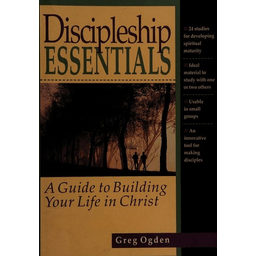 Discipleship EssentialsGreg Ogden's structured, fill-in-as-you-go discipleship workbook - fuller and more guided than Multiply, built for a longer one-on-one or small-group arc.
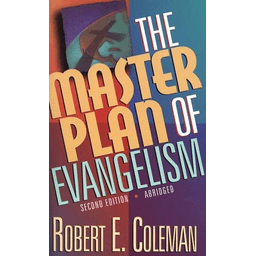 The Master Plan of EvangelismRobert Coleman's classic study of how Jesus made disciples by investing in a few - the principles behind the practice, read before you pick a program.
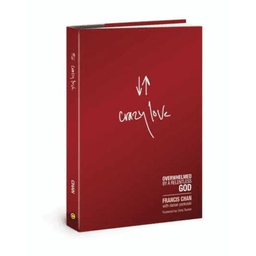 Crazy LoveFrancis Chan's breakout book on wholehearted devotion to God - the urgency that drives Multiply, in its original form.
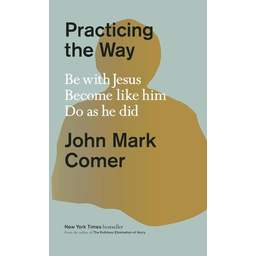 Practicing the WayJohn Mark Comer's guide to apprenticeship under Jesus through spiritual practices - a fuller treatment of formation that complements a disciple-making track.
Frequently asked questions
What is Multiply by Francis Chan about?
It is a disciple-making guide and curriculum built on the conviction that every Christian is called to make disciples, not just to be one. It is organized into four parts - living as a disciple-maker, the heart of God, an overview of the Bible, and how to study Scripture - and is designed to be worked through by two people together, with free companion videos.
Are the Multiply videos really free?
Yes. Francis Chan and his team recorded a full set of companion teaching sessions keyed to the book and released them online at no cost. The intended rhythm is to watch a session, read the matching chapter, and then discuss it with your partner. The book itself is sold; the videos were made freely available.
Do I need a partner to use Multiply?
It is strongly designed for pairs. You can read it alone, but the format assumes a more experienced believer walking a newer one through it, with built-in questions for discussion. Without a partner and the videos, it loses much of what makes it effective.
Is Multiply only for evangelicals?
It is written from a broadly evangelical tradition, and its approach to studying Scripture reflects that. The relational, pair-based disciple-making structure can be used by readers from many backgrounds, but those from Catholic, Orthodox, or Latter-day Saint traditions will likely want to bring their own framing to the Bible-study sections rather than take them as given.
How much does Multiply cost?
The paperback runs around $15 new, with the Kindle edition a few dollars less and used copies available for less still. The companion videos are free. Because it is meant to be done in pairs, most people buy two copies - and even then the total spend is small, which is part of the point of a resource meant to reproduce.
Is Multiply a good first disciple-making resource?
Yes, for that purpose it is one of the best. It is introductory by design, written for the believer who has never discipled anyone, and the free videos take the teaching load off the reader. Experienced disciple-makers will find it basic, but as an on-ramp it is hard to beat for the price.
What should I use after Multiply?
For the principles behind the practice, Robert Coleman's The Master Plan of Evangelism is the classic next read. For a fuller, more guided workbook, Greg Ogden's Discipleship Essentials goes deeper over a longer arc. For personal formation through spiritual practices, John Mark Comer's Practicing the Way is a natural complement to a disciple-making track.
Sources & further reading
More Spiritual Disciplines Books
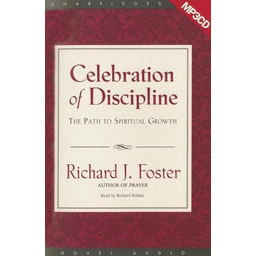 Celebration of DisciplineThe 1978 book that put the words "spiritual disciplines" back into modern Christian vocabulary - still the field guide a generation of pastors hands new readers when they ask how to actually pray, fast, and study.
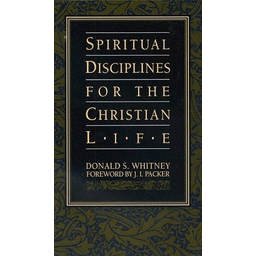 Spiritual Disciplines for the Christian LifeThe textbook-clear survey of the spiritual disciplines that landed on a thousand church-class syllabi - Bible intake, prayer, fasting, silence, stewardship, and more, each pointed at one goal: godliness.The Master Plan of EvangelismRobert Coleman's sixty-year-old study of how Jesus actually trained the Twelve - still the book ministry leaders hand each other when the question is "how did He do it?"
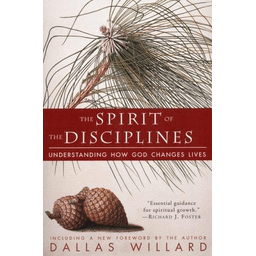 The Spirit of the DisciplinesDallas Willard's case that the spiritual disciplines are the means by which grace actually remakes a person - the philosophically serious book the whole modern formation movement quietly stands on.
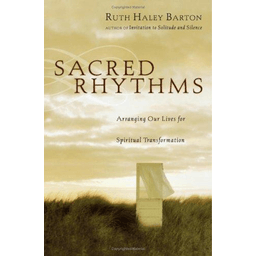 Sacred RhythmsRuth Haley Barton’s practical handbook for arranging an unhurried life around a handful of ancient spiritual practices - the book a lot of burned-out, schedule-shredded Christians get handed when they finally admit the pace isn’t working.
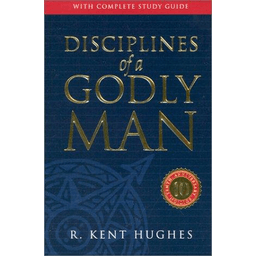 Disciplines of a Godly ManThe men's-group staple that has run through three decades of small groups and church basements - a Reformed-evangelical field manual for the spiritual disciplines, built for accountability and the long haul.