- Starting price
- ~$18 paperback
- Free tier
- No
- Platforms
- Print · Kindle
- Developer
- Crossway
- Launched
- 1991
- Updated
- May 31, 2026
The verdict
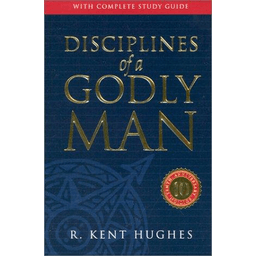
The book a thousand men's groups have run on for thirty years, and it earns the loyalty. R. Kent Hughes aims the classic spiritual disciplines - prayer, study, purity, work, perseverance - squarely at men, with study questions built in for the table. It is exhortative rather than systematic, and written for and about men by design. For a practical men's-group workbook in the Reformed-evangelical mold, this is the standard.
Try Disciplines of a Godly Man ↗Opens crossway.org
Disciplines of a Godly Man has quietly become the default men's-ministry book in a large slice of the Protestant world. Hand it to a pastor planning a men's breakfast study, a dad trying to get his act together, or a group of guys meeting at 6 a.m. before work, and there is a good chance one of them already owns a dog-eared copy. R. Kent Hughes wrote it in 1991, and it has been reprinted, repackaged, and revised - including a 25th-anniversary edition - for so long that it has become a fixture rather than a release.
The premise is narrow on purpose. This is not a general treatment of the spiritual life for everyone. It is a book written for and about men - their particular temptations, their particular excuses, their particular way of going slack. It doesn't try to be gentle. It doesn't try to be trendy. It doesn't try to soften the call. Hughes opens with the Greek athletic metaphor behind the word "discipline" and spends the rest of the book arguing that godliness, like fitness, does not happen by accident - it is trained for, on purpose, over years.
What you actually get is a field manual in three movements. First, disciplines of relationships - marriage, fatherhood, friendship, purity. Then disciplines of the mind and ministry - prayer, worship, the study of Scripture, work. Finally, disciplines of character - integrity, perseverance, church involvement, leadership. Each short chapter ends with study questions and a passage to commit to memory, the engineering that makes the book work in a group. It is exhortative and quotation-heavy - Hughes is forever reaching for a line from a hymn, a Puritan, a poet, or an athlete - and that texture is the reading experience as much as the argument is.
✓ The good
- The men's-ministry standard - three decades of small groups have run on it, and the built-in study questions make it almost frictionless to lead
- Genuinely practical - each chapter ends with discussion questions and a memory verse, engineered for a table of men rather than a solo armchair
- Covers the whole field - relationships, mind, ministry, and character in one volume, so a group is not stitching together five books
- Frank about the disciplines most men skip - the purity, integrity, and work chapters name the specific failure points rather than staying abstract
- Quotation-rich and warm - lines from hymns, Puritans, poets, and athletes keep an exhortative book from feeling like a lecture
- Short, modular chapters - easy to assign one a week, easy to re-read a single discipline years later
- A clear arc toward perseverance and leadership - the book builds rather than just listing, and ends on the long obedience
✗ Watch out
- Written specifically for men - the entire point of the book, but it narrows the audience by design and is not a general treatment for every reader
- Exhortative rather than systematic - Hughes motivates more than he defines, so readers wanting a rigorous theology of the disciplines will want a companion volume
- Quotation-heavy to a fault for some - the stream of poems, hymn stanzas, and anecdotes that warms the book for many will feel like padding to others
- Reflects its tradition and era - a Reformed-evangelical book from 1991, and some illustrations show their age even in the revised editions
- Light on practice mechanics in spots - strong on the why and the call, occasionally thin on the exact how versus a dedicated how-to manual
Best for
- Men's small groups wanting a ready-to-lead study with questions built in
- Men who want one practical book covering the whole field of the disciplines
- New believers or returning churchgoers looking for a concrete starting framework
- Leaders building a multi-week discipleship track for men in a church
Avoid if
- You want a book written for a general or mixed audience rather than specifically for men
- You want a rigorous, systematic theology of the spiritual disciplines
- You bounce off quotation-heavy, exhortative prose and prefer spare, step-by-step instruction
- You're looking for a guided app or program with daily check-ins rather than a book to read and discuss
What Disciplines of a Godly Man is
Disciplines of a Godly Man is R. Kent Hughes's practical guide to the spiritual disciplines, written specifically for men and first published by Crossway in 1991. It is organized into three groups of short chapters: disciplines of relationships (marriage, fatherhood, friendship, purity), of the mind and ministry (prayer, worship, study, work), and of character (integrity, perseverance, church involvement, leadership). Each chapter pairs an exhortation with discussion questions and a memory verse - the structure that turned it into a men's-group fixture rather than a book read alone.
The book serves a Reformed-evangelical Protestant readership and reads in that idiom - heavy on Scripture and the Puritan-flavored devotional tradition, framed by the athletic metaphor of training. Hughes was a longtime pastor, and the voice is a pastor's: direct, warm, willing to name the places men go slack and call them back. It is not a confession of doctrine or a systematic treatise; it is a motivational field manual aimed at getting a man to actually do the things he already half-knows he should, and to do them in the company of other men.
Why men keep reaching for Hughes
Most books on the spiritual disciplines are written for everyone, which means they stay general. Hughes made the opposite bet: he wrote for one audience, men, and let that focus sharpen everything. The purity chapter is not a survey of sexual ethics in the abstract - it is aimed at the specific way men fail, and it names it. The friendship chapter assumes the particular difficulty many men have admitting they need other men. That specificity is why the book reads as if it were written for the guy across the table rather than for a demographic.
The other half of the appeal is the engineering. The study questions and memory verses mean a layman with no teaching background can lead a group on Tuesday morning with almost no prep. Add short, modular chapters and you get a book genuinely easy to run with eight men, a pot of coffee, and forty minutes. Plenty of better-written books on the disciplines exist; few are this frictionless to put in front of a room of men who would not otherwise read a spiritual-formation book at all.
Disciplines of relationships: marriage, fatherhood, friendship, purity
The book opens not with private devotion but with relationships, which is a deliberate move. Hughes spends his first chapters on marriage, fatherhood, friendship, and sexual purity - the arenas where a man's claimed godliness is tested in public and at home before it is tested in his quiet time. The marriage and fatherhood chapters press a man on presence and faithfulness; the friendship chapter argues that men in particular tend to isolate and that isolation is dangerous; the purity chapter is blunt about temptation and builds toward concrete guardrails rather than vague resolve.
This ordering is part of why the book lands. Many treatments of the disciplines start with prayer and Bible reading and treat relationships as an application at the end. Hughes treats the relational disciplines as foundational - the place where the rubber meets the road for most men most of the time. For a group, these early chapters also do social work: they get men talking about marriage, kids, and temptation in week one or two, which builds the trust the rest of the study depends on. The book is written for and about men throughout, and these chapters are where that framing is most visible.
Disciplines of the mind and ministry: prayer, worship, study, work
The middle movement turns to the inner and vocational life: prayer, worship, the study of Scripture, and work. Hughes treats these as trained habits rather than moods that descend on you - prayer as something you schedule and fight for, worship as something you give rather than receive, study as real labor over the text, and work itself as a discipline with spiritual weight. The work chapter in particular is a signature of the book; Hughes refuses to draw a line between Sunday and the job, arguing that how a man works is part of his godliness, not separate from it.
This is the section where the book is strongest on the why and occasionally lighter on the exact how. Hughes is more concerned with convincing a man that prayer and study are non-negotiable than with handing him a rigid method, which fits the exhortative voice but means a reader wanting a step-by-step system may need to supplement. The payoff is breadth: in one short run of chapters a man gets a coherent case that his mind, his worship, and his Monday-through-Friday all belong to the same disciplined life, with study questions to push it from the page into practice.
Disciplines of character: integrity, perseverance, church, leadership
The final movement is where the book builds toward its point. Hughes closes with integrity, perseverance, involvement in the local church, and leadership - the disciplines that show whether the others took root over years rather than weeks. The perseverance material is the emotional center: Hughes is candid that the Christian life is a long obedience and that most failures are failures of endurance, not knowledge. The leadership and church chapters push the man outward, arguing that a godly man is not a self-improvement project but someone increasingly useful to a congregation and a family.
Ending here is what keeps the book from reading as a checklist. The early disciplines could be mistaken for a self-help program; the closing chapters reframe the whole thing as a life given away in a community over the long haul. For a group, the perseverance chapter is often where the real conversations happen, because by then the men have admitted enough to each other to talk honestly about why they keep quitting. It is the section longtime readers most often say stayed with them, and it is the reason the book holds up as more than a starter kit.
Pricing
Paperback
~$18
The standard Crossway edition and the copy most groups buy in bulk. Check for the current revised printing.
Kindle / ebook
~$13
Searchable, syncs highlights, and lighter for travel. Pricing varies by retailer and sale.
25th-anniversary edition
~$20
The revised and updated hardcover-grade edition with refreshed material - the one to gift or to standardize a group on.
Used / bulk
~$5-$12
Three decades in print means used copies are everywhere, and Crossway and retailers often discount cases for group buys.
Disciplines of a Godly Man is not free. As of writing, a new Crossway paperback runs around $18 - the edition most groups buy in bulk and the everyday default. Because the book has been in print for three decades, used copies are everywhere - thrift stores, church libraries, and resale sites routinely have them for $5 to $12 - and that is how a lot of men acquire their first copy.
The Kindle and ebook editions tend to land a few dollars under the paperback, around $13 depending on the retailer and any current sale, and they bring searchable text and synced highlights - useful for a book this quotable and this often re-read one chapter at a time. The reading experience loses a little of the dog-eared, marginalia feel that long-time owners love, but it travels better.
The 25th-anniversary edition, around $20, is the revised and updated version and the one to standardize a group on or to give as a gift - the refreshed material and gift-grade build justify the small premium when everyone in a study should be on the same page, literally. For a leader buying eight or ten copies, it is worth checking with Crossway or a retailer about case pricing, which often brings the per-copy cost down meaningfully.
Most men do not need more than the standard paperback. The questions and memory verses are identical to what makes the book work in a group, and the paperback is the balanced default - cheap enough to hand out, sturdy enough to survive a year of being carried to early-morning meetings.
Where Disciplines of a Godly Man falls behind
Written specifically for men. This is the book's design rather than a flaw, but it is the first thing to know: Hughes writes for and about men throughout, and a reader wanting a general treatment of the disciplines for a mixed audience is simply not the intended reader. The narrowing is purposeful and gives the book its bite - but it is real.
Exhortative, not systematic. Hughes motivates more than he defines. He is trying to move a man to act, not hand him a rigorous theology of spiritual formation. That is the right instinct for a men's-group field manual, but it means the book is a starting point on the deeper questions, and a reader who wants careful definitions will want a companion volume.
Quotation density. The stream of hymn stanzas, Puritan lines, poems, and athletic anecdotes is the texture of the book and a big part of why it reads warmly for most people. For some readers, though, it tips into feeling like padding around a simpler core argument. Whether it reads as a feature or a tic comes down to taste.
Period and tradition markers. Even in the revised editions, this is a Reformed-evangelical book that first appeared in 1991, and a handful of illustrations carry the fingerprints of their tradition and decade. None of it is an obstacle to the substance, but a first-time reader in 2026 will occasionally notice the vintage.
Thin on mechanics in spots. Hughes is stronger on convincing a man that a discipline matters than on laying out the precise method. A couple of chapters - prayer especially - leave the reader fired up but wanting a more concrete how-to, easy enough to supply from a dedicated manual but worth knowing.
Disciplines of a Godly Man vs. Spiritual Disciplines for the Christian Life vs. Exodus 90
These three serve overlapping goals by very different routes. Disciplines of a Godly Man (R. Kent Hughes, 1991) is the men's-group field manual - exhortative, quotation-rich, built around study questions, and aimed specifically at men. Spiritual Disciplines for the Christian Life (Donald S. Whitney) is the broader, more systematic standard on the same topic for a general readership - it defines each discipline carefully from Scripture, the natural companion when a group wants more rigor under Hughes's exhortation. Exodus 90 is not a book at all but an app-based ninety-day program of prayer, asceticism, and fraternity rooted in a Catholic framework, with daily reflections and accountability built into the software.
Different strengths. Hughes is the most frictionless to lead and the most tightly aimed at men - better for getting a room of guys talking and committed quickly. Whitney is broader and more systematic - better when the question is "what exactly is each discipline and why," and it is not gender-specific. Exodus 90 is the most structured and demanding day to day, with a specifically Catholic framing and a hard ninety-day arc rather than a read-and-discuss rhythm. Running a Protestant men's group and want a book? Hughes is the standard. Want depth on the disciplines themselves? Add Whitney. Want a guided, app-driven program with daily check-ins? Exodus 90 is a different animal.
On tradition: Hughes and Whitney are both Reformed-evangelical Protestant in idiom, and both are read across a fairly wide Protestant range. Exodus 90 is Catholic in its framing and devotional sources. A reader should pick the one whose tradition and format fit how they actually want to practice, not just the topic on the cover.
The bottom line
Disciplines of a Godly Man is the book to reach for when you want a practical, ready-to-lead men's study on the spiritual disciplines in the Reformed-evangelical mold. Hughes covers the whole field - relationships, mind, ministry, and character - in short chapters engineered for a table of men, with questions and memory verses built in. It is exhortative rather than systematic and written specifically for and about men, so it is not a one-size-fits-all treatment. But for its intended job - getting men to actually train for godliness, together, over the long haul - it has been the standard for thirty years for a reason.
Alternatives to Disciplines of a Godly Man
 Spiritual Disciplines for the Christian LifeDonald Whitney's broader, more systematic standard on the same disciplines for a general readership - the natural companion for depth.
 Knowing GodJ.I. Packer's classic on the character of God - heavier on theology than practice, and a deep well to pair with Hughes's call to action.
 Exodus 90A ninety-day app-based program of prayer, asceticism, and fraternity in a Catholic framework - a guided alternative to a read-and-discuss book.
 Don't Waste Your LifeJohn Piper's call to live for what lasts - more vision and motivation than method, a strong on-ramp before the disciplines themselves.
Frequently asked questions
Who is Disciplines of a Godly Man written for?
It is written specifically for men and the particular way men approach - and avoid - the spiritual disciplines. That focus is the whole design of the book and why it became a men's-group staple. Readers wanting a general treatment for a mixed audience may prefer Donald Whitney's Spiritual Disciplines for the Christian Life.
What disciplines does the book actually cover?
Three groups: disciplines of relationships (marriage, fatherhood, friendship, purity), of the mind and ministry (prayer, worship, study, work), and of character (integrity, perseverance, church involvement, leadership). Each short chapter ends with discussion questions and a memory verse, which is what makes it easy to run as a group study.
Is it good for a men's small group?
Yes - that is its strongest use case. The built-in study questions and memory verses let a layman with no teaching background lead a session with little prep, and the short, modular chapters fit a once-a-week rhythm. Many leaders standardize the whole group on a single edition so everyone is on the same page.
What is the theological background of the book?
It is a Reformed-evangelical Protestant book, written by longtime pastor R. Kent Hughes and published by Crossway. It draws heavily on Scripture and the Puritan-flavored devotional tradition. It is exhortative and pastoral rather than a systematic theology, so it serves that readership well as a practical guide rather than a doctrinal treatise.
Which edition should I buy?
The standard Crossway paperback (around $18) is the right default for most readers and the usual choice for bulk group buys. The 25th-anniversary edition (around $20) is the revised version and the one to standardize a group on or give as a gift. The Kindle edition (around $13) is the pick for searchable text and synced highlights.
Is the book still relevant after thirty years?
For its intended job - motivating men to practice the disciplines together over the long haul - yes. The revised editions refresh some material, and the core framework of relationships, mind, ministry, and character holds up. A first-time reader will notice a few illustrations that carry the fingerprints of 1991, but they do not get in the way of the substance.
What should I read alongside or after it?
For more systematic depth on the disciplines, Donald Whitney's Spiritual Disciplines for the Christian Life is the natural companion. For the character of God underneath the practice, J.I. Packer's Knowing God. For a guided, app-driven program rather than a book, Exodus 90 offers a ninety-day track in a Catholic framework. And John Piper's Don't Waste Your Life works well as a vision-setting on-ramp.
Sources & further reading
More Spiritual Disciplines Books
 Celebration of DisciplineThe 1978 book that put the words "spiritual disciplines" back into modern Christian vocabulary - still the field guide a generation of pastors hands new readers when they ask how to actually pray, fast, and study.Spiritual Disciplines for the Christian LifeThe textbook-clear survey of the spiritual disciplines that landed on a thousand church-class syllabi - Bible intake, prayer, fasting, silence, stewardship, and more, each pointed at one goal: godliness.
 The Master Plan of EvangelismRobert Coleman's sixty-year-old study of how Jesus actually trained the Twelve - still the book ministry leaders hand each other when the question is "how did He do it?"
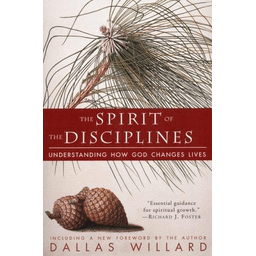 The Spirit of the DisciplinesDallas Willard's case that the spiritual disciplines are the means by which grace actually remakes a person - the philosophically serious book the whole modern formation movement quietly stands on.
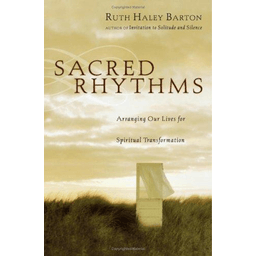 Sacred RhythmsRuth Haley Barton’s practical handbook for arranging an unhurried life around a handful of ancient spiritual practices - the book a lot of burned-out, schedule-shredded Christians get handed when they finally admit the pace isn’t working.
 MultiplyFrancis Chan's plainspoken disciple-making curriculum, built to be worked through by two people with a free set of teaching videos - the workbook you hand the person you're discipling.