
- Starting price
- Free; $13 print
- Free tier
- Yes
- Platforms
- Print · Kindle · Audiobook · Free PDF (desiringgod.org)
- Developer
- Crossway
- Launched
- 2003
- Updated
- May 25, 2026
The verdict
A short, intense book with one big argument - that a life spent chasing comfort, leisure, and a 30-year retirement of seashells and golf is a wasted life. Piper writes it as a sermon, not a self-help manual, and it has converted more than 600,000 copies' worth of readers into people who actually rethink their calendars.
Try Don't Waste Your Life ↗Opens desiringgod.org
Don't Waste Your Life has quietly become the favorite handoff book for college pastors, campus ministers, and older Christians who want to put something into a twenty-two-year-old's hands that won't bounce off. Released by Crossway in 2003 and still in steady print after more than 600,000 copies, it is John Piper's most-circulated short book - shorter than Desiring God, more pointed than Future Grace, and built around a single thesis that the reader can repeat to a friend after one sitting.
The thesis is the title. It doesn't tell you how to find your calling. It doesn't tell you which career to pick. It doesn't tell you how to balance work and family. It tells you, with unusual directness, that a life can be wasted - that comfortable, respectable, financially-secure American lives are being wasted right now in enormous numbers - and that the only thing keeping a life from being wasted is whether it is spent making Christ visibly great. Everything else in the book is downstream of that claim.
It's also a book with an unusual second life. Piper toured it with the Christian hip-hop artist Lecrae in the mid-2000s as the Don't Waste Your Life Tour, which planted the same thesis in front of an audience that doesn't usually read Reformed Baptist pastors. Crossway kept the PDF free at desiringgod.org. So a book that should have been a niche 2003 hardcover has instead become something closer to a generational tract - the kind of thing a youth pastor hands to a high-school senior, a college roommate forwards as a link, and a thirty-year-old re-reads when the salary is finally good and the soul feels weirdly hollow.
✓ The good
- One thesis, hammered home - the whole book exists to make a single, repeatable argument, and that focus is its biggest strength
- Scripture-saturated - anchored in 2 Corinthians 4 and Philippians 1:21, with extended exposition rather than self-help-style proof-texting
- Free PDF at desiringgod.org - Piper's publishing model treats books as ministry, so the full text is downloadable with no email wall
- Short and re-readable - under 200 pages, designed to be finished in a weekend and revisited every few years
- Famous "seashells" illustration - the story of the retired couple collecting shells in Florida has become a load-bearing image for an entire generation
- Pairs naturally with audio and the Lecrae collaboration - there's a built-in ecosystem of sermons, talks, and music around the same thesis
- Works as a gift book - it's the rare Christian living title pastors actually buy by the case to hand out at graduations
✗ Watch out
- Intensity is the whole register - readers looking for nuance, humor, or pastoral gentleness will find the tone relentlessly urgent (sometimes by design, sometimes wearying)
- Light on practical "what do I do Monday" - the book is a worldview reset, not a vocational planning guide
- Reformed Baptist frame is visible - Piper's broader theology (Christian Hedonism, sovereignty of God) sits underneath every chapter, which some readers will love and others will want to bracket
- Examples skew toward missions and martyrdom - the held-up exemplars are often missionaries who died young, which can leave ordinary callings feeling under-celebrated
- Dated cultural references in spots - the 2003 vintage shows in the retirement-as-shuffleboard imagery, though the argument itself has aged well
- Can be misread as anti-rest or anti-enjoyment - careful reading shows Piper isn't against pleasure; quick reading can leave a guilt residue he didn't intend
Best for
- College students and twenty-somethings
- Anyone re-evaluating career or calling
- Pastors and parents buying a gift for a graduate
- Readers new to John Piper looking for a short entry point
Avoid if
- You want a step-by-step vocational guide
- You're allergic to high-intensity, sermon-style prose
- You're looking for a balanced take on rest, sabbath, and slowness
- You've already absorbed the thesis from Desiring God or Piper's sermons
What Don't Waste Your Life is
Don't Waste Your Life is a short, urgent book of Christian living by John Piper, written out of his own near-miss with a life he later judged would have been wasted. He recounts watching his father pray that he wouldn't drift, working as a young academic, and arriving in his thirties at the conviction that the only non-wasted life is one organized around making the worth of Christ visible to the world. The book is structured as ten chapters that build that case from autobiography, scripture, and historical example.
It is not a memoir, a productivity book, or a career guide, though it sits adjacent to all three. The closest genre is the extended sermon - Piper writes in the cadence he preaches in, returns to a small handful of Bible texts repeatedly, and ends most chapters with a direct address to the reader. The Lecrae-collaboration Don't Waste Your Life Tour later turned the same material into a live ministry event, and the title became a kind of slogan in young-adult Christian culture in the late 2000s and 2010s.
Why young adults still pick up this specific book
The single biggest practical difference between Don't Waste Your Life and the broader category of Christian living books is the book's refusal to flatter the reader. Most titles in this lane open with affirmation - you matter, you're loved, your dreams are God-given. Piper opens with the possibility that your life, right now, on its current trajectory, may already be wasting itself. That single move is why the book keeps getting handed to twenty-somethings: it speaks to a real, articulable fear that polite encouragement doesn't reach.
The other reason is durability. The thesis doesn't depend on a specific cultural moment. The 2003 examples have dated; the underlying argument - that comfort-as-end-goal is corrosive to Christian witness - has not. Readers who first met the book at nineteen tend to re-read it at twenty-nine and thirty-nine and find different parts of it landing. It's the thoughtful person's college-graduation gift book, and it has held that slot for two decades.
The thesis: a life can actually be wasted
Piper's central argument runs like this. A human life has a finite number of hours. Those hours are being spent on something. The question is not whether you have a worldview, a god, or a master - the question is which one. If the operative goal of your life is comfort, financial security, leisure, family stability, or even moral respectability, then the hours are being spent on those things, and at death there will be nothing more to show. He uses the famous illustration of a retired couple in Florida collecting seashells full-time - not because shell-collecting is sinful, but because, at the final accounting, a life summed up as "they collected shells" is, in his blunt phrasing, a tragedy.
The argument lands because it doesn't single out the obvious sins. It targets respectable, suburban, fundable lives - exactly the lives most of his readers are either living or aiming at. That's why the book reads as confrontational even though it never raises its voice. Piper is not writing against partying twenty-somethings. He is writing against the version of the dream where you work hard, retire at sixty, and spend the last decades on hobbies. That target audience is, by his diagnosis, the one most at risk of a wasted life - because nothing in their lives looks visibly broken.
2 Corinthians 4 and Philippians 1:21 - the two anchor texts
Two passages do most of the load-bearing work. The first is 2 Corinthians 4, where Paul describes Christians as jars of clay carrying a treasure, afflicted but not crushed, dying outwardly but renewed inwardly. Piper reads this as the template for a non-wasted life: visible weakness, visible suffering, and through it, the visible worth of Christ. That gives him a category - a way to talk about ordinary jobs, ordinary marriages, and ordinary hardships as the place where the thesis actually plays out. You don't have to be a missionary to live this; you have to be a jar of clay whose cracks let the treasure show.
The second is Philippians 1:21 - "For to me to live is Christ, and to die is gain." Piper structures the book around that verse the way a sermon is structured around a text. He spends entire chapters on what it means to be able to say "to die is gain" without flinching, and what it means for the rest of life if death is genuinely a promotion. The verse is also where the book's tone comes from. Paul wrote it from prison, expecting execution, and the urgency in Piper's prose is borrowed from the urgency in Paul's. Once you see the two texts running underneath every chapter, the book stops feeling like ten loosely-connected sermons and starts reading as a single sustained exposition.
The free PDF and the Lecrae-collaboration ecosystem
Crossway publishes the book, but Piper's ministry, Desiring God, treats it the way software companies treat a freemium product. The full PDF has been posted at desiringgod.org since the early years, free, no email wall, identical to the print text. The MP3 audiobook has at times been available the same way. That distribution choice is not incidental - it's why a single book has reached audiences that would never browse a Christian bookstore, including a lot of international readers in places where Crossway print copies are hard to find.
The other half of the ecosystem is the Don't Waste Your Life Tour, the mid-2000s collaboration with Lecrae and the Reach Records artists. Lecrae built a song around the title, the tour pushed the book into hip-hop audiences and college campuses simultaneously, and a generation of young adults who would not have read Piper on their own absorbed the thesis through a Reach Records album cycle. For a reader picking up the book today, this matters in two ways: the title carries cultural freight that the bare 2003 hardcover wouldn't, and the supporting audio, sermons, and music are all still findable for free. The book is the spine, but it sits inside a larger free-to-access body of work.
Pricing
Free PDF
Free
Full book downloadable at desiringgod.org with no email gate - the same edition as print.
Paperback
~$12.99
Crossway trade paperback, the standard gift edition; widely stocked in church bookstores.
Hardcover
~$19
Crossway hardcover for re-readers and gift-givers who want a more durable copy.
Kindle
~$10
Standard Kindle edition; syncs with Audible if you also buy the audiobook.
Audible
~$15
Unabridged audiobook - works well for the book's sermonic cadence on a commute.
Group Study Guide
~$10
Separate companion workbook with discussion questions, intended for small groups and campus ministries.
There is essentially no excuse not to read this book on cost grounds - the full PDF is free at desiringgod.org and has been for years. That is Piper's intentional publishing posture, not a sale, and it includes the same text as the Crossway print edition.
Most readers who want a physical copy go for the Crossway paperback at around $13. It's the gift edition for a reason - durable enough to hand to a college student, cheap enough to buy by the case for a graduating youth group. Hardcover exists at roughly $19 for re-readers and people who want something that survives a decade on a shelf.
The Kindle edition runs around $10 and pairs cleanly with the Audible audiobook at around $15. The audiobook is genuinely worth considering - the book reads in Piper's sermon cadence anyway, and hearing it preached lands the urgency in a way the page sometimes doesn't.
There's also a separate Group Study Guide at roughly $10, intended for small groups and campus ministries. Most users do not need the study guide - the book functions as a discussion driver on its own - but if you're leading twelve sophomores through it on Tuesday nights, the structured questions earn their keep.
Where Don't Waste Your Life falls behind
Limited practical scaffolding. The book is brilliant at convincing you that comfort-as-goal is a problem; it is sparse on what you do with that conviction next Monday morning. Readers who want a vocational discernment workbook will need to pair it with something more practical - Tim Keller's Every Good Endeavor and Os Guinness's The Call are the usual handoffs.
Examples skew toward dramatic callings. Many of Piper's held-up exemplars are missionaries who died young - Jim Elliot, David Brainerd, Henry Martyn. The intent is to picture courage; the side effect is that a reader in an accounting job can come away wondering whether ordinary work counts. Piper believes it does, and says so, but the weight of the illustrations pulls the other direction.
Tonally one-note by design. The book has one volume setting: urgent. That is a strength when you need to be shaken and a weakness when you need to be comforted, rested, or carefully discipled through a hard season. Readers in burnout often need The Ruthless Elimination of Hurry before they need this.
Reformed Baptist frame is visible but not foregrounded. Piper's broader commitments - Christian Hedonism, the sovereignty of God in salvation, a particular reading of human depravity - sit under the argument. Most of the thesis is exportable across traditions, but readers who want to know where the author is coming from will eventually want to read Desiring God to see the full system.
Dated in surface details. Some of the 2003 cultural references - shuffleboard retirement, particular celebrities, particular ads - feel like a decade older than they are. The underlying argument has aged better than the illustrations.
Don't Waste Your Life vs. Desiring God vs. Crazy Love
These are the three books that get handed to the same reader for overlapping reasons. Different strengths.
Desiring God is the full Piper system - Christian Hedonism, sovereignty, the argument that God is most glorified in us when we are most satisfied in him. It's the longer, denser, more theological book, and it's the one to read if you already buy the thesis of Don't Waste Your Life and want the underlying framework. Don't Waste Your Life is the on-ramp; Desiring God is the system.
Crazy Love by Francis Chan covers similar territory - radical commitment, the danger of lukewarm Christianity, the call to spend your life on something more than the suburban default - but in a register that's warmer and more anecdotal. Chan tells stories; Piper preaches. Readers who find Piper too intense often land softer with Chan, and the two books read well as a pair.
If you can only read one, the answer depends on the reader. A nineteen-year-old at a state university gets Don't Waste Your Life. A new-Christian young professional gets Crazy Love. A reader who's already wrestled with both and wants the theological underpinning goes to Desiring God. None of the three contradicts the other two - they sit on a continuum from sermon (Piper-short) to story (Chan) to system (Piper-long).
The bottom line
Don't Waste Your Life is the book to read at the moment a comfortable life starts feeling like a default rather than a choice. It is short, intense, scripture-saturated, and unusually honest about the failure mode it's trying to prevent - a respectable, well-funded, spiritually inert life that nobody around you will critique because nothing in it looks broken. The free PDF removes every barrier to picking it up, the Lecrae-tour ecosystem keeps the thesis circulating across generations, and the central argument has aged better than most Christian living books from the same era. Read it once at twenty, again at thirty, and pass copies down.
Alternatives to Don't Waste Your Life
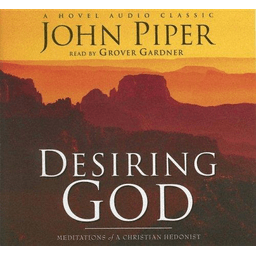 Desiring GodPiper's longer, more theological book - the full Christian Hedonism system that sits underneath Don't Waste Your Life.
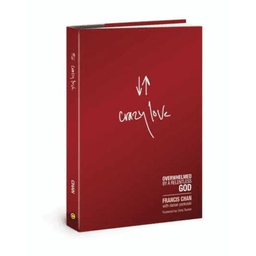 Crazy LoveFrancis Chan's warmer, story-driven companion to a very similar thesis - better entry point for readers who find Piper too intense.
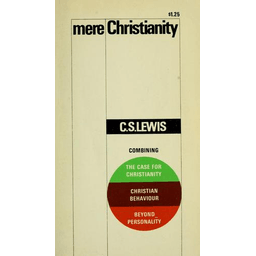 Mere ChristianityC. S. Lewis on first principles - slower, broader, and the standard read-this-first book across most Christian traditions.
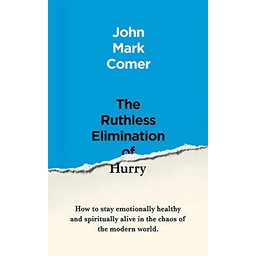 The Ruthless Elimination of HurryJohn Mark Comer on rest, pace, and unhurried discipleship - the natural counterweight when Piper has left you exhausted.
Frequently asked questions
Is Don't Waste Your Life really free?
Yes. The full PDF is posted at desiringgod.org with no email gate. The print, Kindle, and Audible editions are paid, but the text itself has been free for years as part of Piper's intentional publishing posture.
How long does it take to read?
Most readers finish it in a weekend. It's under 200 pages, written in sermon cadence, and most chapters can be read in a sitting.
Do I need to read Desiring God first?
No. Don't Waste Your Life is the shorter, more accessible book and is usually the entry point. Desiring God is the longer theological treatment of the same author's broader system, and many readers go there second.
Is this book just for young adults?
It is most often handed to college students and twenty-somethings, but the argument lands at every life stage. Readers in their thirties and forties tend to re-read it as a recalibration when career or comfort starts crowding out everything else.
What was the Don't Waste Your Life Tour?
A mid-2000s ministry collaboration between John Piper and Christian hip-hop artist Lecrae, built around the book's thesis. Lecrae released a song with the same title, and the tour brought the message to college campuses and audiences that wouldn't otherwise encounter Piper's writing.
Is it appropriate for non-Reformed readers?
The central argument - that lives oriented around comfort and conventional success are at risk of being wasted, and that lives oriented around Christ are not - translates across traditions. Piper's broader theological frame is Reformed Baptist, and that frame is visible in places, but most of the book's load-bearing argument is exportable.
What should I read after this?
Common next steps are Desiring God if you want the full theological system, Crazy Love by Francis Chan for a warmer companion volume, or The Ruthless Elimination of Hurry by John Mark Comer if Piper has left you energized but also exhausted.
Sources & further reading
More Christian Living Books
 The Prodigal GodTim Keller’s 130-page reading of Luke 15 has quietly become one of the most-gifted Christian books of the last twenty years - and the reason is the title itself.
 Practicing the WayComer’s 2024 follow-up to The Ruthless Elimination of Hurry has quietly become the default spiritual-formation book in a thousand small groups - and the reasons are worth unpacking.
 Walking with God Through Pain and SufferingTim Keller’s most comprehensive book on suffering - part survey of how every culture has tried to explain pain, part biblical theology, part field manual for the people actually walking through it.
 FerventThe prayer book that turned “strategic, specific prayer” into a fill-in-the-blank battle plan - and rode the War Room moment to the top of the bestseller lists.
 A Grace DisguisedJerry Sittser lost his mother, his wife, and his four-year-old daughter in a single car crash - and the book he wrote about it has quietly become the one grieving people press into each other’s hands, because it refuses to tell you how to get over your loss.The Ruthless Elimination of HurryJohn Mark Comer’s 2019 breakout - a pastor’s case that hurry is the great spiritual enemy of our age - has quietly become the go-to slow-down book for an exhausted generation of Christians. Here’s what it actually delivers, and where it doesn’t.