- Starting price
- Free PDF; $14.99 paperback
- Free tier
- Yes
- Platforms
- Print · Kindle · Audiobook · Free PDF (Piper’s books are mostly free at desiringgod.org)
- Developer
- Multnomah Books
- Launched
- 1986 (Revised + Expanded 1996, 2003, 2011)
- Updated
- May 25, 2026
The verdict
Desiring God is the book that taught a generation to say "God is most glorified in us when we are most satisfied in Him." Whether or not you finish convinced of Christian Hedonism as a system, the chapters on worship, prayer, money, and suffering have a sermon-pulpit weight you remember years later.
Try Desiring God ↗Opens desiringgod.org
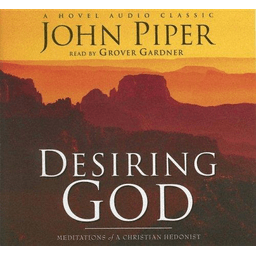
Desiring God has quietly become the book pastors hand to a serious 22-year-old who just asked, "Is it okay to want to be happy?" John Piper’s 1986 paperback - expanded three times since, most recently in the 25th-anniversary edition - argues that the pursuit of joy in God is not optional, not selfish, and not a side effect of the Christian life. It is the Christian life, viewed from the inside. The thesis sits on the cover in a single sentence: God is most glorified in us when we are most satisfied in Him.
It is not a memoir. It is not a devotional. It is not a systematic theology, though it leans on one. What it is, really, is a long sermon - chapter by chapter, Piper takes a domain of life (worship, conversion, love, marriage, money, missions, suffering) and asks what changes when joy in God is treated as the engine instead of an embarrassed afterthought. The voice is unmistakable: short sentences, biblical quotation stacked on biblical quotation, Jonathan Edwards in the footnotes, and a willingness to push a claim until the reader either flinches or agrees.
The book also launched a publishing engine. Out of Desiring God came the desiring-god.org ministry, twenty-plus follow-up titles, and a free-PDF model that has made nearly every Piper book downloadable at no cost. That last fact - that you can read this book tonight without paying anyone - is part of why the review numbers run as high as they do.
✓ The good
- A single, memorable thesis - "God is most glorified in us when we are most satisfied in Him" is the kind of line readers carry around for decades
- Sermon-style chapters - each chapter could be preached on its own; the rhythm is built for re-reading, not skimming
- Free PDF and EPUB at desiringgod.org - the cost-of-entry barrier is essentially zero, which is rare for a book this widely cited
- Substantive treatment of suffering and money - the chapters that get the least airtime in popular Christian publishing get full weight here
- Jonathan Edwards as undercurrent - Piper rehabilitates an 18th-century thinker most modern readers have never opened
- Holds up after almost forty years - the 25th-anniversary edition reads as fresh as the original; the thesis has not aged out
- Spawns its own ecosystem - if a chapter grabs you, there is almost always a longer Piper book or sermon that goes deeper
✗ Watch out
- Dense for first-time readers - Piper writes like a preacher, and some chapters require a second pass
- Emotional/affective emphasis is contested - readers from Wesleyan, Catholic, and Anglican traditions sometimes find the joy-as-engine framing incomplete next to other categories like obedience, sacrament, or virtue
- Reformed Baptist defaults throughout - the underlying soteriology is explicit, which some readers will appreciate and others will want to bracket
- Repetitive by design - the thesis gets restated in every chapter, which is the point but can feel hammered
- Light on practical "how" - Desiring God is mostly diagnostic and motivational; the practical disciplines book is When I Don’t Desire God, which is a separate purchase
- Footnote-heavy - readers who skip footnotes will miss roughly a third of the argument
Best for
- Christians wrestling with whether the pursuit of joy is selfish
- Readers who like sermon-shaped prose and long quotations
- Pastors and small-group leaders looking for a chapter-a-week study
- Anyone curious about Reformed devotional writing without committing to a systematic theology
Avoid if
- You want a short, narrative, story-driven Christian book
- You bounce off dense prose with stacked Scripture proofs
- You are looking for a Catholic or Orthodox spirituality classic
- You want a practical how-to on spiritual disciplines (try Ortlund, Foster, or Piper’s own follow-up When I Don’t Desire God)
What Desiring God is
Desiring God is John Piper’s 1986 book-length argument for what he calls Christian Hedonism: the claim that the chief end of human beings is to glorify God by enjoying Him forever, and that those two clauses are not separate but one. The phrase is a deliberate rework of the Westminster Shorter Catechism, swapping "and" for "by." Piper builds the case across twelve chapters - worship, conversion, love, Scripture, prayer, money, marriage, missions, suffering - applying the thesis to each in turn.
It is a paperback you can finish in two weeks of evenings, but it is rarely read that way. Most readers move through one chapter at a time, often in small groups, often re-reading. The text has been revised three times (1996, 2003, 2011); the 25th-anniversary edition is the one in print today and adds a substantial preface plus expanded material on suffering. The free PDF, EPUB, and MOBI versions at desiringgod.org are identical to the print text.
Why everyday Christians read Desiring God
The thesis is the differentiator. Most popular Christian books in the 1980s and 1990s argued that joy is a fruit of obedience, a reward for faithfulness, or a feeling Christians shouldn’t lean on too hard. Piper inverts the order: joy in God is the goal, not the byproduct, and pursuing it harder is the engine of every other Christian virtue. For readers raised on the idea that wanting to be happy is faintly suspicious, the framing lands like a door opening.
The second differentiator is voice. Piper writes the way he preaches - short sentences, parallel structures, scripture stacked on scripture, and a refusal to soften a claim because someone might disagree. Some readers find this bracing; others find it exhausting. Either way it is unmistakable, and the chapters on prayer, money, and suffering have a pulpit weight that makes them quotable years later. The third differentiator, almost as important, is that the book is free.
The Christian Hedonism thesis: "God is most glorified in us when we are most satisfied in Him"
The thesis is one sentence and the book is twelve chapters of unpacking it. Piper argues that God’s glory and human joy are not in tension - that the pursuit of joy in God is what worship actually is, and that any framework which treats joy as optional or selfish has misread the Bible’s own emotional vocabulary. He stacks the case from the Psalms ("Delight yourself in the Lord"), from Jesus ("for the joy set before him"), from Paul ("rejoice in the Lord always"), and from a long appendix on Jonathan Edwards’ doctrine of the affections.
The thesis has been engaged across traditions with very different conclusions. Some Reformed and evangelical readers treat it as the missing piece that finally makes the Christian life coherent. Wesleyan, Anglican, and Catholic readers have engaged it more cautiously - some embracing the affective emphasis, others noting that joy in God sits alongside other biblical categories (obedience, virtue, the sacraments, communal liturgy) which the thesis can flatten if pressed too hard. Piper himself addresses several of these critiques in later editions. The book is at its strongest when read as a corrective to joyless Christianity rather than as a complete account of the Christian life.
Piper’s voice and the sermon-shaped chapter
Every chapter of Desiring God reads like a sermon, because most of them started as one. Piper was the preaching pastor at Bethlehem Baptist in Minneapolis when he wrote the book, and the chapters carry that DNA - a thesis sentence near the top, a long unfolding through stacked Scripture passages, an extended quotation from an older writer (usually Edwards, sometimes Lewis or Spurgeon), and a closing application that returns to the chapter’s opening claim. The rhythm is meant to be heard as much as read.
For readers used to narrative or memoir-driven Christian books, this is an adjustment. There are almost no anecdotes. There are very few illustrations from contemporary life. What there is, instead, is argument - and the argument moves at a pace that rewards re-reading. A common pattern among long-time readers is to revisit one chapter a year, the way a Catholic reader might return to a chapter of The Imitation of Christ. The audiobook works well for second and third passes, less well for a first read, because the footnotes carry real weight.
The free-PDF model: the differentiator nobody mentions
Nearly every Piper book - Desiring God included - is available as a free PDF, EPUB, and MOBI download at desiringgod.org. No email gate, no paywall, no "enter your name to receive the file." This is the model the entire Desiring God Ministries operation runs on: print royalties and donor support fund the writing, and the digital editions are released into the wild. For a book this widely cited, that is unusual. Most modern Christian classics still sit behind publisher paywalls.
In practical terms it means anyone can read Desiring God tonight without paying anything, and pastors in countries where the paperback would cost a week’s wages can download the same text the seminary professor in Minneapolis is using. The Kindle, Audible, and paperback editions still sell - many readers prefer print or audio, and the publisher economics still work - but the free-PDF channel is the reason this book has reached the corners of the global church it has reached. It is also why review-aggregator ratings for Piper’s books skew high: most of the ratings are coming from readers who paid nothing to read them.
Pricing
Free PDF / EPUB
Free
Full book downloadable at desiringgod.org - the differentiator. No email gate, no upsell.
Paperback (25th Anniv. Ed.)
~$14.99
The standard physical edition. Around 350 pages including appendices.
Hardcover
~$22
Heavier binding, same text. Common gift edition.
Kindle
~$10
Searchable, syncs with Kindle highlights. Often discounted further.
Audible
~$15
Narrated edition; around 14 hours. Useful for re-reads.
25th Anniversary Edition
~$17
Includes a new preface, expanded chapters on suffering, and the longest set of appendices.
The headline number is free. The full PDF and EPUB sit on desiringgod.org with no email gate, no signup, and no upsell. Most readers do not need any other version.
The paperback (around $14.99, 25th-anniversary edition) is the standard physical buy and the version most small groups use. Hardcover runs about $22 and is mostly bought as a gift. Kindle hovers around $10, often less on sale, and syncs highlights across devices.
The Audible edition (around $15, roughly 14 hours) is the most useful for second and third passes - many long-time readers report listening to it more than reading it. The narration is unhurried, which fits the prose.
The 25th-anniversary edition is the canonical text in print right now. It includes a new preface, expanded chapters on suffering, and the longest set of appendices. Earlier editions are still readable; the core argument has not changed, but the expanded suffering material is where most of the revision energy went.
Where Desiring God falls behind
Light on practical disciplines. Desiring God is mostly diagnostic and motivational - it tells you that joy in God is the engine, but the practical "what to do on Tuesday morning" book is When I Don’t Desire God, which Piper wrote eighteen years later. Readers who come to Desiring God looking for a spiritual-disciplines manual sometimes leave frustrated.
A specific Reformed Baptist soteriology runs through it. The chapter on conversion, in particular, assumes a Calvinist account of regeneration and effectual call. Readers from Wesleyan, Catholic, Orthodox, Anglican, or LDS backgrounds will read past several paragraphs that assume positions they do not share. The thesis itself does not require Calvinism - many non-Reformed readers have embraced the joy-as-worship framing - but the surrounding framing is consistent with Piper’s tradition and is not hidden.
Dense prose, sparse narrative. There are very few stories. There are almost no anecdotes from Piper’s own life (his later book Don’t Waste Your Life is more autobiographical). The reader who learns best through narrative will find Knowing God, Mere Christianity, or The Pursuit of God a better first stop and Desiring God a better second.
The Christian Hedonism label has had to do real work over forty years. Piper acknowledges in later prefaces that the word "hedonism" still scares off readers who do not get past the title. It is also a label that has had to be defended repeatedly against the charge that it makes God a means to human joy rather than the end of human joy. Piper’s answer is in the book - God is the joy - but the label keeps requiring the explanation.
It is one voice. The book leans hard on Edwards and almost nowhere else for theological scaffolding. Readers who want a broader devotional canon - Augustine, Bernard, Teresa, à Kempis, Lewis - will find the bibliography surprisingly narrow for a book this influential.
Desiring God vs. Knowing God vs. The Pursuit of God
Three modern devotional classics, three different center-of-gravity arguments. Desiring God argues that the chief end of the Christian life is joy in God, and that pursuing that joy is what worship is. J. I. Packer’s Knowing God argues that the chief end is the knowledge of God - relational, doctrinal, and personal - and that everything else flows from knowing rightly who God is. A. W. Tozer’s The Pursuit of God argues that the chief end is the experience of God’s presence, and that most modern Christians have settled for less than the New Testament expects.
Different strengths. Desiring God is the most polemical and the most thesis-driven; you finish it with a single sentence you can teach to a teenager. Knowing God is the most doctrinally substantive and the most evenly paced; it reads like a careful systematic theologian writing for the pew. The Pursuit of God is the shortest and the most contemplative; Tozer writes like a mystic with a King James cadence and is comfortable in a register Piper and Packer rarely visit.
For most readers the right order is Mere Christianity first (if you have not read it), then whichever of these three matches your temperament. Analytical readers gravitate to Packer. Affective and joy-shaped readers gravitate to Piper. Contemplative readers gravitate to Tozer. None of the three contradicts the others - they are different lenses on the same Christian life - and serious readers usually end up with all three on the shelf eventually.
The bottom line
Desiring God is the rare modern Christian book that has survived its own success. Forty years in, the thesis still lands, the prose still preaches, and the free PDF means there is no reason not to read at least the first three chapters tonight. It is not the only book on joy, worship, or the Christian life, and the Reformed Baptist framing will not be every reader’s home tradition - but the central claim, that God is most glorified in us when we are most satisfied in Him, has done real work in real lives for four decades and shows no sign of stopping. The thoughtful Christian’s book on Christian joy.
Alternatives to Desiring God
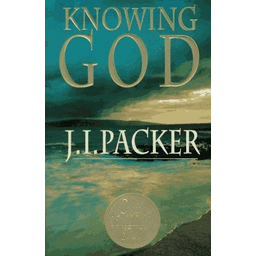 Knowing GodJ. I. Packer’s 1973 classic on the knowledge of God. The most doctrinally substantive of the three modern devotional classics - pairs well with Desiring God.
 The Pursuit of GodA. W. Tozer’s short, contemplative classic on the experience of God’s presence. The most mystical voice in this triplet.
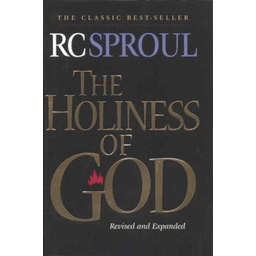 The Holiness of GodR. C. Sproul’s book on the doctrine of God’s holiness. Reformed in framing, accessible in prose, and a common companion read to Piper.
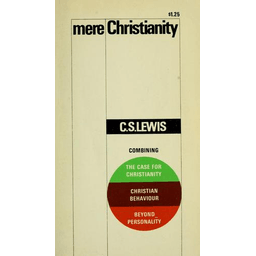 Mere ChristianityC. S. Lewis’s broadcast-talks-turned-book on the core of the Christian faith. The right first read before any of the modern devotional classics.
Frequently asked questions
What is Christian Hedonism?
It is Piper’s term for the thesis that God is most glorified in us when we are most satisfied in Him. The argument is that the pursuit of joy in God is not selfish but central to worship - and that joyless Christianity has misread the Bible’s own emotional vocabulary. The "hedonism" label is deliberately provocative; Piper means joy in God specifically, not joy in pleasure generally.
Do I have to be Reformed or Calvinist to read Desiring God?
No. Piper is Reformed Baptist and the book reflects that, particularly in the chapter on conversion, but the central Christian Hedonism thesis has been engaged across Wesleyan, Anglican, Catholic, and broader evangelical traditions. Readers from other traditions sometimes embrace the joy-as-worship framing while bracketing the surrounding soteriology.
Is the book really free?
Yes. The full PDF, EPUB, and MOBI are downloadable at desiringgod.org with no email gate. Nearly every Piper book follows the same model. The Kindle, Audible, paperback, and hardcover editions are paid, but the text itself is free if you want it that way.
Which edition should I buy?
The 25th-anniversary edition (2011) is the current canonical text. It includes a new preface, expanded chapters on suffering, and the fullest set of appendices. Earlier editions are still readable - the core argument has not changed - but the expanded suffering material is where the most recent revision energy went.
How does Desiring God compare to When I Don’t Desire God?
Desiring God argues that joy in God is the goal. When I Don’t Desire God, written eighteen years later, is the practical follow-up on what to do when the joy is not there - the disciplines of word, prayer, suffering, and community that fight for joy. Most readers who finish Desiring God and want practical next steps end up with the follow-up.
Is the audiobook worth it?
For a second or third pass, yes. For a first read, most readers do better with print or Kindle, because the footnotes carry real weight and are easy to lose in audio. The Audible edition runs around 14 hours and the narration is unhurried, which fits Piper’s prose.
Where does Desiring God sit alongside Knowing God and The Pursuit of God?
All three are modern devotional classics with different center-of-gravity arguments. Desiring God centers joy. Knowing God centers the knowledge of God. The Pursuit of God centers the experience of God’s presence. They do not contradict each other and many serious readers end up with all three on the shelf. Temperament usually decides the order.
Sources & further reading
More Modern Christian Classics
Knowing GodJ.I. Packer’s 1973 classic on the doctrine of God has sold more than 1.5 million copies and is still the book most pastors hand to laypeople who want theology that goes somewhere - here’s what it actually does and who it’s for. The Cost of DiscipleshipDietrich Bonhoeffer’s 1937 exposition of the Sermon on the Mount, written for pastors training under a regime that wanted them silent - and still the sharpest book in print on what following Jesus actually costs.
 Gentle and LowlyDane Ortlund’s 23 short chapters on Matthew 11:29 have quietly become the most-given new Christian book of the decade - and the reason is not what you’d guess.The Holiness of GodR.C. Sproul’s career-defining book on the one attribute of God the church most forgets - and the vision in Isaiah 6 he believed everything else flows from.
 The Weight of GloryThe 1941 sermon many call Lewis's single finest piece of writing - "there are no ordinary people" - gathered with eight other addresses into one slim, uneven, unforgettable collection.The Pursuit of GodA.W. Tozer’s ten-chapter wake-up call on knowing God personally - short, severe, and the one devotional Reformed, Wesleyan, Catholic, and Orthodox readers all seem to keep on the nightstand.