- Starting price
- ~$17 paperback
- Free tier
- No
- Platforms
- Print · Kindle · Audiobook
- Developer
- HarperOne
- Launched
- 1988
- Updated
- May 31, 2026
The verdict
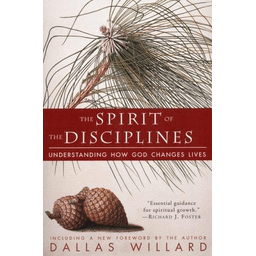
The Spirit of the Disciplines is the theological backbone of the modern spiritual-formation movement - the book that argues, carefully, that following Jesus means training rather than merely trying, and that the disciplines are the activities that make that training possible. It is more conceptual than a how-to manual, and the prose is dense in places, but no recent book makes the deeper case better. Read it for the why; pair it with a how-to for the what.
Try The Spirit of the Disciplines ↗Opens harpercollins.com
The Spirit of the Disciplines has quietly become the book underneath the books. When a pastor recommends a guide to fasting, solitude, or silence, the framework that guide is usually working inside traces back to Dallas Willard. When a church launches a spiritual-formation cohort, the assumptions about how people actually change tend to be his. Willard did not write the most popular book on the disciplines - Richard Foster's Celebration of Discipline holds that title - but he wrote the one that supplies the theology the popular books assume.
Willard was a professor of philosophy at the University of Southern California for nearly half a century, and it shows on every page. He is not interested in giving you a thirty-day plan. He is interested in a prior question: why would practices like solitude, fasting, study, or service have any power to change a human being at all? His answer reframes the whole project. The disciplines are not ways of earning God's favor. They are not spiritual athletics for the unusually devout. They are, in his account, the ordinary means by which grace gets traction in a real human life - the way a person is gradually retrained from the inside out.
Published in 1988, the book carries the subtitle "Understanding How God Changes Lives," and that phrasing is precise. The core move is the distinction between trying and training. A person trying to live like Jesus in the moment of temptation, with no prior formation, will usually fail - the same way an untrained person trying to run a marathon on race day will fail. Training is the arrangement of life around practices that, over time, make the desired action possible. Jesus, Willard argues, lived a life full of such practices - solitude, prayer, fasting, simplicity - and discipleship means apprenticing ourselves to that same kind of life. It is a simple idea stated with real philosophical care, and it has shaped how a generation thinks about growth.
✓ The good
- The theological foundation the whole formation movement stands on - most popular discipline books assume the framework Willard actually argues for
- The training-vs-trying distinction is genuinely clarifying - it reframes spiritual growth in a way readers describe as a permanent shift in how they see the Christian life
- Philosophically substantial - Willard was a career philosopher and grounds his case carefully rather than asserting it, which makes the argument hold up under scrutiny
- Treats the body seriously - a long, distinctive section on the role of the body in spiritual life that most devotional books skip entirely
- Grace-centered throughout - Willard is emphatic that the disciplines are not works that earn standing with God but the means through which grace operates, heading off the most common misreading
- Reads as widely across traditions as any modern formation book - the practices he describes have deep roots in the historic church, and readers from many backgrounds find their own heritage in it
- Ages well. Nearly forty years on, the argument has not dated the way trend-driven Christian-living books do
✗ Watch out
- Not a how-to manual - Willard explains why the disciplines work far more than he walks you through doing them, so most readers need to pair it with a practical guide
- The prose is dense in places - this is a philosopher writing carefully, and some chapters reward a second slow pass rather than a quick read
- Front-loaded with argument - the theological and philosophical groundwork takes a while before the book turns to the practices themselves, which tests readers who came for the practices
- Less structured than its peers - there is no tidy chapter-per-discipline checklist the way some formation books offer, which some readers want
- Assumes some patience with abstraction - readers who prefer story and example to sustained reasoning will find stretches heavy going
Best for
- Readers who want to understand why the disciplines work, not just how
- Pastors and leaders building a theology of spiritual formation
- Anyone who has tried and failed to "just try harder" at the Christian life
- Thoughtful readers comfortable with a philosophically serious argument
Avoid if
- You want a step-by-step practical manual for each discipline
- You want a short, light, story-driven read
- You bounce off abstract or philosophical prose
- You want a thirty-day plan you can start tomorrow morning
What The Spirit of the Disciplines is
The Spirit of the Disciplines is Dallas Willard's theological and philosophical account of how spiritual growth actually happens. Published by HarperOne in 1988, it argues that the classic disciplines - solitude, silence, fasting, study, prayer, worship, service, and others - are the God-given means through which grace transforms a person over time. The central thesis is the distinction between trying and training: lasting change in character does not come from gritting your teeth in the moment but from arranging your life around practices that gradually make the new way of living possible.
It is more conceptual than instructional. Willard spends most of the book establishing why the disciplines have transformative power and how they fit into a life patterned on the life of Jesus, rather than supplying a manual for practicing each one. The flavor is broadly evangelical spiritual-formation thought, though the practices he draws on have deep roots across the historic Christian church. It is widely regarded as a foundational text of the modern spiritual-formation movement, and it pairs naturally with a more practical, step-by-step guide.
Why readers reach for Willard
Most books on the spiritual disciplines start with the practices - here is how to fast, here is how to keep silence, here is a plan for solitude. Willard starts a step earlier, with a question those books rarely pause on: why would any of this work? His training career was in philosophy, and he refuses to let the central claim sit on assertion. He builds it. By the time he gets to the practices, the reader is not just told the disciplines change people; the reader has been walked through an argument for why they do, grounded in how human beings are actually formed.
That is the book's distinctive value and the reason it has outlasted flashier titles. A reader can pick up a how-to guide and follow the steps, but without the underlying framework the practices can curdle into either guilt-driven striving or a checklist of religious tasks. Willard heads both off. He insists, repeatedly, that the disciplines are not works that earn anything from God but the ordinary channels through which grace does its work - and he makes the case carefully enough that it persuades rather than merely reassures. It is the book you read to understand the whole project, which is why so many other books quietly depend on it.
Training, not trying: the idea that reorganizes everything
The engine of the book is a single distinction: the difference between trying and training. Willard's illustration is athletic. A person who has never trained cannot run a marathon by trying hard on race day, no matter how sincere the effort or how strong the desire. The capacity has to be built beforehand, through a long arrangement of life around the right practices. He applies this directly to discipleship. A person trying to respond to an insult with patience, or to a craving with self-control, in the unprepared moment, will usually fail - not for lack of wanting to, but for lack of formation.
The disciplines, in this account, are the training. They are the activities - chosen, repeated, mostly undertaken when no crisis is pressing - that gradually make the desired response available when the moment comes. Solitude trains the soul to be at rest apart from approval; fasting trains it to govern appetite; study reshapes what the mind dwells on. Willard's claim is that Jesus himself lived a life saturated with such practices, and that following him means apprenticing to that same kind of life rather than admiring it from a distance. Readers consistently report this single reframing as the most lasting thing they take from the book: growth is not a matter of effort in the moment but of formation over time.
The body in spiritual life: the chapter most books skip
One of the book's most distinctive sections is its sustained attention to the human body. Where many devotional books treat spiritual life as essentially interior - a matter of beliefs, feelings, and the will - Willard argues that the body is central to how a person is formed, for good or ill. Habits live in the body. Desires are trained through it. The disciplines, in his account, are precisely bodily practices: things you do with your time, your appetite, your tongue, your physical presence or solitude. The body is not an obstacle to the spiritual life but the very instrument through which formation happens.
This is where the philosopher's rigor pays off in an unexpected place. Willard takes seriously that human beings are embodied creatures whose character is shaped by what they repeatedly do, not merely by what they momentarily intend. It explains why the disciplines are activities rather than ideas - why solitude, fasting, and service involve the body at all. The section gives the book a depth and concreteness that abstract treatments of the spiritual life lack, and it is part of why The Spirit of the Disciplines reads as serious rather than sentimental. It treats the reader as a whole person, not a disembodied will to be exhorted.
Grace, not earning: heading off the obvious misreading
The most common objection to any book on the disciplines is that it smuggles in works-righteousness - that all this practicing must be a way of earning standing with God. Willard meets the charge head-on and never lets the reader forget the answer. The disciplines, he insists throughout, earn nothing. They are not payment, performance, or proof. They are the means through which grace operates in a life - the way a sail catches wind it did not generate. Effort, in his framing, is not opposed to grace; grace is precisely what is at work in the effort.
This matters because the misreading is so easy and so destructive. Practiced as earning, the disciplines produce either pride or despair - the satisfaction of having performed, or the crushing sense of falling short. Practiced as the channels of grace, the same activities become freeing rather than burdensome. Willard's careful insistence on this point is one of the book's quiet gifts: it lets a reader take the disciplines seriously without sliding into the legalism that the disciplines, badly understood, can breed. It is the safeguard that makes the whole project usable.
Pricing
Paperback
~$17
The standard HarperOne edition and the copy most readers own. Prices vary by retailer.
Kindle / ebook
~$13
Searchable and highlight-syncs across devices - useful for a book this quotable and this worth re-reading.
Audiobook
~$20
An unabridged recording exists; a reasonable option for a dense book if you prefer to listen and revisit chapters.
Used / library
Under ~$8
A 1988 title with a long print run - used copies are easy to find, and most libraries carry it.
The Spirit of the Disciplines is not free. A new HarperOne paperback runs around $17 as of writing, though the figure moves with the retailer - call it the everyday default and the copy most readers end up owning. It is a 1988 title with a long print history, so used copies are everywhere: thrift stores, library sales, and secondhand sellers routinely have it for under eight dollars, which is how a lot of readers first acquire it.
The ebook runs roughly $13 and is worth considering for a book this quotable - Willard writes in dense, careful paragraphs that reward highlighting and returning to, and search makes a re-read far easier. An unabridged audiobook exists at around $20; it is a reasonable option, with the caveat that this is a book of sustained argument rather than light narrative, so listeners may want to revisit the heavier chapters.
There is no premium tier to agonize over here - it is one book in a few formats. Most readers want the paperback, the balanced default and the copy you will mark up and reach for again. If you commute and prefer to listen, the audiobook is fine; if you live in your highlights, the ebook earns its slightly lower price. The used paperback, meanwhile, is the genuine bargain for anyone who does not mind a previous reader's underlining.
Where The Spirit of the Disciplines falls behind
Not a how-to. This is the thing to know going in. Willard explains why the disciplines work far more than he shows you how to do them. There is no tidy chapter-by-chapter manual for fasting or solitude with steps to follow. That is by design - his project is the foundation, not the floor plan - but it means a reader who wants practical instruction will need to pair the book with a guide like Richard Foster's Celebration of Discipline.
Density. Willard was a philosopher and writes like one - carefully, with sustained argument, in paragraphs that occasionally need a second slow pass. Most readers find the effort repays itself, but this is not a book you skim. Compared with the more accessible prose of some peers, it asks more of you.
A slow runway. The theological and philosophical groundwork comes first and takes a while, so a reader who opened the book hoping to start practicing on page twenty will be some distance in before the practices themselves move to the foreground. It is the right order for the argument; it is not the order an impatient reader wants.
Structure. There is no neat one-discipline-per-chapter checklist of the kind some formation books supply, which makes the book harder to use as a reference and easier to lose the thread of on a first read. Readers who want a clean, modular framework may find the organization more discursive than they would like.
The Spirit of the Disciplines vs. Celebration of Discipline vs. The Ruthless Elimination of Hurry
These three are the modern formation shortlist, and they do genuinely different jobs. The Spirit of the Disciplines (Willard, 1988) is the theological foundation - it argues carefully for why the disciplines transform a person and supplies the framework the other books tend to assume. Celebration of Discipline (Richard Foster, 1978) is the practical companion - Foster, a friend and colleague of Willard's, walks readers through the individual disciplines with far more how-to, which is why it is the more popular of the two. The Ruthless Elimination of Hurry (John Mark Comer, 2019) is the contemporary on-ramp - Comer takes the same tradition, narrows it to the problem of busyness and hurry, and writes in a fast, accessible, story-driven voice for a modern reader.
Different strengths. Willard is the deepest - the book you read to understand the whole project, and the one you will still be thinking about years later. Foster is the most usable - if you want to actually start practicing the disciplines, his is the manual. Comer is the most accessible - if a friend has never thought about formation and you want one short, gripping book to hand them, his lands best. If you are building a theology of how people change, start with Willard. If you want to begin the practices this week, add Foster. If you are easing a busy modern reader in, start with Comer and grow toward Willard.
All three are read widely across Christian traditions, and the practices they describe have deep roots in the historic church. Willard and Foster write from a broadly evangelical spiritual-formation perspective; Comer writes from a similar lineage for a younger, contemporary audience. Readers from many backgrounds find their own heritage of prayer, fasting, and solitude reflected in all three.
The bottom line
The Spirit of the Disciplines is the serious reader's book on spiritual formation - the one that earns, rather than assumes, the claim that practices like solitude and fasting can remake a person. Willard's training-vs-trying distinction is the kind of idea that quietly reorganizes how you see the whole Christian life, and his insistence that the disciplines are channels of grace rather than works keeps the project from curdling into striving. It is denser and less practical than its popular cousins, so most readers will want to pair it with a how-to guide. But for the why beneath the practices, nothing modern does it better.
Alternatives to The Spirit of the Disciplines
 Celebration of DisciplineRichard Foster's classic, practical walk through the disciplines - the how-to companion to Willard's why.
 Practicing the WayJohn Mark Comer's accessible guide to apprenticeship to Jesus - a contemporary on-ramp to the same tradition.
 The Ruthless Elimination of HurryComer on slowing down and unhurrying your life - the most accessible entry point into spiritual formation.
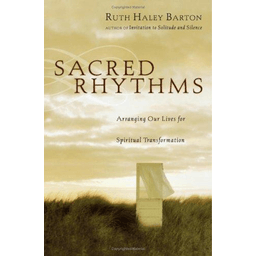 Sacred RhythmsRuth Haley Barton's practical guide to arranging life around spiritual practices - gentle, structured, hands-on.
Frequently asked questions
Is The Spirit of the Disciplines a how-to guide for the disciplines?
Not really. Willard spends most of the book explaining why the disciplines transform a person rather than walking you through how to practice each one. It is more conceptual and theological than instructional. Most readers pair it with a practical guide like Richard Foster's Celebration of Discipline, which supplies the step-by-step how-to that Willard's book intentionally leaves out.
What is the difference between "trying" and "training" in the book?
It is Willard's central idea. Trying is the unprepared effort to do the right thing in the moment, which usually fails - like attempting a marathon with no preparation. Training is arranging your life around practices that, over time, make the desired action possible. The disciplines are that training: chosen, repeated activities that gradually form a person so the right response is available when it is needed.
Is the book hard to read?
It is more demanding than most Christian-living books. Willard was a career philosopher and writes carefully, with sustained argument and some dense passages that reward a slow, second read. It is not unreadable - many readers find it deeply rewarding - but it asks more of you than a light devotional, and the theological groundwork comes before the practices.
Does the book teach that you earn salvation by practicing disciplines?
No, and Willard is emphatic about it. He repeatedly insists the disciplines earn nothing from God. In his account they are not works or performance but the means through which grace operates in a life. He addresses the works-righteousness concern directly and frames effort as something grace works through rather than something opposed to grace.
How does it compare to Celebration of Discipline?
They are companion books by friends and colleagues. Foster's Celebration of Discipline (1978) is the practical, popular walk through the individual disciplines. Willard's The Spirit of the Disciplines (1988) is the deeper theological foundation that explains why those practices work. Many readers use them together: Willard for the why, Foster for the how.
Who was Dallas Willard?
Dallas Willard (1935-2013) was a professor of philosophy at the University of Southern California for nearly fifty years and an influential writer on Christian spiritual formation. Alongside The Spirit of the Disciplines he wrote The Divine Conspiracy and other widely read books. He is regarded as one of the foundational thinkers of the modern spiritual-formation movement.
Where should I start if I am new to spiritual formation?
If you want the deep foundation, this is the book - but many newcomers start with something more accessible and grow toward it. John Mark Comer's The Ruthless Elimination of Hurry or Practicing the Way are gentle on-ramps, and Foster's Celebration of Discipline is the practical manual. Read Willard when you want to understand the whole framework the others assume.
Sources & further reading
More Spiritual Disciplines Books
Celebration of DisciplineThe 1978 book that put the words "spiritual disciplines" back into modern Christian vocabulary - still the field guide a generation of pastors hands new readers when they ask how to actually pray, fast, and study. Spiritual Disciplines for the Christian LifeThe textbook-clear survey of the spiritual disciplines that landed on a thousand church-class syllabi - Bible intake, prayer, fasting, silence, stewardship, and more, each pointed at one goal: godliness.
 The Master Plan of EvangelismRobert Coleman's sixty-year-old study of how Jesus actually trained the Twelve - still the book ministry leaders hand each other when the question is "how did He do it?"Sacred RhythmsRuth Haley Barton’s practical handbook for arranging an unhurried life around a handful of ancient spiritual practices - the book a lot of burned-out, schedule-shredded Christians get handed when they finally admit the pace isn’t working.
 Disciplines of a Godly ManThe men's-group staple that has run through three decades of small groups and church basements - a Reformed-evangelical field manual for the spiritual disciplines, built for accountability and the long haul.
 MultiplyFrancis Chan's plainspoken disciple-making curriculum, built to be worked through by two people with a free set of teaching videos - the workbook you hand the person you're discipling.