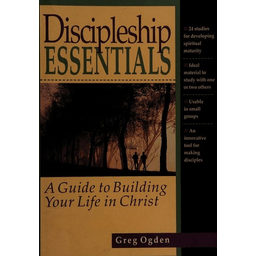
- Starting price
- ~$22 paperback
- Free tier
- No
- Platforms
- Print · Kindle · Leader's guide
- Developer
- InterVarsity Press
- Launched
- 1998
- Updated
- May 31, 2026
The verdict
Discipleship Essentials is the workbook people reach for when they want discipleship to actually happen rather than just be talked about. Greg Ogden built a 25-session curriculum meant to be worked through slowly, in pairs or triads, with Scripture memory and inductive study baked into every week. It is structured, demanding, and unapologetically interactive - and if you finish it with a partner, you are meant to turn around and lead two more people through it.
Try Discipleship Essentials ↗Opens ivpress.com
Discipleship Essentials has quietly become the default workbook for anyone who decides that discipleship should be a thing you do with specific people, not a thing you wish your church did better. Pastors hand it to new believers. Campus ministers run triads through it. Men's and women's groups use it as a year-long spine. It does not have the name recognition of a C.S. Lewis title, and it is not trying to - it is a working tool, the kind that ends up dog-eared, underlined, and passed to the next person who asks how to grow.
The book comes from Greg Ogden, a pastor and seminary professor who spent years frustrated that the discipleship he kept preaching about rarely materialized. So he reverse-engineered one. It does not assume a charismatic teacher up front. It does not assume a large group. It does not assume you already know how to study a passage. Instead it gives two or three people a shared structure they can run themselves, week after week, until the habits stick and the relationship deepens. First published in 1998 and revised in an expanded edition in 2018, it has stayed in print precisely because it solves a problem most churches still have.
What you actually get is a workbook of roughly 25 sessions organized into four parts - growing up in Christ, understanding the message of Christ, becoming like Christ, and the community of Christ. Each session follows the same rhythm: a memory verse, an inductive Bible study you fill in yourself, a short reading that unpacks a core truth, and questions designed to be answered out loud with your partner or triad. It is broadly evangelical in its framing and formation-minded in its goal, and it is built from the ground up to be reproducible - the person you disciple is expected to disciple the next two.
✓ The good
- Built to be reproduced, not just completed - the triad model is designed so today's participant becomes next year's leader, which is the whole point
- Genuinely interactive - the fill-in-the-blank inductive studies force you to engage the text yourself rather than absorb a teacher's conclusions
- A complete one-year spine - ~25 sessions across four parts give a small group a clear, finishable arc instead of an open-ended commitment
- Scripture memory is built in - every session carries a memory verse, so the discipline is structural rather than optional
- Low barrier to lead - there is no charismatic-teacher requirement; two or three ordinary people can run it themselves, which is rare in a curriculum
- The expanded 2018 edition refreshed the material and tightened the sessions - it reads cleaner than the original 1998 release
- A leader's guide exists for groups that want extra structure - the curriculum scales from a single pair to a multi-triad church rollout
✗ Watch out
- It requires a partner or triad - this is not a book you can meaningfully work through alone, which is by design but limits who can use it
- It demands consistency - the value compounds over months of weekly meetings, and a group that drifts gets little out of it
- The content is foundational by design - mature believers may find some core sessions cover ground they already know well
- It presumes an evangelical framework for Scripture study - the inductive method and the way passages are framed reflect that tradition (yet)
- Workbook format is not for everyone - readers who prefer prose to fill-in-the-blank exercises can find the layout dry
Best for
- Anyone wanting to disciple one or two people with real structure
- New believers being mentored by an experienced Christian
- Small groups or triads committing to a year together
- Churches building a reproducible discipleship pathway
Avoid if
- You want a book to read solo on the couch
- You can't commit to consistent weekly meetings
- You want advanced or academic theology rather than foundations
- You prefer flowing prose over a fill-in-the-blank workbook
What Discipleship Essentials is
Discipleship Essentials is Greg Ogden's interactive discipleship curriculum, first published by InterVarsity Press in 1998 and reissued in an expanded edition in 2018. It is a workbook, not a book to be read straight through - roughly 25 sessions organized into four parts covering growing up in Christ, understanding the message of Christ, becoming like Christ, and the community of Christ. Each session pairs a memory verse, an inductive Bible study the reader fills in, a short reading on a core truth, and discussion questions meant to be answered aloud. The format is deliberately demanding: you are meant to do the work before you meet, then talk it through with one or two others.
The defining design choice is who it is for. Ogden built the curriculum to be worked through in pairs or triads - small groups of three - rather than in a large class with a teacher at the front. The reason is reproduction: a triad is small enough that everyone participates and large enough that, when it ends, each person can go start a new triad of their own. The book is broadly evangelical in its framing and formation-minded in its aim. It is a long-running staple for churches and ministries that want discipleship to be intentional and repeatable rather than incidental.
Why churches reach for the triad model
Most discipleship resources assume one of two shapes: a book you read alone, or a class where one teacher pours into a room of listeners. Both have a quiet flaw - they do not naturally reproduce. The solo reader finishes and shelves the book. The class ends and the listeners disperse. Ogden's wager is that the missing ingredient is structure small enough to be handed off, and his answer is the triad: three people, a shared workbook, and a rhythm they can run without an expert.
That choice changes what the book is. A triad means there is nowhere to hide - with three people, everyone talks, everyone does the study, everyone is known. It also means the curriculum has a built-in multiplier: finish a triad and you are equipped to start one, which is why a single group can, over a few years, seed a whole network across a congregation. This is buyer information, not a verdict on method - but it is the reason Discipleship Essentials shows up on so many church and campus-ministry reading lists. It is engineered for the handoff, and that engineering is the product.
The four-part curriculum: a finishable arc
The roughly 25 sessions are grouped into four movements that build on each other. Part one, growing up in Christ, covers the foundations - assurance, identity, and the basic disciplines. Part two, understanding the message of Christ, walks through the core content of the faith: who God is, what humanity is, what Jesus accomplished, and how to respond. Part three, becoming like Christ, turns to formation - prayer, the Word, witness, and growth in character. Part four, the community of Christ, situates the individual inside the church and the practices of life together. Each session is self-contained but sequenced, so a group always knows where it is and how much remains.
The practical effect is a clear, finishable commitment. Open-ended small groups tend to drift - there is no obvious finish line, so attendance erodes. Discipleship Essentials gives a triad a defined arc, typically run across a year of weekly or biweekly meetings, with a real ending. That ending matters: it is the moment participants are meant to become leaders. A finishable curriculum is easier to recruit into ('it's a year, here's the map') and easier to reproduce, because the person you discipled has watched a complete cycle.
The session rhythm: memory verse, inductive study, reading
Every session runs the same four-part rhythm, and the consistency is intentional. It opens with a Scripture memory verse tied to the week's core truth. It moves into an inductive Bible study - questions the reader answers directly in the workbook, working from the text toward their own observations rather than being handed a summary. It includes a short reading that frames the session's central idea. And it closes with discussion questions meant to be worked through aloud with a partner or triad. You do the study before the meeting; the meeting is for talking it through.
This is what makes the book a workbook rather than a study guide. The inductive method asks you to engage the passage yourself - to notice, to ask, to draw the conclusion - instead of absorbing someone else's. The fill-in-the-blank format does real work: it slows you down and makes the engagement visible, both to you and to the people you meet with. It also reflects an evangelical approach to personal Bible study, worth knowing as buyer information. For readers who take to that method, the weekly rhythm becomes a durable habit that outlasts the curriculum itself.
Reproducibility: the disciple becomes the discipler
The single idea that organizes everything else is reproduction. Ogden does not want you to finish Discipleship Essentials and feel informed; he wants you to finish it and turn around and lead two more people through it. The triad size, the self-running format, the finishable arc, the leader's guide - every design decision serves that handoff. The expanded 2018 edition keeps this front and center, framing the participant's graduation as the start of the next generation of triads rather than the end of a course.
In practice this is what separates the book from a one-and-done devotional. A church that adopts it is not buying a single year of content; it is buying a multiplier. One triad becomes three the following year, those become nine, and the curriculum spreads through ordinary members rather than depending on staff capacity. Whether a given congregation achieves that depends entirely on follow-through - the model only multiplies if people actually go start the next triad. But the architecture is there, and it is the reason the book has endured as a discipleship staple for more than two decades.
Pricing
Paperback (expanded edition)
~$22
The standard IVP workbook most people own. The copy you write in and pass on.
Kindle / ebook
~$18
Searchable and portable. Note that a fill-in workbook is less natural on a screen than on paper.
Leader's guide
~$15
A companion volume for the person facilitating - extra structure for a group or church rollout.
Workbook + leader's guide bundle
~$35
The pair most facilitators buy together when launching a new triad. Often discounted by retailers.
Discipleship Essentials is not free. The standard expanded-edition paperback runs around $22 - call it the everyday default - and it is the copy you are meant to write in, mark up, and eventually hand to the next person you disciple. Used copies of the original 1998 edition turn up cheaply, but for a workbook you intend to fill out, a clean new copy is the sensible buy.
The Kindle edition runs a little less, around $18, and is searchable and portable. The honest caveat is that a fill-in-the-blank workbook is less natural on a screen than on paper - the inductive studies are designed to be written into, and many readers end up wanting the physical copy anyway. If you only ever read on a tablet, the ebook works; if you plan to actually do the exercises, the paperback earns its few extra dollars.
For the person facilitating, a companion leader's guide is available for around $15, and a workbook-plus-guide bundle (often discounted) lands near $35. Most participants do not need the leader's guide - it is for the one running the triad. The paperback workbook is the balanced default and the only purchase the majority of readers need to make.
Where Discipleship Essentials falls behind
Requires a partner. This is the big one and it is fully intentional: the inductive studies and discussion questions assume someone across the table. A motivated reader can work the pages alone, but the book's whole value - accountability, being known, the handoff to leadership - evaporates without a triad. If you cannot line up at least one other committed person, this is the wrong tool.
Demands consistency. The value compounds across months of weekly meetings, which means a group that starts strong and then drifts gets very little for its money. The curriculum has no shortcut and no skim mode; it rewards follow-through and punishes flakiness. That is a feature for disciplined groups and a real obstacle for busy ones.
Foundational by design. The sessions are pitched at building a solid base, so a mature believer may find several topics cover familiar ground. That is right for a discipleship onramp, but it means the book is most powerful for newer Christians or for established believers revisiting fundamentals with someone they are mentoring.
Assumes an evangelical study framework. The inductive method and the way passages are introduced reflect a broadly evangelical approach to personal Bible study. Readers from other traditions can absolutely use it, but they will notice the framing. Worth knowing as buyer information rather than discovering mid-curriculum.
Workbook layout. The fill-in-the-blank structure is the source of the book's strength and also a turnoff for readers who simply prefer prose. If you bounce off worksheets and want a narrative you can read on the couch, the format will feel dry no matter how good the content is.
Discipleship Essentials vs. Multiply vs. The Master Plan of Evangelism
These three sit on the same shelf - intentional, reproducible discipleship - but they do genuinely different jobs. Discipleship Essentials (Greg Ogden) is the structured workbook: ~25 sessions, four parts, designed for a year-long pairs-or-triad commitment with memory verses and inductive study baked in. Multiply (Francis Chan and Mark Beuving) is the lighter, more accessible disciple-making guide - shorter, paired with free video sessions, and aimed at getting an ordinary believer comfortable making disciples without a heavy time commitment. The Master Plan of Evangelism (Robert Coleman) is the foundational text behind the whole category - not a workbook at all but a study of Jesus's own method with the Twelve, the book that argues for disciple-multiplication in the first place.
Different strengths. Ogden is the most complete year-long curriculum - the one you adopt when you want a finishable spine and a built-in handoff. Chan is the easiest on-ramp and the lightest lift, best for someone hesitant about whether they can disciple anyone at all. Coleman is the why behind both - the short, classic case for why one-on-one multiplication beats programs, read widely across traditions. If you want a tool to actually run a triad, it is Ogden. If you want to lower the barrier to starting, add Chan. If you want the philosophy that grounds the practice, read Coleman.
All three are broadly evangelical in framing and are used widely across that tradition's churches and campus ministries. Ogden is the most curriculum-like and the most demanding; Chan the most approachable; Coleman the most foundational. Readers outside that tradition will find the disciple-making logic transferable even where the specific framing reflects its evangelical roots.
The bottom line
Discipleship Essentials is the tool you pick when you have decided discipleship should happen on purpose, with specific people, over a real stretch of time. It is structured, interactive, and built from the ground up to reproduce - finish a triad and you are meant to lead the next one. It is not a solo read and it is not a casual one; it rewards a committed pair or triad and gives a drifting group very little. But for anyone who wants a finishable, repeatable path for growing in the Christian life alongside others, it has earned its place as a long-running staple.
Alternatives to Discipleship Essentials
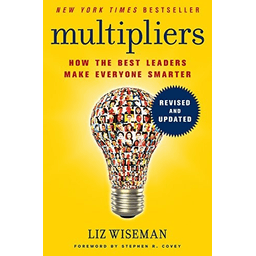 MultiplyFrancis Chan and Mark Beuving's accessible disciple-making guide, paired with free video sessions - the lightest on-ramp in the category.
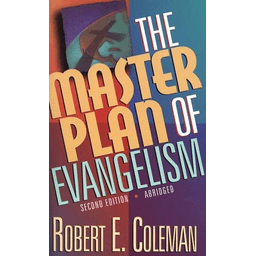 The Master Plan of EvangelismRobert Coleman's classic study of Jesus's method with the Twelve - the foundational case for disciple-multiplication that grounds the whole field.
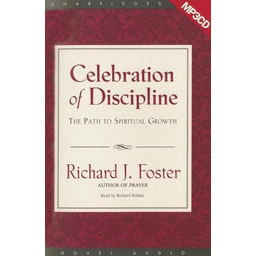 Celebration of DisciplineRichard Foster's landmark on the spiritual disciplines - deeper on the practices of formation, lighter on the one-on-one structure.
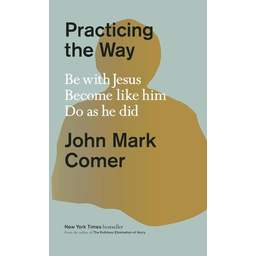 Practicing the WayJohn Mark Comer's modern guide to spiritual formation and apprenticeship to Jesus - a more recent, narrative take on becoming like Christ.
Frequently asked questions
Do I need a group to use Discipleship Essentials?
Effectively, yes. The book is designed to be worked through in pairs or triads - small groups of three - with the inductive studies and discussion questions answered together. You can technically fill in the pages alone, but the accountability, the relationships, and the handoff to leadership that make the book valuable all depend on having at least one other committed person.
How long does it take to complete?
It is built around roughly 25 sessions across four parts, which most groups run as a year-long commitment meeting weekly or biweekly. The pace is deliberately unhurried - each session includes a memory verse, an inductive Bible study to complete beforehand, and discussion to work through together, so the value comes from consistency over months rather than speed.
What is the difference between the 1998 and 2018 editions?
Greg Ogden released an expanded edition in 2018 that refreshed and tightened the original 1998 material and sessions. The core four-part structure and the pairs-and-triad method are the same; the expanded edition simply reads cleaner and updates some of the content. For a new purchase, the expanded edition is the one to get.
Is this a Bible study or a workbook?
It is a workbook with inductive Bible study built into every session. Rather than handing you a teacher's conclusions, each session asks you to study a passage and fill in your own observations directly in the book, then discuss them with your partner or triad. That fill-in-the-blank, do-it-yourself format is what makes it a workbook rather than a book you simply read.
What theological tradition is it written from?
It is broadly evangelical in its framing, with a focus on discipleship and spiritual formation, and Greg Ogden writes from a pastoral and seminary background within that tradition. The inductive study method and the way passages are introduced reflect that approach. Readers from other traditions can use it, but will notice the framing, so it is worth knowing as buyer information going in.
Is there a leader's guide?
Yes. A companion leader's guide is available for the person facilitating a triad or group, offering extra structure for running the sessions and scaling from a single pair up to a church-wide rollout. Most participants do not need it - it is aimed at the facilitator - and it typically runs around $15, or is bundled with the workbook for around $35.
Who is Discipleship Essentials best for?
It is best for anyone who wants to disciple one or two people with real structure - a mentor and a new believer, a triad committing to a year together, or a church building a reproducible discipleship pathway. It is less suited to someone who wants a solo read, who cannot commit to consistent meetings, or who is looking for advanced theology rather than a strong foundation.
Sources & further reading
More Spiritual Disciplines Books
Celebration of DisciplineThe 1978 book that put the words "spiritual disciplines" back into modern Christian vocabulary - still the field guide a generation of pastors hands new readers when they ask how to actually pray, fast, and study.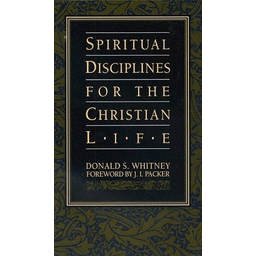 Spiritual Disciplines for the Christian LifeThe textbook-clear survey of the spiritual disciplines that landed on a thousand church-class syllabi - Bible intake, prayer, fasting, silence, stewardship, and more, each pointed at one goal: godliness.The Master Plan of EvangelismRobert Coleman's sixty-year-old study of how Jesus actually trained the Twelve - still the book ministry leaders hand each other when the question is "how did He do it?"
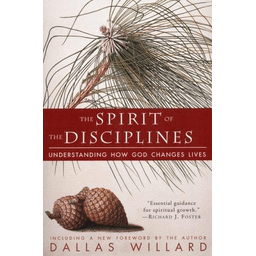 The Spirit of the DisciplinesDallas Willard's case that the spiritual disciplines are the means by which grace actually remakes a person - the philosophically serious book the whole modern formation movement quietly stands on.
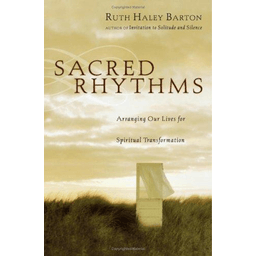 Sacred RhythmsRuth Haley Barton’s practical handbook for arranging an unhurried life around a handful of ancient spiritual practices - the book a lot of burned-out, schedule-shredded Christians get handed when they finally admit the pace isn’t working.
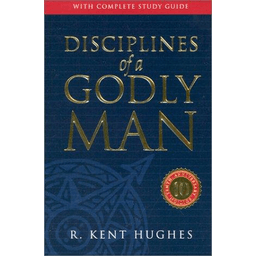 Disciplines of a Godly ManThe men's-group staple that has run through three decades of small groups and church basements - a Reformed-evangelical field manual for the spiritual disciplines, built for accountability and the long haul.