
- Starting price
- Free (public domain)
- Free tier
- Yes
- Platforms
- Print · Kindle · Audiobook · Free (public domain)
- Developer
- Various / Public domain
- Launched
- 1899
- Updated
- May 31, 2026
The verdict
George Müller of Bristol is the standard biography of one of the most-cited figures in Christian devotional history - a man who ran orphanages for thousands of children and, on principle, never asked a single human being for money. A.T. Pierson’s 1899 account is long and Victorian, and the prayer-and-answer chapters repeat by design, but no other book documents Müller’s method as fully. If you want the original source on “the life of faith,” this is it.
Try George Müller of Bristol ↗Opens ccel.org
George Müller of Bristol has quietly become the book Christians reach for whenever the conversation turns to prayer and money. Pastors quote it from the pulpit. Mission organizations hand it to new recruits. Readers across nearly every tradition - Catholic, Protestant, Orthodox, and Latter-day Saint - have found in it the same arresting story: a man who cared for thousands of orphans for decades and refused, as a matter of settled conviction, to ask anyone but God for the funds to do it. That refusal is the spine of the whole book, and it is the reason the book has never quite gone away.
The subject is George Müller (1805-1898), a Prussian-born former gambler and petty thief who came to faith as a university student, moved to England, and settled in Bristol, where he spent the rest of his long life. He is not remembered chiefly as a preacher, though he preached for seventy years. He is remembered for what he built: a set of orphan houses on Ashley Down that, over the course of his lifetime, took in more than ten thousand children. The houses were not endowed. They were not underwritten by a wealthy patron. They ran, day after day, on what Müller called the prayer of faith - and on a discipline of never telling anyone about a need except God.
The book itself is the work of A.T. Pierson, an American Presbyterian pastor and writer who knew Müller personally and drew heavily on Müller’s own published journals. First issued in 1899, the year after Müller’s death, it is part biography, part edited diary, and part devotional argument. It is long - comfortably over four hundred pages in most editions - and the prose is unmistakably late-Victorian. But it remains the fullest single account of Müller’s life and method in print, and it is the source nearly every shorter retelling quietly depends on. This review is for anyone deciding whether to read the original rather than a paraphrase.
✓ The good
- The standard full-length account of Müller’s life - almost every shorter biography and sermon illustration traces back to Pierson’s book and the journals it draws on
- Built on Müller’s own journals - Pierson quotes the diaries at length, so you are reading the man’s own day-by-day record rather than a distant summary
- Documents the orphanage work in concrete detail - the number of children, the daily provision, the buildings on Ashley Down, the decades of operation are all laid out plainly
- The “ask only God, never people” principle is described carefully - Pierson explains Müller’s reasoning rather than just marveling at the results, so you understand the method, not only the headlines
- Read across every Christian tradition - the account of trusting God for daily provision lands with Catholic, Protestant, Orthodox, and Latter-day Saint readers alike
- Public domain and free - the full text is legally available online at no cost, which makes it one of the most accessible Christian classics in print
- A primary source on 19th-century faith missions - historians of the era still cite Müller’s Bristol work and its influence on figures like Hudson Taylor
✗ Watch out
- Victorian prose and length - the sentences are long, the register is formal, and at 400-plus pages it is a slower read than any modern biography
- Devotional-biographical rather than critical history - Pierson admired Müller and wrote to edify, so the book interprets events through faith rather than weighing them sceptically
- The answered-prayer accounts repeat - Müller recorded provision after provision in his journal, and Pierson reproduces many of them; the repetition is the point, but it can feel like more of the same
- Light on Müller’s inner conflicts - the book shows the public ministry far more than the private man, so readers wanting psychological depth will find it thin
- Editions vary widely - abridged, modernized, and full versions all circulate under similar titles, and it is easy to buy a cut-down copy expecting the complete text
Best for
- Readers who want the original source on Müller rather than a paraphrase
- Anyone studying prayer, provision, or the history of faith missions
- Small groups working through a Christian classic on trust and money
- Readers who already love the story and want the fullest account of it
Avoid if
- You want a short, fast-moving modern biography
- You want critical, footnoted history rather than a devotional life
- You bounce off Victorian prose and need a contemporary voice
- You want a balanced portrait of Müller’s private struggles and failures
What George Müller of Bristol is
George Müller of Bristol is a biography written by A.T. Pierson and first published in 1899, the year after Müller’s death. It runs over four hundred pages in most full editions and traces Müller’s life from his wayward youth in Prussia, through his conversion as a university student and his move to England, to the decades in Bristol where he founded the Scriptural Knowledge Institution and the orphan houses on Ashley Down. It covers the building of those houses, the daily provision for the children, Müller’s preaching and later missionary travels, and his death at age ninety-two. Throughout, Pierson leans on Müller’s own published journals, quoting them at length so the reader hears Müller’s voice as much as Pierson’s.
Because Pierson is the public domain, the book exists in many editions - from publishers including CLC Publications and Whitaker House - and the complete text is freely available online. It is not a confession of faith for any single tradition. Müller worked in Plymouth Brethren circles in England, but the book’s subject is his practice of prayer and provision rather than any denominational distinctive, and it has been read and recommended far beyond the circles Müller himself moved in.
Why readers across every tradition keep returning to Müller
The single biggest difference between George Müller of Bristol and almost every other Christian biography is the principle at its center. Müller did not merely pray for his orphanages - many people pray for their ministries. He adopted a deliberate, lifelong rule that he would never make his financial needs known to any person. No appeals. No fundraising letters. No mention, even to friends, that the rent was due or the larder was empty. He told God, and he waited, and he recorded what happened in a journal that Pierson reproduces in detail. That is Müller’s distinctive practice, and the book exists to document it rather than to recommend that every reader copy it.
That arc - a man with thousands of mouths to feed and a self-imposed silence about every need but to God - is why readers across every Christian tradition return to this book. The story does not depend on agreeing with Müller’s particular method to land. Catholic, Protestant, Orthodox, and Latter-day Saint readers have all received the account of daily trust in God as their own. Pierson renders it through Müller’s own diary entries rather than through sermonizing, and the cumulative weight of those entries is the thing readers remember. It is the thoughtful reader’s case study in what one man meant by living by faith.
The orphan houses on Ashley Down: thousands of children, decade after decade
The heart of the book is the orphanage work. Müller opened his first orphan house in rented quarters on Wilson Street in Bristol in 1836, beginning with a handful of girls; over the following decades the work grew until five large purpose-built houses stood on Ashley Down, capable of holding around two thousand children at a time. Pierson lays out the scale carefully - the number of children received over Müller’s lifetime ran past ten thousand - and he keeps returning to the daily mechanics: how the children were fed and clothed, how they were taught and apprenticed, how a household of that size was run without a guaranteed income. The detail is what makes the scale land. It is one thing to say a man cared for orphans; it is another to read how breakfast appeared on a morning when there had been no money for it the night before.
Pierson treats the buildings themselves as part of the story. Each new house on Ashley Down was, in Müller’s telling, an answer to specific prayer - land secured, funds arriving, construction completed - and the journals record the process stage by stage. For Müller, the visible houses were meant to be evidence: a public, brick-and-mortar argument that God could be trusted to provide. Pierson presents them in exactly that spirit. Readers who want a neutral architectural or social history of Victorian orphan care will not find it here; what they will find is the fullest devotional account of how those particular houses came to be built and how they were sustained for the rest of Müller’s life.
The prayer-only principle: telling God, and no one else
Müller’s governing rule is the book’s most distinctive thread, and Pierson is careful to explain the reasoning behind it rather than simply marvel at the results. Müller resolved early that the orphanage would be funded by prayer alone - that he would never solicit donations, never publish a list of needs as an appeal, never drop hints to wealthy visitors, never go into debt. When money was short, he prayed; when it arrived, he recorded it. He kept this rule for more than sixty years, and he kept it publicly, publishing reports that described what had already happened rather than what was needed next. His stated aim was not to prove himself but to give the wider church visible grounds for trusting God with their own circumstances.
Pierson reproduces the journal entries that document this practice across decades - the morning the children sat down to empty tables and food arrived before the meal was over; the gifts that came from strangers at the hour of greatest need; the long stretches of provision recorded almost like an account book. The point of the principle, for Müller, was that the supply came in answer to prayer and could not be credited to his own appeals. This is the practice the whole book is built to document. It is described here as Müller’s distinctive conviction and method - one that has inspired many and that readers are free to weigh for themselves - rather than as a rule the book presses on anyone else.
The journals and the wider ministry: preaching, missions, and the Scriptural Knowledge Institution
The orphanages are the most famous part of Müller’s life, but Pierson is at pains to show that they were one branch of a larger work. In 1834 Müller and his colleague Henry Craik founded the Scriptural Knowledge Institution, an organization that distributed Bibles and tracts, supported missionaries, and ran schools - and the orphan houses grew out of that broader effort. Pierson follows all of it, including the schools the Institution funded at home and abroad and the missionaries it supported, among them workers connected to the wider 19th-century missionary movement. Müller’s influence on contemporaries who took up faith-based mission funding, including Hudson Taylor, surfaces in these chapters.
The book also covers Müller’s later decades, when, having entrusted the orphanage to others, he spent his seventies and eighties on extended preaching tours across Europe, North America, Asia, and beyond - tens of thousands of miles, by his own count, in his old age. Throughout, Pierson’s raw material is Müller’s own journal, which Müller kept for most of his adult life and published in installments. That reliance on the diaries is the book’s defining strength and its defining limitation: you get Müller’s day-by-day record in his own words, but you also get events filtered through the lens of a man writing to demonstrate the faithfulness of God rather than to examine himself.
Pricing
Free (public domain)
Free
The full text is in the public domain and legally available online - CCEL, Project Gutenberg, and others host the complete book at no cost. The way most readers should start.
Paperback
~$12-18
Multiple publishers keep it in print - CLC Publications and Whitaker House among them. Prices vary with edition; confirm it is the full text and not an abridgment.
Kindle / ebook
Free-~$5
Public-domain ebook versions are free; some publishers sell formatted, proofread editions for a few dollars. Either is fine for a quotable book like this.
Audiobook
Free-~$15
Free volunteer-narrated recordings exist (LibriVox and similar), alongside paid professional editions. Quality varies more in the free recordings, so sample before committing.
George Müller of Bristol is, for most readers, free. The full text is in the public domain, and complete copies are hosted online by CCEL, Project Gutenberg, and others at no cost. For a book this quotable - and this long - starting with the free text is the sensible default, and it is the way many readers first encounter it.
If you prefer print, several publishers keep it in stock. CLC Publications and Whitaker House both issue editions, and a paperback typically runs somewhere in the $12-18 range depending on the publisher and whether it is the full text or an abridgment. That last point matters more here than with most books: because the title is public domain, shortened and modernized versions circulate under nearly identical covers, so it is worth confirming you are buying the complete account if that is what you want.
Ebook and audiobook editions both exist. Public-domain Kindle files are free, while a few publishers sell cleaned-up, proofread ebook editions for a couple of dollars. On audio, free volunteer recordings (LibriVox and similar) sit alongside paid professional narrations that can run up to around $15; the free recordings vary in quality, so sample a chapter before settling in for four hundred pages.
Most readers do not need a paid edition at all. The free text is complete and legitimate. The case for buying print or a polished ebook is comfort and convenience - a physical copy for a study group, or a proofread file that is easier on the eyes than a raw scan. The free public-domain text is the balanced default and the place to start.
Where George Müller of Bristol falls behind
Victorian prose and length. Pierson wrote in 1899, and it shows - long sentences, formal diction, and a four-hundred-page span that a modern biography would cover in half the words. The book rewards patience, but a reader expecting a brisk contemporary narrative will feel the period in nearly every paragraph.
Devotional, not critical. Pierson knew and admired Müller, and he wrote to edify. Events are interpreted through faith rather than weighed with a historian’s scepticism, and sources beyond Müller’s own journals are thin. Readers who want a balanced, footnoted account that questions as well as reports will need to supplement it with a modern historical treatment.
The repetition. Müller recorded answered prayer after answered prayer, and Pierson reproduces many of those entries. The accumulation is deliberate - the sheer volume is meant to be the evidence - but read straight through, the provision narratives can begin to feel like variations on a single theme rather than distinct episodes.
Thin on the inner man. The book is rich on the public ministry and sparse on Müller’s private struggles, doubts, and relationships. Because Pierson leans so heavily on journals written to demonstrate God’s faithfulness, the human being behind the method can feel held at arm’s length.
Edition confusion. Abridged, modernized, and complete versions all circulate under the same title, and the public-domain status means the market is crowded. It is easy to end up with a cut-down copy when you wanted the full text, so check before you buy.
George Müller of Bristol vs. God’s Smuggler vs. The Hiding Place
These three are among the most-read true-story accounts of faith under pressure in English-speaking churches, and each does something different.
George Müller of Bristol is the oldest and the most documentary - a Victorian biography built on decades of journals, centered on a single sustained experiment in funding a ministry by prayer alone. God’s Smuggler, Brother Andrew’s 1967 account of carrying Bibles across the Iron Curtain, is a first-person adventure narrative driven by trust in God in moments of immediate danger; it is shorter, faster, and written in a modern voice. The Hiding Place, Corrie ten Boom’s 1971 memoir of hiding Jews and surviving Ravensbrück, is the intimate survivor’s story, built around forgiveness rather than provision.
Different strengths. Müller is the deepest on prayer and provision as a settled, lifelong discipline - the long obedience documented day by day. God’s Smuggler is the best on faith in the face of acute risk. The Hiding Place is the best on suffering and forgiveness. Müller is also by far the most demanding read of the three - the longest, the most Victorian, the least narrative-driven. If you want a fast, gripping story, start with one of the others; if you specifically want the original, fullest account of the life of faith and trusting God for daily provision, Müller is the source the others’ readers eventually find their way to.
The bottom line
George Müller of Bristol earns its place as the standard life of a man whose story the wider church has been retelling for over a century. It is long, it is Victorian, and the parade of answered-prayer entries repeats by design - but no shorter book documents Müller’s method as fully, and reading Pierson means reading Müller’s own journals rather than someone else’s summary of them. The prayer-only principle at its heart is Müller’s distinctive conviction, described here so you can understand and weigh it for yourself. If you want the original source on what one man meant by living by faith, this is the book. Real limitations for readers wanting fast, critical history, but worth knowing about going in rather than dealbreakers.
Alternatives to George Müller of Bristol
 Spurgeon: A New BiographyArnold Dallimore’s life of Charles Spurgeon - another full-length account of a towering Victorian-era figure, pitched to general readers rather than scholars.
 A Praying LifePaul Miller’s modern classic on prayer - the contemporary, practical companion to the lifelong prayer discipline Müller embodies in scene.
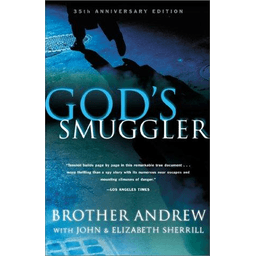 God’s SmugglerBrother Andrew’s account of carrying Bibles behind the Iron Curtain - a faster, modern first-person story of trusting God under pressure.
 The Hiding PlaceCorrie ten Boom’s memoir of hiding Jews and surviving Ravensbrück - a shorter, more intimate true story built around forgiveness rather than provision.
Frequently asked questions
Who was George Müller?
George Müller (1805-1898) was a Prussian-born evangelist who settled in Bristol, England, and founded a set of orphan houses on Ashley Down that cared for more than ten thousand children over his lifetime. He is best known for funding the work through prayer and, on principle, never asking any person for money - only God.
What is the “ask only God, never people” principle?
It was Müller’s lifelong rule that he would never make the orphanage’s financial needs known to any human being - no appeals, no fundraising, no hints, and no debt. When money was short he prayed; when it arrived he recorded it. He kept the rule for more than sixty years and published reports describing what had already happened rather than what was needed. The book describes this distinctive practice in detail; whether to adopt it is left to the reader.
Who wrote the book, and when?
A.T. Pierson, an American Presbyterian pastor and writer who knew Müller personally, wrote George Müller of Bristol. It was first published in 1899, the year after Müller’s death, and draws heavily on Müller’s own published journals.
Is the book free?
Yes. It is in the public domain, and the complete text is legally available online at no cost from sites like CCEL and Project Gutenberg. Free public-domain ebook and audiobook versions also exist, alongside paid print editions from publishers such as CLC and Whitaker House.
Is it hard to read?
It is more demanding than a modern biography. Pierson wrote in 1899, so the prose is formal and the sentences are long, and the full text runs over four hundred pages. It rewards patience, but readers who bounce off Victorian writing may prefer a shorter modern retelling of Müller’s life.
Why do the prayer-and-answer stories repeat?
Müller recorded answered prayer after answered prayer in his journals over decades, and Pierson reproduces many of those entries. The repetition is intentional - the sheer volume of recorded provision is meant to be the evidence - but read straight through, the accounts can feel similar. It is the point of the book rather than a flaw, though some readers find it slow.
What should I read after George Müller of Bristol?
For a faster modern true story of faith under pressure, God’s Smuggler by Brother Andrew is a natural next read, as is Corrie ten Boom’s The Hiding Place. For a contemporary, practical treatment of prayer itself, Paul Miller’s A Praying Life fits well. For another full-length Victorian-era life, Arnold Dallimore’s biography of Charles Spurgeon is a strong companion.
Sources & further reading
More Christian Biographies
God’s SmugglerThe Dutch missionary’s 1967 memoir about driving a blue Volkswagen Beetle full of Bibles past Soviet border guards - and the prayer that became a generation’s shorthand for trusting God in impossible places. Through Gates of SplendorElisabeth Elliot’s account of five young missionaries killed reaching the Waorani of Ecuador in 1956 - the book that sent a generation toward the mission field, told by one of the widows.
 Tortured for ChristThe Romanian pastor’s 1967 account of fourteen years in communist prisons - written in three days after his release, and the book that launched Voice of the Martyrs.
 JoniJoni Eareckson Tada’s account of the diving accident that left her a quadriplegic at seventeen - and the long, unglamorous climb out of despair that followed - told without flinching and without tidy answers.
 Just As I AmBilly Graham’s own account of a North Carolina farm boy who became the twentieth century’s best-known evangelist - the crusades, the presidents, and the doubts in between.
 The Cross and the SwitchbladeThe skinny country preacher who left rural Pennsylvania for the gang-run streets of 1950s New York - and the conversion of switchblade-carrying gang leader Nicky Cruz that turned one man’s hunch into a worldwide ministry.