- Starting price
- $15.99 paperback
- Free tier
- No
- Platforms
- Print · Kindle · Audiobook · Audible
- Developer
- NavPress
- Launched
- 2009 (Updated and Expanded 2017)
- Updated
- May 24, 2026
The verdict
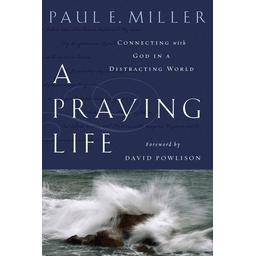
A Praying Life has quietly become the favorite prayer book of pastors, small groups, and exhausted parents across the broadly evangelical world. Miller’s child-like prayer thesis - grounded in two decades of raising a daughter with autism - lands harder than any technique-based prayer book on the shelf.
Try A Praying Life ↗Opens seejesus.net
A Praying Life has quietly become the favorite prayer book of the broadly evangelical world. It has sold somewhere north of half a million copies since NavPress published it in 2009, spawned an Updated and Expanded edition in 2017, and now anchors a companion seminar that has run in thousands of churches. None of that was predictable from the book’s opening pages, which sound more like a memoir about a struggling family than a book about prayer at all.
It doesn’t hand you a method. It doesn’t front-load you with theology. It doesn’t pretend the author has prayer figured out. Instead Paul Miller - director of the seeJesus discipleship ministry - spends the first hundred pages describing his own prayerlessness, his own distractibility, and the slow, embarrassing way God taught him to pray like a child. Readers either find this disarming or they find it unbearable. The half-million who kept reading found it disarming.
The book’s argument is simple and slightly shocking: most adults cannot pray because most adults have stopped being children. Miller spends three hundred pages unpacking what that means - mostly through the unguarded stories of his own marriage, his own kids, and especially his daughter Kim, who has autism and is the quiet center of gravity of the entire book. The result is the most beloved modern Reformed-leaning evangelical book on prayer, and one of the very few that a reader can hand to a non-Christian friend without flinching.
✓ The good
- The child-like prayer thesis - reframes the whole problem of prayer in a way that releases readers from technique anxiety
- Family-life storytelling - the Kim chapters and the Miller-family vignettes are unlike anything else in the genre, and they do the theological work the propositions only point at
- Companion seminar ecosystem - the Praying Life Seminar gives churches, small groups, and staff teams a guided way to actually practice what the book teaches
- Honest about cynicism - a long, unflinching middle section names the modern adult’s real obstacle to prayer instead of pretending it’s just busyness
- Pastoral tone - Miller never scolds the reader for not praying enough; the book is gentle in a category that often is not
- Updated and Expanded edition (2017) - added study questions and chapter summaries that make it usable as a small-group curriculum without a separate workbook
- Travels well across traditions - quoted approvingly in Reformed, charismatic, Anglican, and Catholic spiritual-direction circles alike
✗ Watch out
- No systematic teaching on prayer mechanics - readers looking for "here is the ACTS method, here is how to pray the Psalms" will not find a clean framework
- Memoir-heavy - if you bounce off personal-narrative writing, the very thing that makes this book beloved will make it a slog
- Lightly Reformed-leaning - the theology of providence and sovereignty sits in a broadly Reformed evangelical frame, which some readers will love and some will find unfamiliar
- Discussion guide sold separately - the included end-of-chapter questions are good but the standalone discussion guide is what most groups actually want
- Audiobook is competent rather than great - a book this story-driven would benefit from a more performative narration than the straight read it gets
Best for
- Exhausted parents who feel like prayer has dried up
- Small groups looking for a 12-17 week study with built-in discussion questions
- Pastors and ministry staff teams who want a shared prayer vocabulary
- Readers burned out on technique-driven or guilt-driven prayer books
Avoid if
- You want a step-by-step method or a structured prayer-journal system
- You strongly prefer didactic theology over memoir and story
- You’re looking for a liturgical or fixed-hours prayer guide
- You need a book that engages deeply with non-Western or contemplative monastic prayer traditions
What A Praying Life is
A Praying Life is a 300-page memoir-driven book on prayer, structured in five parts and just over thirty short chapters. It was written by Paul E. Miller, director of seeJesus, a discipleship ministry his father Jack Miller founded out of the broadly Reformed evangelical tradition. NavPress first published it in 2009; the 2017 Updated and Expanded edition added chapter summaries and end-of-chapter discussion questions that turned it into a near-default small-group resource.
The book does not teach a method. It teaches a posture. Miller argues that the adult Christian’s prayer problem is fundamentally a posture problem - we have grown out of the dependence, smallness, and unselfconsciousness that Jesus pointed to when he said "unless you become like little children." The five parts walk the reader from "Learning to Pray Like a Child" through cynicism, the Father’s love, listening prayer, and finally a long section on how prayer reshapes the actual story of a life.
Why so many pastors quietly hand out A Praying Life
Most modern prayer books fail in the same way: they either guilt the reader for praying too little or hand them a technique that feels foreign within a week. Miller does neither. He starts in the place most adults actually live - prayerlessness, distractibility, low-grade cynicism - and refuses to scold. That tone alone is what pastors notice first. They have shelves of prayer books they would never hand to a struggling congregant. They hand this one.
The deeper reason is the Kim chapters. Miller’s daughter Kim has autism, and the book is unembarrassed about the daily, decade-long experience of praying for a child who cannot speak the way other children speak. That story does the theological work that the propositions only point at. When Miller says God answers the child-like prayer of dependence, the reader has watched him live inside that claim for two hundred pages. It is the rare prayer book that earns its conclusions by the time it reaches them.
The child-like prayer thesis: the book’s central move
Miller’s central claim is taken straight from Matthew 18 and Mark 10: unless you become like a little child, you will not enter the kingdom - and you will not pray either. The book’s first major section, "Learning to Pray Like Your Child," argues that adult prayer fails not because adults lack discipline but because adults have grown out of childlikeness. A child does not prepare to ask a parent for help. A child does not curate the request. A child does not wait until the request is theologically airtight. A child interrupts. Miller wants the reader to interrupt God again.
This sounds like a small thing. In practice it’s transformative. Readers report that the first ten chapters do more to unlock daily, unscripted, small-thing prayer than any method-based book they have tried. The thesis also reframes the rest of the genre - once you have read Miller, the technique books read like adult-curated performances of the very posture Jesus told us to abandon. That reframe is the single biggest reason the book has stayed in print, and stayed loved, for fifteen years and counting.
Family-life storytelling: the Kim chapters and why they land
The most quoted passages in A Praying Life are not its arguments. They are its stories - and almost all of those stories come from the Miller family table. Paul and Jill Miller raised six children, one of whom, Kim, has autism. Kim is the quiet center of the entire book. Miller describes praying for her speech, praying through long seasons when nothing visibly changes, praying when she finally asks for a "contact" (her word for the speech device that eventually lets her communicate) and praying through what happens after she gets one.
The Kim chapters do something the propositions could not do alone: they give the reader twenty years of evidence that the author has actually lived inside his own thesis. Other vignettes - Miller’s marriage to Jill, the daily prayer cards he keeps for each family member, the small embarrassing answers he chronicles - fill in the texture. This is the section that converts skeptical readers. It is also why the book is so often given to grieving parents, special-needs families, and anyone whose prayers have started to feel pointless. They find someone who has been there for two decades and is still praying.
The seminar and companion ecosystem
A Praying Life is not just a book. It anchors a broader resource family produced by seeJesus, the discipleship ministry Miller directs. The most-used companion is the Praying Life Seminar - a two-day in-person or video-based seminar that walks groups through the book’s core practices, including the prayer-card system Miller uses with his own family. Thousands of churches, staff teams, and small groups have run it; for many it has become the default on-ramp to a shared congregational prayer culture.
Around the seminar sits the rest of the ecosystem: the standalone Discussion Guide for small groups, A Loving Life and A Praying Church (Miller’s follow-up books), a daily prayer journal, and a quarterly seminar schedule run by seeJesus staff. The Updated and Expanded edition (2017) added chapter summaries and end-of-chapter questions that let a group run the book on its own. The ecosystem is the reason A Praying Life behaves less like a one-off bestseller and more like a small-group standard - closer to how churches treat The Purpose Driven Life or Experiencing God than how they treat a typical trade paperback.
Pricing
Paperback
~$15.99
The default edition most readers buy - the Updated and Expanded 2017 text with chapter summaries and study questions baked in.
Hardcover
~$22
A sturdier gift edition; same text as the paperback. Popular as a baptism, wedding, or pastor-appreciation gift.
Kindle
~$10
Standard Kindle edition with X-Ray and notes-sync. The cheapest way in, and the easiest if you plan to highlight as you go.
Audible
~$15
Unabridged audiobook, roughly 9 hours. Competent narration; better than nothing for commute-readers but not the format the book sings in.
Discussion Guide
~$10
Standalone study guide sold as a companion. What most small groups actually buy on top of the book itself; the built-in questions are good but the guide is fuller.
A Praying Life is a normal trade paperback at a normal trade-paperback price - around $15.99 new, often a few dollars less on Amazon or at Christian retailers, and routinely cheaper used. There is no subscription, no app, no premium tier. You buy the book once.
The paperback is the default and the best value. The Updated and Expanded 2017 edition is the one to get - the chapter summaries and end-of-chapter discussion questions are genuinely useful and turn the book into a near-complete small-group curriculum. Older 2009 printings are still everywhere on the used market for a few dollars; they’re the same core text but they lack the study apparatus.
Kindle is the cheapest entry point at around $10 and is the right pick if you plan to highlight heavily. Audible runs roughly $15 for a 9-hour unabridged read; the narration is competent rather than great, and a book this story-driven really does want to be read on the page. Most groups end up buying the standalone Discussion Guide (around $10) on top of the book.
Bulk pricing through NavPress or Westminster Bookstore is worth knowing about if you’re ordering for a church - the per-copy price drops meaningfully at 10+ copies. Most readers do not need the hardcover, but it makes a respectable gift edition for a pastor or for a parent in a hard season.
Where A Praying Life falls behind
No structured prayer method. Readers who want an ACTS framework, a fixed-hours rule of life, or a clear "do this for fifteen minutes a day" template will not find one. Miller is intentionally allergic to methods; that’s part of the book’s argument. But it does mean a reader looking for scaffolding has to build their own (or pair this book with one that does, like Tim Keller’s Prayer).
Light on the broader Christian prayer tradition. Miller draws mainly from Scripture and from his own family’s experience. He doesn’t engage deeply with the contemplative tradition, the desert fathers, the medieval mystics, or fixed-hours liturgical prayer. Readers coming from a Catholic, Orthodox, Anglican, or Latter-day Saint background may find the book recognizable in posture but narrow in sources.
Memoir-density is a feature and a bug. The Kim chapters and the Miller-family vignettes are why the book is loved, but readers who genuinely do not enjoy personal-narrative writing will struggle. There is no version of this book that is just the arguments - the arguments are inseparable from the stories.
Audiobook underdelivers. A book this story-driven would benefit from a more performative reading; the unabridged audiobook is serviceable but doesn’t do the Kim chapters the justice the printed page does.
Discussion Guide sold separately. The built-in end-of-chapter questions are good, but a small group really running the book through will want the standalone guide too - which means a second purchase for every participant in many group setups.
A Praying Life vs. Tim Keller’s Prayer vs. The Valley of Vision
These are the three modern Reformed-leaning evangelical prayer books readers most often choose between, and they do genuinely different things.
Different strengths. A Praying Life is the memoir - the one that teaches posture through Miller’s own family and especially through Kim. Tim Keller’s Prayer (2014) is the systematic theology of prayer - broader, more historically grounded, drawing on Augustine, Luther, Calvin, and Owen, with a structured method at the back. The Valley of Vision is something different again - a compiled collection of Puritan prayers, edited by Arthur Bennett, that functions as a prayer book to pray out of rather than a book to read about prayer.
In practice most readers end up using two of them together. Miller for the posture and the unlocking of childlike, unscripted prayer. Keller for the theology, the historical depth, and the actual daily method. Valley of Vision for the language to pray when your own runs out. If you can only buy one and you are stuck in adult prayerlessness, A Praying Life is the one most pastors recommend first - it does the diagnostic and pastoral work the other two assume. If you already pray daily and want depth, Keller. If you want a daily companion to pray with, Valley of Vision.
The bottom line
A Praying Life is the most beloved modern book on prayer in the broadly evangelical world for a reason. It refuses to scold, refuses to systematize, and earns its conclusions through twenty years of Miller’s own family life - especially the long, ongoing story of praying for his daughter Kim. It will not give you a method, and the memoir-density is real, but for the exhausted parent, the cynical professional, or the small group looking for a shared prayer vocabulary, no other modern book lands as cleanly. Pair it with Keller for depth and Valley of Vision for daily language, and you have most of what a praying life actually needs.
Alternatives to A Praying Life
 Jesus CallingSarah Young’s daily devotional written in the voice of Jesus speaking to the reader. Hugely popular, sometimes controversial for the first-person device; a different genre than Miller but often on the same nightstand.
 My Utmost for His HighestOswald Chambers’ century-old daily devotional. Denser and more demanding than Miller, but the gold-standard daily reading for many older evangelical readers.
 Knowing GodJ. I. Packer’s modern classic on the character of God. Less about prayer specifically, more about the theological soil prayer grows in - a natural companion to Miller for readers who want depth.
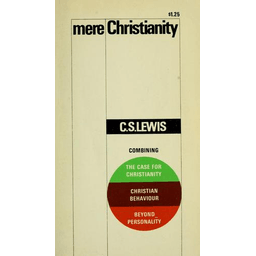 Mere ChristianityC. S. Lewis’s foundational case for the Christian faith. Not a prayer book, but the book most often handed alongside A Praying Life to a friend just starting to take prayer seriously.
Frequently asked questions
Is A Praying Life appropriate for a small group?
Yes - it’s arguably the default modern small-group book on prayer. The Updated and Expanded 2017 edition adds chapter summaries and end-of-chapter discussion questions, and a fuller standalone Discussion Guide is sold separately (around $10). Most groups run it over 12-17 weeks.
Do I need to read the 2017 Updated and Expanded edition specifically?
If you’re buying new, get the 2017 edition - it has chapter summaries and discussion questions the 2009 original lacks. If you already own the 2009 edition, the core text is the same; you’re not missing the argument, just the study apparatus.
What tradition does the book come from?
A Praying Life sits in a broadly evangelical, lightly Reformed-leaning frame. Miller directs seeJesus, the discipleship ministry founded by his father Jack Miller out of that tradition. Readers from charismatic, Anglican, Catholic, and Latter-day Saint backgrounds have all found it useful; it draws mostly from Scripture and from family experience rather than from a narrowly denominational theology of prayer.
Is the audiobook worth it?
It’s competent rather than great. The unabridged Audible edition runs about 9 hours and is fine for a commute, but a book this story-driven really wants to be read on the page where you can sit with the Kim chapters. If you can only pick one format, choose the paperback.
What is the Praying Life Seminar?
A two-day in-person or video-based seminar produced by seeJesus, Miller’s ministry, that walks groups through the book’s core practices - including the prayer-card system he uses with his own family. Thousands of churches have run it as a shared prayer on-ramp for staff teams and small-group leaders.
How does it compare to Tim Keller’s Prayer?
Different strengths. Miller teaches posture through memoir and family stories; Keller teaches a systematic theology of prayer with historical depth and a structured daily method. Most readers end up using both - Miller for the unlocking, Keller for the framework. If you can only pick one and you’re struggling to pray at all, start with Miller.
Who is Kim, and why is she in so much of the book?
Kim is Paul and Jill Miller’s daughter, who has autism. She is the quiet center of A Praying Life - Miller describes two decades of praying for her, including praying through the years before she got a speech device. The Kim chapters do much of the book’s theological work and are the section many readers quote and remember most.
Sources & further reading
More Books on Prayer
 The Valley of VisionArthur Bennett’s slim collection of Puritan prayers has quietly become the modern standard prayer book in Reformed circles - and the gift-book the rest of the church keeps quietly buying.
 Prayer: Experiencing Awe and Intimacy with GodTim Keller’s 2014 book has quietly become the modern study desk’s default doorway into prayer - equal parts pastoral, exegetical, and historically aware.The Book of Common PrayerThe 1549 prayer book that gave English-speaking Christianity its Daily Office has quietly become the structured prayer rhythm readers of many traditions reach for when their own words run out.Power Through PrayerThe short, white-hot classic that argues the church’s power has never come from its methods or its machinery but from praying people - written for preachers, read by everyone who has ever felt their own prayer life go cold.
 The Power of a Praying WifeThe book that quietly built an entire genre of "praying for your spouse" titles - and still sits on more nightstands than almost any other prayer book in print.
 ESV Study BibleThe ESV Study Bible has quietly become the default desk Bible for pastors, seminarians, and serious lay readers in the Reformed evangelical world - and the reasons it earned that spot are worth understanding before you buy.