- Starting price
- Free (public domain)
- Free tier
- Yes
- Platforms
- Print · Kindle · Web (free) · Abridged editions
- Developer
- Various / Public domain
- Launched
- 1274
- Updated
- May 31, 2026
The verdict
The Summa Theologica is the foundational systematic synthesis of Catholic theology and Aristotelian philosophy, and it is genuinely free in the public domain. But it is also enormous and built on a medieval method that takes orientation. Almost no one reads it cover to cover - and you do not have to. Start with a one-volume abridgement or a guide, read the famous treatises in full, and use New Advent for the rest.
Try Summa Theologica ↗Opens newadvent.org
The Summa Theologica has quietly become a book far more people own than read. It sits on seminary shelves, gets cited in footnotes across the theological world, and lends its author's name to an entire school of thought - Thomism - that still shapes Catholic intellectual life. Thomas Aquinas wrote it between roughly 1265 and 1274, in Paris and Naples, as a teaching text for students of theology. He left it unfinished at his death. What survives is one of the largest and most influential single works of Christian thought ever attempted.
It does not read like a modern book. It does not move in chapters and arguments the way a contemporary theology does. It does not state a thesis and defend it in prose. Instead it is built from thousands of small units called "articles," grouped into "questions," each one structured as a formal disputation: a question is posed, objections are raised, a counter-authority is cited, Aquinas gives his own determination, and then he answers each objection in turn. Once you learn to read one article, you can read any of them. The difficulty is not that any single piece is dense - it is that there are so many of them, and the medieval scholastic machinery takes a little while to feel natural.
What you actually get is a complete map of theology as a thirteenth-century master understood it. The work is traditionally divided into three large parts. The First Part treats God, the Trinity, creation, angels, and the human person. The Second Part - itself split in two - is the longest, a vast treatment of human action, happiness, law, grace, and the virtues and vices. The Third Part turns to Christ, his life, and the sacraments, and breaks off mid-treatment of penance (later editors completed it from Aquinas's earlier writings as the "Supplement"). It is distinctively Catholic in its commitments, foundational to the Catholic intellectual tradition, and - because Aquinas reasons so carefully and quotes Scripture, the Fathers, and Aristotle so constantly - it has been read with respect well beyond the tradition that produced it.
✓ The good
- The foundational systematic synthesis of Catholic theology - the single most influential work of the tradition's intellectual life, and the backbone of Thomism
- Genuinely free in the public domain - the full classic translation by the Fathers of the English Dominican Province is online at New Advent, CCEL, and Project Gutenberg, complete and searchable
- The disputation format is rigorously fair - every article states the strongest objections first, so you watch Aquinas argue against himself before he answers
- Modular by design - you need not read it linearly; any single article stands on its own, so you can go straight to the treatise you want (the existence of God, law, the virtues, the Incarnation)
- Vast in scope - God, creation, the human person, ethics and the virtues, law, grace, Christ, and the sacraments all sit in one connected architecture
- Read and respected across traditions - his treatments of the virtues, natural law, and the existence of God are studied widely, even by readers who differ with him
- Abridgements and guides exist for newcomers - a one-volume "Shorter Summa" and reader's guides make the work approachable without the full multi-volume commitment
✗ Watch out
- Enormous - several thousand articles across multiple large volumes; almost no one reads it cover to cover, and treating it like a book to finish sets you up to quit
- The medieval scholastic method takes orientation - the objection-and-response structure and the rhythm of "I answer that" feel foreign until you have read a dozen articles
- Built on an Aristotelian framework - terms like act and potency, form and matter, and the four causes are assumed throughout, so a reader new to them will need a primer alongside
- The famous free translation is century-old English - accurate and complete, but early-twentieth-century prose; modern translations read more smoothly but cost money
- Unfinished - Aquinas stopped writing in 1273, and the Third Part breaks off in the treatise on penance; the "Supplement" that completes it was assembled by editors, not written for the Summa
Best for
- Readers ready to engage the foundational text of Catholic theology
- Students of philosophy or ethics working on natural law or the virtues
- Seminarians, teachers, and clergy building a reference library
- Anyone wanting the primary source behind the Thomist tradition
Avoid if
- You want a quick devotional read or a single-sitting book
- You have no patience for medieval scholastic structure and vocabulary
- You want a modern systematic theology written in contemporary prose
- You expect a narrative or a connected argument rather than a reference architecture
What Summa Theologica is
The Summa Theologica - also rendered Summa Theologiae - is a systematic synthesis of Christian theology written by the Dominican friar Thomas Aquinas between roughly 1265 and 1274, and left unfinished at his death in 1274. Conceived as an instructional text for students, it organizes the whole of theology into three large parts: the First Part on God, the Trinity, creation, and the human person; the Second Part (divided into two) on human action, happiness, law, grace, and the virtues and vices; and the Third Part on Christ and the sacraments. It is built from thousands of short "articles" grouped into "questions," each cast in a formal disputation format.
The work is the foundational text of Thomism and a cornerstone of the Catholic intellectual tradition, distinctive for the way it weaves the philosophy of Aristotle together with Scripture and the Church Fathers. It is unmistakably Catholic in its commitments and method. At the same time, because Aquinas argues so carefully and engages opposing positions so fairly, the Summa has long been read and respected well beyond Catholic circles - his treatments of the existence of God, natural law, and the moral virtues are studied across traditions and in secular philosophy departments alike.
Why the disputation format is the whole point
Most theology states a position and then defends it. The Summa does the opposite first. Each article opens with the question, then lists the objections - the strongest arguments against the conclusion Aquinas will eventually reach - stated as forcefully as he can make them. Only then comes the "On the contrary" (a counter-authority, usually Scripture, a Father, or Aristotle), followed by the "I answer that," where Aquinas gives his own determination. The article closes by replying to each objection one at a time. The reader watches him argue against his own conclusion before he ever argues for it.
This is what makes the Summa feel different from a modern textbook and why it rewards patient reading rather than skimming. Nothing is asserted without first being contested. The format was the standard teaching method of the medieval university - the disputation - and Aquinas raised it to an art. It also explains why the work is so modular: each article is a self-contained piece of reasoning, so a reader can open to the question on whether God exists, or on the nature of law, or on the virtue of justice, and read just that, with no need to have read what came before. The structure is the orientation cost and the payoff at once.
The architecture: God, the moral life, and Christ in one connected map
The Summa is organized as a single arc that proceeds from God, through creation and the human person, to the moral life, and finally to Christ as the way back to God. The First Part (the Prima Pars) treats the existence and nature of God, the Trinity, creation, the angels, and human nature - including the famous "Five Ways," Aquinas's five arguments for the existence of God. The Second Part (the Secunda Pars), the longest by far, is split into a general treatment of human action, happiness, law, and grace, and then a detailed treatment of the individual virtues and vices, vocations, and states of life. The Third Part (the Tertia Pars) turns to the Incarnation, the life of Christ, and the sacraments.
That arrangement is itself a theological claim about order - that everything proceeds from God and returns to God, with the moral life and the sacraments as the path of return. It is also what makes the work usable as a reference. A reader interested in ethics can spend a lifetime in the Second Part alone; a reader interested in the doctrine of God can stay in the First; a reader interested in Christology and the sacraments goes to the Third. The treatise on law (in the First Part of the Second Part) and the treatment of the virtues are among the most-read sections, studied closely both inside the tradition and in secular philosophy and legal theory.
Faith and reason: Scripture, the Fathers, and Aristotle in one method
A defining feature of the Summa is the range of sources Aquinas brings into a single argument. In a typical article he will quote Scripture, cite Augustine or another Church Father, and reason with the philosophical tools of Aristotle - whom he refers to simply as "the Philosopher" - all in the space of a few paragraphs. The Aristotelian framework runs throughout: concepts like act and potency, form and matter, substance and accident, and the four causes are the working vocabulary of the whole work. This synthesis of revelation and philosophy is the heart of what later became known as Thomism.
For a first-time reader this is both the appeal and the orientation cost. The appeal is watching a master integrate biblical, patristic, and philosophical authority into a coherent account rather than treating them as separate departments. The cost is that the Aristotelian vocabulary is assumed, not explained, so a reader with no prior exposure to it will move slowly at first. This is precisely why guides and abridgements are so widely recommended: a short primer on the key terms, or a reader's edition that footnotes them, turns a forbidding page into a readable one. The method itself is consistent, so the investment pays off across the whole work.
How to actually read it: abridgements, guides, and the free text
The single most useful thing to know about the Summa is that almost no one reads it cover to cover, and you are not expected to. The work is too large and too modular for that to be the natural way in. The widely recommended path for newcomers is to start with an abridgement or a guide - Peter Kreeft's A Summa of the Summa and the even shorter A Shorter Summa select the most important articles and add running explanatory notes that translate the medieval method for a modern reader. From there, many readers go on to read the famous treatises in full: the Five Ways, the treatise on law, the treatment of the virtues, the questions on the Incarnation.
For the full text, the classic translation by the Fathers of the English Dominican Province is free and complete online - New Advent hosts it article by article in a clean, searchable layout, and CCEL and Project Gutenberg carry it as well. That translation is over a century old and reads in early-twentieth-century English; it is accurate and complete, which is why it remains the default reference, but a reader who wants smoother prose can pay for a modern translation. The practical recipe most guides suggest: read an abridgement first for orientation, read the major treatises in full, and use the free New Advent text as the reference you return to for everything else.
Pricing
Public domain (web + ebook)
Free
The complete Fathers of the English Dominican Province translation is free at New Advent, CCEL, Project Gutenberg, and in numerous Kindle editions. Full text, searchable, every article. The way most people actually read the Summa.
Shorter Summa (abridged)
~$25
Peter Kreeft's A Summa of the Summa and A Shorter Summa edit the work down to its most important articles with running explanatory notes. The recommended starting point for most first-time readers.
Modern one-volume translation
~$35-50
Contemporary translations (such as the New English Translation / Latin-English editions) render the Latin in smoother modern prose. Easier reading than the free century-old version, at a price.
Full print set
~$100-250
The complete five-volume Benziger Brothers / Christian Classics edition. The reference set for a serious library - comprehensive, but a real shelf and budget commitment.
Audiobook
~$25-40
Partial and selected-treatise audio recordings exist; the full work is rarely narrated end to end. Useful for the major treatises, less so as a way to read the whole.
The Summa Theologica is public domain, which means the complete work is genuinely free. The classic English translation by the Fathers of the English Dominican Province is hosted in full at New Advent, the Christian Classics Ethereal Library, and Project Gutenberg, and turns up in numerous free or near-free Kindle editions. If your budget is zero, you can read every article today - the only cost is that the translation is over a hundred years old and reads accordingly.
For a first-time reader, though, the money is best spent not on the full text but on a way in. Peter Kreeft's abridgements - A Summa of the Summa and the shorter follow-up - run around twenty-five dollars and are the most widely recommended starting point: they select the key articles and add the explanatory notes that make the medieval method legible. Most readers do not need to buy the full work at all to get the substance of Aquinas's thought.
If you want the complete work in smoother modern English, contemporary translations run roughly thirty-five to fifty dollars per volume or as a set, and the full five-volume Benziger Brothers / Christian Classics print edition runs somewhere between about one hundred and two hundred fifty dollars depending on binding and seller. That is the reference set for a serious library - comprehensive, durable, and a genuine shelf commitment.
Audiobook coverage is partial. Selected treatises and individual parts have been narrated, but the full work is rarely recorded end to end, and a disputation-format text does not lend itself to listening the way a narrative does. For the major treatises, audio at around twenty-five to forty dollars can work; as a way to read the whole Summa, it is not the tool.
Where Summa Theologica falls behind
Sheer size. The full Summa runs to several thousand articles across multiple large volumes, and treating it as a book to finish is the fastest way to give up on it. The work is built to be entered at the article and the treatise, not read straight through, and a reader who does not know that will stall early and conclude the problem is them.
The orientation cost of the method. The objection-and-response structure, the formula of "I answer that," and the rhythm of a medieval disputation are genuinely foreign to a modern reader, and the first dozen articles feel slow while you learn the form. This is not a flaw so much as a learning curve, but it is real, and it is why an abridgement or guide is so often the right first step rather than the free full text.
The Aristotelian framework is assumed. Aquinas reasons with act and potency, form and matter, and the four causes as working tools and rarely pauses to define them, because his students already knew them. A reader with no exposure to Aristotle will move slowly until they pick up a short primer - and without one, some articles will feel like they are missing a key.
The free translation shows its age. The century-old Dominican Province translation that dominates the free web and Kindle space is complete and accurate, but its early-twentieth-century English is stiffer than modern readers are used to. Newer translations read more smoothly; they simply cost money, where the classic one is free.
It is unfinished. Aquinas stopped writing late in 1273, and the Third Part breaks off in the treatise on the sacrament of penance. The "Supplement" that completes most editions was assembled after his death by editors drawing on his earlier writings, so the final stretch is not the Summa proper - a detail worth knowing before you reach it.
Summa Theologica vs. Confessions vs. Catechism of the Catholic Church
These three are among the most-reached-for works of the Catholic tradition on an English-language shelf, and they do very different jobs.
Different strengths. The Summa Theologica (Aquinas, c. 1265-1274) is the systematic synthesis - a vast, rigorously argued architecture of theology and philosophy in disputation form, written for students and used ever since as the primary source of Thomism. Confessions (Augustine, c. 400 AD) is the interior, first-person account - a prayer and conversion narrative that founded Western spiritual autobiography, far shorter and more personal than the Summa. The Catechism of the Catholic Church (1992) is the official modern summary of Catholic belief and practice - organized for reference and teaching, written in contemporary prose, and far more accessible than either classic.
For most readers wanting one entry point, the Catechism is the easiest start and Confessions the most personally gripping; the Summa is the deepest and the most demanding, the one a serious student returns to for years rather than finishes in a season. They are complementary rather than competing - the Catechism states what the tradition holds, Confessions shows what the converted life feels like from the inside, and the Summa supplies the reasoned architecture beneath both. A well-built Catholic library tends to include all three.
The bottom line
The Summa Theologica is the foundational systematic synthesis of the Catholic intellectual tradition and the primary source of Thomism - vast in scope, rigorous in method, and free in the public domain. The trick is reading it the way it was actually built: not cover to cover, but by the article and the treatise. Start with Peter Kreeft's abridgement for orientation, read the famous treatises in full, keep a short Aristotle primer nearby, and use the free New Advent text as your reference. Approached that way, the work that intimidates almost everyone becomes one of the most rewarding theological resources you can own.
Alternatives to Summa Theologica
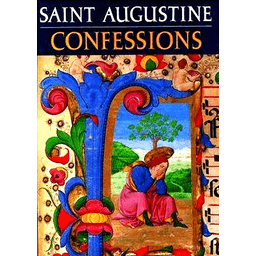 ConfessionsAugustine's c. 400 AD theological autobiography - the interior, first-person companion to Aquinas's systematic architecture. Shorter, more personal, and free in the public domain.
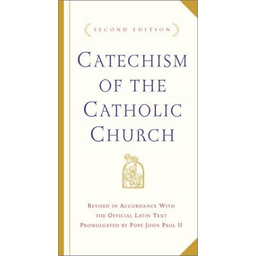 Catechism of the Catholic ChurchThe official 1992 summary of Catholic belief and practice - the accessible modern reference where the Summa is the demanding primary source. The easiest entry point of the three.Catholic ChristianityPeter Kreeft's readable summary of the Catechism - and the same author who wrote the standard abridgement of the Summa. A friendly on-ramp to the tradition Aquinas anchors.
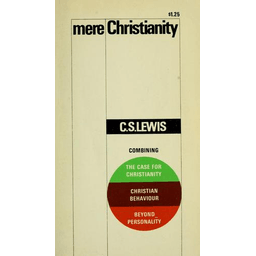 Mere ChristianityC. S. Lewis's wartime broadcasts on shared Christian belief - short, modern, and ecumenical where the Summa is vast, medieval, and distinctively Catholic. A far lighter starting read.
Frequently asked questions
Do I have to read the whole Summa Theologica?
No, and almost no one does. The work runs to several thousand articles, and it was built to be read by the article and the treatise rather than cover to cover. The standard advice is to start with an abridgement for orientation, then read the famous treatises in full - the Five Ways, the treatise on law, the treatment of the virtues, the questions on the Incarnation - and use the free full text as a reference for everything else.
What is the disputation format, and why is the Summa structured that way?
Each article poses a question, lists objections (the strongest arguments against the conclusion), cites a counter-authority ("On the contrary"), gives Aquinas's own determination ("I answer that"), and then answers each objection in turn. It was the standard teaching method of the medieval university. The payoff: you see the strongest case against a position before Aquinas argues for his own, which makes the method unusually fair - and is why any single article stands on its own.
Is the Summa Theologica free to read?
Yes. It is public domain, and the complete classic translation by the Fathers of the English Dominican Province is hosted free and searchable at New Advent, with full copies also at CCEL and Project Gutenberg. That translation is over a century old and reads accordingly; modern translations are smoother but cost money. For most people the free New Advent text is the reference, and a paid abridgement is the way in.
Where should a complete beginner start with Aquinas?
Most guides point newcomers to Peter Kreeft's A Summa of the Summa or the shorter A Shorter Summa, which select the key articles and add running notes that translate the medieval method for a modern reader. Pairing it with a short primer on basic Aristotelian terms (act and potency, form and matter, the four causes) makes the reading far smoother, since Aquinas assumes that vocabulary throughout.
Is the Summa only for Catholics?
It is a distinctively Catholic work and the foundational text of Thomism, written by a Dominican friar as a synthesis of Catholic theology and Aristotelian philosophy. But because Aquinas argues so carefully and engages opposing views so fairly, the Summa is read and respected well beyond Catholic circles - his treatments of the existence of God, natural law, and the moral virtues are studied across traditions and in secular philosophy and legal theory.
Why is the Summa unfinished?
Aquinas stopped writing late in 1273, reportedly after an experience he described as making his work "seem like straw," and died a few months later in 1274. The Third Part breaks off in the treatise on the sacrament of penance. The "Supplement" that completes most editions was assembled by later editors from his earlier writings, so the final stretch is not the Summa as Aquinas wrote it.
What are the "Five Ways"?
The Five Ways are Aquinas's five arguments for the existence of God, near the beginning of the First Part (Question 2). They reason toward God from motion, causation, contingency, degrees of perfection, and the order of nature. They are among the most studied passages in the work, examined closely both within the Thomist tradition and in secular philosophy of religion.
Sources & further reading
More Systematic Theology Books
 Systematic Theology by Wayne GrudemThe most-used modern systematic theology in English-speaking evangelicalism, and the one most laypeople actually finish - here’s what that readability costs you, and what it buys.
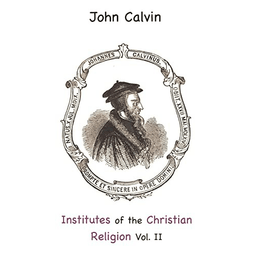 Institutes of the Christian ReligionThe most influential systematic theology of the Protestant Reformation, still in print after almost five centuries - and still one of the most argued-about books in Christian history.
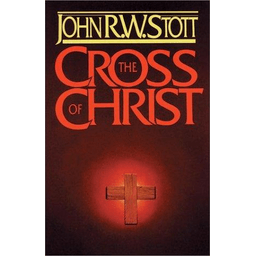 The Cross of ChristJohn Stott’s 1986 masterwork is the book most modern evangelical pastors point to when someone asks what the cross actually accomplished - and four decades later it still earns the recommendation.Reformed DogmaticsA century-old Dutch Reformed masterwork that reads the whole catholic tradition before it argues - magnificent, demanding, and long enough that most readers should start with the one-volume abridgement.A Body of DivinityThe 1692 Puritan exposition of the Westminster Shorter Catechism - still the warmest, most quotable systematic theology a layperson can actually finish.Concise TheologyJ.I. Packer’s 1993 guide compresses the whole of Christian doctrine into 94 two-to-three-page chapters - a doctrine reference you can actually finish, written by the man behind Knowing God.