
- Starting price
- $59.99 hardcover (2nd ed.)
- Free tier
- No
- Platforms
- Print · Kindle · Logos
- Developer
- Zondervan Academic
- Launched
- 1994 (2nd ed. 2020)
- Updated
- May 24, 2026
The verdict
Grudem’s Systematic Theology is the rare 1,500-page doctrine book that ordinary readers actually finish. It is explicitly Reformed Baptist, charismatic-open, and complementarian - know the frame going in and it remains the best single-volume systematic for self-study.
Try Systematic Theology by Wayne Grudem ↗Opens zondervanacademic.com
Wayne Grudem’s Systematic Theology has quietly become the favorite of pastors, seminarians, and motivated laypeople who want one book that will walk them through the whole of Christian doctrine without requiring them to learn Latin first. It launched in 1994, got a substantial second-edition rewrite in 2020, and now runs past 1,500 pages - yet it is consistently the systematic that readers describe as "the one I actually got through."
It is not a neutral textbook. It does not pretend to represent all of historic Christianity. It does not split the difference between traditions. Grudem writes from a clearly stated Reformed Baptist position, with an open-but-cautious view of the continuing gifts of the Spirit and a complementarian view of gender roles in the church and home - and he tells you so on the page rather than smuggling those commitments in.
What makes it dominant despite that narrow lane is the writing. Most systematics read like they were translated from German lecture notes (because many of them were). Grudem reads like a careful pastor who genuinely wants you to follow. Every chapter ends with memory verses, a hymn, discussion questions, and a bibliography that lines up evangelical, Reformed, Lutheran, Wesleyan/Arminian, dispensational, Catholic, and others side by side. That last bit - making it easy to read other traditions against him - is part of why even people outside his frame keep the book on the shelf.
✓ The good
- Genuinely readable for a 1,500-page systematic - the prose is plain, the structure is repetitive in a good way, and the chapter rhythm carries you
- Near-exhaustive scripture index - you can look up almost any verse and find where Grudem treats it doctrinally, which makes it function as a doctrinal cross-reference Bible
- Memory verses and hymns at the end of every chapter - turns doctrine study into devotional practice instead of pure information transfer
- Cross-tradition bibliographies - each topic lists how Roman Catholic, Lutheran, Reformed, Anglican, Arminian/Wesleyan, Baptist, and dispensational writers handle it, so you can read past Grudem easily
- Honest about its commitments - Reformed Baptist, continuationist-cautious, complementarian, young/old-earth open - stated up front rather than assumed
- Companion workbook and abridged edition (Christian Beliefs) make it usable for small groups, Sunday school, and first-time readers
- Logos edition links every scripture reference and footnote into the rest of your library - dramatically more useful than the print for study
✗ Watch out
- Reformed Baptist frame throughout - chapters on baptism, the Lord’s Supper, election, perseverance, and church government argue for specific positions rather than survey them
- Complementarian sections (church office, marriage) are extended arguments - egalitarian, mainline, and many Wesleyan/Methodist readers will disagree with the conclusions, not just the framing
- Limited engagement with Eastern Orthodox, Roman Catholic, Anglo-Catholic, and Latter-day Saint theology beyond brief mentions - readers in those traditions will find their views described from outside
- The charismatic chapters reflect a particular 1990s North American debate - some readers will find them too open, others too cautious
- Second edition added material but did not restructure - if you already own the 1994 edition, the upgrade is incremental, not transformative
- Heavy. Physically heavy. The hardcover is genuinely difficult to read in bed or on a plane - most readers end up with Kindle or Logos for everyday use
Best for
- Lay Christians who want one doctrine book they will actually finish
- Seminary students at Reformed or Reformed-adjacent schools
- Pastors building a teaching series on a specific doctrine
- Small groups using the companion workbook over a year or two
Avoid if
- You want a tradition-neutral survey of all Christian theology
- You are looking for a Catholic, Orthodox, or Latter-day Saint systematic
- You want a fully egalitarian treatment of gender and church office
- You need the most technically advanced academic engagement (try Bavinck or Webster instead)
What Systematic Theology by Wayne Grudem is
Systematic Theology: An Introduction to Biblical Doctrine is Wayne Grudem’s single-volume systematic, first published by Zondervan in 1994 and substantially revised for a second edition in 2020. The book runs 57 chapters across the standard systematic categories - the doctrine of the Word of God, of God, of man, of Christ, of the application of redemption, of the church, and of the future - and now totals more than 1,500 pages with appendices, indexes, and the cross-tradition bibliographies.
Grudem spent most of his teaching career at Trinity Evangelical Divinity School and then Phoenix Seminary, and the book is written from a Reformed Baptist position with an open-but-cautious view of the continuing miraculous gifts and a complementarian view of gender. It is published by Zondervan Academic and is the assigned systematic at a number of Reformed and Reformed-adjacent seminaries; in lay circles it is widely treated as the default modern reference.
Why ordinary readers actually finish Grudem
The single biggest practical difference between Grudem and the other major one-volume systematics is the prose. Berkhof is precise and short and reads like a syllabus. Bavinck is magnificent and four volumes long and frequently assumes you already know what he is arguing against. Erickson is more thorough than Grudem on philosophical theology but his sentences are denser. Grudem writes like a pastor who learned to teach undergraduates - short paragraphs, clear definitions placed in bold, repeated previews and recaps, and an almost stubborn refusal to use a technical term without defining it on the page.
This sounds like a small thing. In practice it is transformative. A reader with no seminary background can pick up the chapter on the atonement, follow the categories, see the verses cited, and come away with a working vocabulary by the end of the chapter. That is rare in systematic theology, and it is why Grudem ends up on the shelves of small-group leaders, youth pastors, and curious laypeople who would never finish Calvin’s Institutes or Bavinck’s Reformed Dogmatics. The readability is the differentiator.
Readability: the differentiator vs. Berkhof and Bavinck
Grudem’s chapters follow a near-identical rhythm - explanation, scripture support, objections, response, application - and that repetition is doing real work. Once you have read three chapters you know how the fourth will move, which means you can focus on the content instead of decoding the structure. Definitions of key terms appear in bold the first time they show up. Long Greek and Hebrew discussions are pushed into footnotes so the main text stays readable.
Compared to Berkhof’s Systematic Theology (terse, outline-driven, written for students who already know the categories) or Bavinck’s Reformed Dogmatics (four volumes, deep historical-theological engagement, beautiful but demanding), Grudem trades depth for accessibility. He is shallower than Bavinck on patristic and continental sources. He is broader and warmer than Berkhof. The trade is conscious, and it is the right trade for the audience the book is actually reaching - people who want one book and one read.
Scripture index and memory verses: doctrine that sticks
The scripture index at the back of Grudem is nearly exhaustive - the kind of index where you can look up an obscure verse in Numbers or 2 Peter and find that he treats it somewhere in the systematic discussion. This turns the book into something closer to a doctrinal cross-reference Bible than a textbook: when you hit a verse in your reading that you do not understand, you can flip to the index and find where Grudem handles it. Few systematics make themselves this lookup-friendly.
On top of that, every chapter closes with a memory verse, a hymn, discussion questions, and personal application prompts. The memory verse choice is consistently the verse Grudem thinks best anchors the chapter’s doctrine in scripture. The hymn turns the chapter into worship. The discussion questions make it usable in a group. Together these features convert a reference book into a slow devotional formation tool - which is why the book has had such an outsized influence on lay readers.
Companion workbook and the abridged Christian Beliefs
Zondervan publishes a chapter-by-chapter Study Guide / Companion Workbook that walks through every chapter with summary questions, reflection prompts, and review exercises. It is the format most small groups use when working through Grudem over a year or two, and it is the closest the book comes to a built-in curriculum. The workbook also helps slower readers stay oriented - 1,500 pages is a lot of book to track without scaffolding.
For readers who do not want the full systematic at all, Grudem and his son Elliot produced Christian Beliefs, a 160-page, 20-chapter abridgement built around the doctrines they consider most important for ordinary Christians to understand. It is the standard recommendation for new believers, gift-givers, and Sunday-school classes that want Grudem without the commitment. There is also a slightly longer Bible Doctrine version sitting between the two. Together the trio - abridged, mid-length, full systematic - lets you scale the same theological frame to the reader in front of you.
Pricing
Hardcover (2nd ed.)
~$59.99
The standard 1,500+ page hardcover. Heavy, but the one most people own.
Kindle
~$30
Same text, searchable, syncs across devices. The everyday-use format for most readers.
Logos edition
~$50
Every scripture reference linked and cross-searchable against your Logos library. The serious-study format.
Companion Workbook
~$35
Chapter-by-chapter questions designed for small groups or solo readers who want to slow down.
Christian Beliefs (abridged)
~$15
The 20-chapter, 160-page distillation co-authored with his son Elliot. Good entry point or gift.
The hardcover runs around $59.99 at most retailers and is the format the book is best known in. It is the one to own if you want a reference you can mark up and pass to your kids. It is also genuinely heavy - most readers who use Grudem daily end up with a second copy in Kindle or Logos for portability.
The Kindle edition lands around $30 and is the everyday-use format for most readers. Search works well, highlights sync, and the chapter structure carries over cleanly. The trade-off is that the scripture index is less satisfying to use on a small screen than in print.
The Logos edition sits around $50 and is the version serious students should consider. Every scripture reference becomes a tooltip that opens in your preferred translation, every footnote is cross-searchable, and Grudem talks to the rest of your Logos library. If you already own Logos, this is the right format.
The companion workbook is around $35 and is worth it specifically if you are leading a group or want to slow yourself down. The abridged Christian Beliefs at around $15 is the right call for gifts, first-time readers, and Sunday-school use. Most users do not need all five formats - pick the depth that matches your actual reading life.
Where Systematic Theology by Wayne Grudem falls behind
Limited engagement outside the Reformed Baptist frame. Catholic sacramental theology, Eastern Orthodox theosis, Anglican via media, Wesleyan-Arminian soteriology, dispensational eschatology, and Latter-day Saint distinctives are all mentioned somewhere, but they are mentioned to be argued against rather than entered into on their own terms. Readers in those traditions will need a second book to hear their own view stated charitably.
Complementarian as a sustained argument, not just a frame. The chapters on church office, marriage, and gender go beyond stating Grudem’s position into making a multi-chapter case for it. Egalitarian readers - including most mainline Protestants, many Wesleyan/Methodist readers, and a growing share of younger evangelicals - will find those sections genuinely contested, not just colored.
Charismatic chapters dated to a specific debate. The treatment of tongues, prophecy, and the continuing gifts is framed by the cessationist/continuationist argument that dominated North American evangelicalism in the 1980s and 1990s. Newer Pentecostal scholarship, global Pentecostalism, and the more recent reformed-charismatic conversation are mostly absent.
Thin on historical theology compared to Bavinck or Muller. Grudem is fundamentally a biblical-theological systematician - he argues from scripture forward. If you want deep engagement with the church fathers, medieval scholastics, Reformation-era controversies, or post-Reformation Reformed orthodoxy, you will outgrow Grudem fairly quickly.
Second edition is incremental. The 2020 revision added a substantial chapter on biblical theology, expanded several discussions (notably the eternal subordination of the Son material, which Grudem revisited and clarified), and updated some bibliographies. If you already own the 1994 edition and are not a teacher, the upgrade is nice rather than necessary.
Grudem vs. Berkhof vs. Erickson
These three are the systematics most likely to sit on the same shelf, and they serve different readers. Different strengths. Grudem is the most readable and the most lay-friendly. Berkhof is the most concise and the most precisely Reformed. Erickson is the most balanced and the most philosophically careful of the three.
Louis Berkhof’s Systematic Theology (1939, lightly revised since) is short - around 750 pages - and tightly outlined. It is the historic Reformed standard for a reason: it is precise, it knows exactly what it believes, and it does not waste words. The trade is that it reads like a textbook for students who already know the vocabulary. If you have had a year of theology already, Berkhof rewards you. If you have not, it can feel like reading the index of a longer book.
Millard Erickson’s Christian Theology is closer in size to Grudem (around 1,300 pages) and is written from a moderately Reformed, broadly evangelical Baptist position with more attention to contemporary philosophical theology and to the history of doctrine. Erickson engages process theology, open theism, postmodernism, and contemporary Christology more directly than Grudem does. He is also less doctrinaire on questions where Grudem takes a hard line. Many seminaries pair the two - Grudem for accessibility and the scripture index, Erickson for breadth and balance.
The honest summary: pick Grudem first if you want to actually read a systematic. Add Berkhof when you want it shorter and tighter. Add Erickson when you want a second voice from a similar but more cautious position. For traditions outside Reformed evangelicalism, look elsewhere entirely - Bavinck for deep Reformed, Pannenberg or Jenson for ecumenical Lutheran, Aquinas’s Summa or Ott for Catholic, Lossky or Stăniloae for Orthodox, McConkie or Roberts for Latter-day Saint.
The bottom line
Grudem’s Systematic Theology earns its place as the default modern one-volume systematic for English-speaking evangelicals not because it is the deepest, most balanced, or most ecumenical book on the shelf, but because it is the one ordinary readers finish and the one whose scripture index, memory verses, and companion workbook turn doctrine into formation. Know the frame going in - Reformed Baptist, complementarian, charismatic-open - read it alongside voices from your own tradition, and it will repay every hour you put into it. For most lay readers and many pastors, it is still the right first systematic.
Alternatives to Systematic Theology by Wayne Grudem
 Calvin’s Institutes of the Christian ReligionThe 16th-century Reformed source text behind much of Grudem. Denser, more devotional, and longer - but the original voice rather than a modern restatement.
 Mere ChristianityC. S. Lewis’s short introduction to the doctrines most Christians share. Not a systematic, but the right book to read before or alongside one.
 Knowing GodJ. I. Packer’s devotional-theological classic on the attributes of God. Pairs well with the doctrine-of-God chapters in Grudem and is shorter and warmer.
 ESV Study BibleA study Bible with extensive doctrinal articles in the back - a way to get systematic-theology essentials at the verse level rather than the chapter level.
Frequently asked questions
Is Grudem’s Systematic Theology good for someone with no theology background?
Yes - it is arguably the best entry point in print. The prose is clear, key terms are defined on the page, and the chapter rhythm makes the book learnable. Most absolute beginners do better starting with the abridged Christian Beliefs (160 pages) and graduating to the full systematic once the categories feel familiar.
What is Grudem’s theological position?
Reformed Baptist on most matters (election, perseverance, believer’s baptism by immersion, congregational government), open-but-cautious on the continuing miraculous gifts of the Spirit, and complementarian on gender roles in the church and home. He states each of these positions openly in the book rather than assuming them.
Is the second edition worth buying if I own the first?
It depends. The 2020 edition adds a substantial biblical-theology chapter, clarifies several discussions Grudem revisited (notably around the eternal relations of Father and Son), and updates bibliographies. For teachers and pastors it is worth the upgrade. For lay readers who already own the 1994 edition, the new material is helpful but not essential.
How does Grudem compare to Berkhof and Erickson?
Grudem is the most readable and lay-friendly. Berkhof (1939) is shorter and more tightly Reformed but reads like a textbook for advanced students. Erickson is closer in scope to Grudem but more philosophically balanced and engages contemporary theology more directly. Many seminaries assign Grudem and Erickson together.
Will this book work for Catholic, Orthodox, Wesleyan, or Latter-day Saint readers?
Readers in those traditions will find their own theology described from outside and often argued against. Grudem can still be useful as a window into how Reformed evangelicalism thinks about each doctrine, but it should not be the only systematic on the shelf for readers whose tradition Grudem is not writing from.
Is there a workbook or small-group version?
Yes - Zondervan publishes a Companion Workbook / Study Guide that walks chapter by chapter with discussion questions and review exercises. There is also a shorter Bible Doctrine version and the 160-page abridged Christian Beliefs co-authored with Elliot Grudem, which is the right pick for small groups that want Grudem in 20 sessions instead of 57.
Print, Kindle, or Logos - which should I buy?
Hardcover if you want one marked-up reference copy for life - it is the format the book is best known in. Kindle if you want to actually carry it around. Logos if you do serious study and want every scripture reference and footnote linked into the rest of your library. Many committed readers end up with the hardcover plus one digital format.
Sources & further reading
More Systematic Theology Books
Institutes of the Christian ReligionThe most influential systematic theology of the Protestant Reformation, still in print after almost five centuries - and still one of the most argued-about books in Christian history.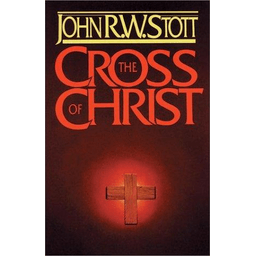 The Cross of ChristJohn Stott’s 1986 masterwork is the book most modern evangelical pastors point to when someone asks what the cross actually accomplished - and four decades later it still earns the recommendation.Reformed DogmaticsA century-old Dutch Reformed masterwork that reads the whole catholic tradition before it argues - magnificent, demanding, and long enough that most readers should start with the one-volume abridgement.Summa TheologicaThe thirteenth-century synthesis that became the backbone of Catholic theology - vast, rigorous, free in the public domain, and almost no one reads it the way it looks like you should.A Body of DivinityThe 1692 Puritan exposition of the Westminster Shorter Catechism - still the warmest, most quotable systematic theology a layperson can actually finish.Concise TheologyJ.I. Packer’s 1993 guide compresses the whole of Christian doctrine into 94 two-to-three-page chapters - a doctrine reference you can actually finish, written by the man behind Knowing God.