- Starting price
- Free (public domain); ~$25 Banner print ed.
- Free tier
- Yes
- Platforms
- Print · Kindle · Web (free) · Public domain
- Developer
- Banner of Truth
- Launched
- 1692
- Updated
- May 31, 2026
The verdict
The most readable systematic theology the Puritans produced - a warm, image-rich exposition of the Westminster Shorter Catechism that reads more like a great preacher than a textbook. It is built on the Reformed catechetical tradition, so know the frame going in; within it, this is the rare doctrine book a layperson finishes and rereads.
Try A Body of Divinity ↗Opens banneroftruth.org
A Body of Divinity has quietly become the Puritan systematic theology that ordinary readers actually finish. Most works in the genre are admired from a distance and read in fragments. Watson’s is the one people get all the way through, dog-ear, and reach for again - because it does not read like a textbook translated from a lecture hall. It reads like a gifted preacher leaning across the table, turning the same truth over until you see why it should matter to you by Tuesday.
The book did not begin as a book. It began as a sermon series. Thomas Watson - a London Puritan pastor ejected from his pulpit at St. Stephen’s, Walbrook in 1662 along with some two thousand others - preached his way through the Westminster Shorter Catechism, question by question, and the addresses were gathered and printed in 1692, several years after his death. It does not lay out a tidy modern outline. It does not give you charts. It does not pretend to neutrality. It follows the catechism’s order and lets each answer open into Scripture, illustration, and application.
What you actually get is a guided tour of Christian doctrine in the shape the Westminster divines gave it: who God is, what He made, how He governs the world, what Christ accomplished, how a person is brought to faith, and how the Christian then lives. The voice is vivid, aphoristic, and relentlessly practical - Watson cannot state a doctrine for half a page without asking what it means for the reader’s prayers, fears, and Mondays. Four centuries on, it is still the title pastors hand to a layperson who wants real theology without the fog of academic prose.
✓ The good
- The most readable systematic the Puritans produced - Watson preaches doctrine rather than lecturing it, and the prose carries motivated laypeople through material that defeats them elsewhere
- Endlessly quotable - Watson is the master of the one-line image ("The angels are not above the work of praising God, and are we below it?"), and the aphorisms make the doctrine stick
- Relentlessly practical - every doctrine lands in application, so the book functions as devotional reading and systematic theology at the same time
- Anchored to the Westminster Shorter Catechism - the structure is fixed and well-trodden, so the argument never wanders and the table of contents doubles as a study map
- Public domain - the 1692 text is free in dozens of formats (CCEL, Monergism, Gutenberg, Grace Online Library), so cost is never the barrier to entry
- Short chapters built for sittings - the catechism’s question-by-question shape breaks the whole into bite-sized units you can read one at a time
- A natural first volume - it is the opening book of Watson’s catechism trilogy, with The Ten Commandments and The Lord’s Prayer carrying the same voice forward
✗ Watch out
- The 1690s English takes adjustment - the vocabulary, the period spelling in some editions, and the sermon cadence are a real gap from modern prose, even if Watson is far gentler than Owen or Calvin
- Tied to the Westminster Shorter Catechism’s structure - the book follows the catechism’s order and questions, not a modern systematic’s topical scheme, which can feel unfamiliar to readers expecting chapters on, say, ecclesiology or eschatology in the usual places
- Sermonic rather than tightly systematic - Watson illustrates and applies more than he defines and distinguishes, so readers wanting rigorous, footnoted argument will find it loose by textbook standards
- Written from a settled Reformed/Puritan vantage - Watson assumes the doctrines of the Westminster tradition rather than arguing for them against alternatives, so it informs more than it debates
- Uneven coverage - because it tracks the catechism, some doctrines get extended treatment while others the catechism touches lightly get less, and a few modern questions are simply not on its map
- No study apparatus in the original - the 1692 text has no discussion questions, modern cross-references, or footnotes; only some recent editions add any
Best for
- Laypeople who want real systematic theology in prose they can actually enjoy
- Readers working through the Westminster Shorter Catechism who want a guide for each question
- Anyone who loved a quotable classic and wants doctrine that reads devotionally
- Small groups and pastors building a backbone of accessible Reformed spiritual theology
Avoid if
- You want a neutral survey that weighs multiple traditions against each other
- You bounce off 17th-century English even when it is warm and plain
- You want a modern topical systematic with charts, footnotes, and current debates
- You need a reference book organized by doctrine rather than by catechism question
What A Body of Divinity is
A Body of Divinity is a Puritan systematic theology by the English pastor Thomas Watson, compiled from his sermons and first printed in London in 1692, a few years after his death. The title uses "divinity" in its older sense - the study of God and of Christian doctrine as a whole - and "body" in the sense of an organized whole rather than scattered parts. It is the first of Watson’s three catechism volumes, followed by The Ten Commandments and The Lord’s Prayer, and it has remained in print for the better part of two centuries.
Structurally, the book is an exposition of the Westminster Shorter Catechism, the 1647 question-and-answer summary of doctrine produced by the Westminster Assembly. Watson works through the catechism’s opening questions in order - the chief end of man, the being and attributes of God, creation and providence, the covenant and the fall, the person and work of Christ, effectual calling, justification, adoption, sanctification, and the benefits that flow from union with Christ. Each catechism answer becomes the text for an address, and Watson preaches it: doctrine, illustration, and use. The result is systematic in its scope but homiletical in its method.
Why everyday readers still reach for Watson
Most systematic theology is built for someone who reads theology for a living. The sentences are careful, the distinctions are fine, and the assumed reader already knows what "imputation" and "concurrence" mean and is comfortable with a paragraph that does nothing but define terms. Watson was a preacher addressing a congregation, and that changes everything about how the doctrine lands. He cannot define a term and move on; he has to make a butcher and a seamstress in the pews feel why it is good news. So the abstractions keep turning into pictures - providence as a clock with many wheels turning one way, the promises of God as a deep mine the believer is invited to dig.
That homiletical instinct is why the book outlives its category. A reader does not have to be a seminarian to follow it. The doctrine is the same doctrine the heavier systematics teach, but Watson delivers it the way a memorable teacher delivers a hard subject - concretely, warmly, and with an eye always on the person in front of him. Readers who have given up on systematic theology as dry usually discover that the dryness was a feature of the prose, not the subject, and that Watson never had it. He is the rare doctrine book people describe with the word delight.
The Westminster Shorter Catechism framework: doctrine in a fixed, walkable order
The spine of the book is the Westminster Shorter Catechism, and Watson follows it the way Owen follows a single verse - never letting the structure be skipped. The famous first question sets the whole tone: "What is the chief end of man?" with its answer, "to glorify God, and to enjoy him forever." Watson spends extended attention there before moving to the being of God, the persons of the Godhead, the decrees, creation, providence, the covenant of works and the fall, and then the long central movement on Christ the Redeemer and the application of redemption - calling, justification, adoption, sanctification, and the assurance and growth that follow. Because the order is the catechism’s, the table of contents itself functions as a map of Reformed doctrine, and a reader can use the book as a question-by-question commentary on the catechism rather than reading straight through.
This is the book’s great organizing strength and also a thing to know going in. The catechism’s order is not a modern systematic’s order. Topics modern textbooks foreground - a developed doctrine of the church, a structured eschatology, prolegomena on revelation and method - are present only as the catechism touches them, which is sometimes lightly. What you gain is coherence and momentum: every chapter is a discrete answer, the units are short, and there is no risk of Watson wandering off his frame. What you trade is the topical completeness and the side-by-side comparison of views that a contemporary reference systematic provides. For readers using the book as a guide through the catechism, that trade is exactly right.
The Watson voice: aphorism, image, and application as a teaching method
If one thing has carried A Body of Divinity across four centuries, it is the voice. Watson is among the most quotable writers the Puritans produced, and the quotability is not decoration - it is how he teaches. He compresses a doctrine into an image you cannot unsee: the heart as an idol-factory long before that phrase was fashionable, sin as a debt and Christ as the surety, the believer’s afflictions as a file that does not consume the gold but only takes off the rust. The aphorisms do the work that footnotes do in an academic systematic; they fix the point in memory so it survives the closing of the book.
Paired with the imagery is the method the Puritans called "use" - the insistence that no doctrine is finished until it has been pressed on the conscience. Watson never states a truth about God and leaves it floating. He asks what it means for how you pray, what it should do to your fear, where it exposes a comfortable sin, how it ought to steady you in trouble. The effect on the reader is that systematic theology stops feeling like information and starts feeling like address. That is the signature experience of the book: a doctrine you thought you understood turns, in Watson’s hands, into a question you have to answer.
The catechism trilogy: where A Body of Divinity sits in Watson’s larger project
A Body of Divinity is the first installment of a three-volume walk through the Westminster Shorter Catechism, and knowing that shapes how to buy and read it. The catechism moves from doctrine (what we are to believe concerning God) to duty (what God requires of us), and Watson’s volumes follow that arc. This first book covers the doctrinal questions. The Ten Commandments takes up the catechism’s long treatment of the moral law. The Lord’s Prayer handles its exposition of prayer. Together the three form a complete pastoral commentary on the Shorter Catechism, all in the same warm, image-rich register.
For a reader, this means A Body of Divinity is genuinely self-contained - it covers the doctrinal heart of the catechism and stands on its own - but it is also the front door to a larger room. Banner of Truth keeps all three in matching editions, and readers who take to Watson’s voice in the first volume almost always go on to the other two, since the method and the warmth never change. If you are deciding where to start with the Puritans, this is an unusually friendly entry point: short units, plain warmth, and two more volumes waiting if the first one earns your trust.
Pricing
Free original (public domain)
Free
The 1692 text is in the public domain - CCEL, Monergism, Grace Online Library, and Project Gutenberg host clean HTML, EPUB, and PDF versions. The complete book, free, for readers comfortable with lightly archaic prose.
Banner of Truth hardcover
~$25
The standard in-print edition, lightly modernized and clothbound - the handsome copy most pastors keep on the shelf and the one most modern quotations are keyed to.
Kindle / ebook
~$5-10
Multiple ebook editions exist, from free public-domain conversions to inexpensive cleaned-up versions. Searchable and highlight-syncing, which suits a book this quotable.
Used paperback
~$10-15
Older printings and reprints turn up secondhand for the price of a sandwich. Quality of typesetting varies, but the text is the text.
A Body of Divinity is, first of all, free. The 1692 text is long out of copyright and freely available - CCEL has clean HTML, Monergism and Grace Online Library host the full text, and Project Gutenberg and other archives carry EPUB and Kindle conversions. If you are comfortable with lightly archaic English, you never have to pay for this book, which is why it is marked best value here: the complete work, at no cost, in the format of your choosing.
For most readers who want a physical copy, the Banner of Truth hardcover at around $25 is the natural buy. It is lightly modernized, durably bound, and the edition most modern quotations and study references are keyed to - the one that ends up on the shelf next to the catechism it expounds. It is more expensive than a typical paperback because it is a sewn hardcover meant to last, and for a book this rereadable that is a reasonable trade.
Ebook editions run anywhere from free (public-domain conversions) to roughly $5-10 for cleaned-up commercial versions; the paid ones are worth the small premium mainly for better formatting and a working table of contents, which matters for a book you will navigate by catechism question. Used paperbacks of older printings turn up secondhand around $10-15, with typesetting quality that varies but text that does not.
Most readers do not need more than two of these. Read it free online first to see whether Watson’s voice is for you; if it is, buy the Banner hardcover as the keeper copy. The trilogy’s other volumes - The Ten Commandments and The Lord’s Prayer - are the natural next purchases once this one has earned its place.
Where A Body of Divinity falls behind
Not a topical reference. Because it tracks the Westminster Shorter Catechism, A Body of Divinity is organized by catechism question rather than by modern doctrinal heading. Readers used to flipping to a chapter titled "The Doctrine of the Church" or "Last Things" will find those subjects present only where the catechism raises them, and sometimes only briefly. It rewards reading through more than spot-consultation.
The 1690s English. Watson is far easier than Owen or Calvin, but he is still a 17th-century writer. The sentence rhythms, some period vocabulary, and the occasional archaic spelling in older editions take a few pages to adjust to. Modernized editions smooth the worst of it, yet the book never sounds contemporary and does not try to.
Sermonic, not tightly systematic. Watson’s method is illustration and application, not definition and disputation. He will give you a vivid picture and a searching question where a modern systematic would give you a numbered list of distinctions and a footnote to the secondary literature. That is the source of the book’s warmth and also its looseness; readers wanting rigor by textbook standards should pair it with a structured systematic.
A settled vantage, not a survey. The book is written from within the Reformed catechetical tradition and assumes that frame rather than arguing it against alternatives. Christians from other traditions will recognize doctrines they read differently, stated here as the Westminster divines stated them. As a window into that tradition it is excellent; as a neutral comparison of views it is not built to be.
No built-in study machinery. The original has no discussion questions, no modern cross-references, no footnotes. A few recent editions add light apparatus, but Watson supplies doctrine and application, not workbook scaffolding. Groups using it will want to build their own questions around the catechism’s order.
A Body of Divinity vs. Calvin’s Institutes vs. Grudem’s Systematic Theology
These three are the classic recommendations when someone asks for a systematic theology, and they do genuinely different jobs. A Body of Divinity (Watson, 1692) is the pastoral-devotional systematic - it follows the Westminster Shorter Catechism, preaches each doctrine into application, and is the one a motivated layperson is most likely to enjoy and finish. The Institutes of the Christian Religion (Calvin, final edition 1559) is the foundational and most argumentative of the three - roughly 1,500 pages, devotional in surprising places but dense, and the source text of the Reformed tradition itself. Grudem’s Systematic Theology (1994; 2nd ed. 2020) is the modern reference systematic - readable for its size, organized by topic, with chapter-end study aids and a near-exhaustive scripture index.
Different strengths. Watson is the warmest and most quotable - the one you read for delight as much as instruction. Calvin is the deepest and most historically weighty - the book the whole Reformed tradition is arguing with or about. Grudem is the most navigable and the easiest to use as a reference, with the most modern apparatus. All three sit within the broadly Reformed orbit, though they differ in era, register, and aim. If you want one accessible classic to read straight through, start with Watson. If you want the foundational source, read Calvin. If you want a topical desk reference, reach for Grudem.
They also differ in how they treat the reader. Watson assumes a congregation and warms you as he teaches. Calvin assumes a serious student and rewards endurance. Grudem assumes a self-studier and supplies the scaffolding - memory verses, hymns, questions, bibliographies that line up multiple traditions side by side. Many readers who care about this material eventually keep all three, using each for the work it actually does rather than asking one to do the others’ jobs.
The bottom line
A Body of Divinity is the rare systematic theology a layperson reads for pleasure. Watson took the doctrines that fill a thousand dry textbooks and preached them - warmly, vividly, and always with an eye on the reader’s actual life - so the result reads less like a reference work than like time with a great teacher. It is built on the Westminster Shorter Catechism and written from a settled Reformed vantage, so know the frame going in; within it, this is one of the most enjoyable doctrine books ever written. Read it free online to see if the voice is for you, then buy the Banner edition to keep.
Alternatives to A Body of Divinity
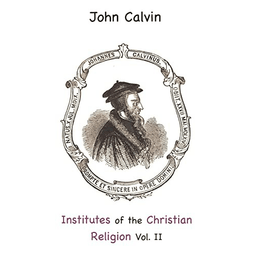 Institutes of the Christian ReligionCalvin’s foundational systematic of the Reformation - far longer and denser than Watson, and the source text of the tradition Watson teaches from. The deep end after Watson’s warm shallows.
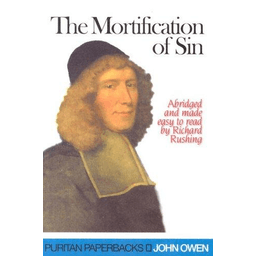 The Mortification of SinOwen’s 1656 Puritan classic on killing indwelling sin - the harder, more clinical companion to Watson’s warmth. Same era and tradition, narrower focus, much steeper prose.
 Knowing GodJ. I. Packer’s 1973 classic on the character of God - a modern descendant of Watson’s devotional-doctrinal method, in fully contemporary prose. The easiest bridge from Watson to today.
 Systematic Theology by Wayne GrudemThe most-used modern single-volume systematic - topical, navigable, and built for self-study with chapter-end aids. The desk reference to Watson’s read-through pleasure.
Frequently asked questions
Do I need to read a modern edition, or is the free public-domain text fine?
For many readers the free text is fine - Watson is far more approachable than Owen or Calvin, and CCEL, Monergism, and Grace Online Library all host clean copies. The Banner of Truth hardcover (~$25) is lightly modernized and durably bound, which is the better pick if you want a physical keeper copy you will return to. Try the free version first to see whether the voice suits you.
Is A Body of Divinity hard to read?
Less than most works of its era. Watson was a preacher writing for a congregation, so the prose is warm, concrete, and full of memorable images rather than dense argument. It is still 17th-century English - the cadence and some vocabulary take a few pages to adjust to - but readers who find Owen or Calvin heavy going usually find Watson genuinely enjoyable.
How is the book organized?
It follows the Westminster Shorter Catechism, a 1647 question-and-answer summary of doctrine. Watson takes the catechism’s questions in order - the chief end of man, the being and attributes of God, creation and providence, the work of Christ, and how salvation is applied and lived - and preaches each one as a short chapter. The table of contents doubles as a map of the catechism.
What tradition is it written from?
Watson was an English Puritan pastor, and the book is an exposition of the Westminster Shorter Catechism, so it stands within the Reformed catechetical tradition and assumes that framework rather than arguing it against alternatives. Readers from other traditions will recognize doctrines they understand differently; the book is best read as a warm window into the Westminster tradition.
How does it relate to Watson’s other books?
It is the first of three volumes Watson built on the Westminster Shorter Catechism. A Body of Divinity covers the catechism’s doctrinal questions; The Ten Commandments covers its treatment of the moral law; The Lord’s Prayer covers its section on prayer. Together they form a complete pastoral commentary on the catechism, all in the same voice. This first volume stands fully on its own.
Is it really in the public domain?
Yes - the 1692 text is long out of copyright and freely available from CCEL, Monergism, Grace Online Library, Project Gutenberg, and others in HTML, EPUB, and PDF. Modern editions such as Banner of Truth’s hold their own editorial copyright on any modernization, formatting, and added material, but the underlying work is free.
Where should I go after Watson?
Two natural paths. To continue with Watson, the companion volumes The Ten Commandments and The Lord’s Prayer carry the same warmth forward. For a modern descendant of his devotional-doctrinal style, J. I. Packer’s Knowing God is the closest thing in contemporary prose; for a topical reference systematic, Grudem is the standard; and for the foundational source of the tradition, Calvin’s Institutes is the deep end.
Sources & further reading
More Systematic Theology Books
Systematic Theology by Wayne GrudemThe most-used modern systematic theology in English-speaking evangelicalism, and the one most laypeople actually finish - here’s what that readability costs you, and what it buys.Institutes of the Christian ReligionThe most influential systematic theology of the Protestant Reformation, still in print after almost five centuries - and still one of the most argued-about books in Christian history. The Cross of ChristJohn Stott’s 1986 masterwork is the book most modern evangelical pastors point to when someone asks what the cross actually accomplished - and four decades later it still earns the recommendation.Reformed DogmaticsA century-old Dutch Reformed masterwork that reads the whole catholic tradition before it argues - magnificent, demanding, and long enough that most readers should start with the one-volume abridgement.Summa TheologicaThe thirteenth-century synthesis that became the backbone of Catholic theology - vast, rigorous, free in the public domain, and almost no one reads it the way it looks like you should.Concise TheologyJ.I. Packer’s 1993 guide compresses the whole of Christian doctrine into 94 two-to-three-page chapters - a doctrine reference you can actually finish, written by the man behind Knowing God.