- Starting price
- $24.99 paperback
- Free tier
- No
- Platforms
- Print · Kindle · Audiobook
- Developer
- InterVarsity Press
- Launched
- 1986 (20th anniversary 2006)
- Updated
- May 24, 2026
The verdict
The most thorough modern evangelical treatment of the atonement, written by an Anglican pastor-theologian who took thirty years of preaching and study and distilled it into a single, irenic, scripture-saturated volume. Long, dense, and worth every page.
Try The Cross of Christ ↗Opens ivpress.com
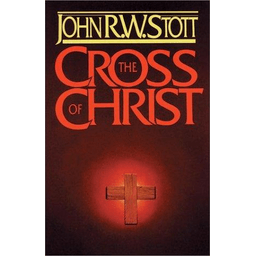
The Cross of Christ has quietly become the favorite of evangelical pastors who want one book on the atonement they can actually hand to a thoughtful layperson - not a seminary syllabus, not a tract, but a real piece of theology that respects both the reader and the subject. John Stott was Rector Emeritus of All Souls, Langham Place, in central London, and by the time this book appeared in 1986 he had been preaching the cross weekly for roughly forty years. The book reads like that - settled, unhurried, the work of a mind that has lived in the material long enough to be patient with it.
It is not a polemic. It does not pick a fight with every other theory of the atonement. It does not pretend the question is simpler than it is. What it does is walk slowly through the centrality of the cross in the New Testament, ask what the cross actually achieved (forgiveness, justification, reconciliation, the defeat of evil), and then ask what difference that makes for the way a Christian worships, suffers, and lives in the world.
Stott was an Anglican evangelical, and the book is written from that location - it argues for penal substitution as the inner logic of the atonement, while engaging Christus Victor, satisfaction, and moral-influence accounts respectfully and at length. Readers from Catholic, Orthodox, Anabaptist, or other traditions will find Stott a serious conversation partner rather than a dismissive one, which is part of why the book has stayed in print across confessional lines for forty years.
✓ The good
- The most thorough single-volume treatment of the atonement in modern evangelical literature - covers history, exegesis, and application without feeling like three separate books bolted together
- Stott’s voice is irenic and pastoral - he engages competing atonement theories (Christus Victor, satisfaction, moral influence) with real care rather than caricature
- Roughly the back third of the book is practical - the cross transforming worship, suffering, self-understanding, ethics, community - which is rare for a serious atonement book
- Scripture-saturated - Stott is famous for letting the biblical text drive the argument rather than retrofitting verses to a system
- The chapter "The Self-Substitution of God" is widely considered one of the finest single chapters in 20th-century evangelical theology
- Accessible to a careful lay reader - there is Greek, there is church history, but Stott explains as he goes rather than assuming the reader has a seminary degree
- Has aged extraordinarily well - the 20th-anniversary edition added a new foreword by Alister McGrath and study questions, but the body of the text needed almost no revision
✗ Watch out
- Long - around 350 pages of dense prose, and Stott does not skip steps. A first-time reader should plan on weeks, not a weekend
- Defends penal substitution as the controlling category - readers in traditions that frame the atonement primarily through Christus Victor, satisfaction, or theosis will agree with much but not all of the argument
- Mid-1980s British evangelical prose - clear, but more formal than most current Christian publishing. Sentences are long. Paragraphs are longer
- Light on the patristic and medieval material - Stott engages Anselm and Abelard, but readers wanting deep Athanasius, Gregory of Nyssa, or Aquinas should pair this with another volume
- Not a starting point for someone brand new to Christianity - assumes the reader already wants to know what the cross means, not whether to care
Best for
- Pastors and teachers preparing sermons or classes on the atonement
- Lay readers who want one serious book on what the cross accomplished
- Seminarians needing a readable companion to systematic-theology coursework
- Small groups willing to spend a season working through it together
Avoid if
- You want a short, devotional treatment rather than a sustained theological argument
- You are looking for a survey of every historical atonement theory at equal length
- You prefer contemporary, conversational prose over formal British exposition
- You are looking for an introduction to the Christian faith rather than a deep dive on one doctrine
What The Cross of Christ is
The Cross of Christ is a single-volume systematic and pastoral treatment of the atonement, first published by InterVarsity Press in 1986 and re-released in a 20th-anniversary edition in 2006. It runs roughly 350 pages across four major parts: "Approaching the Cross" (why the cross is central), "The Heart of the Cross" (what the cross achieved), "The Achievement of the Cross" (forgiveness, justification, reconciliation, the defeat of evil), and "Living Under the Cross" (worship, self-understanding, suffering, ethics, community).
It is the most-cited modern evangelical book on the atonement, and the volume Stott himself reportedly named when asked which of his books he most hoped would outlive him. It is not a textbook in the technical sense - there are no chapter summaries, no review questions in the original edition - but it functions as one in seminaries and pastoral training programs around the English-speaking world.
Why pastors and serious lay readers keep recommending this one
The single biggest practical difference between The Cross of Christ and most other books in the category is that Stott refuses to separate doctrine from formation. The book’s first half is rigorous theology - substitution, propitiation, justification, the meaning of the New Testament language for what Christ accomplished. The second half is what that doctrine does to a human life that takes it seriously. Most atonement books pick one of those tasks. Stott does both, and treats the second as the reason for the first.
The other reason it has stayed in print across confessional lines is tone. Stott was a leader of the global evangelical movement and unapologetic about his convictions, but he argued the way a good pastor argues - slowly, with the other side’s strongest version on the page, and without contempt. Readers who disagree with parts of his framework often finish the book respecting it anyway, which is rare for a 350-page work of contested doctrine.
The defense of penal substitution - and a genuine engagement with the alternatives
The argumentative spine of the book is Stott’s defense of penal substitution as the inner logic of the cross - the claim that on the cross, God in Christ bore in himself the judgment that human sin deserved. The famous chapter "The Self-Substitution of God" works carefully through the language of sacrifice, propitiation, and substitution in both Testaments, and answers the standard objections (that substitution is morally crude, that it pits the Father against the Son, that it makes God arbitrary) one at a time. Stott’s line - that the doctrine is "neither immoral nor unworthy of God" because the substitute is God himself - has become one of the most quoted single sentences in modern evangelical theology.
What makes the section unusual is Stott’s treatment of the alternatives. He spends real chapters on Christus Victor (Christ as the cosmic conqueror of evil), on Anselm’s satisfaction model, and on Abelard’s moral-influence theory, and he affirms what each captures of the New Testament witness before arguing that penal substitution holds them together. Readers who land elsewhere on this question - Catholic readers more at home in the satisfaction tradition, Orthodox readers reading through Christus Victor and theosis, Anabaptist readers wary of any retributive frame - will not be persuaded on every page, but they will find their position represented fairly. That is not the norm for books in this category.
The back third: the cross transforming worship, suffering, and ethics
Part Four - "Living Under the Cross" - is what separates this book from a strictly doctrinal monograph. Stott walks through the cross as the center of Christian worship (why the Lord’s Supper, why the cross at the front of the room, why the language of the hymnody returns again and again to the blood), as the lens for understanding the self (the cross simultaneously humbles and dignifies - humbled by what it cost, dignified by what we were worth to God), and as the Christian’s framework for suffering (not a theodicy that explains evil, but a God who entered it).
The final two chapters address the cross and the community - the church as the people shaped by a crucified Lord - and the cross and the world, including a careful section on Christian responsibility in the face of structural evil and injustice. This is the part of the book that ages best. Doctrinal disputes shift over time. The question of what it means to live as someone formed by a crucified Christ does not. For many readers it is the section they return to long after they have stopped re-reading the technical chapters.
Stott’s Anglican evangelical voice - irenic, careful, pastorally serious
Stott wrote from inside the Anglican evangelical tradition - Rector of All Souls, Langham Place, for twenty-five years, a primary architect of the 1974 Lausanne Covenant, a recognized leader of global evangelicalism through the second half of the twentieth century. That location is audible on every page. The prose is unhurried British, the citations stretch from the Greek New Testament through the Reformers to mid-twentieth-century scholarship, and the controlling instinct is pastoral rather than polemical.
It matters for what kind of book this is. Stott is not trying to win a debate; he is trying to set a doctrine in front of you in a way that will hold up to a lifetime of reading. He concedes minor points. He praises authors he disagrees with. He occasionally pauses to admit that the church has historically gotten something wrong. That habit of mind makes The Cross of Christ readable for an audience well beyond Stott’s own tradition - Catholic seminarians, Orthodox lay readers, Latter-day Saint readers interested in how modern evangelicals reason about the atonement, and Anabaptists weighing his arguments against their own - all engage with the book on its own terms because Stott engages with them on theirs.
Pricing
Paperback (20th Anniversary Ed.)
~$24.99
The standard format most readers buy - the 20th-anniversary edition includes a foreword by Alister McGrath and study questions for group use.
Kindle
~$15
Full text, searchable, with highlighting that syncs across devices. The right pick if you read on a phone or tablet and want to annotate as you go.
Audible
~$20
Roughly 14 hours of unabridged narration. Dense for audio, but it works if you already have some theological vocabulary and want to revisit a book you’ve read before.
Hardcover (older printings)
$28+ used
Out of print in hardcover from IVP, but used copies of the original 1986 and the 20th-anniversary hardcover circulate on the secondhand market.
The paperback at around $24.99 is the version almost everyone should buy. The 20th-anniversary edition adds Alister McGrath’s foreword and study questions that work well for a small-group setting, and the print quality from IVP is solid for a book you will mark up.
Kindle at roughly $15 is the right call if you read on a tablet or want to highlight aggressively and have your notes export. The book is dense enough that searchable text is a real advantage - Stott circles back to key passages and being able to jump to earlier mentions of, say, the word "propitiation" speeds up a second reading.
Audible at around $20 (about 14 hours unabridged) is harder to recommend as a first encounter. The sentences are long and the argument is technical enough that most listeners will lose threads. As a re-listen for someone who has already read the text, it works.
There is no free version of this book and no legitimate streaming-subscription tier that includes it. Most public libraries carry it, and most seminary libraries have multiple copies, which is the genuinely free option.
Where The Cross of Christ falls behind
Length. At roughly 350 pages of dense exposition, this is not a book for a reader looking for a short answer. Stott does not skip steps, does not summarize where he should explain, and does not assume the reader is in a hurry. That is part of the book’s strength, but it is also the reason many people buy it, read fifty pages, and shelve it.
Patristic and medieval coverage. Stott engages Anselm and Abelard, but Athanasius, Gregory of Nyssa, Cyril, and the broader Greek tradition appear less than a serious treatment of historical atonement theology probably warrants. A reader who wants the full pre-Reformation conversation should pair The Cross of Christ with a volume oriented to the patristic material.
Newer scholarship. The book is from 1986, and even the 20th-anniversary edition only lightly updated the bibliographic apparatus. Major recent conversations - the New Perspective on Paul, more recent Anabaptist nonviolent atonement work, contemporary Catholic and Orthodox theology of the cross - appear only thinly or not at all. The core arguments remain intact, but the footnotes are of their era.
Format conservatism. There are no sidebars, no callout boxes, no diagrams, no glossary. The reader gets paragraphs and chapter divisions. That is fine for the audience the book was written for, but readers used to contemporary Christian publishing’s formatting affordances will notice the difference.
The Cross of Christ vs. Knowing God vs. Mere Christianity
These are the three books most often recommended together as a core mid-to-late twentieth-century evangelical reading list - and they do very different jobs. Different strengths.
C. S. Lewis’s Mere Christianity is the door. It is short, it argues for the basic plausibility and shape of Christian belief, and it assumes a reader who is not yet sure. Lewis is a philosopher and apologist; he is not trying to write a theology of the cross. He famously declines, in fact, to adjudicate between atonement theories at all.
J. I. Packer’s Knowing God is the middle path. It is a systematic-theology survey written devotionally - twenty-two chapters across the doctrine of God, the attributes, the covenant, and yes, propitiation and adoption - for a reader who is past the entry level but not ready for a single-doctrine deep dive. Packer is broader than Stott but not as deep on any one topic.
Stott’s The Cross of Christ is the deep dive. It is the book to reach for once you know you care about the atonement specifically and want one serious volume that treats it at length. The three together - Lewis to begin, Packer to broaden, Stott to deepen - form an unusually durable reading sequence.
The bottom line
Forty years after publication, The Cross of Christ remains the modern evangelical book on the atonement - the one pastors recommend, seminaries assign, and serious lay readers finish marked up and re-shelved within arm’s reach. It is long, it is dense, and it argues a specific position (penal substitution as the inner logic of what Christ accomplished), but it argues that position with such patience and care for other traditions that it has earned readers well outside Stott’s own. If you are going to read one book on what the cross actually achieved, this is still the one most pastors would put in your hands.
Alternatives to The Cross of Christ
 Knowing GodJ. I. Packer’s 1973 classic - a broader devotional systematic theology that includes a celebrated chapter on propitiation. Read this for the wide angle, Stott for the deep dive on the cross.
 Mere ChristianityC. S. Lewis’s entry-level case for the Christian faith. Lewis deliberately stays agnostic about which atonement theory is correct, which is exactly why so many readers move from Lewis to Stott next.
 Gentle and LowlyDane Ortlund’s contemporary devotional treatment of the heart of Christ for sinners and sufferers. Shorter, warmer, less technical - a different but complementary register from Stott.
 Systematic Theology (Grudem)Wayne Grudem’s 1,500-page systematic - the standard one-volume evangelical reference. Use Grudem to look things up; use Stott to actually sit with the doctrine of the atonement.
Frequently asked questions
Is The Cross of Christ hard to read for someone without a seminary background?
It is challenging but not inaccessible. Stott uses Greek terms but always defines them, and he explains historical figures (Anselm, Abelard, Aulén) as he introduces them. A careful lay reader who is willing to slow down and look up the occasional word will be able to follow the whole argument. It is the kind of book that rewards reading with a pencil.
Does the book argue for one theory of the atonement over the others?
Yes. Stott argues that penal substitution is the controlling category that holds the other New Testament images together - Christus Victor, satisfaction, moral influence, sacrifice, ransom. He engages each of those alternatives seriously and affirms what they capture, but his constructive proposal is that the cross was God in Christ bearing in himself the judgment due to human sin. Readers from traditions that frame the atonement differently - Orthodox, Catholic, Anabaptist, and others - will find his treatment of their position respectful, even where they disagree with his conclusions.
Which edition should I buy?
The 20th-anniversary paperback from IVP (2006) is the standard recommendation. It adds Alister McGrath’s foreword and a set of study questions that work well for small groups, and the body of the text is essentially identical to the 1986 original. Avoid older used copies only if you specifically want the study questions; otherwise they read the same.
Is the audiobook a good way to take this in?
It is a better re-read than a first read. The argument is dense enough - long sentences, technical vocabulary, frequent cross-references back to earlier chapters - that most first-time listeners lose threads. If you have already worked through the book in print, the Audible edition is a useful way to revisit it.
How does this compare to a shorter book like Gentle and Lowly?
They are doing very different things. Dane Ortlund’s Gentle and Lowly is a short, warm, devotional meditation on the disposition of Christ toward sinners and sufferers - drawing heavily on Puritan writer Thomas Goodwin. Stott’s Cross of Christ is a sustained theological treatment of what the cross accomplished and what it means for the Christian life. Many readers benefit from both, in either order.
Is this a good book to use in a small group?
Yes, with realistic expectations about pace. Most groups that work through it take a full year of weekly meetings, often two chapters at a time. The 20th-anniversary edition’s study questions help, but the book’s real virtue in a group setting is that it sustains conversation over months - there is enough in any given chapter to anchor several discussions.
Who was John Stott?
John Stott (1921-2011) was an English Anglican pastor and theologian, Rector of All Souls, Langham Place, in central London for twenty-five years and then Rector Emeritus for the rest of his life. He was a primary architect of the 1974 Lausanne Covenant and one of the most influential figures in global evangelicalism in the second half of the twentieth century. The Cross of Christ is generally considered his most enduring book.
Sources & further reading
More Systematic Theology Books
Systematic Theology by Wayne GrudemThe most-used modern systematic theology in English-speaking evangelicalism, and the one most laypeople actually finish - here’s what that readability costs you, and what it buys. Institutes of the Christian ReligionThe most influential systematic theology of the Protestant Reformation, still in print after almost five centuries - and still one of the most argued-about books in Christian history.Reformed DogmaticsA century-old Dutch Reformed masterwork that reads the whole catholic tradition before it argues - magnificent, demanding, and long enough that most readers should start with the one-volume abridgement.Summa TheologicaThe thirteenth-century synthesis that became the backbone of Catholic theology - vast, rigorous, free in the public domain, and almost no one reads it the way it looks like you should.A Body of DivinityThe 1692 Puritan exposition of the Westminster Shorter Catechism - still the warmest, most quotable systematic theology a layperson can actually finish.Concise TheologyJ.I. Packer’s 1993 guide compresses the whole of Christian doctrine into 94 two-to-three-page chapters - a doctrine reference you can actually finish, written by the man behind Knowing God.