- Starting price
- ~$45 (1-vol abridged)
- Free tier
- No
- Platforms
- Print (4 vols or 1-vol abridged) · Kindle
- Developer
- Baker Academic
- Launched
- 1901
- Updated
- May 31, 2026
The verdict
Bavinck’s Reformed Dogmatics is widely regarded as the finest Reformed systematic theology of the modern era - vast in learning, generous toward the whole Christian tradition it engages, and unusually warm in tone for a work this technical. It is a confessional Dutch Reformed work, it is long, and the full set is expensive - most readers should begin with the one-volume abridgement.
Try Reformed Dogmatics ↗Opens bakerpublishinggroup.com
Herman Bavinck’s Reformed Dogmatics has quietly become the systematic that other theologians cite when they want to show their work. Written in Dutch between 1895 and 1901 by a professor at the Theological School in Kampen and later at the Free University of Amsterdam, it sat largely out of reach of English readers for a century until John Bolt edited and John Vriend translated the complete four-volume set, published by Baker Academic between 2003 and 2008. Since then it has moved from a specialist’s secret to a fixture on serious theological shelves.
It is not a quick read. It is not a neutral survey. It does not pretend to stand outside every tradition. Bavinck writes openly from within the Dutch Reformed confessional tradition, and the four volumes follow the classic systematic order - prolegomena and the doctrine of revelation, God and creation, sin and salvation in Christ, and the application of salvation, the church, and the last things. Across all four he argues for the Reformed reading of each doctrine while taking the reader through how the church fathers, the medieval scholastics, the Reformers, Roman Catholic theologians, Lutherans, and modern thinkers handled the same questions first.
What sets the work apart is the combination most systematics never manage: encyclopedic historical learning married to a genuinely worshipful tone. Bavinck reads the whole catholic and historical tradition appreciatively before he reasons from it - he is as comfortable with Augustine and Aquinas as with Calvin - and his prose keeps circling back to wonder rather than mere precision. Readers across traditions describe the experience as closer to being taught by someone who loves the material than to working through a textbook. That blend of rigor, breadth, and doxology is why the book endures.
✓ The good
- Exceptional historical breadth - Bavinck walks through how the church fathers, medieval scholastics, Reformers, Catholic theologians, Lutherans, and modern writers treated each doctrine before stating his own view
- Genuinely doxological tone - the prose keeps returning to worship and wonder, which is rare for a work this technical and is the quality readers cite most
- Engages the broad catholic and historical tradition appreciatively - Bavinck reads Augustine, Aquinas, and the wider church as resources rather than merely as opponents to refute
- The Bolt/Vriend English translation (2003-2008) is clear and well-edited - it made a century-old Dutch landmark fully accessible to English readers for the first time
- A one-volume abridgement exists - the same theological frame distilled to roughly 900 pages for readers who do not want all four volumes
- Balances biblical exegesis, historical theology, and philosophical reflection in nearly every chapter rather than leaning on only one of the three
- Holds up as a reference - the topical structure and detailed tables of contents make it possible to read a single locus (the Trinity, providence, the atonement) on its own
✗ Watch out
- Long. The full set runs roughly 3,000 pages across four volumes - a serious time commitment that most lay readers will not finish cover to cover
- Expensive. The complete four-volume set runs north of $180 new; the price alone pushes many readers toward the abridgement or a library copy
- Academic in register - Bavinck assumes a reader who can follow extended engagement with historical and philosophical sources, and the density rewards patience more than speed
- Written from and for the Dutch Reformed tradition - readers in Catholic, Orthodox, Wesleyan, or Latter-day Saint traditions will find their own views presented from outside Bavinck’s confessional standpoint
- Some 19th-century interlocutors are dated - Bavinck argues against modern theologians and movements that a 2026 reader may not recognize, which can make stretches feel like a period piece
- No first-party study guide or workbook - unlike some modern systematics, there is no built-in small-group scaffolding (the abridgement is the closest thing to an on-ramp)
Best for
- Readers who want the most learned modern Reformed systematic
- Seminarians and pastors studying historical theology in depth
- Anyone who values a worshipful tone alongside technical rigor
- Teachers tracing how a doctrine developed across church history
Avoid if
- You want a short, single-sitting introduction to doctrine
- You want a tradition-neutral survey of all Christian theology
- You want a Catholic, Orthodox, or Latter-day Saint systematic
- You bounce off academic prose and dense historical engagement
What Reformed Dogmatics is
Reformed Dogmatics (Gereformeerde Dogmatiek) is Herman Bavinck’s four-volume systematic theology, originally published in Dutch between 1895 and 1901 and revised in a second edition shortly after. The complete English translation - edited by John Bolt and translated by John Vriend - was published by Baker Academic across four hardcover volumes between 2003 and 2008. It covers the standard systematic loci: Volume 1, prolegomena and the doctrine of revelation and scripture; Volume 2, the doctrine of God and creation; Volume 3, sin and salvation in Christ; and Volume 4, the application of salvation, the church, and the last things.
Bavinck taught dogmatics first at the Theological School in Kampen and then at the Free University of Amsterdam, and he wrote from within the Dutch Reformed confessional tradition, in conversation with the wider catholic and Protestant heritage. Baker Academic also publishes Reformed Dogmatics: Abridged in One Volume, a roughly 900-page condensation edited by John Bolt that preserves the structure and argument in a fraction of the length. The work is treated across Reformed and Reformed-adjacent seminaries as a benchmark of the tradition’s theological scholarship.
Why theologians keep reaching for Bavinck
The single biggest difference between Bavinck and most modern systematics is how much of the conversation he lets you hear before he speaks. Where a typical one-volume systematic states a doctrine, cites supporting verses, raises an objection, and answers it, Bavinck first lays out how the doctrine developed - what Augustine said, how the medieval scholastics framed it, where the Reformers landed, how Roman Catholic and Lutheran theologians differed, and what the modern critics objected. Only then does he reason toward the Reformed position. The effect is that you finish a chapter understanding not just one view but the whole landscape of views, which is why scholars from outside his tradition keep the set on the shelf.
The second difference is tone. Most works this learned read as cold. Bavinck does not. His prose keeps lifting from analysis into something closer to praise, and the historical breadth never feels like score-keeping - he engages Aquinas or the early church the way you would engage a respected teacher, taking what is true and reasoning carefully where he differs. That combination of vast scholarship and warm, worshipful register is the differentiator. It is the reason readers describe Bavinck not as a textbook they got through but as a theologian they sat under.
Historical breadth: the whole tradition before the argument
Bavinck’s defining method is to trace each doctrine through the history of the church before arguing for a position. Open the chapters on the Trinity, providence, or the atonement and you find the same pattern: a survey of how the doctrine took shape in scripture, then in the patristic period, then through medieval scholasticism, the Reformation, post-Reformation orthodoxy, and modern theology, with Roman Catholic, Lutheran, and Reformed developments set side by side. Long footnotes carry the primary-source detail so the main text keeps moving. The reader is never asked to take a conclusion on trust without first seeing the conversation it grew out of.
This matters because it makes the work usable far beyond its own tradition. A reader who does not share Bavinck’s Reformed commitments can still mine the historical surveys for a reliable map of how Christians across the centuries have understood a given doctrine. It also models a posture: Bavinck treats the broad catholic and historical tradition appreciatively, drawing on Augustine and Aquinas as genuine resources rather than foils. For students of historical theology specifically, the four volumes function almost as an annotated guide to the development of Christian doctrine, with Bavinck’s own synthesis layered on top.
Doxological tone: theology that ends in worship
The quality readers mention first about Bavinck is the tone. The prose does not stay in the register of analysis; it keeps rising into wonder. Discussions of the divine attributes, of creation, of the incarnation repeatedly turn from technical exposition toward the greatness of their subject, so that the reader is moved as well as informed. Bavinck held that dogmatics is ultimately about the knowledge of God, and the writing enacts that conviction - the careful distinctions are in service of awe, not a substitute for it.
This sounds like a small thing. In practice it changes how the book is read and remembered. A reader can work through a dense chapter on, say, divine simplicity or the covenant and come away not just with sharper categories but with a heightened sense of the One the categories are describing. It is the feature that lifts Reformed Dogmatics out of the reference-shelf category and explains why it is recommended as formative reading and not only as a lookup tool. Few systematics of comparable rigor are described by their readers as moving; this one routinely is.
The one-volume abridgement: the on-ramp most readers need
Recognizing that roughly 3,000 pages is more than most readers will take on, Baker Academic publishes Reformed Dogmatics: Abridged in One Volume, edited by John Bolt. At around 900 pages it preserves the structure, the argument, and a good measure of the historical engagement of the full set while trimming the most technical stretches and the longest source surveys. It reads as a continuous work rather than a set of excerpts, and it is the format most first-time readers and many pastors actually use.
The abridgement is also the natural entry point for deciding whether to commit to the complete set. A reader can work through the one volume, get the shape of Bavinck’s thought and the flavor of his tone, and then move to the four volumes for the loci that matter most to them - buying individual volumes rather than the whole set if budget is a concern. At around $45 against $180-plus for the full work, the abridgement is the clear best value for everyone except specialists who need Bavinck’s complete historical apparatus. It is the single recommendation that fits the most readers.
Pricing
One-volume abridgement
~$45
Reformed Dogmatics: Abridged in One Volume, edited by John Bolt. Roughly 900 pages distilling the four-volume frame. The right starting point for most readers.
Four-volume set (print)
~$180+
The complete Bolt/Vriend translation across four hardcovers. The full ~3,000-page work - the format for serious study and reference.
Individual volume
~$50 each
Volumes sell separately (Prolegomena; God and Creation; Sin and Salvation in Christ; Holy Spirit, Church, and New Creation). Useful if you only need one locus.
Kindle
Varies
Both the abridgement and individual volumes are available as ebooks. Searchable and portable, though the long footnotes read better in print.
The one-volume abridgement runs around $45 and is the right purchase for most readers. It keeps Bavinck’s structure, argument, and much of his historical engagement in roughly 900 pages, and it reads as a unified work rather than a digest. Unless you are a specialist or a teacher who needs the full apparatus, start here - it is the best value in the lineup and the format most people finish.
The complete four-volume set runs north of $180 new and is the version for serious study and long-term reference. Across roughly 3,000 pages you get the full historical surveys, the complete footnotes, and the unabridged argument. It is a significant outlay, and many readers buy it gradually rather than all at once - which the per-volume pricing makes easy.
Individual volumes sell separately at around $50 each, which is genuinely useful if you only need one locus - the doctrine of God and creation in Volume 2, say, or the church and last things in Volume 4. Buying the volume you need is often the smarter move than committing to the whole set up front.
Kindle editions of both the abridgement and the individual volumes are available, and they are searchable and portable. The trade-off is that Bavinck’s long footnotes - central to the historical method - are easier to follow in print. Most users do not need the full four volumes at all; match the depth to your actual reading life, and reach for the abridgement first.
Where Reformed Dogmatics falls behind
Length and price together. The full set is roughly 3,000 pages and north of $180, which is a real barrier for ordinary readers. There is no way around the fact that this is a large, costly work - the one-volume abridgement at around $45 exists precisely because the complete edition is more than most people will read or pay for.
Academic register. Bavinck writes for a reader who can follow sustained engagement with historical and philosophical sources. It is not a flaw so much as an audience choice, but it does mean the work rewards patience and prior familiarity with theological vocabulary more than a first-time reader’s quick pass. Newcomers to doctrine will move faster through a more introductory systematic.
Dated interlocutors. Because Bavinck wrote at the turn of the 20th century, some of the modern theology he engages and argues against belongs to debates a 2026 reader will not immediately recognize. The doctrinal substance holds up; the specific 19th-century opponents sometimes read as a period piece, and the most recent century of scholarship is, by definition, absent.
Confessional standpoint. Reformed Dogmatics is written from and for the Dutch Reformed tradition. Readers in Catholic, Orthodox, Wesleyan-Arminian, or Latter-day Saint traditions will find their own positions presented and assessed from outside their own framing. Bavinck engages them more charitably than many, but the conclusions are argued from a Reformed confessional starting point.
No built-in study scaffolding. There is no first-party workbook, discussion-question set, or small-group curriculum the way some modern systematics provide. The one-volume abridgement is the closest thing to an on-ramp, but a group wanting structured exercises will need to supply their own.
Bavinck vs. Berkhof vs. Hodge
These three are the Reformed systematics most likely to share a shelf, and they serve different readers. Different strengths. Bavinck is the most learned and the most historically broad. Berkhof is the most concise and the most teachable. Hodge is the most thorough in the older American Reformed mold and the most polemically self-assured of the three.
Louis Berkhof’s Systematic Theology (1939) is short - around 750 pages - tightly outlined, and explicitly indebted to Bavinck, whose dogmatics Berkhof drew on heavily. It is the better classroom text: precise, organized, and quick to find what you need. The trade is depth and tone - Berkhof gives you the conclusions of the tradition in outline, where Bavinck gives you the whole conversation and the warmth. Charles Hodge’s Systematic Theology (1872-73) is the great 19th-century American Reformed work - three volumes, roughly 2,000 pages, written from Princeton in a confident, argumentative style. Hodge is exhaustive and clear, and his treatment of scripture and the divine decrees is a benchmark of old Princeton theology, but compared to Bavinck he is less attentive to continental and patristic breadth and more bound to the controversies of his American context.
The honest summary: read Bavinck (or the abridgement) when you want the deepest, most historically rich, most worshipful Reformed systematic. Reach for Berkhof when you want it shorter and more teachable, or Hodge for the classic American Reformed treatment. For traditions outside Reformed theology, look elsewhere - Grudem for an accessible evangelical entry, Calvin’s Institutes for the Reformation source text, Aquinas’s Summa or Ott for Catholic, Lossky or Stăniloae for Orthodox.
The bottom line
Reformed Dogmatics is, by wide agreement, the most accomplished Reformed systematic theology of the modern era - vast in historical learning, generous toward the whole tradition it engages, and warm where most works this rigorous are cold. Know what it is going in: a confessional Dutch Reformed work, long and academic, with a full set that is genuinely expensive. Begin with the one-volume abridgement, move to the individual volumes for the doctrines you care most about, and read it as the theologian-under-whom-you-sit that it is. For readers who want depth and devotion together, nothing in the category matches it.
Alternatives to Reformed Dogmatics
 Systematic Theology by Wayne GrudemThe most accessible modern one-volume systematic in English. Written for lay readers where Bavinck is academic - the easier first systematic, the less historically deep.
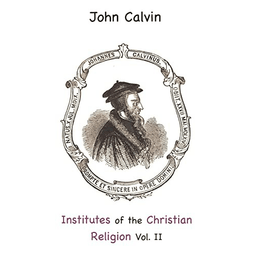 Institutes of the Christian ReligionCalvin’s 16th-century Reformation source text behind much of the tradition Bavinck systematizes. The original voice rather than a later synthesis.Systematic Theology by Charles HodgeThe classic three-volume 19th-century American Reformed systematic from old Princeton. Thorough and confident, with a narrower base than Bavinck’s continental breadth.
Frequently asked questions
Is Bavinck’s Reformed Dogmatics worth reading if I’m not Reformed?
Often yes, with eyes open. It is written from a Dutch Reformed standpoint and argues for Reformed positions, so readers in other traditions will find their own views presented from outside. But the historical surveys - how the church across the centuries handled each doctrine - are valuable to almost any serious reader, and Bavinck engages the broad catholic tradition more charitably than most. It should not be the only systematic on the shelf for readers whose tradition Bavinck is not writing from.
Should I buy the four-volume set or the one-volume abridgement?
For most readers, the abridgement. At around 900 pages and about $45 it keeps Bavinck’s structure, argument, and much of his historical engagement, and it is the version most first-time readers actually finish. Move to the full four-volume set (or buy individual volumes) when you know you want the complete historical apparatus or need to study a particular locus in depth.
How long is Reformed Dogmatics?
The complete four-volume English set runs roughly 3,000 pages. The one-volume abridgement edited by John Bolt is around 900 pages. It is a substantial work either way - closer to a long-term study project than a weekend read - which is the main reason the abridgement exists.
Who translated Reformed Dogmatics into English, and when?
The complete English edition was edited by John Bolt and translated by John Vriend, published by Baker Academic across four volumes between 2003 and 2008. Bavinck wrote the original Dutch (Gereformeerde Dogmatiek) between 1895 and 1901. The Bolt/Vriend translation is the standard English text and is widely praised for its clarity.
How does Bavinck compare to Grudem or Berkhof?
Bavinck is the most historically broad and the most demanding of the three, with a worshipful tone and deep engagement with the whole tradition. Grudem is the most accessible and lay-friendly - the easier first systematic. Berkhof is the shortest and most teachable, and it drew heavily on Bavinck. Many readers learn the categories from Grudem or Berkhof and then turn to Bavinck for depth.
Is Reformed Dogmatics too academic for a layperson?
It is academic, but motivated lay readers do work through it - especially via the one-volume abridgement. Bavinck assumes a reader who can follow sustained engagement with historical and philosophical sources, so it rewards patience and some prior familiarity with theological vocabulary. If you want a gentler on-ramp, start with a more introductory systematic and come to Bavinck once the categories feel familiar.
What does Reformed Dogmatics cover?
It follows the standard systematic order across four volumes: prolegomena and the doctrine of revelation and scripture; the doctrine of God and creation; sin and salvation in Christ; and the application of salvation, the church, and the last things. Each doctrine is traced through church history before Bavinck argues his own position, so the work doubles as a guide to how Christian doctrine developed.
Sources & further reading
More Systematic Theology Books
Systematic Theology by Wayne GrudemThe most-used modern systematic theology in English-speaking evangelicalism, and the one most laypeople actually finish - here’s what that readability costs you, and what it buys.Institutes of the Christian ReligionThe most influential systematic theology of the Protestant Reformation, still in print after almost five centuries - and still one of the most argued-about books in Christian history. The Cross of ChristJohn Stott’s 1986 masterwork is the book most modern evangelical pastors point to when someone asks what the cross actually accomplished - and four decades later it still earns the recommendation.Summa TheologicaThe thirteenth-century synthesis that became the backbone of Catholic theology - vast, rigorous, free in the public domain, and almost no one reads it the way it looks like you should.A Body of DivinityThe 1692 Puritan exposition of the Westminster Shorter Catechism - still the warmest, most quotable systematic theology a layperson can actually finish.Concise TheologyJ.I. Packer’s 1993 guide compresses the whole of Christian doctrine into 94 two-to-three-page chapters - a doctrine reference you can actually finish, written by the man behind Knowing God.