- Starting price
- Free (public domain)
- Free tier
- Yes
- Platforms
- Print (3 vols) · Kindle · Web (free)
- Developer
- Eerdmans
- Launched
- 1873
- Updated
- May 31, 2026
The verdict
Hodge’s Systematic Theology is the classic three-volume statement of Old Princeton Presbyterianism - rigorous, confessionally Reformed, and historically important. It is long, it is 19th-century, and a few of its scientific and cultural sections have dated badly. But the text is free, the argument is careful, and for readers who want the source of conservative American Reformed theology it remains a primary reference.
Try Systematic Theology (Hodge) ↗Opens ccel.org
Charles Hodge’s Systematic Theology has quietly remained, for a century and a half, the book that conservative American Presbyterianism keeps coming back to. Published in three volumes between 1871 and 1873, near the end of a teaching career at Princeton Seminary that ran more than fifty years, it is the most complete statement of what is usually called Old Princeton theology - a confessional, Westminster-shaped Reformed system worked out in deliberate continuity with the post-Reformation Reformed tradition. It is cited in seminary papers, in denominational debates, and in footnotes to nearly every later Reformed systematic written in English.
It is not a quick read. It does not split the difference between traditions. It does not pretend to be a neutral survey of all of Christianity. Hodge writes from a clearly Reformed, Westminster-confessional position and argues for it across roughly 2,200 pages, and he tells you which view he is defending rather than hiding the commitment. He is most famous for a remark he made at his fiftieth-anniversary celebration in 1872 - that Princeton Seminary had never originated a single new idea - which he meant not as an apology but as a boast: his whole project was fidelity to the received Reformed confessional tradition rather than innovation.
What keeps the book in print despite its length is the combination of comprehensiveness and order. Hodge moves through the standard systematic categories - theology proper, anthropology, soteriology, eschatology - with a lawyer’s instinct for stating the question, surveying the alternatives, raising objections, and answering them in turn. The prose is 19th-century and the apparatus is heavy, but the structure is clean enough that you can read a single locus on its own. And because it is public domain, the entire three volumes are free online, which makes it one of the most accessible major systematics ever written.
✓ The good
- Free in the public domain - the entire three-volume text is online at CCEL and elsewhere, and the Kindle editions cost a few dollars at most
- Comprehensive and orderly - covers the full sweep of Reformed dogmatics with a clear state-the-question, survey-the-views, answer-the-objections rhythm in nearly every section
- A primary source for Old Princeton theology - if you want to understand conservative American Presbyterianism, this is the defining statement rather than a summary of it
- Rigorous engagement with opposing positions - Hodge quotes and argues against Roman Catholic, Lutheran, Arminian, rationalist, and Pelagian sources at length rather than caricaturing them
- The opening section on theological method is widely admired - Hodge’s account of how theology relates to scripture, reason, and the facts of experience is read on its own in seminaries
- Historically self-aware - Hodge constantly situates each doctrine against the historic creeds and Reformed confessions, so you learn the lineage of a position alongside the position
- Inexpensive print sets - the Eerdmans and Hendrickson three-volume editions run around $45 for the whole thing, a fraction of the cost per page of most modern systematics
✗ Watch out
- Reformed and Westminster-confessional throughout - chapters on election, the covenants, baptism, the Lord’s Supper, and church government argue for specific positions rather than survey them neutrally
- Long. Roughly 2,200 pages across three volumes, with a density of citation and Latin that makes it slower going than any modern single-volume option
- 19th-century prose - the sentences are long, the paragraphs are long, and the rhetorical register is formal in a way that asks patience of a modern reader
- Several scientific and cultural sections have dated badly - Hodge’s discussions of geology, the age of the earth, evolution, and contemporary 1870s controversies are very much of their moment
- Written from and for the Reformed tradition - Catholic, Orthodox, Wesleyan, and Latter-day Saint readers will find their own views described from outside and argued against
- Berkhof and Grudem cover much of the same Reformed ground far more concisely - for many readers the modern abridgements are the more practical entry point
Best for
- Reformed and Presbyterian readers who want the primary source rather than a summary
- Seminary students studying the history of American theology or Old Princeton
- Pastors who want a deep, confessional reference on a specific doctrine
- Readers who value a free, complete systematic they can search and quote
Avoid if
- You want a tradition-neutral survey of all Christian theology
- You want a Catholic, Orthodox, or Latter-day Saint systematic
- You want a short, modern, single-volume read (try Berkhof or Grudem)
- You bounce off dense 19th-century prose and long Latin citations
What Systematic Theology (Hodge) is
Systematic Theology is Charles Hodge’s three-volume statement of Reformed dogmatics, published by Scribner between 1871 and 1873 and continuously reprinted since. Volume 1 covers theological method (the celebrated Introduction) and theology proper - the existence, nature, and attributes of God, the Trinity, creation, and providence. Volume 2 covers anthropology and the person and work of Christ. Volume 3 covers soteriology - the application of redemption, the means of grace, and the sacraments - and eschatology. The whole runs to roughly 2,200 pages with extensive citation of patristic, Reformation, and contemporary 19th-century sources.
Hodge taught at Princeton Theological Seminary from 1820 until his death in 1878 and was the central figure of what later writers named the Old Princeton school - a confessional Reformed theology committed to the Westminster Standards and to continuity with post-Reformation Reformed orthodoxy. The Systematic Theology is its mature expression. It is widely treated as a primary reference in Reformed and Presbyterian seminaries and as an essential document for understanding the history of conservative American Protestant thought, and because it is public domain the full text is freely available.
Why Reformed readers go back to Hodge
The single biggest reason to read Hodge rather than a later summary is that he is the source. Louis Berkhof’s Systematic Theology is in large part a careful, compressed organization of the Reformed tradition that Hodge and his successors had already worked out, and Berkhof says as much. Reading Hodge first is reading the argument at full length, with the objections he actually faced, the sources he actually quoted, and the reasoning spelled out rather than condensed into outline form. For a reader who wants to understand how American Reformed theology arrived at its positions, the primary text answers questions a digest cannot.
The other reason is method. Hodge’s Introduction lays out a view of theology as a science that works from the facts revealed in scripture the way a natural scientist works from the facts of nature - gathering, ordering, and drawing conclusions. That account, sometimes called the inductive or Baconian method, is one of the most discussed sections in the whole book and is read on its own in courses on the history of theology. Whether or not a reader finds it persuasive, it frames everything that follows and shows you the engine under Old Princeton’s confidence. The depth and the method together are the differentiator.
The Introduction: theology as a science
Volume 1 opens with a long methodological Introduction that is, for many readers, the most influential part of the book. Hodge argues that theology is a science in the proper sense - that scripture is the storehouse of revealed facts, and that the theologian’s task is to collect those facts, arrange them, and exhibit their relations the way a scientist collects and orders the facts of the natural world. He sets this inductive approach against what he calls the speculative method (deriving theology from a philosophical first principle) and the mystical method (grounding it in feeling or inner experience), and he defends the place of reason while insisting that reason is the recipient, not the source, of revelation.
This section gets read on its own because it is where Hodge’s whole confidence comes from. The famous boast that Princeton never originated a new idea makes sense only against this backdrop: if theology is the ordering of facts already given in scripture, then novelty is a warning sign rather than an achievement. Modern readers - including many within the Reformed tradition - debate whether the scientific analogy claims too much and whether it underrates how much interpretation shapes the facts. That debate is itself a reason to read the Introduction: it is the hinge on which most assessments of Old Princeton turn.
Comprehensiveness: the full sweep, with the objections
Hodge’s great practical strength is coverage. Across the three volumes he treats the existence and attributes of God, the Trinity, creation and providence, the origin and fall of humanity, original sin, the person and work of Christ, the application of redemption, the church and sacraments, and the last things - and he treats each at length, not in summary. A reader who wants Hodge’s view of, say, the atonement or imputation finds not a paragraph but a sustained discussion that states the question, lays out the Roman Catholic, Lutheran, Arminian, and rationalist alternatives, raises the standard objections, and answers them in order. The lawyerly habit of taking opposing arguments seriously runs through the whole work.
That thoroughness is what makes the book usable as a reference long after the reader has stopped agreeing with every conclusion. Because each locus is largely self-contained, you can read the section on providence or on the sacraments without working through the preceding 800 pages. And because Hodge quotes his opponents at length and in their own words, the book doubles as a window into the 19th-century theological landscape - the debates with Charles Finney’s revivalism, with German rationalism and the mediating theology, and with the Roman Catholic and Tractarian positions of his day are all preserved on the page.
The dated sections: science, geology, and the 1870s
No honest review can skip the parts of Hodge that have aged. Because he wrote at the height of the Victorian conversation between theology and natural science, the Systematic Theology spends real space on geology, the age of the earth, the unity of the human race, and the new evolutionary theory - Hodge’s separate short book What Is Darwinism? sits alongside these sections. His handling reflects the state of the question in the 1870s, and the scientific particulars are simply out of date. Readers come to these passages for their historical interest, as evidence of how a careful conservative engaged the science of his moment, rather than for current answers.
The same caution applies to a scattering of cultural and contextual material throughout the work. Examples drawn from 19th-century controversies, assumptions about contemporary society, and the occasional aside reflect the world Hodge wrote in. None of this is hard to navigate once you know to expect it - the doctrinal core of the book is what later Reformed writers carried forward, while the scientific and cultural shell is the part a modern reader reads with the date in mind. It is worth flagging going in rather than being surprised by it.
Pricing
Web (free / public domain)
Free
The complete three volumes online at CCEL and other archives. Searchable, linkable, and the way most readers access it today.
Kindle
~$1-5
Several public-domain ebook editions exist for a few dollars or less. Searchable and portable, though formatting quality varies between editions.
Print set (Eerdmans / Hendrickson)
~$45
The standard three-volume hardcover or paperback set. The format to own if you want a markable reference on the shelf.
Logos / Accordance edition
~$20-40
Scripture references and citations linked into your library and cross-searchable. The serious-study format for digital users.
The headline number is that there is no number. Because the work entered the public domain long ago, the complete three volumes are free to read online - the Christian Classics Ethereal Library hosts a clean, searchable, fully linked edition, and several other archives carry it as well. For most readers in 2026, this is how they first meet Hodge, and it is genuinely the best value in the category: a 2,200-page primary systematic at no cost.
The Kindle and other ebook editions are essentially free too - public-domain reprints run from nothing up to a few dollars, with the price tracking formatting quality more than content. They are worth it for searchability and for reading on a device, with the caveat that the cheapest editions can have rough formatting and unreliable footnote handling. Spend the extra dollar or two for a better-formatted edition if you plan to read at length.
For a physical copy, the Eerdmans and Hendrickson three-volume sets run around $45 for all three volumes - striking value per page next to a modern single-volume systematic that often costs more on its own. This is the format to own if you want a reference you can mark up and keep on the shelf. The set is heavy and the volumes are thick, but they are built to last.
Serious digital students should consider the Logos or Accordance editions, which typically run somewhere in the $20-40 range and link every scripture reference and citation into the rest of your library. If you already work in one of those platforms, the cross-searching is worth the modest cost. Most readers, though, do not need to spend anything at all - the free web text is complete, and the print set is cheap when you want paper.
Where Systematic Theology (Hodge) falls behind
Length and 19th-century prose. At roughly 2,200 pages of formal Victorian writing, Hodge asks more patience than any modern systematic. The sentences are long, the paragraphs run for half a page, and Latin phrases appear untranslated. The argument rewards the effort, but a reader who wants doctrine in plain contemporary English will move faster with Berkhof or Grudem.
Dated science and cultural material. The sections on geology, the age of the earth, evolution, and the social assumptions of the 1870s are exactly as old as the book. They are valuable as a record of how a careful conservative engaged the science of his day, but they are not a current resource on any of those questions, and a first-time reader should treat them as historical.
Written from and for one tradition. Hodge is Reformed and Westminster-confessional from the first page to the last. Roman Catholic sacramental theology, Eastern Orthodox theology, Wesleyan-Arminian soteriology, and Latter-day Saint distinctives are present mainly as positions to be argued against. Readers in those traditions will need a second book to hear their own view stated by someone who holds it.
Thinner than later work on some 20th-century questions. Because Hodge died in 1878, the systematic naturally does not engage the theological developments that came after - Barth and 20th-century dogmatics, modern biblical scholarship, contemporary debates in Christology and eschatology. For those, even a reader who loves Hodge will reach for newer volumes such as Bavinck or later Reformed dogmatics.
More concise modern options exist for the same tradition. Berkhof condenses much of the Old Princeton inheritance into one outline-driven volume of around 750 pages, and Grudem repackages a broadly similar Reformed frame in highly readable prose with study aids. For a reader whose goal is to learn Reformed doctrine efficiently rather than to read the primary source, those are the practical first stops.
Hodge vs. Berkhof vs. Bavinck
These three are the Reformed systematics most likely to be recommended in the same breath, and they serve different readers. Different strengths. Hodge is the primary 19th-century American source - the fullest, most argued-out statement of Old Princeton. Berkhof is the concise modern standard that organizes much of that same inheritance into one volume. Bavinck is the deep Dutch alternative, broader on historical and continental sources and widely regarded as the most theologically rich of the three.
Louis Berkhof’s Systematic Theology (1939, lightly revised) is short - around 750 pages - and tightly outlined. It self-consciously carries the Old Princeton and Dutch Reformed tradition forward in compressed, teachable form, which is exactly why so many readers reach for Berkhof first and Hodge second: Berkhof gives you the conclusions and the structure, Hodge gives you the full argument and the sources behind them. If you want the tradition efficiently, start with Berkhof. If you want to see the reasoning at length, go to Hodge.
Herman Bavinck’s Reformed Dogmatics (four volumes, originally early 1900s, in full English only since 2003-08) is the deepest of the three. Bavinck engages the church fathers, medieval scholastics, the Reformers, and modern continental theology more fully than Hodge does, and many readers find him more synthetic and less polemical. He is also longer than Hodge and more demanding. Hodge and Bavinck overlap heavily in conclusions but differ in texture - Hodge the careful 19th-century American, Bavinck the wide-reading early-20th-century Dutchman.
The honest summary: read Berkhof or Grudem first if your goal is to learn Reformed doctrine quickly and cheaply. Read Hodge when you want the American primary source at full length and at no cost. Read Bavinck when you want the richest and most wide-ranging treatment in the tradition. For systematics outside Reformed Protestantism, look elsewhere entirely - Aquinas’s Summa or Ott for Roman Catholic, Lossky or Stăniloae for Eastern Orthodox, Wesley and later Wesleyan dogmaticians for the Methodist tradition, and the standard Latter-day Saint references for that tradition.
The bottom line
Hodge’s Systematic Theology earns its place not as the most concise or the most current systematic on the shelf, but as the definitive primary statement of Old Princeton Reformed theology - comprehensive, rigorously argued, historically self-aware, and free in the public domain. Know the frame going in - confessionally Reformed and Westminster-shaped - read the dated science and cultural sections as the 19th-century artifacts they are, and reach for Berkhof or Grudem when you want the same tradition in fewer pages. For Reformed and Presbyterian readers who want the source rather than the summary, it remains an essential reference, and the price is unbeatable.
Alternatives to Systematic Theology (Hodge)
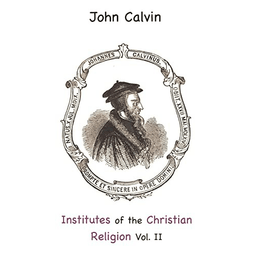 Institutes of the Christian ReligionCalvin’s 16th-century Reformation source text behind much of the tradition Hodge defends. Denser and more devotional, and the original voice rather than a 19th-century restatement.
 Systematic Theology by Wayne GrudemThe most-read modern one-volume systematic in English-speaking evangelicalism, with study aids and plain prose. A far more accessible entry point to a broadly similar Reformed frame.Reformed Dogmatics by Herman BavinckThe four-volume Dutch Reformed masterwork - broader on historical and continental sources and widely regarded as the richest systematic in the tradition. Longer and more demanding.
Frequently asked questions
Is Charles Hodge’s Systematic Theology free?
Yes. The complete three-volume work is in the public domain, so the full text is freely available online - the Christian Classics Ethereal Library (CCEL) hosts a clean, searchable edition, and other archives carry it too. Public-domain Kindle editions cost only a few dollars, and the standard print set runs around $45 for all three volumes.
What is Hodge’s theological position?
Hodge writes from a confessionally Reformed, Westminster-shaped Presbyterian position and is the central figure of the Old Princeton school. He argues for specific Reformed positions on election, the covenants, the sacraments, and church government rather than surveying them neutrally, and he states those commitments openly throughout the work.
Should I read Hodge or Berkhof?
For most readers, Berkhof first and Hodge second. Berkhof’s one-volume Systematic Theology (around 750 pages) organizes much of the same Reformed tradition into compressed, teachable form, so it is the faster way to learn the doctrine and the structure. Hodge is the place to go when you want the full argument, the sources, and the primary 19th-century American text behind it.
How long is Hodge’s Systematic Theology?
Roughly 2,200 pages across three volumes. Volume 1 covers theological method and the doctrine of God, Volume 2 covers anthropology and the person and work of Christ, and Volume 3 covers the application of redemption, the sacraments, and eschatology. It is considerably longer and denser than any modern single-volume systematic.
Are parts of Hodge out of date?
Some are. Because Hodge wrote in the early 1870s, his sections on geology, the age of the earth, evolution, and various 19th-century controversies reflect the science and culture of his moment and have dated accordingly. The doctrinal core is what later Reformed writers carried forward; the scientific and cultural material is best read for its historical interest.
Will this book work for Catholic, Orthodox, Wesleyan, or Latter-day Saint readers?
Readers in those traditions will find their own theology described from outside and often argued against, since Hodge writes specifically from and for the Reformed tradition. It can still be useful as a window into how 19th-century conservative Presbyterianism reasoned about each doctrine, but it should not be the only systematic on the shelf for readers whose tradition Hodge is not writing from.
What did Hodge mean that Princeton never originated a new idea?
At his fiftieth-anniversary celebration in 1872, Hodge said Princeton Seminary had never originated a new idea. He meant it as a point of pride, not an apology: in his view theology is the ordering of truths already given in scripture and handed down in the Reformed confessions, so fidelity to that tradition mattered more to him than novelty. The remark captures the whole spirit of Old Princeton.
Sources & further reading
More Systematic Theology Books
Systematic Theology by Wayne GrudemThe most-used modern systematic theology in English-speaking evangelicalism, and the one most laypeople actually finish - here’s what that readability costs you, and what it buys.Institutes of the Christian ReligionThe most influential systematic theology of the Protestant Reformation, still in print after almost five centuries - and still one of the most argued-about books in Christian history. The Cross of ChristJohn Stott’s 1986 masterwork is the book most modern evangelical pastors point to when someone asks what the cross actually accomplished - and four decades later it still earns the recommendation.Reformed DogmaticsA century-old Dutch Reformed masterwork that reads the whole catholic tradition before it argues - magnificent, demanding, and long enough that most readers should start with the one-volume abridgement.Summa TheologicaThe thirteenth-century synthesis that became the backbone of Catholic theology - vast, rigorous, free in the public domain, and almost no one reads it the way it looks like you should.A Body of DivinityThe 1692 Puritan exposition of the Westminster Shorter Catechism - still the warmest, most quotable systematic theology a layperson can actually finish.