- Starting price
- ~$40 hardcover
- Free tier
- No
- Platforms
- Print · Kindle
- Developer
- Eerdmans
- Launched
- 1938
- Updated
- May 31, 2026
The verdict
Berkhof’s Systematic Theology is the classic one-volume Reformed dogmatics in English - concise, tightly ordered, and written squarely from the confessional Reformed tradition (drawing heavily on Bavinck and Kuyper). It is not a neutral survey and it assumes some theological vocabulary; know the frame and the era going in, and it remains one of the most efficient summaries of the Reformed system ever put in a single volume.
Try Systematic Theology (Berkhof) ↗Opens eerdmans.com
Louis Berkhof’s Systematic Theology has, for the better part of a century, been the default one-volume dogmatics in conservative Reformed and Presbyterian seminaries. First published in 1938 (building on earlier Dutch-language work and his own Reformed Dogmatics), it arranges the whole of Christian doctrine into the traditional loci - the doctrine of God, of man, of Christ, of the application of salvation, of the church, and of the last things - and works through each with a precision that has kept it on syllabi long after most textbooks of its generation went out of print.
It is not a neutral textbook. It does not survey every Christian tradition even-handedly. It does not split the difference between communions. Berkhof writes from a clearly Reformed confessional position, in the line of the Dutch theologians Herman Bavinck and Abraham Kuyper, and he organizes the entire book around that system - so the reader is always learning the Reformed account of a doctrine, with other positions introduced mainly to be set against it.
What has kept the book alive despite its age and its narrow lane is the compression. Berkhof says in 750-odd pages what other systematics take two or three volumes to say. The structure is relentlessly orderly: definition, biblical basis, historical survey, statement of the Reformed position, objections answered. Once you learn the rhythm, you can find any doctrine in the book in seconds and read a careful summary of it in minutes. That efficiency - paired with a clear introduction to theological method (the Introductory Volume that opens most modern printings) - is why it remains a standard reference rather than a museum piece.
✓ The good
- Remarkably concise for a full systematic - Berkhof covers the entire scope of Christian doctrine in roughly 750 pages, where peers run to multiple volumes
- Tightly and consistently ordered - every locus follows the same pattern (definition, scriptural basis, historical survey, position, objections), so the book is fast to navigate and easy to study
- The clearest compact summary of the Reformed system in English - long the standard seminary text precisely because it states the tradition’s positions crisply and without padding
- Strong on historical theology - Berkhof traces how each doctrine developed through the church fathers, the medievals, the Reformation, and post-Reformation Reformed orthodoxy, so you see where positions come from
- Distills Bavinck and Kuyper - it functions as an accessible on-ramp to the much larger Dutch Reformed tradition for readers who will not work through Bavinck’s four volumes
- The Introductory Volume on theological method (prolegomena, the idea and divisions of dogmatics) is a respected short treatment in its own right
- Inexpensive and durable - the one-volume hardcover is widely available, holds up to heavy use, and is far cheaper than assembling a multi-volume set
✗ Watch out
- Confessionally Reformed throughout - chapters on election, the covenants, perseverance, the sacraments, and church government present the Reformed position rather than survey the field neutrally
- Terse and dense - the compression that makes it efficient also makes it hard going for readers without some theological grounding; it reads like a manual, not a narrative
- Assumes theological vocabulary - terms like supralapsarian, federal headship, and common grace are used with brief definition at best, and Latin and occasional Greek appear unglossed
- Dated in places - first published in 1938, it engages the liberal-theology debates of its own era and predates a century of later biblical scholarship and ecumenical conversation
- Limited charitable engagement with Catholic, Orthodox, Wesleyan-Arminian, and Latter-day Saint theology - other traditions appear mainly as positions to be answered, described from outside
- No memory verses, discussion questions, or built-in study apparatus - unlike Grudem, it is a reference work, not a self-study or small-group curriculum
Best for
- Seminary students at Reformed or Presbyterian schools where it is assigned
- Readers who already hold or want to understand the Reformed system in depth
- Pastors who want a compact, well-organized doctrinal reference on the shelf
- Students of historical theology who value its survey of how doctrines developed
Avoid if
- You want a tradition-neutral survey of all Christian theology
- You are new to theology and need terms defined and arguments unpacked slowly
- You are looking for a Catholic, Orthodox, Wesleyan, or Latter-day Saint systematic
- You want a warm, readable, application-driven book rather than a terse manual
What Systematic Theology (Berkhof) is
Systematic Theology is Louis Berkhof’s single-volume Reformed dogmatics, first published by Eerdmans in 1938 and continuously in print since, now commonly issued together with his Introductory Volume on theological method. It works through the standard systematic loci - theology proper (the doctrine of God), anthropology (the doctrine of man), Christology, soteriology (the application of redemption), ecclesiology (the doctrine of the church and the means of grace), and eschatology (the last things) - in roughly 750 pages, treating each doctrine with a definition, its scriptural basis, a short history of how it has been understood, a statement of the Reformed position, and answers to common objections.
Berkhof (1873-1957) taught and served as president at Calvin Theological Seminary in Grand Rapids, and the book is written from the confessional Reformed tradition, drawing heavily on the Dutch theologians Herman Bavinck and Abraham Kuyper. Published by Eerdmans and also issued by Banner of Truth, it was for decades the assigned systematic at a wide range of conservative Reformed and Presbyterian seminaries, and it remains widely treated as the standard compact statement of Reformed doctrine.
Why Reformed students still reach for Berkhof
The single biggest practical difference between Berkhof and the other major systematics is compression. Grudem is warmer, more accessible, and far longer. Bavinck is magnificent, deep, and four volumes - the source Berkhof is summarizing. Calvin’s Institutes is the 16th-century fountainhead, more devotional and discursive than a modern manual. Berkhof, by contrast, is a textbook in the strict sense: it states the Reformed position on each doctrine as economically as the subject allows, surveys the alternatives quickly, and moves on. There is almost no narrative warmth and almost no wasted word.
For its intended reader, that is the feature, not the bug. A student who needs to grasp the Reformed account of, say, the covenant of grace or the order of salvation can find it in Berkhof in minutes, see how it was argued historically, and understand where it sits against Lutheran, Arminian, and Catholic alternatives - all in a few tightly organized pages. That efficiency is why Berkhof has outlasted most textbooks of its generation and why it remains the compact reference of choice within the Reformed world, even as Grudem has become the more popular first systematic for general readers.
Concision and structure: the loci, in 750 pages
Berkhof organizes the whole of Christian doctrine into the traditional loci and treats each one with an almost identical structure: a definition of the doctrine, its grounding in scripture, a survey of how it has been understood through church history, a statement of the Reformed position, and a section answering objections. The book opens (in the standard combined printing) with the Introductory Volume on prolegomena - what theology is, what dogmatics is, and how it should be done - before moving through theology proper, anthropology, Christology, soteriology, ecclesiology, and eschatology. The result is a complete system in a single, navigable volume.
That structural discipline is the book’s defining trait. Once you have read a few sections you know exactly how the next one will move, which makes the book fast to study and fast to consult - you can locate any doctrine and read a careful summary of it in a sitting. Compared with Grudem (longer, more application-driven, broken up with memory verses and questions) or Bavinck (four volumes of unhurried historical-theological depth), Berkhof trades expansiveness for efficiency. He says in a paragraph what others say in a chapter. For readers who want the Reformed system stated compactly, that trade is the entire appeal.
Historical theology: where each doctrine came from
A distinctive strength of Berkhof is the short history attached to nearly every doctrine. Before stating his own position, he typically sketches how the doctrine was understood in the early church, how the medieval theologians handled it, what the Reformation did with it, and how post-Reformation Reformed orthodoxy refined it. He names the figures and the controversies - Pelagius and Augustine on grace, the medieval debates on the sacraments, the Reformation-era disputes, the later Reformed scholastics - so the reader sees that doctrines have a lineage rather than appearing fully formed.
This historical layer is part of why the book has held up as a teaching text. It does more than tell you what the Reformed tradition concludes; it shows you the conversation the conclusion came out of, which is exactly what a seminary course in systematic theology is trying to convey. It is also where Berkhof’s debt to Bavinck is most visible - much of the historical framing condenses the larger Dutch Reformed engagement with the history of doctrine. Readers who want that engagement at full length will move on to Bavinck, but Berkhof gives them the map first.
A compact gateway to the Dutch Reformed tradition
Berkhof wrote in the wake of Herman Bavinck and Abraham Kuyper, the towering figures of the Dutch Reformed revival, and his Systematic Theology functions in large part as an accessible distillation of that tradition for the English-speaking seminary. Where Bavinck’s Reformed Dogmatics runs to four substantial volumes, Berkhof renders the same broad system - its account of God, covenant, common grace, the order of salvation, and the church - in a fraction of the space, in a form a student can actually work through in a single course.
For many readers that gateway function is the book’s lasting value. It introduces the categories and commitments of the Dutch Reformed tradition clearly enough that a reader can then pick up Bavinck (now fully available in English translation) and follow him, or read Kuyper on common grace and recognize the framework. Berkhof also produced a shorter, catechism-style condensation of his own work - the Summary of Christian Doctrine - and a Manual of Christian Doctrine, so the same system is available in full, mid-length, and abridged forms depending on the reader in front of you.
Pricing
One-volume hardcover
~$40
The standard Eerdmans / Banner of Truth hardcover, including the Introductory Volume on method. The edition nearly everyone owns.
Kindle / ebook
~$25-30
Same text, searchable, syncs across devices. Useful for word-level lookup, though the dense layout reads better in print.
Banner of Truth printing
~$40
A widely sold cloth edition of the same text. Choice between editions is mostly about cover and typesetting, not content.
Summary of Christian Doctrine (abridged)
~$15
Berkhof’s own shorter, catechism-style condensation of the system. The right entry point or companion for first-time readers.
Used / secondhand
under ~$15
A long-printed standard, so used copies are plentiful and cheap. How many seminarians still acquire their first one.
The one-volume hardcover runs around $40 at most retailers - typically bundling the Introductory Volume on method with the main Systematic Theology - and is the format the book is best known in. For a complete systematic it is genuinely inexpensive, especially next to assembling a multi-volume set, and the cloth binding stands up to the underlining and marginal notes the book invites.
The Kindle or ebook edition lands around $25-30 and is useful mainly for search and portability. The trade-off is real: Berkhof’s dense, outline-heavy layout - with its nested points and frequent Latin tags - reads more comfortably in print than on a small screen, and the cross-referencing is easier on paper.
There is little meaningful difference between the Eerdmans and Banner of Truth printings; both reproduce the same text, and the choice comes down to cover, typesetting, and price on the day. Used copies are abundant and often under $15, since the book has been a standard for so long - secondhand is still how many seminarians get their first one.
For first-time readers or those who want the system in brief, Berkhof’s own Summary of Christian Doctrine (around $15) is the natural companion: a short, catechism-style condensation in his own words. Most readers do not need every format - own the hardcover as the reference, and add the Summary if you want a gentler way in.
Where Systematic Theology (Berkhof) falls behind
Written from and for the Reformed tradition. The entire book is organized around the Reformed system, and on contested doctrines - election and reprobation, the covenants, the perseverance of the saints, the sacraments, church government - Berkhof states and defends the Reformed position rather than surveying the field. Readers from other traditions will find their own views described mainly as positions to be answered, and will want a second book to hear those views stated on their own terms.
Terse to the point of difficulty. The concision that makes Berkhof efficient also makes him demanding. The prose is compressed and outline-like, arguments are stated rather than unfolded, and there is little of the hand-holding a beginner needs. A reader without prior theological grounding can find the book hard to enter - it assumes you already know roughly where you are.
Assumes a working theological vocabulary. Technical terms - supralapsarian and infralapsarian, federal headship, common grace, the communicatio idiomatum - are used with minimal definition, and Latin phrases and occasional Greek appear without translation. The book was written for seminarians who had already learned the language, and it still reads that way.
Dated by its 1938 vintage. Berkhof engages the theological controversies of the early 20th century - the liberal theology of his day, the modernist-fundamentalist debates - and predates nearly a century of later biblical scholarship, the mid-century Barthian conversation, and the ecumenical dialogue that followed. Some of its polemical targets are no longer the live ones, and newer questions are simply absent.
No study apparatus. Unlike Grudem, Berkhof offers no memory verses, discussion questions, application prompts, or chapter summaries built for groups. It is a reference and a textbook, not a self-study course - which is fine for its purpose, but means most lay readers will want a more accessible book alongside it.
Berkhof vs. Grudem vs. Bavinck
These three sit on the same Reformed shelf and serve genuinely different readers. Different strengths. Berkhof is the most concise and the most efficient summary of the Reformed system. Grudem is the most readable and the most lay-friendly. Bavinck is the deepest and the most thorough - the source much of Berkhof is condensing.
Wayne Grudem’s Systematic Theology (1994; 2nd ed. 2020) is far longer at 1,500-plus pages and far more accessible, written from a Reformed Baptist position with memory verses, discussion questions, and a near-exhaustive scripture index built for self-study. It is the systematic most general readers and lay people actually finish. Berkhof is shorter, denser, and more strictly confessional Reformed (paedobaptist, covenantal); it rewards a reader who already has some theological footing and wants the system stated compactly rather than explained gently. Many readers use Grudem to learn and Berkhof to consult.
Herman Bavinck’s Reformed Dogmatics (four volumes, now fully in English) is the magisterial Dutch Reformed work standing behind Berkhof. It engages the history of doctrine, the church fathers, the medievals, and continental philosophy at far greater length and with more nuance than any one-volume book can - Berkhof is, in effect, the seminary distillation of that tradition, the right place to learn the framework before taking on the four volumes. The honest summary: pick Grudem first if you simply want to read and finish a systematic, pick Berkhof when you want the Reformed system stated tightly in one navigable volume and you can handle the vocabulary, and move to Bavinck when you want the tradition at full depth and historical range. For traditions outside the Reformed world, look elsewhere entirely - Calvin’s Institutes for the Reformation source, Hodge for the older Princeton Reformed voice, Aquinas’s Summa or Ott for Catholic, Lossky or Stăniloae for Orthodox, and the relevant in-tradition systematics for Wesleyan and Latter-day Saint readers.
The bottom line
Berkhof’s Systematic Theology earns its long-standing place as the classic one-volume Reformed dogmatics not because it is the warmest or the most current book on the shelf, but because it is the most efficient - a complete, tightly ordered statement of the Reformed system in a single navigable volume, rich in historical theology and grounded in the Bavinck-Kuyper tradition. Know the frame and the era going in - it is confessionally Reformed and it shows its 1938 vintage - and it remains one of the best compact references a Reformed student or pastor can own. For readers in that tradition it is still close to indispensable; for everyone else it is a clear, if pointed, window into how the Reformed system is built.
Alternatives to Systematic Theology (Berkhof)
 Systematic Theology by Wayne GrudemThe most-used modern one-volume systematic in English - longer and far more readable than Berkhof, with memory verses and a scripture index built for self-study.Reformed Dogmatics by Herman BavinckThe four-volume Dutch Reformed masterwork that stands behind Berkhof. Deeper, broader, and far longer - the full version of the tradition Berkhof condenses.
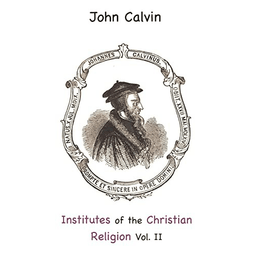 Institutes of the Christian ReligionCalvin’s 16th-century source text for the whole Reformed tradition. More devotional and discursive than a modern manual - the original voice rather than a summary.Systematic Theology by Charles HodgeThe three-volume 19th-century Princeton Reformed systematic. Older and more expansive than Berkhof, in the American Presbyterian rather than Dutch Reformed line.
Frequently asked questions
Is Berkhof’s Systematic Theology good for a beginner?
Not as a first book. It is concise and assumes some theological vocabulary, so readers without prior grounding often find it dense. Beginners usually do better starting with Grudem (more readable, with definitions on the page) or with Berkhof’s own shorter Summary of Christian Doctrine, then moving to the full Systematic Theology once the categories feel familiar.
What is Berkhof’s theological position?
Berkhof writes from the confessional Reformed tradition - covenantal, paedobaptist, and in the line of the Dutch theologians Herman Bavinck and Abraham Kuyper. The book is organized around the Reformed system and states the Reformed position on contested doctrines (election, the covenants, perseverance, the sacraments) rather than surveying all traditions even-handedly.
How does Berkhof compare to Grudem?
Berkhof is shorter (around 750 pages), denser, and more strictly confessional Reformed; Grudem is much longer (1,500-plus pages), more accessible, written from a Reformed Baptist position, and built for self-study with memory verses and a scripture index. Grudem is the easier first read; Berkhof is the more compact reference for someone who already has theological footing. Many readers own both.
How does Berkhof relate to Bavinck?
Berkhof draws heavily on Herman Bavinck’s four-volume Reformed Dogmatics and functions in large part as an accessible distillation of that Dutch Reformed tradition for the seminary classroom. If you want the framework in one navigable volume, read Berkhof; if you want the tradition at full depth and historical range, move on to Bavinck, now fully available in English.
Is the 1938 date a problem?
It depends on what you want. The core Reformed system Berkhof lays out is stable, and the book remains an accurate, well-organized statement of it. But it engages the theological debates of its own era and predates a century of later scholarship and ecumenical conversation, so some of its polemical targets are dated and newer questions are absent. Use it as a systematic reference, and read more recent works for contemporary discussion.
Will this book work for Catholic, Orthodox, Wesleyan, or Latter-day Saint readers?
Readers in those traditions will find their own theology described from outside and usually treated as a position to be answered rather than entered into. Berkhof can still be a useful, clear window into how the Reformed tradition reasons about each doctrine, but it should not be the only systematic on the shelf for readers whose tradition Berkhof is not writing from.
Is there a shorter version of Berkhof?
Yes. Berkhof wrote a catechism-style condensation called the Summary of Christian Doctrine, as well as a Manual of Christian Doctrine, which present the same system in much briefer compass. The Summary (around $15) is the natural entry point or companion for readers who want Berkhof’s system without the full 750-page reference.
Sources & further reading
More Systematic Theology Books
Systematic Theology by Wayne GrudemThe most-used modern systematic theology in English-speaking evangelicalism, and the one most laypeople actually finish - here’s what that readability costs you, and what it buys.Institutes of the Christian ReligionThe most influential systematic theology of the Protestant Reformation, still in print after almost five centuries - and still one of the most argued-about books in Christian history.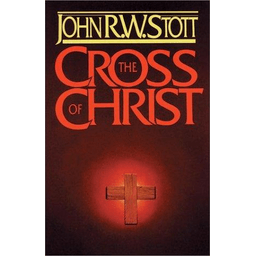 The Cross of ChristJohn Stott’s 1986 masterwork is the book most modern evangelical pastors point to when someone asks what the cross actually accomplished - and four decades later it still earns the recommendation.Reformed DogmaticsA century-old Dutch Reformed masterwork that reads the whole catholic tradition before it argues - magnificent, demanding, and long enough that most readers should start with the one-volume abridgement.Summa TheologicaThe thirteenth-century synthesis that became the backbone of Catholic theology - vast, rigorous, free in the public domain, and almost no one reads it the way it looks like you should.A Body of DivinityThe 1692 Puritan exposition of the Westminster Shorter Catechism - still the warmest, most quotable systematic theology a layperson can actually finish.