- Starting price
- Free (public-domain editions)
- Free tier
- Yes
- Platforms
- Print · Kindle · Audiobook · Web (free)
- Developer
- Various / Public domain
- Launched
- 1577
- Updated
- May 31, 2026
The verdict
The Interior Castle is the foundational map of the Carmelite contemplative tradition - St. Teresa of Ávila imagining the soul as a castle of seven successive dwelling places and guiding the reader inward, room by room, toward union with God. It is demanding 16th-century mystical prose, written first for nuns, but it remains one of the most influential books on prayer ever composed, and readers across many traditions return to it for its structure, its candor, and its sheer experiential authority.
Try The Interior Castle ↗Opens ccel.org
The Interior Castle has quietly become the book that serious students of prayer reach for once the shorter classics stop being enough. Brother Lawrence will teach you to keep gentle attention on God while you wash dishes; Teresa of Ávila will hand you a cartography of the whole interior journey, from the threshold of the spiritual life all the way to its deepest union. It is more ambitious, more demanding, and more systematic than almost anything else in the contemplative shelf - and it carries the unusual authority of having been written by someone reporting, with disarming frankness, on territory she had actually crossed.
It is not a how-to manual. It is not a memoir, though Teresa is everywhere in it. It is not theology in the scholastic sense - Teresa repeatedly apologizes for being an unlearned woman writing about things the learned describe better. What it is, instead, is an extended guided metaphor. Teresa pictures the soul as "a castle made of a single diamond or of very clear crystal, in which there are many rooms," and she organizes the entire spiritual life as a journey from the outermost rooms toward the innermost chamber where God dwells. She wrote it in 1577, near the end of her life, at the request of her confessors and for the Carmelite sisters she was then reforming - composing in haste, around convent business, in a Spanish that runs warm, digressive, and conversational.
The premise is simple to state and a lifetime to absorb: God is already present in the center of the soul, and the work of prayer is the long inward passage toward that center, through seven successive sets of rooms Teresa calls "mansions" or "dwelling places." It sounds like a tidy schema. In practice it is something stranger and richer - a description of how prayer actually deepens, what obstructs it, what consoles and what frightens along the way, written by a woman who was at once a mystic, a monastery administrator, and, by the reckoning of her own tradition, one of its greatest teachers. The Catholic Church later named her a Doctor of the Church, a recognition reserved for teachers of lasting significance - the first woman to be so named.
✓ The good
- The most influential map of contemplative prayer in the Western tradition - the seven-mansions structure has shaped how spiritual directors describe the interior journey for four and a half centuries
- Unusual experiential authority - Teresa is not theorizing; she writes as someone describing stages of prayer she had passed through, which gives the book a reported-from-the-field credibility few works on prayer have
- The castle metaphor is genuinely clarifying once it clicks - picturing the soul as a single structure with progressive rooms gives readers a frame for an interior life that otherwise resists description
- Warm and candid in voice - Teresa is funny, self-deprecating, and digressive, frequently breaking off to address her sisters directly, which keeps a demanding book surprisingly human
- Read well beyond its own tradition - a Carmelite Catholic classic by origin, it is studied across spiritual-formation circles by readers of many backgrounds
- The standard modern translations (notably the ICS edition by Kavanaugh and Rodriguez) are faithful and readable - a real upgrade over older renderings for first-time readers
- Free to start - older translations are in the public domain online and in inexpensive reprints, so cost is never a barrier
✗ Watch out
- The 16th-century mystical idiom is demanding - Teresa's long sentences, period vocabulary, and digressions ask more of a reader than the shorter, plainer classics do
- Written originally for cloistered nuns - Teresa assumes a reader inside a life of formal prayer and monastic routine, and some counsel is addressed to that setting rather than to a general audience
- The mansions metaphor takes orientation - the later dwelling places describe interior experiences (raptures, spiritual betrothal, union) in language that can feel abstract or remote without a guide or introduction
- Translation choice matters a great deal - older public-domain versions can be stiff or smoothed, and the reading experience varies sharply between editions
- Not a step-by-step method - Teresa describes stages of prayer and their landmarks, but a reader wanting a practical technique to follow tonight will need to supply the practice themselves
- Easy to misread as a literal ladder - the structure tempts readers to "rank" themselves by mansion, which Teresa repeatedly warns against, but the warning is easy to miss on a fast read
Best for
- Readers ready to go deeper than the short contemplative classics
- Anyone seeking a structured map of how prayer deepens over time
- Spiritual directors, formation leaders, and serious students of mysticism
- Readers building a shelf of Carmelite and contemplative classics
Avoid if
- You want a short, plain, read-it-tonight devotional
- You bounce off dense 16th-century mystical prose even when modernized
- You need a practical, step-by-step prayer method rather than a map of stages
- You prefer doctrinal instruction to first-person spiritual experience
What The Interior Castle is
The Interior Castle (Spanish: Las Moradas, "The Dwelling Places," or El Castillo Interior) is a work on the life of prayer written by St. Teresa of Ávila in 1577, near the end of her life. Teresa was a Spanish Carmelite nun, a reformer who founded the Discalced Carmelite movement, and a writer of several influential spiritual works. In this book she develops a single extended metaphor: the soul is a castle made of clear crystal, containing many rooms arranged in seven successive groups she calls "mansions" or "dwelling places," with God dwelling in the innermost chamber. The book walks the reader from the outer rooms inward, describing the deepening stages of prayer encountered along the way.
The book is a classic of Catholic spirituality and a foundational text of the Carmelite contemplative tradition, written alongside the work of John of the Cross, Teresa's friend and collaborator in the Carmelite reform. The text most modern readers know is one of several English translations; the standard modern critical edition was translated by Kieran Kavanaugh, O.C.D., and Otilio Rodriguez, O.C.D., and published by ICS Publications, while older translations such as E. Allison Peers's are in the public domain. The Catholic Church later named Teresa a Doctor of the Church - the first woman to receive the title - in recognition of the lasting significance of her teaching on prayer.
Why readers go to Teresa for the whole map
Most books on prayer give you a practice or a posture. Teresa gives you a geography. The Interior Castle is the rare work that tries to describe the entire arc of the interior life as a single connected structure - not a tip for today, but a map of where the road goes. The first mansions are about beginning: self-knowledge, prayer that is still mostly effort, the soul newly turned toward God but still entangled with what lies outside the castle. The middle mansions describe a prayer that grows quieter and more receptive. The final mansions describe the deepest union Teresa knew how to put into words. The reader who works through it comes away not with a technique but with a sense of the terrain - what tends to come early, what comes late, and what the landmarks along the way actually are.
That cartographic ambition is why the book endures and why spiritual directors across many traditions still reach for it. It is the thoughtful reader's atlas of prayer - the work that takes the inner life seriously enough to chart it. Teresa is careful to insist the rooms are not rigid grades and that no one should measure their worth by which mansion they think they occupy; the point is the journey inward toward a God already present at the center, not a ladder to be climbed for status. Read that way, the structure stops being a hierarchy and becomes what she intended: a way of seeing the whole of a life of prayer at once.
The seven mansions: a map of the soul from the outer rooms to the center
The book's organizing idea is its title image. Teresa asks the reader to picture the soul as a castle of clear crystal or diamond, with many rooms, and she groups those rooms into seven successive sets she calls "mansions" or "dwelling places." Each set marks a stage in the deepening of prayer. The outer mansions describe the soul at the beginning of the journey - turning toward God, growing in self-knowledge, still pulled by what lies outside the castle walls and learning the basic disciplines of prayer and conduct. As the reader moves inward, the prayer described becomes quieter, less effortful, and more receptive: Teresa distinguishes, for example, between prayer the soul actively works at and a deeper "prayer of quiet" that feels more given than achieved. The innermost mansions describe the most profound union with God that Teresa attempts to put into language.
What makes the schema useful rather than merely tidy is that Teresa fills each stage with specifics - the particular consolations, dangers, and temptations she associates with each phase, and the candid observation that progress is rarely linear. She is emphatic that the mansions are not watertight compartments and that a soul may move among them; the numbering is a teaching device, not a ranking. This sounds like a small clarification. In practice it is central - because it turns the castle from a status ladder, which Teresa explicitly warns against, into a description of how an interior life actually unfolds, with its advances, its long plateaus, and its returns.
Teresa's voice and authority: a reformer writing from inside the experience
It matters enormously who is writing. Teresa of Ávila was not a detached scholar describing prayer from the outside; she was a working mystic and a hard-pressed administrator describing it from within. She founded and reformed convents, traveled the roads of 16th-century Spain managing the practical affairs of a religious movement, navigated conflict with church and civil authorities, and wrote The Interior Castle in snatches of time around all of it. She also writes with constant self-deprecation - apologizing for her lack of learning, second-guessing her own metaphors, breaking off to address her sisters with affection or humor. The book is dense, but it is never cold; the reader is always aware of a particular, vivid person on the other side of the page.
That biography does real work in the text. The counsel lands differently coming from someone who reports having passed through these stages herself than it would from a theorist organizing other people's accounts. When Teresa describes the dryness of early prayer, the disorienting consolations of the middle mansions, or the experiences she places in the innermost rooms, she writes as a firsthand witness straining at the limits of language - repeatedly noting that words fail her here. That combination of experiential authority and frank humility is much of why the book travels across centuries and traditions: it has the unmistakable ring of someone reporting what she actually found.
Translation and edition: the choice that shapes a demanding read
Few classics reward a careful choice of edition as much as this one, because the prose is demanding and a good translation removes friction the original Spanish does not intend. Teresa wrote in a warm, run-on, digressive 16th-century Castilian, and English versions differ considerably in how they handle it. The older public-domain translations - most prominently E. Allison Peers's and the earlier Benedictines of Stanbrook version - are free online and in inexpensive reprints, and many readers find them dignified and serviceable, but their register can feel formal and their sentences long. The standard modern critical translation by Kieran Kavanaugh, O.C.D., and Otilio Rodriguez, O.C.D., published by ICS Publications, is the version most often recommended for first-time readers who want the closest, most readable rendering of Teresa's actual voice, with an introduction and notes that orient the reader to the mansions before the journey begins.
For a casual first encounter, a free public-domain edition costs nothing and will give you the shape of the book. For a careful read, a study group, or anyone who wants help with the more abstract later mansions, the ICS edition is the one to reach for - it runs around $15 and its editorial apparatus is genuinely useful for a work this interior. Some volumes also bundle Teresa's other writings, which deepen the portrait but are not part of The Interior Castle proper. Given how much the prose asks of a reader, knowing which translation you are holding is worth more than a moment before you start.
Pricing
Public-domain editions
Free
Older English translations (notably E. Allison Peers and the Benedictines of Stanbrook) are out of copyright and freely available online and as cheap reprints. The way most readers first meet the book.
ICS paperback (Kavanaugh & Rodriguez)
~$15
The standard modern critical translation, with introduction and notes. Widely considered the most faithful and readable English version - the one to buy for a careful first read.
Kindle / ebook
Free-$15
Public-domain ebooks are free; the modern translations are sold separately. Searchable and highlight-syncs across devices, which helps with a book this densely cross-referenced.
Audiobook
~$10-20
Multiple recordings exist, including free public-domain narrations on LibriVox and paid editions; quality and translation vary by reader.
Gift / hardcover editions
~$20-30
Various publishers issue cloth and gift editions, sometimes bundled with Teresa's other works such as The Way of Perfection or her Life.
The Interior Castle is one of those classics where the entry point can cost nothing. Because Teresa died in 1582 and the early English translations are long out of copyright, public-domain editions - E. Allison Peers's chief among them - are freely available online and as inexpensive print reprints. That free tier is how most readers first meet the book, and for a casual first read it is entirely adequate to convey the structure and the spirit of the work.
The trade-off, as with most older classics, is translation quality and reader support. The free versions can read formally, their long sentences can tax a modern reader, and they generally offer little orientation to a book this interior. The standard modern critical translation by Kieran Kavanaugh, O.C.D., and Otilio Rodriguez, O.C.D., published by ICS Publications, runs around $15 in paperback and is the version most often recommended for a careful or first-time read - its introduction and notes are a real help with the later mansions. Most readers do not strictly need it, but it is the upgrade worth paying for if you want the smoothest path through demanding material.
Ebook and audiobook editions exist across both the free public-domain versions and the paid translations. Public-domain ebooks are free; audiobook recordings range from free LibriVox narrations to paid editions in the ~$10-20 range, and quality varies by reader and translation. Cloth and gift editions run roughly $20-30 and sometimes bundle Teresa's other works alongside the castle.
The practical advice: start free if you are simply curious, and buy the ICS edition if you are reading it slowly, leading a group, or want the notes that help with the inner mansions. The free public-domain edition is the balanced default for a first taste; the ICS translation is the one many readers eventually wish they had begun with.
Where The Interior Castle falls behind
Demanding idiom. Teresa wrote in a digressive, run-on 16th-century Castilian, and even good translations preserve a density that the shorter classics do not have. A reader coming from Brother Lawrence's plain talk or Thérèse's diary-like warmth will feel the difference immediately - the sentences are longer, the vocabulary is older, and the argument doubles back on itself. It rewards patience, but it asks for it up front.
Written for nuns. The book was composed for the Carmelite sisters Teresa was reforming, and it assumes a reader already inside a life of formal prayer and monastic routine. Much of the counsel translates freely to any reader, but some of it is addressed to that specific setting, and a general reader occasionally has to do the work of carrying it across. This is not a flaw so much as a context worth knowing before you open the book.
The mansions take orientation. The metaphor is clarifying once it clicks, but the later dwelling places describe interior experiences - degrees of contemplative prayer, raptures, spiritual betrothal and union - in language that can feel abstract or remote without a guide. Readers who pick up a bare public-domain text with no introduction sometimes lose the thread in the inner rooms. An edition with notes, or a short companion, solves most of this.
Not a method. Teresa maps the stages of prayer and their landmarks; she does not hand you a technique to practice tonight. A reader who wants step-by-step instruction - a breath prayer, a lectio framework, an examen - will leave with a map but not a method, and will need to pair the book with something more practical. Those are real gaps, but they are worth knowing about going in rather than dealbreakers.
Edition variance. Because the strongest English versions are paid and the free ones are older and stiffer, the reading experience depends unusually heavily on which translation you pick up. A reader who grabs a difficult public-domain rendering with no notes may come away daunted by a book that opens up considerably in the ICS translation. It is a solvable problem, but a real one.
The Interior Castle vs. The Dark Night of the Soul vs. The Imitation of Christ
These three are among the most-recommended works on the interior life, and they do genuinely different jobs. The Interior Castle (Teresa of Ávila, 1577) is the map - a systematic guided metaphor that charts the whole arc of prayer through seven dwelling places. The Dark Night of the Soul (John of the Cross, late 16th century) is the close companion volume from Teresa's collaborator in the Carmelite reform - a focused treatment of the painful purifications the soul passes through on the way to union, narrower in scope and even more concentrated in its mysticism. The Imitation of Christ (Thomas à Kempis, 15th century) is the older devotional manual - terse, aphoristic chapters of practical spiritual counsel rather than a sustained map.
Different strengths. Teresa is the most architectural and the most experiential - the book to read when you want to understand how prayer deepens over a whole life. John of the Cross is the most concentrated and the most searching about suffering and purification - the natural next step for a reader who has worked through Teresa and wants to go further into the Carmelite tradition. à Kempis is the most accessible and the most immediately practical - short readings to return to daily rather than a structure to study. If you want the comprehensive map of the inner journey, start with The Interior Castle. If you want its harder, more focused companion, add The Dark Night of the Soul. If you want a plain daily devotional, à Kempis is the gentler companion.
All three are read well beyond their own tradition. Teresa and John of the Cross are Carmelite Catholic writers; à Kempis wrote in the late-medieval Western church. Readers across many Christian traditions keep them in rotation, and Teresa's castle in particular is studied widely in spiritual-formation circles regardless of where a reader sits.
The bottom line
The Interior Castle has lasted for four and a half centuries because no one has written a better map of where the life of prayer actually leads. Teresa of Ávila imagined the soul as a crystal castle of seven dwelling places and walked her readers inward toward the God already waiting at the center, writing with an authority that comes from having made the journey and a humility that keeps insisting words are not enough. The prose is demanding and the translation you choose matters, but the book remains the foundational text of the Carmelite contemplative tradition and one of the most influential works on prayer ever written. If you are ready to go deeper than the short classics, this is the one to reach for - and you can start it for free.
Alternatives to The Interior Castle
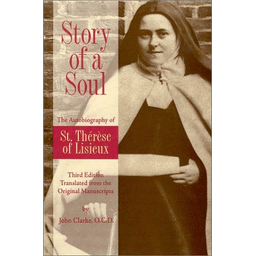 Story of a SoulSt. Thérèse of Lisieux's warm Carmelite autobiography and the "Little Way" - a gentler, more accessible entry into the same contemplative tradition.
 The Practice of the Presence of GodBrother Lawrence's short, plain classic on staying aware of God in ordinary work - the on-ramp for readers who find Teresa's mysticism demanding.Introduction to the Devout LifeFrancis de Sales's gentle, practical guide to a devout life lived in the world - more methodical and everyday than Teresa's interior map.
Frequently asked questions
What is The Interior Castle about?
It is St. Teresa of Ávila's work on the life of prayer, written in 1577. Teresa pictures the soul as a castle of clear crystal containing many rooms, grouped into seven successive sets she calls "mansions" or "dwelling places," with God dwelling in the innermost chamber. The book guides the reader inward through those mansions, describing the deepening stages of prayer - and their consolations, dangers, and landmarks - encountered along the way.
What are the seven mansions?
They are the seven groups of rooms in Teresa's metaphor, each marking a stage in the deepening of prayer. The outer mansions describe the beginning of the journey - turning toward God, growing in self-knowledge, the early disciplines of prayer. The middle mansions describe a quieter, more receptive prayer. The innermost mansions describe the most profound union with God that Teresa attempts to put into words. Teresa is clear that they are a teaching device, not a rigid ladder, and warns against measuring oneself by which mansion one occupies.
Is The Interior Castle a Catholic book?
Yes. It is a classic of Catholic spirituality and a foundational text of the Carmelite contemplative tradition - Teresa of Ávila lived and wrote as a Carmelite nun and reformer, and the Catholic Church later named her a Doctor of the Church, the first woman to receive the title. That said, it is read well beyond Catholic circles; readers across many traditions study it in spiritual-formation settings for its map of how prayer deepens.
Which translation or edition should I read?
For a careful or first-time read, the standard modern translation by Kieran Kavanaugh, O.C.D., and Otilio Rodriguez, O.C.D., published by ICS Publications (around $15), is the one most often recommended - it is widely regarded as the most faithful and readable English version, and its introduction and notes help with the later mansions. For a casual first encounter, older public-domain translations such as E. Allison Peers's are free online and serviceable, though their register is more formal.
Is The Interior Castle available for free?
Yes. Because Teresa died in 1582, the older English translations are in the public domain and freely available online and as inexpensive reprints. Free public-domain ebooks and some LibriVox audiobook narrations also exist. The paid ICS edition is a separate, more readable modern translation with helpful notes, but cost is never a barrier to starting the book.
Is it hard to read?
It is more demanding than the short contemplative classics. Teresa wrote in a digressive, run-on 16th-century Castilian, and even good translations preserve a density that asks patience of the reader. The later mansions, which describe interior experiences like contemplative union, can feel abstract without an introduction or guide. A good modern translation with notes - and a slow, unhurried pace - makes a noticeable difference.
What should I read after The Interior Castle?
Within the Carmelite tradition, John of the Cross's The Dark Night of the Soul is the natural next step - a more focused, intense companion from Teresa's own collaborator. For a gentler entry into the same contemplative world, St. Thérèse of Lisieux's Story of a Soul and Brother Lawrence's The Practice of the Presence of God are both warmer and shorter. Francis de Sales's Introduction to the Devout Life offers a more practical, everyday approach to the spiritual life.
Sources & further reading
More Catholic Books
 Catechism of the Catholic ChurchThe official, full-length compendium of Catholic doctrine - four pillars, ~2,865 numbered paragraphs, free online at the Vatican, and the reference nearly every other Catholic resource quotes.
 Compendium of the Catechism of the Catholic ChurchThe official 598-question summary of the full Catechism - Catholic doctrine in a portable question-and-answer format, with the complete text free at vatican.va.
 CatholicismBishop Robert Barron's richly illustrated tour of the Catholic faith - the companion book to the Word on Fire documentary series, written to walk a curious reader from Jesus to the last things.
 Introduction to ChristianityThe 1968 lectures that a young Joseph Ratzinger - later Pope Benedict XVI - turned into one of the 20th century's most cited works of Catholic theology, built section by section on the Apostles' Creed.
 Jesus of NazarethA sitting pope's personal, scholarly reading of the Gospels - three volumes that engage modern biblical criticism while searching for the Jesus the Gospels actually present.Story of a SoulThe spiritual autobiography of a young Carmelite nun who died at 24 - the small, warm book that taught a century of readers a path of holiness through little things done with great love.