- Starting price
- Free (public-domain editions)
- Free tier
- Yes
- Platforms
- Print · Kindle · Audiobook · Free (older translations)
- Developer
- ICS Publications
- Launched
- 1898
- Updated
- May 31, 2026
The verdict
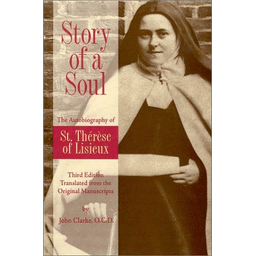
Story of a Soul is one of the most beloved spiritual classics ever written - the autobiography of St. Thérèse of Lisieux, a French Carmelite nun who died at 24 and left behind the "Little Way," a path of holiness through small acts done with great love. It is warm, intimate, and unusually accessible for a book of its era. Readers across many Christian traditions return to it for the same reason: it makes sanctity feel possible for ordinary people.
Try Story of a Soul ↗Opens icspublications.org
Story of a Soul has quietly become the spiritual classic people give to friends who are starting over. It is short, it is tender, and it carries one durable idea - that holiness is not reserved for heroic figures doing dramatic things, but is available to anyone willing to do small things with great love. That idea is the "Little Way," and the woman who articulated it, Thérèse of Lisieux, was 24 years old when she died of tuberculosis in 1897, having spent her adult life inside the walls of a single Carmelite convent in Normandy.
The book did not begin as a book. Thérèse wrote it in obedience - sections were composed at the request of her religious superiors, partly as a family memoir, partly as a private account of her interior life - and it was assembled and published in 1898, the year after her death, under the French title Histoire d'une âme. It was not a polished manuscript meant for the public. It reads like what it is: a young woman writing honestly to the people who knew her, about her childhood, her family, her struggles with feeling small and unimportant, and the spiritual discovery that reframed all of it. The first edition went out to a few hundred convents. Within a generation it had spread across the world.
What you actually get is a first-person autobiography in plain, affectionate prose, organized loosely around the stages of Thérèse's short life - her childhood in a devout French family, the early loss of her mother, her determination to enter Carmel young, and then the hidden interior years where the Little Way took shape. The voice is intimate and occasionally effusive in the manner of 19th-century French piety. But underneath the period style is a spine of genuine psychological and spiritual insight, and it is that spine - not the lace - that has kept the book in print and in conversation for more than a century. Thérèse was later named a Doctor of the Church, a recognition the Catholic Church reserves for teachers of unusual and lasting significance.
✓ The good
- One of the best-loved spiritual classics in print - across Catholic, Orthodox, and Protestant readers, it is among the most-recommended introductions to the interior life
- The "Little Way" is genuinely portable - Thérèse's idea that ordinary, hidden acts done with love are the real material of holiness is one that readers across traditions describe as freeing
- Unusually accessible for a book of its kind - it is autobiography, not theology, so there is no technical vocabulary to clear before you can read it
- Short and re-readable - most editions run a few hundred pages and many readers return to it annually rather than reading it once
- Honest about smallness and struggle - Thérèse writes openly about feeling insignificant, about dryness in prayer, and about her own limitations, which is why the book lands with people who feel ordinary
- Available free - older translations are in the public domain online and in inexpensive reprints, so cost is never a barrier to starting
- The standard modern critical translation (ICS, by John Clarke, O.C.D.) is widely regarded as the most faithful and readable English version - a real upgrade over the older renderings for first-time readers
✗ Watch out
- The 19th-century convent idiom can feel dated - the effusive, sentimental register of French Catholic piety in that era lands as overly sweet for some modern readers
- Translation choice matters a great deal - older public-domain versions soften, abridge, or smooth Thérèse's voice, and the reading experience varies sharply between editions
- It is devotional and personal, not doctrinal instruction - Thérèse is sharing an interior life, not teaching a system, so a reader wanting structured theology will need to look elsewhere
- The family-memoir sections move slowly - the early chapters on Thérèse's childhood and relatives can read as detailed and domestic before the spiritual core arrives
- Editions differ in what they include - some add letters, prayers, and "Last Conversations" while others print only the core manuscripts, so the table of contents is not standardized
Best for
- Readers who want a warm, accessible entry into the spiritual life
- Anyone drawn to the idea of holiness in small, ordinary acts
- People who feel insignificant and want a book that speaks to that
- Readers building a shelf of Christian spiritual classics
Avoid if
- You want structured doctrine or systematic theology rather than a personal account
- You bounce off sentimental or effusive 19th-century prose
- You prefer modern, plainspoken devotional writing over period voice
- You want a long, dense read rather than a short, intimate one
What Story of a Soul is
Story of a Soul is the spiritual autobiography of St. Thérèse of Lisieux, a French Carmelite nun, written in the 1890s and first published in 1898, the year after her death at age 24. It is a first-person account of her short life - her childhood in a devout family, the early death of her mother, her early entrance into the Carmelite convent at Lisieux, and the hidden interior years in which she developed what became known as the "Little Way." The original French title is Histoire d'une âme. The book is autobiography and devotional reflection rather than formal theology, and its enduring fame rests on the spiritual path it describes more than on any single event it recounts.
The book is a classic of Catholic spirituality. Thérèse lived and wrote as a Carmelite, and the Catholic Church later named her a Doctor of the Church, a title given to teachers of lasting significance. The text most modern readers know is one of several English translations; the standard modern critical edition was translated by John Clarke, O.C.D., and published by ICS Publications, while older translations are in the public domain. Across editions the heart of the book is the same: a young woman explaining, in her own words, how she came to believe that the smallest acts, offered with love, are the real path to God.
Why readers keep returning to the Little Way
Most books about the spiritual life describe a climb - disciplines to master, stages to ascend, a summit reached by the few. Thérèse describes something closer to an elevator. Her "Little Way" is the conviction that you do not have to do great things to become holy; you have to do small things - a kind word, a swallowed complaint, a hidden act of patience - with great love and with the trust of a child toward a parent. She arrived at this not from strength but from weakness: she was, by her own account, too small for the heroic path, so she looked for a different one.
That reframing is why the book travels. It does not require you to be a monk, a scholar, or a spiritual athlete. It meets you in the ordinary texture of a day - the irritations, the boredom, the unnoticed chances to be kind - and tells you that this is where holiness actually happens. Readers across many Christian traditions find the Little Way resonant precisely because it democratizes the spiritual life: it is a path for people who feel small, which is most people, most of the time.
The Little Way: holiness sized for ordinary people
The Little Way is the book's central idea and the reason it is still read. Thérèse describes it as a path of "spiritual childhood" - approaching God not as someone striving to earn approval through great accomplishments, but as a small child trusts a loving parent, confident of being carried. In practice it means treating the smallest, most hidden moments of an ordinary day as the real arena of the spiritual life: choosing patience with a difficult companion, doing a tedious task with care, accepting an irritation without complaint. None of these acts is dramatic. That is the point - Thérèse insists that love, not scale, is what gives an act its weight.
What makes the idea durable is that Thérèse arrived at it honestly. She did not start from spiritual strength; she started from the painful sense that she was too little for the heroic sanctity she read about in the lives of the saints. The Little Way was her resolution of that problem, and because it is rooted in felt smallness rather than in willpower, it speaks to readers who feel the same. This is the passage of the book people quote, the part that gets pressed into a friend's hands, and the reason readers across traditions describe Story of a Soul as freeing rather than daunting.
An intimate autobiography, not a treatise
Story of a Soul is built as a memoir, and its texture is personal throughout. Thérèse writes about her family, the early loss of her mother, her close bond with her sisters, her childhood faith, and her determined campaign to enter the Carmelite convent while still very young. She does not adopt the detached voice of a theologian; she writes the way a person writes to people who love them, with affection, candor, and occasional tears. The early chapters in particular read as family history - warm, domestic, and specific - before the book turns inward to the convent years and the interior life.
This is both the book's charm and a thing to know going in. Because it is autobiography rather than instruction, there is no system to learn and no argument to follow - you are reading a life, and the spiritual insight emerges from the living of it. It also means the pacing is uneven by design: the family material moves slowly, and the spiritual core arrives gradually. Readers who come expecting structured teaching sometimes have to adjust to the genre. Those who settle into it tend to find that the intimacy is exactly what gives the Little Way its force - the idea is convincing because you have watched a real person live it.
Translation and edition: the choice that shapes the read
Few classics are as edition-dependent as this one. Thérèse wrote in 19th-century French, and her manuscripts were lightly edited by her own community before the first 1898 publication; later scholarship returned to the original autographs. The result is that the English you read can vary considerably. Older public-domain translations - free online and in inexpensive reprints - are how most readers first meet the book, but they can be smoothed, abridged, or rendered in a more sentimental register than the original. The standard modern critical translation by John Clarke, O.C.D., published by ICS Publications, is the version most often recommended for first-time readers who want the closest, most readable rendering of Thérèse's actual voice.
For a casual first encounter, a free public-domain edition is perfectly serviceable and costs nothing. For a careful read, a study group, or anyone who wants to be sure they are hearing Thérèse rather than her early editors, the ICS edition is the one to reach for - it runs around $13-17 and includes editorial apparatus that situates the manuscripts. Some editions also append her letters, poems, and the "Last Conversations" recorded near her death, which round out the portrait but are not part of the core autobiography. Knowing which edition you are holding is worth a moment before you start.
Pricing
Public-domain editions
Free
Older English translations are out of copyright and freely available online and as cheap reprints. The way most readers first encounter the book.
ICS paperback
~$13-17
The standard modern critical translation by John Clarke, O.C.D. - widely considered the most faithful and readable English version.
Kindle / ebook
Free-$13
Public-domain ebooks are free; the ICS edition is sold separately. Searchable and highlight-syncs across devices.
Audiobook
~$10-20
Multiple recordings exist, including free public-domain narrations and paid editions; quality varies by reader and translation.
Gift / hardcover editions
~$20-30
Various publishers issue cloth and gift editions, sometimes bundled with letters, poems, and Thérèse's "Last Conversations."
Story of a Soul is one of the rare classics where the best entry point costs nothing. Because Thérèse died in 1897 and the early translations are long out of copyright, public-domain English editions are freely available online and as inexpensive print reprints. That free tier is how most readers first encounter the book, and for a casual read it is entirely adequate.
The trade-off is translation quality. The free older versions can be smoothed or abridged, and they vary in fidelity to Thérèse's actual French. The standard modern critical translation by John Clarke, O.C.D., published by ICS Publications, runs around $13-17 in paperback and is the version most often recommended for a careful or first-time read. Most readers do not strictly need it to benefit from the book - but it is the upgrade worth paying for if you want the closest rendering of her voice.
Ebook and audiobook editions exist across both the free public-domain versions and the paid translations. Public-domain ebooks are free; audiobook recordings range from free narrations to paid editions in the ~$10-20 range, and quality varies by reader. Cloth and gift editions run roughly $20-30 and sometimes bundle Thérèse's letters, poems, and "Last Conversations" alongside the autobiography.
The practical advice: start free if you are simply curious, and buy the ICS edition if you are reading it slowly, leading a group, or want to be sure you are hearing Thérèse and not her early editors. The free public-domain edition is the balanced default for a first read; the ICS translation is the one most readers eventually wish they had begun with.
Where Story of a Soul falls behind
Period voice. Thérèse wrote in the effusive, sentimental register of late-19th-century French Catholic piety, and that idiom has not aged evenly. A modern reader will hit passages that read as overly sweet or florid, and some find the tone an obstacle before the substance underneath wins them over. It is a feature of the era, not a flaw in the thought, but it is the most common reason readers bounce.
Edition variance. Because the strongest English versions are paid and the free ones are uneven, the reading experience is unusually dependent on which translation you pick up. A reader who grabs a poor public-domain rendering may come away underwhelmed by a book that lands very differently in the ICS translation. This is a solvable problem, but it is a real one, and it is worth knowing before you choose an edition.
Genre. It is a personal autobiography, not doctrinal instruction. There is no system to learn, no argument to follow, and no structured treatment of theology - Thérèse is sharing an interior life. A reader who wants organized teaching rather than a lived account will find the book does a different job than they expected, and will need to pair it with other reading.
Pacing. The family-memoir chapters move slowly, with detailed attention to Thérèse's childhood and relatives, and the spiritual core arrives gradually rather than up front. Readers who want the central idea quickly sometimes feel the early sections are a long runway. Those are real gaps, but they are worth knowing about going in rather than dealbreakers.
Story of a Soul vs. The Seven Storey Mountain vs. The Imitation of Christ
These three are the shelf of Catholic spiritual classics readers most often compare, and they do genuinely different things. Story of a Soul (Thérèse of Lisieux, 1898) is the intimate autobiography of a young Carmelite - warm, personal, and built around the single portable idea of the Little Way. The Seven Storey Mountain (Thomas Merton, 1948) is the modern conversion memoir - a 20th-century intellectual's account of his journey from a restless secular youth into a Trappist monastery, longer and more searching in tone. The Imitation of Christ (Thomas à Kempis, 15th century) is the older devotional manual - terse, aphoristic chapters of spiritual counsel rather than a life story.
Different strengths. Thérèse is the most accessible and the warmest - the book you give to someone who feels small and needs encouragement. Merton is the most narratively gripping and the best fit for a modern reader who wants a conversion story they can see themselves in. à Kempis is the most concentrated - short readings to return to daily rather than a book to read straight through. If you want one short, tender entry into the interior life, start with Story of a Soul. If you want a modern memoir of becoming a believer, add Merton. If you want a daily devotional companion, add à Kempis.
All three are read well beyond their own tradition. Thérèse and Merton are Catholic spiritual writers; à Kempis wrote in the late-medieval Western church. Readers across many Christian traditions keep all three in rotation, and the Little Way in particular tends to resonate regardless of where a reader sits.
The bottom line
Story of a Soul has lasted for more than a century because it makes holiness feel possible for ordinary people. Thérèse wrote a short, honest, intimate account of a hidden life and left behind one durable idea - that small things done with great love are the real material of sanctity. The period prose can feel sweet and the translation you choose matters, but the spine of the book is genuine, and readers across many traditions keep returning to it. If you want one warm, accessible entry into the spiritual life, this is still a book to reach for - and you can start it for free.
Alternatives to Story of a Soul
 The Seven Storey MountainThomas Merton's modern conversion memoir - a 20th-century intellectual's road into a Trappist monastery, longer and more searching than Thérèse.
 The Imitation of ChristThomas à Kempis's late-medieval devotional manual - terse, aphoristic spiritual counsel meant to be returned to daily.
 ConfessionsAugustine's foundational spiritual autobiography - the ancient template for the genre Thérèse and Merton both work in.
 HallowA Catholic prayer and meditation app with guided audio - a modern companion for readers who want to pray as well as read.
Frequently asked questions
What is Story of a Soul about?
It is the spiritual autobiography of St. Thérèse of Lisieux, a French Carmelite nun who died in 1897 at age 24. She recounts her childhood, her family, her early entrance into the convent, and the interior life that led her to the "Little Way" - a path of holiness through small acts done with great love. It was first published in 1898, the year after her death.
What is the "Little Way"?
It is Thérèse's central idea: that holiness is not reserved for those doing great or heroic deeds, but is available to anyone willing to do small, ordinary, often hidden things - a kind word, a swallowed complaint, a patient act - with great love and childlike trust in God. Readers across many Christian traditions describe it as freeing because it makes the spiritual life feel possible for ordinary people.
Is Story of a Soul a Catholic book?
Yes. It is a classic of Catholic spirituality - Thérèse of Lisieux lived and wrote as a Carmelite nun, and the Catholic Church later named her a Doctor of the Church. That said, it is read well beyond Catholic circles; readers in many Christian traditions return to it for the Little Way and for its warm, accessible account of the interior life.
Which translation or edition should I read?
For a careful or first-time read, the standard modern translation by John Clarke, O.C.D., published by ICS Publications (around $13-17), is the one most often recommended - it is widely regarded as the most faithful and readable English version. For a casual first encounter, the older public-domain translations are free online and perfectly serviceable, though they vary in quality and can read more sentimentally than the original.
Is Story of a Soul available for free?
Yes. Because Thérèse died in 1897, the older English translations are in the public domain and freely available online and as inexpensive reprints. Free public-domain ebooks and some audiobook narrations also exist. The paid ICS edition is a separate, more faithful modern translation, but cost is never a barrier to starting the book.
Is it hard to read?
Not in terms of difficulty - it is autobiography, not theology, so there is no technical vocabulary to clear. The main hurdle is style: Thérèse wrote in the effusive, sentimental idiom of 19th-century French Catholic piety, which can read as overly sweet to some modern readers. The early family-memoir chapters also move slowly before the spiritual core arrives. The right translation makes a noticeable difference.
What should I read after Story of a Soul?
Within the same shelf of spiritual classics, The Imitation of Christ by Thomas à Kempis is a natural daily companion, and Thomas Merton's The Seven Storey Mountain is the modern conversion memoir many readers pair with it. For the older root of the autobiographical genre, Augustine's Confessions is the foundational text. Readers who want to pray as well as read often add a guided-prayer app such as Hallow.
Sources & further reading
More Catholic Books
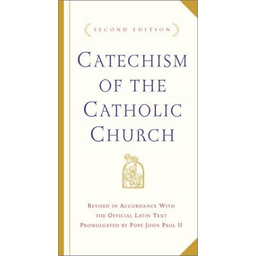 Catechism of the Catholic ChurchThe official, full-length compendium of Catholic doctrine - four pillars, ~2,865 numbered paragraphs, free online at the Vatican, and the reference nearly every other Catholic resource quotes.
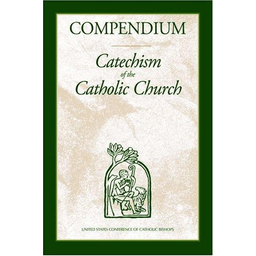 Compendium of the Catechism of the Catholic ChurchThe official 598-question summary of the full Catechism - Catholic doctrine in a portable question-and-answer format, with the complete text free at vatican.va.
 CatholicismBishop Robert Barron's richly illustrated tour of the Catholic faith - the companion book to the Word on Fire documentary series, written to walk a curious reader from Jesus to the last things.
 Introduction to ChristianityThe 1968 lectures that a young Joseph Ratzinger - later Pope Benedict XVI - turned into one of the 20th century's most cited works of Catholic theology, built section by section on the Apostles' Creed.
 Jesus of NazarethA sitting pope's personal, scholarly reading of the Gospels - three volumes that engage modern biblical criticism while searching for the Jesus the Gospels actually present.New Seeds of ContemplationThomas Merton’s revised 1962 classic on contemplation - the book that taught a century of readers the difference between the true self and the false self, and what it means to rest in God.