- Starting price
- ~$22 per volume
- Free tier
- No
- Platforms
- Print · Kindle · Audiobook (3-volume work)
- Developer
- Ignatius Press
- Launched
- 2007
- Updated
- May 31, 2026
The verdict
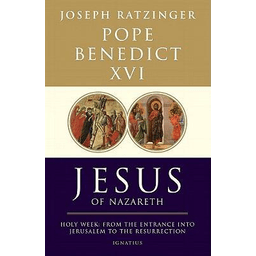
Jesus of Nazareth is the rare book a head of a church wrote and then asked you to argue with. Across three volumes (2007-2012), Joseph Ratzinger - Pope Benedict XVI - reads the Gospels closely, takes modern scholarship seriously, and offers the result as his own theological work rather than official teaching. Substantial and demanding, it is read appreciatively well beyond the Catholic readers it was written from within.
Try Jesus of Nazareth ↗Opens ignatius.com
Jesus of Nazareth occupies a strange piece of literary real estate: it is a book about Jesus written by a reigning pope who went out of his way to say it was not papal teaching. Joseph Ratzinger published the first volume in 2007, four years after he became Benedict XVI, and in the foreword he does something almost no one in his position has done - he tells the reader the book is his own personal search and that everyone is "free to contradict me." That single sentence sets the tone for everything that follows.
The project grew into three volumes over five years. It is not a catechism. It is not a defense of an institution. It is not a verse-by-verse commentary in the technical sense. It is one theologian - admittedly a famous one - sitting with the four Gospels and trying to see the figure at their center clearly. Ratzinger had spent decades as a professor before he was ever a cardinal, and the book reads like a scholar returning to the work he loved, now free to write for ordinary readers rather than an academic guild.
What you get is a close, patient walk through the life of Jesus across three installments: the public ministry from the baptism to the Transfiguration (Volume 1, 2007), Holy Week from the entry into Jerusalem to the resurrection (Volume 2, 2011), and the birth narratives (Volume 3, the short Infancy Narratives, 2012). The voice is unhurried and erudite, comfortable quoting both ancient Church Fathers and twentieth-century German exegetes on the same page. It is written from a Catholic vantage and read appreciatively across a wide range of Christian traditions for the seriousness it brings to the text.
✓ The good
- A genuinely rare document - a sitting pope's personal reflection on Jesus, offered as theology open to disagreement rather than binding teaching
- Engages modern biblical scholarship head-on - reads the historical-critical method carefully, uses what is useful, and explains where it stops short
- Close attention to the Gospel text itself - it lingers on individual scenes, parables, and sayings rather than skating across the surface
- Theologically rich without academic jargon - decades of professorial work distilled into prose for the general reader
- Read appreciatively across traditions - the seriousness of its engagement with Scripture is respected well beyond Catholic readers
- Volume 3 (The Infancy Narratives) is short and self-contained - a natural, low-commitment entry point
- Holds up as a reference - readers return to specific chapters (the Temptations, Gethsemane) like a favorite commentary
✗ Watch out
- It is three volumes - committing to the whole work is a real undertaking, not a weekend
- Substantial and demanding - it assumes genuine interest in close, sustained Gospel reading, not a quick lift
- Engages academic exegesis throughout - discussions of German scholarship and source criticism can slow a reader with no background in them
- Not a light devotional - no daily entries, prompts, or study-guide scaffolding; the structure follows the Gospels, not a reading plan
- The volumes were written out of narrative order (ministry, Holy Week, infancy), which can confuse readers expecting a single chronological arc
Best for
- Readers who want a serious, sustained study of the Gospels
- Anyone curious how a major theologian reads modern biblical scholarship
- Catholic readers seeking Benedict XVI in his own voice
- Study groups willing to take a volume slowly over several weeks
Avoid if
- You want a short, single-volume introduction to Jesus
- You want a daily devotional with prompts and reflection questions
- You have no interest in close, academic-leaning Gospel exegesis
- You want a quick read, not a multi-week commitment
What Jesus of Nazareth is
Jesus of Nazareth is a three-volume study of the life of Jesus by Joseph Ratzinger / Pope Benedict XVI, published in English by Ignatius Press (and Image) between 2007 and 2012. It is a scholarly yet devotional reading of the four Gospels: Ratzinger works through the major episodes of Jesus's life, drawing on the Church Fathers, the wider Christian tradition, and modern biblical scholarship to ask what the Gospels actually present. Volume 1 covers the public ministry from the baptism in the Jordan to the Transfiguration; Volume 2, Holy Week from the entry into Jerusalem through the resurrection; and Volume 3, the short Infancy Narratives, the birth of Jesus.
The book is unusual in its own framing. Benedict wrote it while he was pope, but the foreword states plainly that it is his personal theological work and not an exercise of the papal teaching office - and he explicitly invited readers to disagree. That distinction matters: it is not a doctrinal pronouncement but one theologian's extended, carefully argued reading of the Gospels. It is written from a Catholic vantage, engages mainstream biblical scholarship throughout, and is read appreciatively across many Christian traditions.
Why readers reach for Benedict on the Gospels
Most books about Jesus pick a lane and stay in it. Popular devotionals stay warm and avoid the hard scholarly questions; academic monographs stay rigorous and lose the general reader. Jesus of Nazareth refuses the trade-off. Ratzinger had spent a career as a university theologian before he was a cardinal, and the book carries that training without wearing it heavily - he can walk through a thorny question of New Testament scholarship and then, a paragraph later, dwell on a single Gospel scene with the attention of someone who has prayed over it for decades.
The other distinctive is the posture. A reigning pope writing a book and then telling readers they are free to contradict him is genuinely rare, and it changes how the book reads. It invites engagement rather than assent. A reader from outside the Catholic tradition can take the argument seriously on its own terms without feeling an institution is being asserted over them, because the author has explicitly set the institution to one side. That openness is part of why the work is read and cited across so many traditions, even as it is unmistakably written from within Catholic faith.
Engaging modern scholarship without surrendering to it
The organizing tension of the whole work is the relationship between the "historical" Jesus reconstructed by modern scholarship and the Jesus the Gospels present. Ratzinger takes the historical-critical method seriously - he was trained in the German academic tradition where it was developed, and treats it as an indispensable tool for understanding texts written in real history. He neither dismisses it nor pretends the questions it raises are unimportant. Much of the book is spent in patient conversation with named twentieth-century exegetes, weighing what their work establishes and what it leaves open.
Where the book makes its move is in arguing that the method, used alone, reaches a limit - that it can illuminate the historical setting of a text without fully reaching the figure the text is about. Ratzinger's aim is to read the Gospels both critically and as Scripture, holding the scholarly questions and the theological reading together rather than choosing one. Readers need not share his conclusions to find the discussion valuable; it is one of the clearest popular-level explanations of what the historical-critical method does, what it has contributed, and where a serious reader might think it stops short.
Holy Week up close (Volume 2): Gethsemane, the trial, the cross
Volume 2 - Holy Week, from the entrance into Jerusalem to the resurrection - is where many readers say the project comes fully into its own. Ratzinger slows down and reads the final days scene by scene: the cleansing of the temple, the Last Supper, the agony in Gethsemane, the interrogations before the Jewish authorities and Pilate, the crucifixion, and the resurrection accounts. Each gets sustained attention, with the Old Testament background drawn in and the differing emphases of the four Gospels held side by side rather than flattened.
The treatment of the resurrection is characteristic of the whole approach. Ratzinger takes the historical question seriously - what it would mean for the resurrection to be an event in history rather than only a symbol of the disciples' faith - and reads the accounts as testimony to something that actually happened, while acknowledging it is unlike any other event and resists ordinary categories. Whether or not a reader follows him all the way, the chapters are a model of reading the most contested material in the Gospels slowly and without shortcuts.
The Infancy Narratives (Volume 3): a short, self-contained entry point
Volume 3, published in 2012, is the shortest of the three and in some ways the most approachable. It treats the birth narratives in Matthew and Luke: the annunciation, the genealogies, the nativity at Bethlehem, the visit of the magi, and the presentation in the temple. Because it is brief and covers familiar ground, it works well as a first taste - a reader can see Ratzinger's method on material they already know before committing to the longer volumes.
The chapters do the same double work as the rest of the series. Ratzinger engages the scholarly questions the infancy narratives raise - about genre, the genealogies, how the accounts relate to history - and at the same time reads them devotionally, drawing out what Matthew and Luke present about who this child is. It is a compact demonstration of the book's whole ambition: to read the Gospels with both the scholar's questions and the believer's attention, letting neither cancel the other.
Pricing
Single paperback volume
~$20-25
Any one of the three volumes on its own. The usual way readers start - often with Volume 1 or the short Infancy Narratives.
Kindle (per volume)
~$15-20
Searchable and highlight-syncing. Useful for a book this dense in footnotes and cross-references. Priced per volume.
Audiobook (per volume)
~$20-25
Unabridged recordings exist for the volumes; pricing varies by retailer and is often discounted with an Audible membership.
Three-volume set
~$50-65
The volumes are sometimes sold bundled. As of writing, pricing and availability vary by edition and retailer.
Jesus of Nazareth is not free, and because it is a three-volume work the cost adds up if you want the whole thing. As of writing, each paperback runs around $20-25 depending on volume and edition - call a single paperback the everyday default, since most readers start with one rather than buying all three at once.
The Kindle editions run a little cheaper per volume, roughly $15-20, and are genuinely useful here: the books are dense with footnotes, cross-references, and named scholars, and a searchable text makes them easier to use as a reference. Highlights sync across devices, which helps for a work most people read slowly. Unabridged audiobooks exist as well, around $20-25 or discounted with an Audible membership; the prose is dense enough that some readers prefer to pair the audio with the print.
The three volumes are sometimes sold as a bundled set, which can run around $50-65 - though availability and pricing vary by edition and retailer, so confirm before assuming a set is in stock. Most readers do not need to buy all three at once. The short Infancy Narratives (Volume 3) or the public-ministry Volume 1 is the natural place to begin, and you can decide from there whether to go on.
Where Jesus of Nazareth falls behind
Length and commitment. This is three volumes, written over five years, and reading the whole work is a real undertaking. A reader looking for a single book covering the life of Jesus from cradle to resurrection will find the material spread across three installments - and written out of chronological order, since the ministry volume came first, Holy Week second, and the infancy narratives last.
It is not a light devotional. There are no daily entries, no reflection prompts, no fill-in study-guide scaffolding. The structure follows the Gospels, not a reading plan, and a reader who wants gentle daily encouragement will find the prose denser and more demanding than a typical devotional offers.
Academic exegesis throughout. Ratzinger engages modern biblical scholarship - including extended discussion of German exegetes and questions of source and form criticism - on nearly every topic. For a reader with no background in that scholarship, those passages can slow the reading considerably, even though Ratzinger explains as he goes.
Assumes sustained interest in close reading. The book rewards patience and lingers on individual scenes and sayings. A reader who wants a brisk overview, or a quick answer to a single question, will find it slower and more deliberate than reference works built for fast lookups.
Jesus of Nazareth vs. Introduction to Christianity vs. Catholicism (Barron)
These three are often shelved together as serious Catholic-authored introductions, and they do different jobs. Jesus of Nazareth (Ratzinger / Benedict XVI, 2007-2012) is the focused, three-volume study of the Gospels, read closely and at length. Introduction to Christianity (also Ratzinger, originally 1968) is the earlier single-volume work that walks through the Apostles' Creed - broader and more systematic, a companion for the reader who wants his overall theological vision rather than his Gospel reading. Catholicism (Robert Barron, 2011) is the wide-angle survey of the faith as a whole, paired with a documentary series and written for a more general audience.
Different strengths. Jesus of Nazareth is the deepest of the three on the Gospels themselves - the book if your question is specifically about the figure of Jesus. Introduction to Christianity is broader and more systematic, better for grasping the structure of Christian belief. Catholicism is the most accessible and widest-ranging, a strong starting point for an overview before going deeper. Want one book on Jesus specifically? Jesus of Nazareth. Want the bigger picture? Start with one of the other two.
All three are written from within the Catholic tradition, and all three are read beyond it. Jesus of Nazareth in particular is cited across a range of Christian traditions for the seriousness of its engagement with Scripture and modern scholarship, even as its theological vantage is unmistakably Catholic.
The bottom line
Jesus of Nazareth is one of the most substantial popular books about Jesus written this century, and its circumstances make it unusual - a reigning pope reading the Gospels in his own voice and inviting you to disagree. It is not light, not short, and not a devotional; it is a demanding, scholarly, three-volume study that assumes you want to sit with the text. For a reader who does, it rewards slow reading and rereading, and it is respected well beyond the Catholic tradition it was written from within.
Alternatives to Jesus of Nazareth
 Introduction to ChristianityRatzinger's earlier single-volume walk through the Creed - broader and more systematic than his Gospel study, and the natural companion to it.
 Catholicism (Robert Barron)Bishop Barron's wide-angle survey of the Catholic faith, paired with a documentary series - the most accessible of the serious Catholic introductions.
 Catechism of the Catholic ChurchThe official reference for Catholic teaching - where you turn after a theological reading like this one to check the settled doctrine.
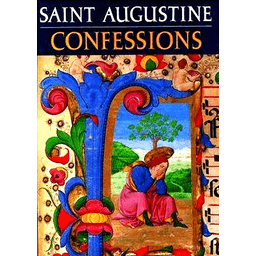 ConfessionsAugustine's spiritual autobiography - the ancient classic Ratzinger drew on throughout, and a deeper read for anyone wanting the source.
Frequently asked questions
Did Pope Benedict XVI write this as official Catholic teaching?
No. He was pope while writing it, but the foreword states plainly that it is his personal theological work, not an exercise of the papal teaching office, and he explicitly invited readers to disagree. It is one theologian's reading of the Gospels, not a doctrinal pronouncement.
How many volumes are there, and what does each cover?
Three. Volume 1 (2007) covers the public ministry to the Transfiguration; Volume 2 (2011), Holy Week through the resurrection; Volume 3 (2012), The Infancy Narratives, the birth of Jesus. They were written out of order - ministry first, Holy Week second, infancy last.
Do I need to read all three volumes, or can I start with one?
You can start with one - each stands on its own. Many readers begin with the short Infancy Narratives (Volume 3) for a low-commitment first taste, or with Volume 1, and decide from there.
Is this a devotional or an academic book?
Somewhere in between, intentionally. It reads the Gospels devotionally while engaging modern scholarship throughout. There are no daily entries or prompts, and the exegetical discussions can be demanding, so it is closer to a serious theological study than a light devotional.
Is it only for Catholic readers?
No. It is written from a Catholic vantage but read appreciatively across many Christian traditions for its serious engagement with Scripture and scholarship. Because Benedict set aside the papal teaching office, readers outside the tradition can engage it on its own terms.
How much does the whole work cost?
As of writing, paperbacks run around $20-25 each, Kindle editions roughly $15-20 per volume, and audiobooks around $20-25 per volume. The three are sometimes bundled as a set for around $50-65, though pricing and availability vary by edition and retailer.
Where should I go after Jesus of Nazareth?
Introduction to Christianity is the same author's broader walk through the Creed. Robert Barron's Catholicism is a wider survey of the Catholic faith. The Catechism of the Catholic Church is the reference for settled teaching. Augustine's Confessions is the ancient source Ratzinger leans on.
Sources & further reading
More Catholic Books
Catechism of the Catholic ChurchThe official, full-length compendium of Catholic doctrine - four pillars, ~2,865 numbered paragraphs, free online at the Vatican, and the reference nearly every other Catholic resource quotes. Compendium of the Catechism of the Catholic ChurchThe official 598-question summary of the full Catechism - Catholic doctrine in a portable question-and-answer format, with the complete text free at vatican.va.CatholicismBishop Robert Barron's richly illustrated tour of the Catholic faith - the companion book to the Word on Fire documentary series, written to walk a curious reader from Jesus to the last things.Introduction to ChristianityThe 1968 lectures that a young Joseph Ratzinger - later Pope Benedict XVI - turned into one of the 20th century's most cited works of Catholic theology, built section by section on the Apostles' Creed.
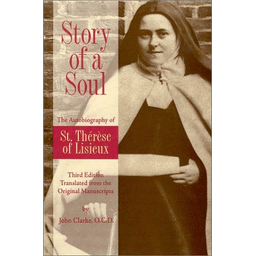 Story of a SoulThe spiritual autobiography of a young Carmelite nun who died at 24 - the small, warm book that taught a century of readers a path of holiness through little things done with great love.New Seeds of ContemplationThomas Merton’s revised 1962 classic on contemplation - the book that taught a century of readers the difference between the true self and the false self, and what it means to rest in God.