- Starting price
- ~$17 paperback
- Free tier
- No
- Platforms
- Print · Kindle · Audiobook · Film series companion
- Developer
- Word on Fire / Image
- Launched
- 2011
- Updated
- May 31, 2026
The verdict
Catholicism is Bishop Robert Barron's accessible, art-soaked presentation of the Catholic faith - the book that accompanies his acclaimed Word on Fire film series. It is written from inside the tradition, for readers who are curious about or drawn to Catholicism, and it moves from the person of Jesus through the Church, the saints, Mary, the liturgy, prayer, and the last things. As a single readable doorway into how Catholics understand their own faith, it has few rivals.
Try Catholicism ↗Opens wordonfire.org
Catholicism has quietly become the book Catholic parishes hand to anyone asking "so what do you actually believe?" - and the book a fair number of non-Catholics pick up when they want that answer from a confident, articulate insider rather than from a critic or a catechism. Written by Robert Barron (then a priest of the Archdiocese of Chicago, now Bishop Barron of Winona-Rochester and the founder of the Word on Fire ministry), it set out to do something most introductions to Catholicism do not even attempt: to make the faith beautiful on the page, not just explained.
The book did not arrive alone. It is the companion volume to the CATHOLICISM documentary series, a multi-part film project Barron shot on location across the Catholic world - Rome, the Holy Land, Mexico City, Uganda, Poland - that aired on PBS stations and became one of the most-watched religious series of its era. The book is not a transcript of the films. It is a parallel work, written to stand on its own, but the two were conceived together and they reward each other. Read the chapter, watch the episode, and the cathedral or canvas Barron is describing is suddenly in front of you.
What you actually get is a guided tour, not a textbook. Barron does not march you through doctrines in catechism order. He starts with a person - Jesus of Nazareth, and the audacious claims the Church makes about him - and then radiates outward: the mystery of God, the Church that grew from it, Mary and the saints, the liturgy and the Eucharist, prayer, and finally the "last things" of death, judgment, heaven, and hell. Along the way he reaches constantly for art, architecture, poetry, and the lives of particular people, on the conviction that Catholicism is best understood not as a list of propositions but as a whole way of seeing the world. It is a presentation of the faith from inside the faith, and it earns its readers by being genuinely well-written.
✓ The good
- Unusually beautiful for an introduction - Barron writes about Caravaggio, Chartres, Dante, and Flannery O'Connor as readily as he writes about doctrine, and the prose carries it
- Genuinely accessible - no theological degree required; Barron explains as a teacher who has spent years in front of ordinary audiences and knows where people get lost
- Wide-angle coverage in one volume - Jesus, the Trinity, the Church, Mary, the saints, the liturgy and Eucharist, prayer, and the last things all get a chapter
- Pairs with a genuinely good film series - the CATHOLICISM documentary lets you see the art and the sites the book describes, and the two were built to work together
- A confident, warm authorial voice - Barron presents the Catholic faith as someone who loves it and wants you to see why, which many readers find more engaging than a neutral survey
- Excellent on-ramp to deeper Catholic reading - Barron name-drops Augustine, Aquinas, Newman, and the mystics in a way that leaves you with a reading list
- Useful for non-Catholics too - readers from other traditions get a clear, fair-minded statement of how Catholics actually understand contested topics, in Catholic terms
✗ Watch out
- It presents and commends the Catholic faith from inside the tradition - it is an affirming tour, not a neutral comparative survey, and a reader looking for an even-handed weighing of traditions should know that going in
- Broad rather than deep - with this much ground covered in one book, most individual topics get an inviting overview rather than an exhaustive treatment
- Built to pair with the film series - the book stands on its own, but the art and architecture Barron describes land far harder when you can also see them, and the full experience assumes access to the films
- Art-and-culture heavy - the literary and artistic detours are a feature for many readers and a slight detour for anyone who just wants the doctrine stated plainly and quickly
- Not a catechism - it is a guided introduction, not a reference work, so a reader who wants the Church's teaching laid out systematically point by point will need the Catechism alongside it
Best for
- Curious readers who want the Catholic faith explained by a confident insider
- Catholics wanting one well-written book to understand or re-encounter their own tradition
- Anyone watching (or planning to watch) the Word on Fire CATHOLICISM film series
- Non-Catholics who want a fair, articulate statement of what Catholics actually believe
Avoid if
- You want a neutral comparison of Christian traditions rather than a presentation from inside one
- You want a systematic, point-by-point reference - that is the Catechism, not this book
- You want deep, specialist treatment of a single topic rather than a wide-angle tour
- You prefer plain doctrinal exposition and find extended art-and-literature detours a distraction
What Catholicism is
Catholicism is Robert Barron's accessible, single-volume presentation of the Catholic faith, published in 2011 by Image (a Penguin Random House imprint) in partnership with his Word on Fire ministry. It is the companion book to the CATHOLICISM documentary film series, which Barron filmed on location across the Catholic world and which aired on PBS. The book runs a few hundred pages and is organized as a tour rather than a catalog: it begins with the person of Jesus, moves through the nature of God and the Church, takes up Mary and the saints, the liturgy and the Eucharist, prayer and the spiritual life, and closes with the "last things."
It is a presentation of the faith from inside the tradition. Barron - a priest when he wrote it, later ordained a bishop - is not attempting a neutral survey that weighs Catholicism against other traditions; he is explaining and commending the Catholic faith to a broad audience as someone who holds it. His distinctive method is to lead with beauty: he reads Catholicism through its art, architecture, saints, and literature, on the conviction that the faith is most truly grasped as a whole way of seeing rather than as a list of doctrines. That approach is the book's signature and the reason it reads more like a literate travelogue than a manual.
Why readers reach for Barron
Most introductions to Catholicism are built like instruction manuals - here are the doctrines, here are the sacraments, here is what you must hold. Barron's wager is the opposite. He assumes that the fastest way to help someone understand the Catholic faith is to show them what it has produced and what it sees: the soaring logic of a Gothic cathedral, the realism of a Caravaggio, the strange holiness of saints from Francis to Thérèse to the martyrs of Uganda. He explains the doctrine, but he keeps anchoring it to something you can picture, which is why readers with no theological background can follow him.
The result is a book that works for two very different readers at once. A Catholic reader gets a confident, articulate account of their own tradition that reconnects the catechism answers to the beauty behind them. A non-Catholic reader - Protestant, Orthodox, Latter-day Saint, or simply curious - gets a clear, fair-minded statement of how Catholics themselves understand the contested parts of their faith, stated in Catholic terms rather than filtered through a critic. Barron is unmistakably commending what he describes; he is not pretending to neutrality. Knowing that, many readers find the inside view more illuminating than an outside survey would be.
Starting with the person, not the propositions
Most books about a religion open with its idea of God or its founding events. Barron opens Catholicism with a person and a claim: Jesus of Nazareth, and the assertion that this particular first-century Jew is the God of Israel come in the flesh. He spends his early chapters on the gospels' portrait of Jesus - the teacher, the gatherer of a new Israel, the one who forgives sins and is crucified and, the Church proclaims, raised - and on why everything else in Catholic life flows from who Catholics understand him to be. Doctrine, in Barron's telling, is the unpacking of that central scandal, not a free-standing system.
This ordering is the book's quiet argument. By making the person of Jesus the hinge, Barron frames the Church, the sacraments, Mary, and the saints not as add-ons a skeptic has to swallow separately but as extensions of one claim about one life. A reader may or may not be persuaded - that is between them and the text - but the structure makes the Catholic case hang together as a single story rather than a checklist. It is also why the book reads as a journey: you start at the center and travel outward, which is exactly what the subtitle, "A Journey to the Heart of the Faith," promises.
Beauty as the way in: art, architecture, and the saints
Barron's signature move is to read the faith through what it has made and whom it has formed. A chapter will pause on Michelangelo's work in the Sistine Chapel, the architecture of Chartres or the great Roman basilicas, Dante's Divine Comedy, or the fiction of Flannery O'Connor, and then turn to the lives of particular saints - Francis of Assisi, Thérèse of Lisieux, Edith Stein, Mother Teresa, Katharine Drexel - as living arguments for what the doctrine looks like in a human being. The artwork is reproduced in the print editions, which is part of why the hardcover is worth the difference for readers who care about the images.
This is also where the film series and the book most obviously reinforce each other. The CATHOLICISM documentary was shot precisely so viewers could stand, on camera, in the cathedrals and chapels the book describes; reading the chapter and then watching the episode turns a description into a place. For some readers the art-and-culture emphasis is the best thing about the book - it makes an abstract subject vivid. For a reader who wants doctrine stated plainly and quickly, the detours can feel like the scenic route. Either way, the beauty-first method is the most distinctive thing Barron brings, and what separates Catholicism from a standard explainer.
The full arc - from Mary and the saints to the last things
Where many short introductions stop at the basics, Catholicism deliberately covers the whole arc of Catholic life, including the parts that most distinguish it. There are full chapters on Mary and the communion of saints; on the liturgy and the Eucharist; on prayer and the inner life; and a closing treatment of the "last things" - death, judgment, heaven, hell, and the hope of resurrection. Barron presents each as the Catholic tradition understands it, explaining the reasoning and the history behind teachings that a newcomer often finds puzzling.
Reported plainly: this is where the book is most clearly a presentation from inside the tradition rather than a neutral survey. Barron explains Catholic teaching on Mary, the saints, the sacraments, and the Church's authority as a Catholic who holds them, aiming to make them intelligible and attractive rather than to compare them against other traditions' positions. A reader from another tradition will find these chapters the most useful for understanding what Catholics actually believe and why - and the most clearly partisan, in the sense that Barron is advocating, not adjudicating. That is the book Word on Fire set out to make, and the breadth is a real strength as long as you read it for what it is.
Pricing
Paperback
~$17
The standard Image edition. The copy most readers and parish groups own.
Kindle / ebook
~$12
Searchable and highlight-syncs to your account. The art reproductions are smaller than print but present.
Audiobook
~$20
Read for listeners who commute. Note that the audio edition cannot carry the book's images.
Hardcover
~$28
The gift-grade edition, and the better choice for a book where the artwork reproductions matter.
Book + film study program
Varies
Word on Fire sells the CATHOLICISM film series and a parish study kit that pair with the book; pricing depends on the bundle.
Catholicism is not free. A new paperback of the Image edition runs around $17 - call it the everyday default - and is the copy most readers and parish reading groups end up with. Used copies circulate widely and turn up cheaply, the way most introductory religious books do.
The Kindle edition runs a few dollars less than paperback and is searchable with syncing highlights, which is handy for a book this quotable; the trade-off is that the artwork reproductions, which are part of the point, are smaller on a screen. The audiobook (around $20, or included with an Audible membership) suits commuters and reads well, but it necessarily drops the images entirely - for a book that leans this hard on visual art, that is a real consideration.
If the artwork matters to you, or you are buying a gift, the ~$28 hardcover is the natural pick because the reproductions are larger and the binding is built to last. Most readers do not need anything beyond the paperback, which is the balanced default.
The one upgrade worth knowing about is the pairing with the CATHOLICISM film series. Word on Fire sells the documentary and a parish-grade study program built around it, and the book was designed to work alongside them. Pricing varies by bundle and by whether you are buying for yourself or running a group, but if you are going to use the films at all, buying the book and the series together is how the project was meant to be experienced.
Where Catholicism falls behind
Not a neutral survey. Catholicism presents and commends the Catholic faith from inside the tradition - that is its design, not a flaw, but it means a reader hoping for an even-handed comparison of Christian traditions is reaching for the wrong book. Barron is an advocate for what he describes. Read alongside resources from other traditions if a balanced weighing is what you are after.
Breadth over depth. Covering Jesus, the Trinity, the Church, Mary, the saints, the liturgy, prayer, and the last things in a single volume means each topic gets an inviting overview rather than a specialist's deep dive. That is the right call for an introduction. It does mean Catholicism is a starting point on any given question, and a reader who wants to go deep on, say, the Eucharist or Marian doctrine will need to read further.
Best with the films. The book stands on its own, but its art-and-architecture method was built to pair with the documentary series, and the descriptions of cathedrals and paintings land far harder when you can also see them. A reader who only has the book is getting most of the experience, but not all of it.
Art-and-culture density. Barron's literary and artistic detours are a feature for many readers and a slight obstacle for anyone who just wants the doctrine stated plainly and moves impatiently past the Caravaggio chapter. It is a question of taste rather than a defect, but it is worth knowing your own preference going in.
Not a reference work. This is a guided introduction, not a catechism. A reader who wants the Church's teaching organized point by point for lookup will want the Catechism of the Catholic Church on the shelf next to it - the two do different jobs.
Catholicism vs. the Catechism vs. Introduction to Christianity
These three are the natural shortlist for someone trying to understand the Catholic faith in depth, and they do genuinely different jobs. Catholicism (Barron, 2011) is the accessible, beauty-first tour - it reads the faith through art, architecture, and the saints and is built for a broad audience, especially one watching the companion film series. The Catechism of the Catholic Church is the Church's own comprehensive, official reference - exhaustive, systematic, and authoritative, the document Barron and everyone else is ultimately pointing back to, but a reference work rather than a book you read cover to cover for pleasure. Introduction to Christianity (Joseph Ratzinger, later Pope Benedict XVI) is the theologian's classic - a profound, demanding meditation on the Creed that rewards a reader willing to think hard.
Different strengths. Barron is the most inviting and the most visual - the book to start with if you want the faith to come alive rather than be merely catalogued. The Catechism is the most complete and the most authoritative - the place to look up exactly what the Church teaches on any point. Ratzinger is the deepest - the book for a reader who already has the basics and wants serious theological substance on what the Creed actually claims. If you are starting from curiosity and want one readable doorway, it is Barron. If you want the official, full statement, it is the Catechism. If you want to think at the level of a major theologian, it is Ratzinger.
All three are Catholic works that present the faith from within the tradition. Barron writes for the broadest audience and leans hardest on art and story. The Catechism is the Church's formal teaching document. Ratzinger writes as one of the most significant Catholic theologians of the era. A reader from another tradition can learn a great deal from any of them about how Catholics understand their own faith, in Catholic terms.
The bottom line
Catholicism is the single most inviting doorway into the Catholic faith in print. Bishop Barron wrote a book that explains the tradition the way an insider who genuinely loves it would - leading with beauty, anchoring doctrine to art and to real human lives, and covering the whole arc from Jesus to the last things in prose a curious reader can actually enjoy. It is a presentation from inside the tradition, not a neutral survey, and it pairs best with the film series it was built alongside. But if someone asks you for one well-written book to understand what Catholics believe and why, this is the one to hand them.
Alternatives to Catholicism
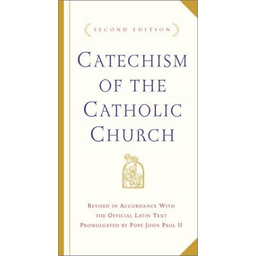 Catechism of the Catholic ChurchThe Church's own comprehensive reference - the authoritative, systematic statement Barron's tour ultimately points back to.
 Introduction to ChristianityJoseph Ratzinger's (later Benedict XVI) classic meditation on the Creed - the deep theological end of what Barron introduces.
 Word on FireBarron's ministry and website - videos, articles, and the CATHOLICISM film series that pairs directly with the book.
 HallowThe most-used Catholic prayer and meditation app - a natural companion for putting Barron's chapters on prayer into daily practice.
Frequently asked questions
Who wrote Catholicism, and what is Word on Fire?
It was written by Robert Barron - a priest when the book was published in 2011, and now Bishop Robert Barron of the Diocese of Winona-Rochester. He is the founder of Word on Fire, a Catholic media ministry that produced the CATHOLICISM documentary series the book accompanies, along with films, articles, and study programs.
Do I need to watch the film series to get value from the book?
No. The book stands on its own and reads well by itself. That said, it was conceived alongside the CATHOLICISM documentary, and the art, architecture, and pilgrimage sites Barron describes land much harder when you can also see them on screen. If you can use both, the book and the films were built to reinforce each other.
Is this a neutral, comparative book or a Catholic one?
It is a presentation of the Catholic faith from inside the tradition. Barron is explaining and commending Catholicism to a broad audience as someone who holds it - not weighing it neutrally against other traditions. That is the book's design. A reader from any background can learn a great deal from it about how Catholics understand their own faith, as long as they read it for what it is.
Is Catholicism a good book for non-Catholics?
Many non-Catholics find it valuable precisely because it states, clearly and in Catholic terms, how Catholics actually understand contested topics like Mary, the saints, the Eucharist, and the Church - rather than filtering those teachings through a critic. If you want a fair, articulate account of the Catholic position from a confident insider, it serves that purpose well. If you want an even-handed comparison of several traditions, pair it with resources from those traditions.
How is this different from the Catechism of the Catholic Church?
They do different jobs. The Catechism is the Church's official, comprehensive reference - systematic and authoritative, organized for lookup. Catholicism is an accessible guided tour written to be read straight through, leading with art and story rather than catalog order. Most readers use Barron to fall in love with the subject and the Catechism to look up exactly what the Church teaches on a given point.
How long is the book, and is it hard to read?
It runs a few hundred pages and is written for a broad, non-specialist audience - Barron is a practiced teacher and explains as he goes. The prose is literate and leans on art and literature, so it rewards a reader who enjoys that, but it assumes no theology degree. Most readers move through it comfortably and find the chapters self-contained enough to read in any order.
Which edition should I buy?
The standard paperback (around $17) is the right default for most readers and parish groups. Choose the hardcover (around $28) if the artwork reproductions matter to you or you are buying a gift, since the images are larger and the binding lasts. The audiobook suits commuters but necessarily drops the images. If you plan to use the documentary, look at the Word on Fire bundles that pair the book with the film series.
Sources & further reading
More Catholic Books
Catechism of the Catholic ChurchThe official, full-length compendium of Catholic doctrine - four pillars, ~2,865 numbered paragraphs, free online at the Vatican, and the reference nearly every other Catholic resource quotes.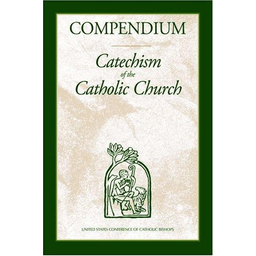 Compendium of the Catechism of the Catholic ChurchThe official 598-question summary of the full Catechism - Catholic doctrine in a portable question-and-answer format, with the complete text free at vatican.va.Introduction to ChristianityThe 1968 lectures that a young Joseph Ratzinger - later Pope Benedict XVI - turned into one of the 20th century's most cited works of Catholic theology, built section by section on the Apostles' Creed.
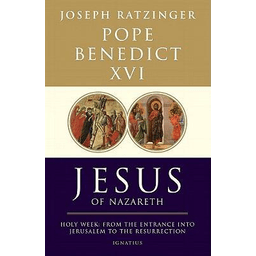 Jesus of NazarethA sitting pope's personal, scholarly reading of the Gospels - three volumes that engage modern biblical criticism while searching for the Jesus the Gospels actually present.
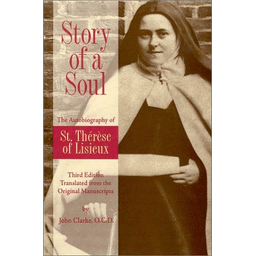 Story of a SoulThe spiritual autobiography of a young Carmelite nun who died at 24 - the small, warm book that taught a century of readers a path of holiness through little things done with great love.New Seeds of ContemplationThomas Merton’s revised 1962 classic on contemplation - the book that taught a century of readers the difference between the true self and the false self, and what it means to rest in God.