- Starting price
- ~$18 paperback
- Free tier
- No
- Platforms
- Print · Kindle · Audiobook
- Developer
- Ignatius Press
- Launched
- 1968
- Updated
- May 31, 2026
The verdict
Introduction to Christianity is the book that made Joseph Ratzinger's reputation as a theologian a generation before he became Pope Benedict XVI. It is a meditation on the Apostles' Creed - what it means to believe at all, who the God of the Creed is, who Jesus is, and what the Spirit and the Church are - written from within the Catholic tradition but read appreciatively far outside it. It is demanding. It is also one of the most rewarding theology books of the last sixty years.
Try Introduction to Christianity ↗Opens ignatius.com
Introduction to Christianity has quietly become one of the most cited theology books of the 20th century, and it carries an unusual backstory: the man who wrote it, a young German professor named Joseph Ratzinger, would four decades later be elected Pope Benedict XVI. The book has been read in seminaries, graduate programs, and reading groups ever since, and it is one of the rare works of serious Catholic theology that scholars in other traditions cite without flinching. That is a strange place for a book to land, and it is partly the point - Ratzinger set out to ask what the word "believe" can even mean for a modern person, before asking what specifically Christians believe.
The book did not begin as a book. It began as a lecture course Ratzinger delivered to students of every faculty at the University of Tübingen in the summer of 1967 - not a course for theology specialists, but an attempt to explain the faith to the whole university. The lectures were published in German in 1968 as Einführung in das Christentum, in the unsettled years just after the Second Vatican Council, when Catholic theology was arguing with itself about what to keep and what to rethink. The English translation followed, and Ratzinger added new prefaces over the decades reflecting on how the questions had shifted. It has never gone out of print.
What you actually get is a sustained meditation organized around the Apostles' Creed - the ancient "I believe" that Christians across many traditions still recite. Ratzinger opens with the problem of belief itself: what it means to say "I believe" in a scientific age that trusts only what it can measure. Then he works through the Creed in three movements - God the Father ("I believe in God"), the Son (the long central section on Jesus Christ), and the Holy Spirit and the Church. The voice is that of a professor thinking out loud: patient, allusive, fond of a well-placed paradox. It does not argue you into anything in a debate-club sense. It circles a question, turns it over, and waits for you to see what he sees.
✓ The good
- One of the most influential works of 20th-century Catholic theology - written by Joseph Ratzinger before he became Pope Benedict XVI, and cited far beyond Catholic circles
- Organized on the Apostles' Creed - the ancient, shared "I believe" gives the book a clear spine that readers from many traditions already recognize
- The opening meditation on the nature of belief is widely admired - Ratzinger takes the modern doubter seriously instead of waving the difficulty away
- The central section on Christology is the heart of the book - a careful, unhurried reflection on who Jesus is that many readers describe as the part that stayed with them
- Faith-and-reason is handled with unusual depth - Ratzinger was a working academic engaging philosophy directly, not a popularizer skimming it
- Substantial but not sprawling - a single focused volume you can return to for years rather than a multi-volume system
- Repeatedly reissued with new prefaces - the later editions show the author revisiting his own questions across four decades
✗ Watch out
- Dense and academic - this is graduate-level theological prose, and a first-time reader should expect to slow down and reread
- Assumes some philosophical literacy - Ratzinger engages modern German philosophy and theology by name, and readers without that background will miss some references
- A meditation, not a catechism - it explores the meaning of the Creed rather than systematically listing what to believe, so it is a poor reference book
- Despite the title, not an easy first introduction - newcomers often find a gentler starting point serves them better and come back to this later
- The translation can feel formal - German theological style renders into long, carefully qualified English sentences that some readers find heavy going
Best for
- Readers who want a serious, demanding meditation on the Apostles’ Creed
- Students and clergy engaging modern theology and the faith-and-reason question
- Catholics wanting a major work from the tradition by Ratzinger / Benedict XVI
- Anyone curious how a leading 20th-century theologian thought about belief itself
Avoid if
- You want a plain-language first introduction to Christianity
- You want a systematic catechism that lists doctrines for reference
- You bounce off dense, philosophically loaded academic prose
- You want a quick read rather than a book to work through slowly
What Introduction to Christianity is
Introduction to Christianity is Joseph Ratzinger's book-length meditation on the Apostles' Creed, drawn from a 1967 lecture course at Tübingen and published in German in 1968. It is a single substantial volume, written from within the Catholic theological tradition, and it is built in three movements that follow the Creed itself: belief in God the Father, belief in Jesus Christ the Son, and belief in the Holy Spirit and the Church. A long opening section steps back even further to ask what the act of believing means at all for a modern person before turning to the content of the faith.
The book is not a catechism and does not pretend to be one. A catechism states what is to be believed, article by article, for reference; Ratzinger instead circles the meaning of each clause of the Creed, asking why it is phrased as it is and what it asks of the person who says "I believe." He wrote it as a professor addressing an entire university, not only theology students, which gives it a reaching, explanatory quality - but the reaching is intellectual, not simplifying. Much of its reflection on the Creed is read appreciatively by readers well outside the Catholic tradition, even as the book remains rooted in it.
Why readers still reach for Ratzinger
Most books with "introduction" in the title aim to make a subject easy. Ratzinger aimed instead to make the act of belief honest. The book's distinctive move, the one readers come back for, is that it does not start by assuming faith and then explaining its parts. It starts with the modern person's actual difficulty - the sense that "I believe" is a claim about things you cannot see in a world that trusts only what it can verify - and takes that difficulty seriously as a starting point rather than an embarrassment. Only then does it work through the Creed.
That is rarer in the genre than it sounds, and it is why the book travels. A reader who has spent years in philosophy finds someone arguing at their level. A reader from another Christian tradition finds the shared text of the Apostles' Creed as a common reference point, and much of the reflection on it lands appreciatively even where the framing is distinctly Catholic. And a reader who simply wants to know how one of the century's major theologians thought about God, Christ, and the Church finds the thinking happening on the page rather than summarized after the fact. It is demanding company, but it is genuine company.
The Creed as the book’s spine: belief, Father, Son, Spirit
The organizing idea of Introduction to Christianity is the Apostles' Creed - the short, ancient "I believe in God the Father... and in Jesus Christ... and in the Holy Spirit" that Christians across many traditions still recite. Ratzinger does not treat the Creed as a checklist. He treats it as a structure to think inside, devoting the book's three main movements to its three articles: God the Father, the Son, and the Holy Spirit together with the Church. Before any of that, a long introductory section asks what it even means to believe, so that the reader who reaches the first article is not taking the verb "believe" for granted.
Using the Creed as the spine is what gives a demanding book its clarity. Because the text is ancient and shared, a reader from almost any Christian background already knows the map, even when Ratzinger's exploration of a clause is rooted in the Catholic tradition. It also keeps the meditation anchored: however far a chapter wanders into philosophy or history, it works back toward a specific line of the Creed. For many readers that is the book's quiet gift - it makes words they may have recited since childhood feel newly weighed.
Faith and reason: taking the modern doubter seriously
The opening section on the nature of belief is the part of the book that readers single out most often, and it is where Ratzinger's training as a working academic shows. Instead of beginning with the confidence of faith, he begins with its difficulty - the modern intuition that real knowledge is what can be measured and proven, which seems to leave "I believe" stranded. He sits with that problem at length, drawing on modern philosophy directly and by name, and argues that belief and the kind of trust that underlies all human knowing are more deeply related than the doubter assumes.
This is the engine of the whole book. By treating the faith-and-reason question as the live one rather than skipping past it, Ratzinger earns the right to spend the rest of the volume on the content of the Creed. It is also why the book is read far beyond catechesis: anyone wrestling with whether belief is intellectually respectable in a scientific age finds a serious interlocutor here. The treatment is not quick or breezy - the argument is closely reasoned and assumes you will keep up - but readers who do the work tend to count it among the most rewarding sections.
Christology at the center: the long reflection on Jesus Christ
The largest movement of the book is its reflection on Jesus Christ - the second article of the Creed and the part most readers describe as its heart. Ratzinger moves through who Jesus is, the meaning of the cross and resurrection, and the claims the Creed makes about him, in the same unhurried, circling style he uses throughout. He is less interested in defending each clause point by point than in drawing out what it means that Christians confess this particular person as the center of everything, and he lets the weight of the question accumulate rather than rushing to a slogan.
This central section is why the book outlasted its moment. Written just after the Second Vatican Council, it could have been a period piece about the debates of 1968; instead the Christological core reaches past them to the older question of who Jesus is, which every generation has to take up again. Readers from various traditions return to these chapters specifically, even where they read them through their own theological vocabulary, because the reflection is substantial enough to sit with for a long time.
Pricing
Paperback
~$18
The standard Ignatius Press edition with the later prefaces. The copy most readers own.
Kindle / ebook
~$15
Searchable and highlight-syncs across devices - handy for a dense book you will want to flip back through.
Audiobook
~$20
An unabridged recording exists; useful for a first pass, though the closely argued passages reward the printed page.
Used / library
~$5-10
Earlier printings turn up secondhand and in seminary libraries. Fine if you only need the text, not the latest preface.
Introduction to Christianity is not free. Earlier printings turn up secondhand and in seminary libraries for well under ten dollars, which is how a lot of students still acquire their first copy. A new Ignatius Press paperback runs around $18 - call it the everyday default - and has the advantage of carrying the later prefaces Ratzinger added as he revisited the book's questions over the decades.
The ebook runs a little less, roughly $15, and is genuinely useful for a book this dense: full-text search and synced highlights make it easier to find the passage you half-remember and to flip back through a closely argued chapter. The text is identical to print; you give up only the feel of marking a physical page, which some readers of a book like this prefer.
An unabridged audiobook runs around $20 or comes with an audio membership. It is a reasonable way to make a first pass, especially the more narrative Christological chapters, but the tightly reasoned sections - the opening on belief above all - reward the printed page, where you can stop and reread a sentence. Most readers do not need every format. The paperback is the balanced default and the copy you will return to with a pencil in hand.
Where Introduction to Christianity falls behind
Difficulty. This is the headline caution. Introduction to Christianity is graduate-level theological prose, and despite its title it is not the gentlest on-ramp to the faith. A first-time reader should expect to slow down, reread paragraphs, and occasionally look something up. That is the cost of the book's depth, not a flaw in it - but it is worth knowing before you start.
Assumed background. Ratzinger engages modern philosophy and theology directly, often by name, and assumes a reader who can follow those references or is willing to chase them. Someone without that grounding will still get a great deal from the book, but will miss layers of the conversation he is having. A companion reader's guide, of which several exist, helps.
Not a reference work. Because it is a meditation on the meaning of the Creed rather than a systematic listing of doctrines, it is a poor book to consult when you want a quick, organized answer to "what does this tradition teach about X." For that purpose a catechism is the right tool. This book is for thinking with, not for looking up.
Period framing. The book was written in the years just after the Second Vatican Council, and a few passages address the theological debates of that specific moment. The core reflection reaches well past 1968, and the later prefaces help orient a modern reader, but a handful of sections carry the flavor of their decade.
Introduction to Christianity vs. Jesus of Nazareth vs. Catholicism
These three are a natural shortlist for a reader drawn to major Catholic theology, and they do different jobs. Introduction to Christianity (Ratzinger, 1968) is the demanding meditation on the Apostles' Creed and on the act of belief itself - the most philosophical and the most academic of the three. Jesus of Nazareth (Ratzinger/Benedict XVI, three volumes, 2007-2012) is the later, more accessible work, a close personal reading of the Gospels written while he was pope. Catholicism (Robert Barron, 2011, with a companion film series) is the broad, vividly illustrated tour of the Catholic faith aimed at a general audience.
Different strengths. Introduction to Christianity is the deepest and most intellectually demanding - the book you wrestle with rather than skim. Jesus of Nazareth is gentler and more devotional in feel, organized around the Gospel narrative rather than the Creed, and is often the easier Ratzinger to start with. Catholicism is the most welcoming and the most visual, the best choice for someone who wants an overview before going deep. If you want the rigorous theological meditation, this is the one. If you want to read the Gospels alongside the same author, add Jesus of Nazareth. If you want a panoramic introduction first, start with Barron.
All three are works of the Catholic tradition, and they say so plainly. Introduction to Christianity and Jesus of Nazareth share an author in Joseph Ratzinger / Benedict XVI; Catholicism comes from Robert Barron and his Word on Fire ministry. Readers outside the tradition engage all three, and Ratzinger's work in particular is cited well beyond Catholic circles.
The bottom line
Introduction to Christianity is one of the landmark theology books of the last century, and the fact that its author later became Pope Benedict XVI only added to its reach. It is not an easy first read despite the title - it is a demanding, philosophically serious meditation on the Apostles' Creed and on what it means to believe at all. But for a reader willing to slow down, it pays back the effort as few books do, and much of its reflection on the Creed is valued well beyond the Catholic tradition it comes from. If you want one substantial work from a major modern theologian, this is a strong place to start.
Alternatives to Introduction to Christianity
 Jesus of NazarethRatzinger / Benedict XVI's three-volume reading of the Gospels - gentler and more narrative than this book, and often the easier place to start with the same author.
 Catholicism (Barron)Robert Barron's vivid, broad tour of the Catholic faith, with a companion film series - the most accessible overview of the three.
 Catechism of the Catholic ChurchThe official systematic reference for Catholic teaching - the book to consult when you want doctrine listed rather than meditated on.
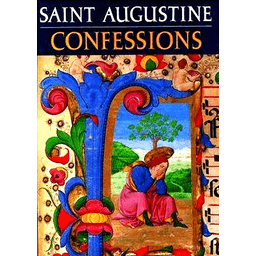 ConfessionsAugustine's spiritual autobiography and one of the most read Christian classics - a more personal, narrative companion to Ratzinger's argument.
Frequently asked questions
Who wrote Introduction to Christianity?
Joseph Ratzinger, a German theologian who was a young university professor when he wrote it in the late 1960s. He was later elected Pope Benedict XVI in 2005, so the book predates his papacy by nearly four decades.
Is it really an introduction? Is it a good first book on Christianity?
Despite the title, it is not the gentlest first read. It is a demanding, graduate-level meditation on the Apostles' Creed and on the nature of belief, and it assumes some philosophical background. Many readers find a more accessible book serves as a better starting point and then come to this one later for depth.
How is the book organized?
Around the Apostles' Creed. After a long opening section on what it means to believe at all, the book follows the Creed's three articles: belief in God the Father, belief in Jesus Christ the Son (the longest, central section), and belief in the Holy Spirit and the Church.
Is this a Catholic book, and can readers from other traditions use it?
It is a work of Catholic theology, written from within that tradition. But because it is built on the Apostles' Creed - a text shared across many Christian traditions - much of its reflection is read appreciatively by readers outside Catholicism and cited well beyond Catholic circles. Readers of any background can engage it; the framing is Catholic.
When was it written, and do the editions differ?
It was first published in German in 1968 as Einführung in das Christentum, based on lectures Ratzinger gave at Tübingen in 1967, with an English edition following. He added new prefaces over the years reflecting on how the questions had changed, so later editions carry extra front matter, but the core text is the same.
How does it compare to Jesus of Nazareth?
Both are by Ratzinger / Benedict XVI. Jesus of Nazareth (2007-2012) is a later, three-volume reading of the Gospels written during his papacy; it is more narrative and generally more accessible. Introduction to Christianity is earlier, a single more philosophical volume organized on the Creed rather than the Gospel story. Many readers find Jesus of Nazareth the easier entry point.
Where should I go after Introduction to Christianity?
For the same author, Jesus of Nazareth is the natural next read. For a systematic reference rather than a meditation, the Catechism of the Catholic Church lays out the tradition's teaching article by article. For a broad illustrated overview, Robert Barron's Catholicism works well, and Augustine's Confessions makes a classic, more personal companion.
Sources & further reading
More Catholic Books
Catechism of the Catholic ChurchThe official, full-length compendium of Catholic doctrine - four pillars, ~2,865 numbered paragraphs, free online at the Vatican, and the reference nearly every other Catholic resource quotes.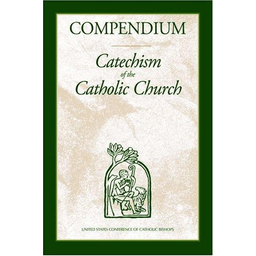 Compendium of the Catechism of the Catholic ChurchThe official 598-question summary of the full Catechism - Catholic doctrine in a portable question-and-answer format, with the complete text free at vatican.va.CatholicismBishop Robert Barron's richly illustrated tour of the Catholic faith - the companion book to the Word on Fire documentary series, written to walk a curious reader from Jesus to the last things.Jesus of NazarethA sitting pope's personal, scholarly reading of the Gospels - three volumes that engage modern biblical criticism while searching for the Jesus the Gospels actually present.
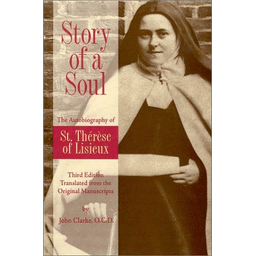 Story of a SoulThe spiritual autobiography of a young Carmelite nun who died at 24 - the small, warm book that taught a century of readers a path of holiness through little things done with great love.New Seeds of ContemplationThomas Merton’s revised 1962 classic on contemplation - the book that taught a century of readers the difference between the true self and the false self, and what it means to rest in God.