- Starting price
- ~$20 paperback
- Free tier
- No
- Platforms
- Print · Kindle · App
- Developer
- Ignatius Press
- Launched
- 2011
- Updated
- May 31, 2026
The verdict
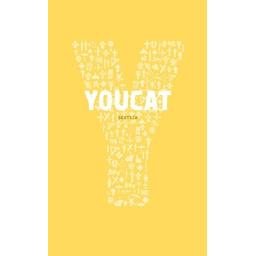
YOUCAT repackages official Catholic teaching for teenagers and young adults - the full four-part structure of the Catechism in plain-language question-and-answer form, with margin quotations and cartoon illustrations. It does exactly what it sets out to do: get young Catholics into doctrine without scaring them off, then points to the full Catechism for depth.
Try YOUCAT ↗Opens youcat.org
YOUCAT has quietly become the default first catechism for a whole generation of young Catholics. Confirmation classes use it. Youth groups read it in chunks. Parents buy it because it is the rare doctrine book a sixteen-year-old will actually open. It launched in 2011 with a foreword by Pope Benedict XVI and was distributed by the boxful at World Youth Day in Madrid that same year - an unusually loud entrance for a catechism.
The pitch is simple. The Catechism of the Catholic Church, published in the early 1990s, is comprehensive, authoritative, and roughly the size of a brick. It is not what you hand a fourteen-year-old. YOUCAT - the name compresses “Youth” and “Catechism” - takes the same body of teaching and re-presents it in a Q&A format with short, plain-English answers, a running margin of quotations, and definitions of the hard words. It does not change the doctrine or pretend to replace the full Catechism. It is a doorway, and it says so on the way in.
What you actually get is a paperback of around 300 pages built on a question-and-answer spine: a numbered question, a tight answer in bold, then a paragraph or two of plainer commentary, with quotations, definitions, and simple stick-figure cartoons filling the margins. It follows the same four-part shape as the full Catechism, and it wears its purpose openly: official Catholic teaching, written for young Catholics.
✓ The good
- Built for the actual reader - the Q&A format, short answers, and conversational commentary are pitched at teens and young adults, not clergy or scholars
- Genuinely official - it presents the teaching of the Catechism of the Catholic Church and carries a foreword by Pope Benedict XVI, not one author’s take
- The margins do real work - quotations from saints, popes, Scripture, and thinkers run alongside without interrupting the main answer
- Definitions built in - hard vocabulary is glossed in the margin where it appears, so a reader is not stranded on words like “grace” or “sacrament”
- It knows it is a starting point - most answers cross-reference the paragraph numbers of the full Catechism for readers who want more
- A whole family of follow-ups - YOUCAT for Kids, DOCAT, a YOUCAT Bible, and an app extend the same approach
- Portable and affordable - a backpack-sized paperback around $20, easy to assign by the chapter
✗ Watch out
- The casual register is not for everyone - readers who want a formal, dignified text may find the breezy tone and cartoons distracting
- The stick-figure illustrations divide people - some love the lightness, others find the cartoons gimmicky or already dated
- It simplifies by design - answers are short, so anyone wanting the full reasoning has to move to the Catechism it points toward
- Early printings drew translation scrutiny - a few first-edition passages were revised across printings, so very early copies differ slightly
- Margin-heavy layout can feel busy - the quotes, definitions, and cartoons around the main answer are a lot of input on one page
Best for
- Catholic teenagers in confirmation or youth-group settings
- Young adults wanting an approachable first pass at Church teaching
- Catechists and youth ministers who need a teachable, chapter-sized text
- Catholic parents looking for a doctrine book their teen will open
Avoid if
- You want the full, formally cited text - that is the Catechism of the Catholic Church itself
- You dislike conversational tone or cartoon illustrations in a doctrine book
- You are looking for a non-Catholic catechism - this presents specifically Catholic teaching
- You want exhaustive depth and argument rather than a clear, condensed summary
What YOUCAT is
YOUCAT is the Youth Catechism of the Catholic Church - a presentation of official Catholic teaching written for teenagers and young adults, first published in 2011 by Ignatius Press in its English edition. It takes the content of the Catechism of the Catholic Church and re-casts it in a question-and-answer format: a numbered question, a short bold answer, then plainer commentary, with margin quotations and inline definitions alongside. It follows the same four-part structure as the full Catechism: the Creed, the sacraments and liturgy, the moral life, and prayer.
The book is explicitly a youth-oriented doorway into Catholic doctrine, not a replacement for the Catechism it summarizes. It carries a foreword by Pope Benedict XVI and was promoted heavily around World Youth Day. A family of related titles followed in the same style - YOUCAT for Kids, DOCAT on Catholic social teaching, a YOUCAT Bible, and a companion app - so the brand now spans several ages and subjects.
Why young Catholics reach for YOUCAT first
The full Catechism of the Catholic Church is authoritative and complete, but it reads like a reference work - dense paragraphs, formal prose, footnotes pointing in every direction. For a fourteen-year-old in a confirmation class, that is a wall. YOUCAT was built to lower that wall without lowering the content: the question comes first, the answer is short enough to finish, the commentary fills in just enough, and the margins give a saint or a Scripture line to chew on. Every design choice serves one goal - keep the reader reading.
That makes YOUCAT useful in a way the full Catechism is not for this audience. A catechist can assign a few pages and expect them to land; a youth group can read a question aloud and discuss it; a teen who would never crack the brick-sized Catechism will flip through this one. It teaches Catholic doctrine to young Catholics, and the whole design is calibrated to that job - then it hands the serious reader off to the full Catechism, by paragraph number, the moment they want more.
The question-and-answer spine: doctrine you can actually finish
YOUCAT is built on a question-and-answer structure - the oldest catechetical form there is. Each entry opens with a numbered question phrased the way a curious young person might ask it, then a short answer in bold, then a paragraph or two of plainer commentary. The questions march through the same four parts as the full Catechism: what Catholics believe, how they worship, how they are called to live, and how they pray. The effect is a book you read in small, finishable bites rather than long unbroken stretches.
This sounds like a small thing. In practice it is the whole reason the book works for its audience. A young reader is not asked to wade through dense prose to find the point - the point is the bold answer, right there, and the commentary is optional depth. It makes the book teachable: a catechist can build a lesson around a single question, and a teen can read three or four in a sitting and feel like they got somewhere. The format is also honest about its limits, cross-referencing the fuller treatment in the Catechism.
The margins: quotes, definitions, and the cartoons people argue about
The most distinctive thing about a YOUCAT page is everything around the main answer. The margins carry a running stream of quotations - from saints and popes, from Scripture, from the occasional secular thinker - chosen to echo or deepen the question at hand. Alongside them are short definitions of the technical vocabulary, so a reader who hits a word like “grace” or “sacrament” gets a plain gloss without leaving the page. And scattered throughout are the stick-figure illustrations that have become the book’s visual signature.
Those margins are where YOUCAT either wins you over or wears you out. The quotations give a young reader a chorus of voices instead of a single lecturing tone, and the inline definitions remove the friction that stops a lot of teens from finishing doctrine books. The stick figures are the divisive part: many find them charming and disarming, others gimmicky or dated. Either way, the layout is busy by intent - built to feel like a magazine spread more than a textbook.
A doorway, not a destination - and the family of spin-offs
YOUCAT never claims to be the last word. Its answers are short on purpose, and they routinely cross-reference the paragraph numbers of the Catechism of the Catholic Church so a reader who wants the full treatment knows exactly where to turn. That self-awareness is a quiet strength: for a young reader, the staged path - approachable summary first, full reference when ready - beats dropping the brick-sized Catechism on them and hoping.
The approach proved popular enough to spawn a whole family of titles in the same style: YOUCAT for Kids for younger children, DOCAT on Catholic social teaching, a YOUCAT Bible, and a companion app. The lineup means a parish or family can stay inside one consistent house style as a reader grows, all of it pointing back toward the same official teaching.
Pricing
Paperback
~$20
The standard Ignatius Press English edition - the copy most readers, classes, and youth groups buy.
Kindle / ebook
~$10-15
The full text in a searchable digital edition, handy if you are reading on a phone or tablet.
YOUCAT app
Free / small in-app cost
A companion app exists with the Q&A content and extras; pricing has shifted over the years, so check current terms.
Spin-off volumes
~$18-25 each
YOUCAT for Kids, DOCAT (Catholic social teaching), and the YOUCAT Bible are sold separately in the same style.
Bulk / parish pricing
Varies (discounted)
Ignatius and Catholic distributors offer case and classroom discounts - the usual route for confirmation programs.
YOUCAT is not free. The standard Ignatius Press paperback runs around $20 - call it the everyday default - and is the edition almost every class, youth group, and parent buys. Used copies turn up cheaply, and confirmation programs typically order in bulk at a discount, the way most teens actually receive theirs.
A Kindle/ebook edition exists, usually somewhere in the $10-15 range, which is handy for reading on a phone and for searching the text. A companion YOUCAT app has also existed for years with the question-and-answer content and some extras; its pricing and feature set have shifted over time, so it is worth checking the current terms rather than assuming a fixed price.
The spin-offs - YOUCAT for Kids, DOCAT, and the YOUCAT Bible - are sold separately, each roughly in the same $18-25 range. Most readers do not need the whole shelf at once; the main paperback is the balanced default. For a parish running confirmation, the simple play is to order it in a case at the discounted rate and assign it by the chapter.
Where YOUCAT falls behind
Depth. YOUCAT is a summary by design, and the short answers leave out much of the reasoning, citation, and nuance the full Catechism carries. That is the right call for a youth catechism - going deeper would defeat the purpose - but it means YOUCAT is a starting point, not an ending point. Anyone wanting the complete treatment is pointed, by paragraph number, to the Catechism it draws from.
Tone. The conversational register that makes the book approachable for teenagers is the same thing that puts off readers who want a formal, dignified doctrinal text. If you prefer the gravity of the full Catechism’s prose, YOUCAT’s lighter voice will feel like a step down.
The cartoons. The stick-figure illustrations are the book’s most divisive feature - some readers find them charming and exactly suited to the audience, others find them gimmicky, busy, or already showing their age. They are woven through the margins, so there is no reading around them.
Edition drift. A handful of passages in the earliest printing were revised across later printings to tighten the English wording against the original-language text. The differences are small, but a very early copy can read slightly differently from a current one - worth knowing if you are matching editions across a group.
YOUCAT vs. the Catechism of the Catholic Church vs. the Compendium
These three are the same teaching at three different altitudes. The Catechism of the Catholic Church is the full reference - comprehensive, formally written, and authoritative, the source the other two condense. The Compendium of the Catechism is the official mid-length abridgment, also in question-and-answer form, pitched at a general adult reader. YOUCAT is the youth-oriented version: the same teaching rewritten in plain language with margin quotes, inline definitions, and cartoons aimed at teenagers and young adults.
Different jobs. The full Catechism is the deepest and most complete - the text you cite, study, and return to. The Compendium is the tidy official summary for an adult who wants the essentials. YOUCAT is the most approachable and the only one built around a teenage reader from the ground up. If you are catechizing young people, YOUCAT is the natural front door; if you want the official condensed text for adults, the Compendium fits; and for the complete treatment, all roads lead back to the Catechism itself.
All three are official Catholic catechetical texts that share the same teaching, and YOUCAT openly cross-references the full Catechism so a reader can move up the ladder. The choice is not about which is more authoritative but about which altitude fits the reader in front of you.
The bottom line
YOUCAT is the rare doctrine book that meets its reader where they are. It takes official Catholic teaching, keeps it intact, and re-presents it in a question-and-answer form a teenager will actually open - short answers, margin quotes, inline definitions, and the cartoons people either love or roll their eyes at. It does not try to be the full Catechism; it tells you exactly where to go when you want more. For a Catholic teen, a confirmation class, or a youth minister who needs something teachable, it is still the most natural place to start.
Alternatives to YOUCAT
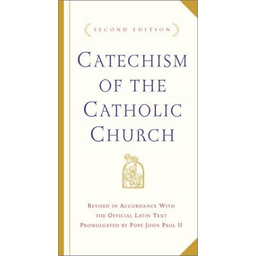 Catechism of the Catholic ChurchThe full, official reference text that YOUCAT condenses - comprehensive and formally written, the destination YOUCAT points you toward.
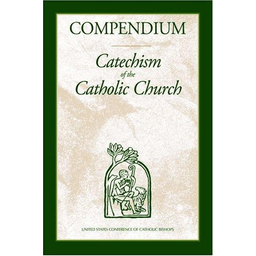 Compendium of the CatechismThe official mid-length abridgment of the Catechism, also in question-and-answer form, pitched at a general adult reader.
 HallowThe leading Catholic prayer and meditation app - guided prayer, the rosary, and Scripture audio for daily practice.
 Catholic AnswersA long-running Catholic apologetics and Q&A resource - articles, audio, and answers on questions about the faith.
Frequently asked questions
What does YOUCAT stand for?
YOUCAT compresses “Youth Catechism.” It is the Youth Catechism of the Catholic Church - official Catholic teaching written for teenagers and young adults, first published in 2011 with a foreword by Pope Benedict XVI.
Is YOUCAT the same as the Catechism of the Catholic Church?
It draws on the same teaching but is not the same book. The Catechism is the full, formally written reference text; YOUCAT condenses that content into a plain-language Q&A format and cross-references the full Catechism by paragraph number.
What ages is YOUCAT for?
The main YOUCAT is aimed at teenagers and young adults and is widely used in confirmation classes and youth groups. For younger children there is YOUCAT for Kids, in the same approachable style.
What are the stick-figure cartoons in YOUCAT?
The margins carry simple stick-figure illustrations that comment on the text, alongside quotations and inline definitions. The cartoons are the book’s most divisive feature - some find them charming and well-suited to the audience, others find them gimmicky.
Are there other books in the YOUCAT family?
Yes - YOUCAT for Kids, DOCAT on Catholic social teaching, a YOUCAT Bible, and a companion app, all in the same approachable style.
How much does YOUCAT cost?
The standard Ignatius Press paperback runs around $20, with an ebook usually in the $10-15 range and a companion app whose pricing has varied. Parishes and schools often order paperbacks in bulk at a discount.
Were there changes between editions of YOUCAT?
A few passages in the earliest printing were revised across later printings to tighten the English wording against the original-language text. The differences are small, but a very early copy can read slightly differently from a current one.
Sources & further reading
More Catholic Books
Catechism of the Catholic ChurchThe official, full-length compendium of Catholic doctrine - four pillars, ~2,865 numbered paragraphs, free online at the Vatican, and the reference nearly every other Catholic resource quotes.Compendium of the Catechism of the Catholic ChurchThe official 598-question summary of the full Catechism - Catholic doctrine in a portable question-and-answer format, with the complete text free at vatican.va. CatholicismBishop Robert Barron's richly illustrated tour of the Catholic faith - the companion book to the Word on Fire documentary series, written to walk a curious reader from Jesus to the last things.
 Introduction to ChristianityThe 1968 lectures that a young Joseph Ratzinger - later Pope Benedict XVI - turned into one of the 20th century's most cited works of Catholic theology, built section by section on the Apostles' Creed.
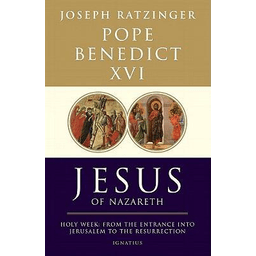 Jesus of NazarethA sitting pope's personal, scholarly reading of the Gospels - three volumes that engage modern biblical criticism while searching for the Jesus the Gospels actually present.
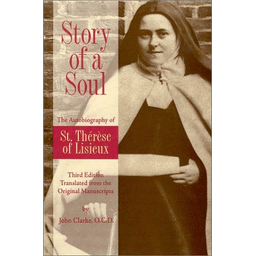 Story of a SoulThe spiritual autobiography of a young Carmelite nun who died at 24 - the small, warm book that taught a century of readers a path of holiness through little things done with great love.