- Starting price
- Free (notes online); ~$50 print
- Free tier
- Yes
- Platforms
- Print · Web (notes free) · App
- Developer
- Ligonier Ministries
- Launched
- 2015
- Updated
- May 31, 2026
The verdict
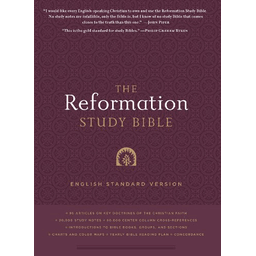
A confessional Reformed study Bible on the ESV text, edited by R.C. Sproul, with theology notes, dozens of topical articles, and a generous set of historic creeds and confessions. Best-in-class for readers who want a study Bible from inside the covenantal, Reformed tradition - and notable for putting its entire study apparatus online for free. Readers from other traditions will recognize the notes as a specific tradition's reading.
Try Reformation Study Bible ↗Opens ligonier.org
The Reformation Study Bible began life under a different name. R.C. Sproul served as general editor of the New Geneva Study Bible, published in 1995, which was renamed the Reformation Study Bible at the turn of the century. In 2015, Ligonier Ministries - the teaching ministry Sproul founded - released a substantially revised and expanded edition through its Reformation Trust imprint: new notes, a larger roster of contributing theologians, more articles, and an expanded collection of historic creeds and confessions in the back. That 2015 revision is the version most buyers encounter today.
It is a study Bible with a stated point of view. It does not aim for the broad evangelical middle. It does not try to lay out every interpretive option and let you choose. It does not soften its theological framing to appeal across traditions. What it does is present scripture through a confessional Reformed lens - covenant theology in its structure, the doctrines of grace in its soteriology, and the historic Reformed confessions as its reference points. The notes assume that framework and teach from within it, which is precisely what its intended readers want.
The natural points of comparison are the other major single-volume study Bibles: the ESV Study Bible (Crossway, broader Reformed-leaning evangelical), the MacArthur Study Bible (Reformed-Baptist, dispensational, single-author), and the NIV Study Bible (broad evangelical consensus). The Reformation Study Bible sits at the most explicitly confessional end of that spectrum - closer to a catechism-and-commentary hybrid than the more academically restrained ESV edition. For readers in Presbyterian and Reformed Baptist traditions, that is the appeal. For readers in Wesleyan, Catholic, Orthodox, or Latter-day Saint traditions, it is a useful but clearly situated reference - best read with awareness that a particular tradition is doing the framing.
✓ The good
- Confessional Reformed framing is consistent and clearly stated - readers who want covenant theology and the doctrines of grace get a study Bible that teaches from that framework throughout
- The full study apparatus is free online and in the Ligonier app - notes, articles, and introductions readable at no cost, which almost no print study Bible offers
- Historic creeds and confessions are collected in the volume - the Apostles' and Nicene Creeds, the Westminster Standards, the Heidelberg Catechism, and more, in one reference section
- R.C. Sproul's editorial voice gives the notes unusual coherence - the framing is steady across the canon rather than varying book by book
- Dozens of topical theology articles - on subjects like the attributes of God, covenant, justification, and the canon - read like a compact systematic theology primer
- Uses the ESV text - a widely respected essentially-literal translation, the same base text as several other major study Bibles
- Multiple print bindings plus digital editions - hardcover, leather, and Logos all carry the same study content
✗ Watch out
- Notes argue from a specific confessional Reformed viewpoint - readers in Wesleyan, Catholic, Orthodox, or Latter-day Saint traditions will read them as that tradition's interpretation rather than a neutral summary
- Theologically dense - the notes assume some familiarity with Reformed vocabulary (covenant, election, the ordo salutis) and move quickly when the framework is in play
- ESV translation only - if your primary text is NIV, NASB, KJV, NRSV, or another version, the notes and cross-references won't line up word for word
- Less visual reference than some competitors - fewer maps, charts, and diagrams than the ESV Study Bible's heavily illustrated apparatus
- No daily-reading or devotional structure - there's no one-year plan or reading schedule built in; it's a reference, not a guided plan
- Print editions are substantial - full-Bible heft, not a lightweight carry-to-church volume
Best for
- Readers in Presbyterian, Reformed, or Reformed Baptist traditions who want a study Bible from inside that framework
- Anyone wanting confessional Reformed notes alongside the historic creeds and confessions in one volume
- Budget-minded readers who want serious study notes at no cost via the free online and app access
- Followers of R.C. Sproul's teaching who want his editorial framing in a study Bible
Avoid if
- You want a study Bible that lays out multiple interpretive views without a stated theological lens
- You read primarily in a non-ESV translation and want notes that map to your text
- You're Catholic, Orthodox, or Latter-day Saint and want a study Bible from inside your own tradition
- You want a heavily illustrated reference with extensive maps, timelines, and diagrams
What Reformation Study Bible is
The Reformation Study Bible is a single-volume study Bible built on the English Standard Version text, with R.C. Sproul as general editor and a roster of contributing theologians supplying the study notes. The biblical text runs at the top of each page; study notes run beneath, covering historical background, the meaning of key terms, the structure of each passage, and how it fits the larger storyline of scripture. The framing throughout is confessional Reformed - covenant theology in its account of how the testaments fit together, and the doctrines of grace in how it reads salvation. It first appeared as the New Geneva Study Bible in 1995 and was substantially revised and expanded in the 2015 edition published by Ligonier's Reformation Trust imprint.
Beyond the running notes, the volume includes dozens of topical articles on theological subjects, multi-page introductions to each book of the 66-book Protestant canon, and an extended reference section gathering historic Christian creeds and Reformed confessions - among them the Apostles' and Nicene Creeds, the Westminster Confession of Faith and Catechisms, the Heidelberg Catechism, and the Canons of Dort. The same study content is available in print across hardcover and leather editions, as a Logos resource, and - unusually for a study Bible - free of charge on the Ligonier website and in the Ligonier app.
Why Reformed readers reach for the Reformation Study Bible
The first reason is that the framing is explicit and consistent. Some study Bibles work hard to stay neutral on contested questions; the Reformation Study Bible does the opposite, and its readers consider that a feature. When a note touches election, the covenants, the sacraments, or the order of salvation, it reads the passage through the confessional Reformed tradition and references the historic confessions rather than hedging. For a reader who already holds that framework - or who is studying their way into it - a study Bible that teaches it plainly is more useful than one that lists options without a position.
The second reason is the package around the notes. Sproul built the volume so that the running commentary, the topical articles, and the historic creeds and confessions all point at each other. A note on justification connects to an article on the doctrine and to the relevant confessional statement in the back. That turns the book into something between a study Bible and a confessional handbook - you can read a passage, follow the doctrine into an article, and then read the confession that summarizes it, all in one volume. And because Ligonier publishes the whole apparatus free online, a reader can sample that experience before paying for a print copy.
The notes and articles: a confessional Reformed reading, edited to one voice
The study notes are the core of the product, supplied by a roster of contributing theologians and edited under R.C. Sproul's general editorship into a consistent framing. They cover the usual study-note territory - historical background, the sense of key Hebrew and Greek terms, the structure of each passage, and cross-canonical connections - but they do so from a stated confessional Reformed standpoint. Where a passage bears on a doctrine the Reformed confessions address, the note teaches that reading and often points to the relevant confessional statement. Alongside the running notes sit dozens of topical articles on subjects like the attributes of God, the covenants, justification, sanctification, and the canon of scripture, each running long enough to function as a short primer rather than a sidebar.
The practical effect is coherence. Because the notes are written and edited from a single theological framework, they read as one continuous voice across the canon rather than shifting tone from book to book. That is exactly what a reader inside the Reformed tradition is looking for - a study Bible that reasons the way they do. A reader from another tradition will experience the same notes differently: as a clear, well-argued statement of one tradition's interpretation, useful for understanding how that tradition reads a passage, and best paired with a reference from their own. The notes don't pretend to be a neutral consensus, and the volume is more useful for being upfront about that.
Creeds and confessions: a historic reference library bound in
One of the volume's distinctive features is the reference section gathering historic Christian creeds and Reformed confessions in one place. Depending on the edition, that includes the Apostles' Creed, the Nicene Creed, the Chalcedonian Definition, the Westminster Confession of Faith with its Larger and Shorter Catechisms, the Heidelberg Catechism, the Belgic Confession, the Canons of Dort, and others. These are the documents the study notes lean on, so collecting them in the back of the same book means a reader can move from a note to the confessional statement behind it without reaching for another volume.
For the intended reader, this is a meaningful convenience. Reformed and Presbyterian study often works confession-first - you read scripture and then check it against the church's historic summaries - and having those summaries bound into the study Bible streamlines that workflow. It also doubles as a teaching resource: a small group or a new believer working through the Westminster Shorter Catechism can read the question, then turn to the passages and notes that inform it. Readers outside the Reformed tradition may not use the confessions the same way, but the creeds shared across the broader church (Apostles', Nicene, Chalcedon) are useful reference for almost anyone.
Free online and app access: the apparatus without the purchase
The Reformation Study Bible does something almost no other study Bible in its class does: Ligonier publishes the complete study apparatus - notes, articles, and book introductions - free of charge on its website and in the Ligonier app. You can read the ESV text with the full set of study notes attached, search across the content, and follow the introductions, all without buying anything. For a study Bible whose print editions run from around fifty dollars into the triple digits for premium leather, that is a genuinely unusual perk and a meaningful reason the product stands out.
In practice this changes the buying decision. With most study Bibles you pay first and discover the notes' depth and framing afterward. Here you can read the actual notes on the passages you care about, decide whether the confessional Reformed approach fits how you study, and only then choose whether you want a print copy for sustained reading or shelf reference. It also lowers the barrier for budget-conscious readers and students: the scholarship is available even if the hardcover isn't in the budget. The free tier is the right starting point for almost everyone evaluating this Bible.
Pricing
Free Online + App
Free
The complete study notes, articles, and book introductions are readable at no cost on the Ligonier website and in the Ligonier app. Searchable and linked to the ESV text. For many readers this is all they need - a genuinely rare offering for a study Bible of this depth.
Hardcover
~$50
The standard print edition. Full study apparatus, the creeds-and-confessions section, durable binding. The natural pick for a reader who wants a physical desk copy and prefers paper for sustained reading.
Leather Editions
~$70-$130+
Genuine and premium leather covers in several colorways, including a two-volume set on some editions. Same study content as hardcover; the upgrade is durability, feel, and shelf presence rather than additional material.
Logos / Digital
~$40-$50
The Reformation Study Bible as a Logos resource, where notes link to lexicons, cross-references jump to other library titles, and articles surface in search. Best for readers already inside the Logos ecosystem.
The free online and app access is the headline, and for many readers it is the whole answer. The complete study notes, articles, and introductions are available at no cost on the Ligonier website and in the Ligonier app - the same apparatus that appears in the print editions. If you mainly study at a desk with a browser open or read on your phone, you may never need to buy anything. Most readers should start here.
The hardcover at around fifty dollars is the right pick for anyone who wants a physical copy. You get the full study apparatus and the creeds-and-confessions section in a durable binding, and paper remains the better medium for long, sustained reading sessions. If this is the Bible that will live on your desk for years, the hardcover is the sensible default.
The leather editions - running from around seventy dollars up past a hundred for premium bindings and multi-volume sets - are a cosmetic and durability upgrade. Same notes, same articles, same confessions; the difference is feel, longevity, and shelf presence. Worth it if you want an heirloom-grade copy; skip it if you mostly read the free digital version and want print only as backup.
The Logos edition, around forty to fifty dollars, is the pick for readers already in the Logos ecosystem - the notes link to original-language tools and the rest of your library. For someone not already using Logos, the free web and app access is the better and cheaper entry point. Most users do not need the Logos edition unless they are already invested in the platform.
Where Reformation Study Bible falls behind
A stated confessional viewpoint. The notes are written from within the confessional Reformed tradition - covenantal in structure, with the doctrines of grace in its soteriology and the historic Reformed confessions as reference points. Readers in Wesleyan-Arminian, Anglo-Catholic, Roman Catholic, Eastern Orthodox, or Latter-day Saint traditions will read framings of passages bearing on election, the sacraments, ecclesiology, or the relationship of faith and works as that tradition's interpretation rather than a neutral summary. That is the design of the book, not a defect, but it is the single most important thing to know before buying - you are getting one tradition's reading, clearly and consistently.
Theological density. The notes assume some fluency in Reformed vocabulary and move quickly when the framework is in play. Terms like covenant, election, justification, and the ordo salutis appear without much on-ramp. For a reader already inside the tradition that is efficient; for a newcomer it can be a steeper climb than a study Bible written for the broad evangelical middle.
ESV-only. Every note and cross-reference is keyed to the English Standard Version. If your primary translation is NIV, NASB, NKJV, KJV, NRSV, CSB, or another version, you will do constant mental translation between the verse you are reading and the verse the note annotates. Some competitors ship in multiple translations; this one does not.
Lighter visual reference. The volume includes introductions, articles, and some maps and charts, but it is not as heavily illustrated as the ESV Study Bible, which is built around an extensive atlas-grade set of maps, diagrams, and timelines. If visual reference is a priority, this is an area where the Reformation Study Bible is more modest.
No devotional or daily-reading layer. There is no one-year plan, no reading schedule, no devotional thoughts. The volume provides the reference apparatus and assumes you bring the reading discipline. Readers who want a Bible that walks them through scripture day by day will want a reading-plan app like YouVersion alongside it.
Reformation Study Bible vs. ESV Study Bible vs. MacArthur Study Bible
These three single-volume study Bibles all sit in the broad Reformed and evangelical orbit, all are available on the ESV text (among others, in MacArthur's case), and they serve genuinely different readers. The ESV Study Bible (Crossway) is the broadest and most academically restrained - 95 contributors edited into one voice, an enormous visual-reference apparatus, and a Reformed-leaning evangelical framing that lays out interpretive options and indicates a preference rather than arguing hard from a confession. It is the densest and most illustrated of the three.
The MacArthur Study Bible is the single-author option - John MacArthur wrote all the notes, and his Reformed-Baptist, dispensational, cessationist perspective comes through directly and decisively. It is available in multiple translations, which neither the ESV Study Bible nor the Reformation Study Bible offers. The Reformation Study Bible is the most explicitly confessional of the three: R.C. Sproul's editorial framing, covenant theology in its structure, and a bound-in collection of the historic Reformed creeds and confessions that the notes reference throughout. It reads less like a neutral reference and more like a study Bible and confessional handbook in one.
Different strengths. The ESV Study Bible is broader, more visually accomplished, and more restrained on contested questions. The MacArthur Study Bible is sharpest-voiced and most translation-flexible. The Reformation Study Bible is the most confessional and the only one of the three that gives its full study apparatus away free online. For a reader who specifically wants covenant theology and the Reformed confessions, Sproul's edition is the natural pick. For a broader evangelical reference, the ESV edition. For MacArthur's decisive single voice in your preferred translation, the MacArthur edition. The choice comes down to which framing you want and how explicitly you want it stated.
The bottom line
The Reformation Study Bible is the strongest single-volume study Bible for readers who specifically want the confessional Reformed tradition - covenant theology, the doctrines of grace, and the historic creeds and confessions - taught plainly and consistently on the ESV text. R.C. Sproul's editorial framing gives it real coherence, and Ligonier's decision to publish the entire apparatus free online makes it easy to evaluate before you buy and easy to use even if you never do. The confessional viewpoint is explicit and worth knowing about going in rather than a dealbreaker. If you are inside the Reformed tradition, this is the study Bible to reach for; if you are outside it, it is a clear, well-argued window into how that tradition reads scripture, best paired with a reference from your own.
Alternatives to Reformation Study Bible
 ESV Study BibleCrossway's flagship - the densest and most heavily illustrated single-volume study Bible, with a broader Reformed-leaning evangelical framing on the same ESV text.
 MacArthur Study BibleJohn MacArthur's single-author notes - a decisive Reformed-Baptist, dispensational voice, available in multiple translations rather than ESV only.
 Ligonier MinistriesR.C. Sproul's teaching ministry and the publisher behind this Bible - a deep free library of Reformed articles, devotionals, and the study notes themselves.
 NIV Study BibleZondervan's broad-evangelical study Bible on the NIV text - shorter, more accessible notes that take fewer positions on contested in-house questions.
Frequently asked questions
What translation does the Reformation Study Bible use?
The English Standard Version (ESV), the same essentially-literal translation used by several other major study Bibles. The notes, cross-references, and articles are all keyed to the ESV, so they work best alongside that text - wordings won't always match if you read from a different translation.
What is the theological perspective of the Reformation Study Bible?
It is confessional Reformed. The notes are framed by covenant theology and the doctrines of grace, and they reference the historic Reformed confessions - the Westminster Standards, the Heidelberg Catechism, the Canons of Dort, and others, several of which are printed in the back. The framing is consistent and stated plainly. Readers in Wesleyan, Catholic, Orthodox, or Latter-day Saint traditions will encounter readings of certain passages that reflect that tradition rather than their own.
Are the study notes really free?
Yes. Ligonier publishes the complete study apparatus - notes, articles, and book introductions - free of charge on its website and in the Ligonier app, attached to the ESV text and searchable. That is unusual for a study Bible of this depth, and it means you can read the actual notes before deciding whether to buy a print edition.
How is it different from the ESV Study Bible?
Both use the ESV text and both come from the broader Reformed and evangelical world, but they differ in framing and apparatus. The ESV Study Bible has 95 contributors, a far larger set of maps and diagrams, and a more academically restrained approach that lays out interpretive options. The Reformation Study Bible is more explicitly confessional - R.C. Sproul's framing, covenant theology, and the historic Reformed confessions bound in - and it publishes its notes free online, which the ESV edition does not.
Is it good for someone new to the Reformed tradition?
It can be a strong on-ramp, with a caveat. The notes teach the Reformed framework plainly and the bound-in confessions and catechisms are useful study tools. But the notes assume some familiarity with Reformed vocabulary and move quickly, so a newcomer may want to read alongside an introductory resource. The free online access makes it easy to sample the notes and see whether the approach fits before committing.
What's the history behind the Reformation Study Bible?
It began as the New Geneva Study Bible in 1995, edited by R.C. Sproul, and was later renamed the Reformation Study Bible. Ligonier Ministries released a substantially revised and expanded edition in 2015 through its Reformation Trust imprint - with new notes, more contributing theologians, additional articles, and an expanded collection of creeds and confessions. The 2015 revision is the edition most readers use today.
Which edition should I buy?
Start with the free online and app access - the full study notes cost nothing and let you evaluate the approach. If you want print, the hardcover at around fifty dollars is the right default for most readers. The leather editions are a durability and feel upgrade with the same content, and the Logos edition is worth it mainly if you already use Logos.
Sources & further reading
More Study Bibles
ESV Study BibleThe ESV Study Bible has quietly become the default desk Bible for pastors, seminarians, and serious lay readers in the Reformed evangelical world - and the reasons it earned that spot are worth understanding before you buy.NIV Study BibleThe original modern study Bible - over nine million copies sold and still the most balanced one-volume evangelical study Bible most readers will ever own. NIV Cultural Backgrounds Study BibleA 2,400-page reference Bible built around one question - what would an ancient reader have heard in this verse?
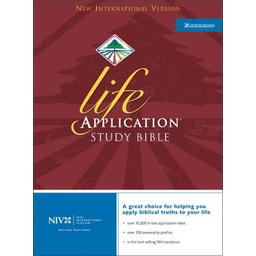 NIV Life Application Study BibleThe best-selling study Bible of the last forty years built its name on one idea - notes that tell you what a passage means for your Tuesday, not just what it meant in the first century. Here is what that trade-off actually buys you.
 Ignatius Catholic Study BibleThe Catholic study Bible that built its reputation one New Testament volume at a time - Scott Hahn and Curtis Mitch on the RSV-2CE - has finally arrived as a complete single volume, and it's worth understanding what it does before you buy.
 CSB Study BibleHolman's flagship study Bible pairs the readable Christian Standard Bible translation with about 16,000 study notes - a clean, modern, broadly evangelical reference that competes in one of the most crowded categories in publishing.