Head-to-head comparison
ESV Study Bible vs Reformation Study Bible
Ratings, pricing, platforms, real-world strengths, and a clear pick for each kind of user.

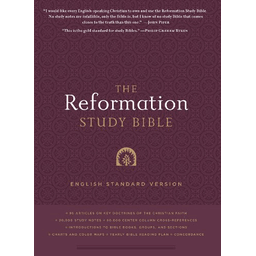
The ESV Study Bible and the Reformation Study Bible are the two most scholarly single-volume study Bibles on the ESV text, and they're the ones readers in the Reformed evangelical world spend the most time choosing between. Both are excellent, both are on the ESV, both are rooted in the Reformed and evangelical tradition, but they represent genuinely different editorial philosophies about what a study Bible should sound like.
The simplest way to frame the difference: the ESV Study Bible is a scholarly consensus tool that leans Reformed, while the Reformation Study Bible is an explicitly confessional Reformed tool that occasionally leans scholarly. The ESV edition tries to lay out interpretive options and indicate a preference; the Reformation edition teaches from inside the Reformed confession and references the creeds and catechisms as reference points. One is broader, the other is more specifically tradition-bound. Both are worth owning, but they're built for different readers.
The bottom line
Both are outstanding, and the choice depends on whether you want the broadest scholarly consensus with a Reformed lean, or a full-throated confessional Reformed reading. The ESV Study Bible is denser, more visually accomplished, and more academically restrained. The Reformation Study Bible is more explicitly traditional and more affordable in the digital tier since Ligonier gives the full apparatus away free. For Reformed pastors and lay readers, the Reformation edition. For those wanting maximum scholarship and breadth, the ESV edition.
The core difference: The ESV Study Bible brings 95 contributors edited into one voice, with a Reformed-evangelical lean but studied distance on contested questions. The Reformation Study Bible brings R.C. Sproul's explicit confessional Reformed framing, teaching from inside the tradition rather than surveying options from outside. One is 'here are the options, we think this one' and the other is 'here is how the Reformed tradition reads this.'
ESV Study Bible vs Reformation Study Bible: at a glance
| ESV Study Bible | Reformation Study Bible | |
|---|---|---|
| Rating (source) | 4.8 / 5 (Editor rating) | 4.7 / 5 (Editor rating) |
| Starting price | $54.99 hardcover | Free (notes online); ~$50 print |
| Free tier | No | Yes |
| Platforms | Print · Kindle · Logos · ESV.org online | Print · Web (notes free) · App |
| Developer | Crossway | Ligonier Ministries |
| Launched | 2008 | 2015 |
| Best for | Pastors and seminarians who want one editorially coherent reference on the desk | Readers in Presbyterian, Reformed, or Reformed Baptist traditions who want a study Bible from inside that framework |
How they compare, point by point
Theological perspective and voice
ESV Study Bible
Broadly Reformed-evangelical with Wayne Grudem and J.I. Packer overseeing coherence. Lays out interpretive options on contested passages and indicates editorial preference rather than arguing hard from a creed. Readers from other traditions will recognize it as a specific tradition's work, but without the full weight of confessional commitment.
Reformation Study Bible
Explicitly confessional Reformed. R.C. Sproul edits from within the covenant theology and doctrines-of-grace framework. Where a passage touches election, the covenants, or the sacraments, the notes teach that reading and reference the Westminster Standards or other confessions. Readers already inside the tradition find this clarifying; readers outside it will experience this as a specific tradition's reading, stated plainly.
Editorial coherence and scholarship depth
ESV Study Bible
95 contributors harmonized into one editorial voice. Denser than almost any other study Bible: 20,000+ notes totaling over a million words, with exceptional cross-referencing discipline. More academically restrained; more willing to surface uncertainty when it's genuine.
Reformation Study Bible
Single editorial voice throughout. Sproul's consistent framing makes it read as one person's commentary rather than 95 different authors. Shorter than the ESV edition but more theologically dense. Assumes fluency in Reformed vocabulary and moves quickly when the framework is in play.
Visual reference and apparatus
ESV Study Bible
Heavily illustrated. Over 200 full-color maps, diagrams, timelines, and charts. National Geographic-tier cartography. Architectural diagrams of the tabernacle, temple, and synagogues. The visual reference alone justifies keeping the print copy.
Reformation Study Bible
Modestly illustrated. Includes some maps and charts, but the volume is not built around a visual-reference apparatus the way the ESV edition is. Focus is on theological notes and confessional reference rather than visual learning.
Confessions and creeds
ESV Study Bible
Not bound in. The notes reference theologies and traditions but don't collect historic documents.
Reformation Study Bible
The Apostles' and Nicene Creeds, the Westminster Confession and Catechisms, the Heidelberg Catechism, the Canons of Dort, and others are gathered in the back. This turns the book into something between a study Bible and a confessional handbook. You can move from a note to the confessional statement behind it without another volume.
Digital access and pricing
ESV Study Bible
Free digital access at ESV.org included with print purchase. Full study apparatus searchable on the web for anyone who owns a print copy. No free tier; you pay for print to unlock the web.
Reformation Study Bible
The entire study apparatus (notes, articles, introductions) is free on the Ligonier website and in the Ligonier app. Searchable. Full read before buying. Print editions carry the same content if you want physical reference.
Which should you choose?
ESV Study Bible
Choose the ESV Study Bible if you want maximum scholarship in one volume, prefer a more academically restrained and less explicitly confessional approach to contested questions, value visual reference materials, and are comfortable with a Reformed-evangelical framing that respects other views rather than fully embracing a confession.
Reformation Study Bible
Choose the Reformation Study Bible if you're inside the Presbyterian or Reformed Baptist tradition and want a study Bible that teaches from that frame, appreciate having the historic creeds and confessions bound in and referenced throughout, want to sample before buying (the digital access is free), and are comfortable with R.C. Sproul's consistent editorial voice rather than 95 different contributors.
For pastors in Presbyterian or confessionally Reformed churches, the Reformation edition is the more natural home. For pastors in broader evangelical settings, the ESV edition. If you own both, the Reformation edition serves as theological guide and the ESV edition serves as scholarly reference. They layer well.
Strengths at a glance
ESV Study Bible
- Best-in-class scholarship density - 20,000+ study notes, 80,000 cross-references, and 50+ feature articles, all in one volume
- Editorial coherence - Grudem and Packer's oversight gives the whole thing a consistent voice across 95 contributors, which is rare for projects this size
- Visual reference unmatched in the category - over 200 full-color maps, charts, timelines, and architectural diagrams by National Geographic-tier cartographers
- Lifetime digital access to ESV.org included with print purchase - the same notes searchable, linkable, and synced across devices
Reformation Study Bible
- Confessional Reformed framing is consistent and clearly stated - readers who want covenant theology and the doctrines of grace get a study Bible that teaches from that framework throughout
- The full study apparatus is free online and in the Ligonier app - notes, articles, and introductions readable at no cost, which almost no print study Bible offers
- Historic creeds and confessions are collected in the volume - the Apostles' and Nicene Creeds, the Westminster Standards, the Heidelberg Catechism, and more, in one reference section
- R.C. Sproul's editorial voice gives the notes unusual coherence - the framing is steady across the canon rather than varying book by book
Watch-outs
ESV Study Bible
- Reformed-leaning evangelical perspective shapes the notes - Wesleyan, Catholic, Orthodox, and Latter-day Saint readers will find theology outside their tradition
- Physical book is heavy and bulky - 2,750+ pages; not a carry-to-church Bible for most people
- ESV translation only - if you prefer NIV, NASB, KJV, NRSV, or another version, the notes don't travel
Reformation Study Bible
- Notes argue from a specific confessional Reformed viewpoint - readers in Wesleyan, Catholic, Orthodox, or Latter-day Saint traditions will read them as that tradition's interpretation rather than a neutral summary
- Theologically dense - the notes assume some familiarity with Reformed vocabulary (covenant, election, the ordo salutis) and move quickly when the framework is in play
- ESV translation only - if your primary text is NIV, NASB, KJV, NRSV, or another version, the notes and cross-references won't line up word for word
Frequently asked questions
Are both study Bibles equally good for someone new to Reformed theology?
The Reformation Study Bible is a better on-ramp to the Reformed tradition because it teaches the framework plainly and collects the confessions you're studying toward. The ESV edition assumes more existing knowledge. Both can work for a newcomer, but paired with a primer like the Heidelberg Catechism, the Reformation edition is more instructive.
If I read primarily in a different translation, will either study Bible work?
Neither is ideal. Both are locked to the ESV, so you'll do constant mental translation if you're reading NIV, NASB, KJV, or another version. The MacArthur Study Bible exists in multiple translations; these two do not. This is a real gap if you're wedded to another translation.
Does the ESV Study Bible assume I'm Reformed?
It leans that way. Grudem and Packer are both Reformed, and the 95 contributors were drawn largely from Reformed, Presbyterian, and Reformed Baptist circles. But it's more restrained than the Reformation edition. You'll feel the perspective, but not as an argument from a confession. Wesleyan and Catholic readers will recognize it as a specific tradition's work.
Is the Reformation Study Bible too dense or technical for a lay reader?
It can be. The notes assume some fluency in Reformed vocabulary (covenant, election, the ordo salutis) and move quickly. A motivated lay reader can follow it, but a newcomer might want to pair it with a gentler introduction to Reformed thought. The free online access lets you try the actual notes before committing.
Is ESV Study Bible free?
ESV Study Bible starts at $54.99 hardcover; there's no free tier.
Is Reformation Study Bible free?
Yes - Reformation Study Bible has a free tier (Free (notes online); ~$50 print).
The single most comprehensive, well-edited evangelical study Bible in print - 95 contributors, 20,000+ notes, 50+ articles, and editorial fingerprints from Wayne Grudem and J. A confessional Reformed study Bible on the ESV text, edited by R.