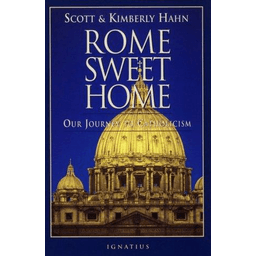
- Starting price
- ~$15 paperback
- Free tier
- No
- Platforms
- Print · Kindle · Audiobook
- Developer
- Ignatius Press
- Launched
- 1993
- Updated
- May 31, 2026
The verdict
Rome Sweet Home is the founding text of the modern Catholic-convert memoir, and it still reads as the warmest. It is the personal story of Scott and Kimberly Hahn - a Reformed-trained Presbyterian minister and his wife - told in their own alternating voices, and it makes no pretense of being a balanced survey. If you want the conversion as a marriage story rather than a debate transcript, this is the one people hand you.
Try Rome Sweet Home ↗Opens ignatius.com
Rome Sweet Home has quietly become the book Catholic parishes hand to anyone asking how a Protestant minister ends up Catholic. It is short, it is personal, and it is told in two voices - Scott Hahn writing his chapters, Kimberly Hahn writing hers - so that you get the conversion as it actually happened: not a clean argument resolved on a chalkboard, but a marriage put under enormous strain and slowly, unevenly, brought to a new place. That dual narration is the book's signature, and the reason it outlived dozens of drier titles that tried to do the same thing.
The story begins in the Reformed world. Scott Hahn was a Presbyterian minister and a seminary-trained Calvinist - by his own account a zealous one, the kind who set out to refute Catholicism and found the refutation harder than he expected. The book traces his study through questions of biblical authority, the Eucharist, the covenant, and the place of Mary, and it traces Kimberly's parallel and very different journey, which lagged his by years and was marked by real grief at what his change was costing their family and friendships. It is not a triumphant march. It is a slow, painful, sometimes lonely process narrated honestly by both people living through it.
Published by Ignatius Press in 1993, Rome Sweet Home launched Scott Hahn into one of the most prolific Catholic teaching careers of his generation - shelves of books on Scripture, the Mass, and covenant theology. This first one, though, is the human document underneath all of that, and it remains his most-read. It does not argue you into the Catholic Church. It shows you two people walking into it and lets you decide what to make of the walk.
✓ The good
- The founding title of the modern Catholic-convert genre - almost every later memoir is written in its shadow
- Told in two alternating voices - Scott's chapters and Kimberly's give both halves of a marriage living through a wrenching change, which most conversion books never try
- Genuinely human and readable - it reads like a story, not a treatise
- Honest about the cost - Kimberly's chapters do not hide the grief, the strained friendships, and the years out of step
- A window into Reformed theology from the inside - Scott explains the Calvinist framework he was trained in without caricature
- Launched a teaching career readers can follow further - if it resonates, Hahn's later Scripture and covenant work is an obvious next step
- Short and inexpensive - around 180 pages and roughly $15 new
✗ Watch out
- One couple's personal story, not a balanced survey - not a neutral treatment of the questions it raises
- Written from the Hahns' settled Catholic perspective - readers who do not share its conclusions will experience it as a case for one side
- Light on heavy scholarship - Hahn wrote far more rigorous books later; this one gestures at the theology rather than working it out
- The apologetic threads (authority, the Eucharist, sola scriptura, Mary) are presented as the Hahns came to see them, not adjudicated
- The dual-voice structure tells some episodes twice from both sides, which a few readers find repetitive
Best for
- Anyone curious why a Reformed Protestant minister would become Catholic
- Readers who prefer a personal story over a formal apologetics treatise
- Couples or families navigating a faith change in different time and on different terms
- Catholics wanting a friendly book to share with a Protestant friend
Avoid if
- You want a balanced, multi-sided survey of the questions it raises
- You want rigorous scholarship rather than personal narrative
- You want the Reformed or Protestant counter-case argued back
- You bounce off memoir and prefer straight exposition
What Rome Sweet Home is
Rome Sweet Home is the 1993 conversion memoir of Scott Hahn and his wife Kimberly, published by Ignatius Press. Scott was a Presbyterian minister with Reformed seminary training; the book narrates the years-long process by which the two of them studied, argued, struggled, and eventually entered the Catholic Church - Scott first, Kimberly some years later. It is written in alternating chapters, each telling their own half in the first person, so the conversion reads as a shared event lived through very differently by two people in the same marriage.
The book is a memoir, not a systematic case. It moves through the questions that drove Scott's study - biblical authority and sola scriptura, the Eucharist, covenant theology, the role of Mary - but engages them as autobiography, in the order they surfaced in his life, rather than as a structured argument. The subtitle, "Our Journey to Catholicism," is precise: it is the story of how this couple got from one tradition to another, told from the far side, after they had arrived.
Why readers reach for Rome Sweet Home first
Most books in the Catholic-convert genre are built like arguments - premises, objections, a conclusion you are meant to reach. Rome Sweet Home is built like a marriage. Scott writes his chapters and Kimberly writes hers, and the gap between them is the whole drama: he moves first, she does not, and for a long stretch they live on opposite sides of the most important question either has ever faced. That turns a set of theological disputes into a story with people in it, which is why the book travels where drier titles stall out.
The result is a memoir a reader can finish even if they disagree with where it lands. A Protestant reader sees the Reformed framework Scott was trained in described from the inside, without caricature, before he explains why he left it. A Catholic reader gets a story to share that leads with warmth rather than confrontation. Anyone who has watched a faith change strain a family will recognize Kimberly's chapters at once. It is the rare conversion book read as much for the human story as for the theology - and that is exactly why it became the genre's founding title.
The alternating voices: a conversion told as a marriage
The structural choice that defines Rome Sweet Home is its dual narration. The chapters alternate between Scott and Kimberly, each writing in the first person about the same years from inside their own experience. Scott's chapters tend toward the intellectual - the books he was reading, the arguments that stopped working, the studies that pulled him forward. Kimberly's tend toward the relational and the costly - what it was like to watch her husband move somewhere she could not yet follow, the friendships that cooled, the grief of feeling the Reformed world they had built their life in was slipping away.
This is what separates the book from the apologetics shelf. A conversion narrated by one confident voice can read as a victory lap; one narrated by two voices, one of them in real pain for much of the book, reads truer to how these things happen. Readers consistently single out Kimberly's chapters as the ones that stay with them, precisely because she does not pretend the journey was clean. The dual structure is the book's heart, and the feature later convert memoirs most often tried to copy.
The questions that drove the study
The engine of Scott Hahn's half of the book is a sequence of questions his Reformed training had answered one way and his continued study began to answer differently. It walks through biblical authority and sola scriptura - Scripture alone as the rule of faith - which Scott describes coming to doubt could account for itself on its own terms. It moves through the Eucharist, through covenant as an organizing idea for reading Scripture, and through the place of Mary, which the book presents as one of the last and hardest thresholds.
Crucially, the book engages these from the Hahns' perspective rather than adjudicating them. It does not weigh the Catholic and Protestant answers side by side and declare a winner; it reports the answers Scott arrived at and the road he took to reach them. A reader who shares his conclusions will find the chapters confirming; a reader who does not will find a clear account of why one trained Calvinist came to see these questions as he now does. Either way the book is a perspective, openly and warmly offered, not a referee's ruling.
A door into Scott Hahn's larger body of work
Rome Sweet Home is the first thing most readers encounter from Scott Hahn, and it functions as the front door to a very large house. After this memoir launched him, Hahn became one of the most prolific Catholic Scripture teachers and apologists of his generation, writing extensively on the Mass, covenant theology, and reading the Bible within the Catholic tradition. The memoir itself stays light on that scholarship by design - it is the story, not the system.
That makes the book an on-ramp rather than a destination. A reader moved by the human story but wanting the theology worked out has a clear next step in Hahn's later, heavier titles. Read that way, Rome Sweet Home is the personal preface to a career - the chapter where the teacher explains how he got here, before the teaching begins.
Pricing
Paperback
~$15
The standard Ignatius Press edition. The copy most people own and the one parishes hand out.
Kindle / ebook
~$10
Searchable and highlight-syncs to your account. Often a few dollars under the paperback.
Audiobook
~$18
The audio edition suits the conversational, first-person voice - pricing varies, or it is included with some audio memberships.
Used
~$4
A 1993 title that has sold steadily for decades, so secondhand copies turn up cheaply at sales and online.
Rome Sweet Home is not free. A new paperback from Ignatius Press runs around $15 - call it the everyday default - and it is the edition most readers own and the one parishes keep on the giveaway shelf. At roughly 180 pages it is a short book, so the price buys a quick read rather than a tome.
The Kindle edition usually lands a few dollars under the paperback and adds searchability and synced highlighting, handy for a book people often quote from. The audiobook suits the material unusually well, since the whole thing is written in two conversational first-person voices; pricing varies, and it is sometimes included with an audio membership.
Because the book has sold steadily since 1993, the secondhand market is deep - used copies routinely turn up for around four dollars at parish sales, library sales, and online. For most readers the new Ignatius paperback is the balanced default, the used copy the budget pick, and there is no premium edition you are missing by skipping it.
Where Rome Sweet Home falls behind
Not a balanced survey. The book is one couple's memoir and makes no claim to weigh the questions it raises from every side. A reader looking for an even-handed treatment of authority, the Eucharist, or sola scriptura will not find it here - that was never the book's job.
Light on scholarship. Scott Hahn wrote far more rigorous books later, and this early memoir gestures at the theology rather than working it through. On the heavier questions it raises, Rome Sweet Home is a starting point and an invitation, not a worked-out argument.
A perspective, openly held. The Hahns write from the far side of their conversion, as settled Catholics, and the book reads accordingly. Readers who do not share its conclusions will experience it as a case made for one tradition - which it is - rather than a neutral account, and that is worth knowing going in.
Some doubling from the dual structure. Because Scott and Kimberly each narrate the same years, a handful of episodes get told twice. Most readers find this enriching; a few find it slows the middle of the book.
Rome Sweet Home vs. The Seven Storey Mountain vs. Catholicism
These three are the books people reach for when someone asks about the Catholic faith from a personal angle, and they do different jobs. Rome Sweet Home (Scott and Kimberly Hahn, 1993) is the modern Protestant-to-Catholic convert memoir - a Reformed minister and his wife narrating, in alternating voices, their entry into the Catholic Church. The Seven Storey Mountain (Thomas Merton, 1948) is the earlier and more literary conversion autobiography - a restless young man's road to Catholicism and ultimately to a Trappist monastery, written in dense, searching prose. Catholicism (Robert Barron) is not a memoir at all but a guided tour of Catholic belief, art, and practice, built around a documentary series.
Different strengths. Rome Sweet Home is the most relational and accessible - the marriage-story structure and plain voice make it the easiest to hand to a friend. Merton is the deeper literary experience for a reader who wants interiority and struggle on a grand scale, though it is a heavier lift. Barron is the most systematic, for someone who wants the contours of Catholic belief laid out rather than a single life story. If you want one personal door into a contemporary conversion, it is still Rome Sweet Home. If you want a literary classic, read Merton. If you want the overview, read Barron.
All three are read widely, well beyond Catholic readers. Rome Sweet Home is especially common in conversations with Protestant readers because it leads with story and treats the Reformed tradition Scott left with care. Merton has a broad literary readership that reaches past any single tradition, and Barron's work is designed as an introduction used in parishes and classrooms alike.
The bottom line
Rome Sweet Home built the modern Catholic-convert genre, and it earns the spot by being the most human entry in it. Scott and Kimberly Hahn tell their own story in alternating voices, warmer and more honest than the debate-transcript books that followed. It is not a balanced survey and does not pretend to be - it is one couple's journey, told from the far side, with the Reformed tradition they left handled respectfully and the Catholic tradition they joined embraced openly. If a friend asks why a Calvinist minister became Catholic and wants the story rather than the argument, this is still the book to hand them.
Alternatives to Rome Sweet Home
 The Seven Storey MountainThomas Merton's classic 1948 conversion autobiography - the literary forerunner of the genre, deeper and denser than Hahn.
 CatholicismRobert Barron's guided tour of Catholic belief, art, and practice - the overview to pair with Hahn's personal story.
 Catechism of the Catholic ChurchThe official, systematic reference for Catholic teaching - where to go when the memoir leaves you with questions.
 Catholic AnswersThe large Catholic apologetics and Q&A website - the searchable place to follow up on the questions the Hahns raise.
Frequently asked questions
What is Rome Sweet Home about?
It is the 1993 conversion memoir of Scott and Kimberly Hahn from Ignatius Press. Scott was a Presbyterian minister with Reformed seminary training, and the book tells, in their two alternating voices, how the couple studied, struggled, and eventually entered the Catholic Church - Scott first, Kimberly some years later.
Who are Scott and Kimberly Hahn?
Scott Hahn is a former Presbyterian minister and Reformed-trained Calvinist who, after the conversion described here, became a prolific Catholic Scripture teacher and apologist. Kimberly Hahn is his wife and co-author; her chapters narrate her own, later, and very different journey into the Catholic Church.
Is Rome Sweet Home a balanced look at Catholicism vs. Protestantism?
No, and it does not claim to be. It is a personal memoir written from the Hahns' settled Catholic perspective, engaging questions like biblical authority, the Eucharist, sola scriptura, and Mary as the couple came to see them rather than adjudicating them from every side. Readers who do not share its conclusions will read it as a perspective.
Is it hard to read?
No. At around 180 pages and written as a first-person story in two conversational voices, it is one of the more accessible books on the subject. Most readers finish it in a sitting or two.
Will a Protestant or Reformed reader find it fair to their tradition?
The book describes the Reformed framework Scott Hahn was trained in without caricature before explaining why he moved away from it. A Protestant reader will find their tradition treated with respect, though they should expect a story that ends in the Catholic Church.
Should I read this or one of Scott Hahn's later books?
Start here if you want the personal story - it is the human document underneath Hahn's heavier work and the most widely read of his books. If it leaves you wanting the theology developed in depth, his later titles on Scripture, the Mass, and covenant work those arguments out at length.
Where should I go after Rome Sweet Home?
For another personal angle, Thomas Merton's The Seven Storey Mountain is the literary classic of the genre. For an overview of Catholic belief, Robert Barron's Catholicism; for the systematic reference, the Catechism of the Catholic Church; and for searchable follow-up on specific questions, the Catholic Answers website.
Sources & further reading
More Catholic Books
Catechism of the Catholic ChurchThe official, full-length compendium of Catholic doctrine - four pillars, ~2,865 numbered paragraphs, free online at the Vatican, and the reference nearly every other Catholic resource quotes.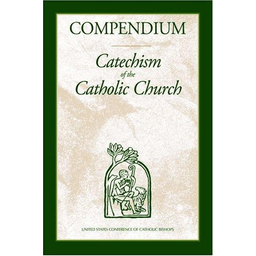 Compendium of the Catechism of the Catholic ChurchThe official 598-question summary of the full Catechism - Catholic doctrine in a portable question-and-answer format, with the complete text free at vatican.va.CatholicismBishop Robert Barron's richly illustrated tour of the Catholic faith - the companion book to the Word on Fire documentary series, written to walk a curious reader from Jesus to the last things.
 Introduction to ChristianityThe 1968 lectures that a young Joseph Ratzinger - later Pope Benedict XVI - turned into one of the 20th century's most cited works of Catholic theology, built section by section on the Apostles' Creed.
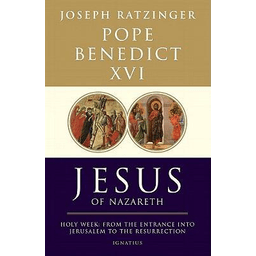 Jesus of NazarethA sitting pope's personal, scholarly reading of the Gospels - three volumes that engage modern biblical criticism while searching for the Jesus the Gospels actually present.
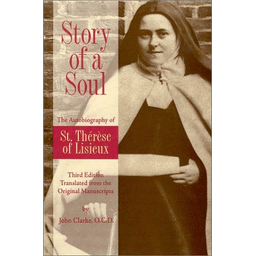 Story of a SoulThe spiritual autobiography of a young Carmelite nun who died at 24 - the small, warm book that taught a century of readers a path of holiness through little things done with great love.