Head-to-head comparison
ESV Study Bible vs MacArthur Study Bible
Ratings, pricing, platforms, real-world strengths, and a clear pick for each kind of user.

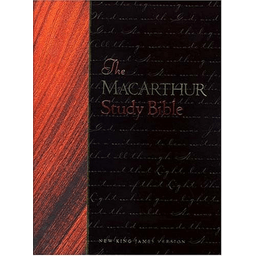
Both are single-volume study Bibles anchored in Reformed theology, with roughly 20,000-25,000 notes, multiple translation editions, and strong user bases among pastors and serious lay readers. They represent opposite approaches to the study Bible form.
The ESV Study Bible is a 95-author committee project edited by Wayne Grudem and J.I. Packer, offering broad evangelical scholarship held together by editorial discipline. The MacArthur Study Bible is one pastor's lifetime of verse-by-verse expository notes: John MacArthur's own voice across 50 years of preaching, Reformed Baptist and dispensational, with no committee mediation.
The bottom line
Choose the ESV Study Bible if you want multiple expert voices, broader scholarly options on contested passages, and more visual and theological aids. Choose the MacArthur Study Bible if you want one consistent preacher's reading, a voice you trust deeply, and prefer decisiveness over surveying alternatives. Different readers need different tools.
The core difference: The ESV Study Bible is edited academic scholarship; the MacArthur Study Bible is one preacher's sermon notes. ESV shows you the field and makes recommendations. MacArthur tells you what he thinks and moves on.
ESV Study Bible vs MacArthur Study Bible: at a glance
| ESV Study Bible | MacArthur Study Bible | |
|---|---|---|
| Rating (source) | 4.8 / 5 (Editor rating) | 4.4 / 5 (Editor rating) |
| Starting price | $54.99 hardcover | $49.99 hardcover |
| Free tier | No | No |
| Platforms | Print · Kindle · Logos · ESV.org online | Print · Kindle · Logos · Olive Tree |
| Developer | Crossway | Thomas Nelson |
| Launched | 2008 | 1997 (2nd ed. 2019) |
| Best for | Pastors and seminarians who want one editorially coherent reference on the desk | Reformed Baptist and dispensational readers |
How they compare, point by point
Editorial approach
ESV Study Bible
95 contributors, editorially harmonized, balanced in disagreements, shows where traditions diverge before recommending
MacArthur Study Bible
Single author (John MacArthur), consistent voice throughout, often confident rather than exploratory on disputed passages
Translation options
ESV Study Bible
ESV only, all notes and cross-references are keyed to ESV
MacArthur Study Bible
Four editions: NKJV (original), NASB, ESV, NIV. Same notes travel across translations
Note style
ESV Study Bible
Scholarly, formal, often function as compressed commentary; willingness to lay out multiple credible readings
MacArthur Study Bible
Pastoral, verse-by-verse, often sound like sermon transcripts; MacArthur's dispensational and cessationist positions are clear
Theological tradition
ESV Study Bible
Broadly Reformed evangelical, covenantal, open to multiple views on disputed passages
MacArthur Study Bible
Reformed Baptist, dispensational, cessationist, a specific tradition, clear from beginning, not surveyed
Visual aids & articles
ESV Study Bible
200+ full-color maps, 50+ articles, architectural diagrams, timelines, a serious production budget
MacArthur Study Bible
Maps, charts, sidebars, word studies, text-dense by design, fewer visual extras
Best audience
ESV Study Bible
Pastors wanting a balanced reference, seminarians, lay readers across traditions, readers wanting multiple angles
MacArthur Study Bible
MacArthur listeners already, Reformed Baptist readers, pastors and teachers wanting one consistent voice for consistency checking
Which should you choose?
ESV Study Bible
Choose the ESV Study Bible if you want to compare scholarly opinions on contested passages, you're building a multi-voice reference library, or you're uncomfortable with any single author's total perspective.
MacArthur Study Bible
Choose the MacArthur Study Bible if you already listen to John MacArthur's preaching, you trust his Reformed Baptist dispensational framework, or you want one settled voice that never contradicts itself across 66 books.
Both are around $50-55 for hardcover. Both are available in Logos and Kindle. The MacArthur advantage: available in four translations. The ESV advantage: 95 expert voices and more visual reference material. Most pastors in MacArthur's tradition own MacArthur; most pastors outside it own ESV.
Strengths at a glance
ESV Study Bible
- Best-in-class scholarship density - 20,000+ study notes, 80,000 cross-references, and 50+ feature articles, all in one volume
- Editorial coherence - Grudem and Packer's oversight gives the whole thing a consistent voice across 95 contributors, which is rare for projects this size
- Visual reference unmatched in the category - over 200 full-color maps, charts, timelines, and architectural diagrams by National Geographic-tier cartographers
- Lifetime digital access to ESV.org included with print purchase - the same notes searchable, linkable, and synced across devices
MacArthur Study Bible
- Single-author consistency - every note sounds like the same teacher, so you never get whiplash from one contributor to the next
- 25,000+ exegetical notes - dense, verse-anchored, and almost always practical rather than merely academic
- Four translation editions - the same note system is available in NKJV (original), NASB, ESV, and NIV, so you can match it to the pew Bible at your church
- Strong introductions - each book opens with author, date, themes, and an outline that doubles as a sermon-prep skeleton
Watch-outs
ESV Study Bible
- Reformed-leaning evangelical perspective shapes the notes - Wesleyan, Catholic, Orthodox, and Latter-day Saint readers will find theology outside their tradition
- Physical book is heavy and bulky - 2,750+ pages; not a carry-to-church Bible for most people
- ESV translation only - if you prefer NIV, NASB, KJV, NRSV, or another version, the notes don't travel
MacArthur Study Bible
- Opinionated where other study Bibles hedge - you get MacArthur’s reading, not a survey of credible options
- Distinctly cessationist and dispensational - readers from continuationist, covenantal, Wesleyan, Catholic, Orthodox, or LDS backgrounds will encounter theology outside their tradition on many contested passages
- Complementarian framing throughout - notes on 1 Timothy 2, Ephesians 5, and 1 Corinthians 14 reflect that position without surveying alternatives
Frequently asked questions
Is the ESV Study Bible or MacArthur Study Bible better?
Depends on your reading style. ESV is better if you want to see the field of credible evangelical readings. MacArthur is better if you want one preacher's settled perspective. Many readers own both: MacArthur for daily reading, ESV for sermon prep that needs multiple angles.
Is the MacArthur Study Bible too opinionated?
Yes, by design. MacArthur tells you what passages mean rather than surveying options. Readers who share his Framework love the clarity. Readers from other traditions (Wesleyan, Lutheran, charismatic) will feel the edges of his specific positions.
Can I get the MacArthur Study Bible in the NIV?
Yes, it's available in NKJV, NASB, ESV, and NIV. The notes are the same; the underlying English changes. Pick the translation your church reads.
Which has better scholarship?
ESV in breadth and balance. MacArthur in consistency: one preacher with fifty years on the same text knows it deeply, but won't point you to credible alternatives to his reading. Different kinds of rigor.
Is ESV Study Bible free?
ESV Study Bible starts at $54.99 hardcover; there's no free tier.
Is MacArthur Study Bible free?
MacArthur Study Bible starts at $49.99 hardcover; there's no free tier.
The single most comprehensive, well-edited evangelical study Bible in print - 95 contributors, 20,000+ notes, 50+ articles, and editorial fingerprints from Wayne Grudem and J. The MacArthur Study Bible is the gold standard for readers who want a single, consistent, opinionated voice walking them through the whole canon.