- Starting price
- ~$17 paperback
- Free tier
- No
- Platforms
- Print · Kindle · Audiobook
- Developer
- Zondervan
- Launched
- 1999
- Updated
- May 31, 2026
The verdict
Boundaries in Marriage is the volume most couples reach for after the original Boundaries lands - a focused, practical application of the property-line framework to the relationship where two people share the most life and the most friction. It is not a theology of marriage and it is not couples therapy, but as a shared vocabulary for two spouses willing to take ownership of their own halves, it is hard to beat.
Try Boundaries in Marriage ↗Opens boundariesbooks.com
Boundaries in Marriage is the book a counselor reaches for when a couple keeps circling the same fight. One spouse over-functions and resents it; the other under-functions and feels controlled. One avoids every hard conversation; the other pursues until the avoider shuts down. He pouts when she says no; she manages his moods so the pout never arrives. Most marriages have at least one of these grooves worn into them, and most couples cannot name what is happening - only that they are tired and stuck. This is the book Henry Cloud and John Townsend wrote for exactly that couple, taking the framework that made the original Boundaries a five-million-copy bestseller and pointing it directly at marriage.
Cloud and Townsend are Christian clinical psychologists, and the central move of the original Boundaries carries straight into this one: every person has a kind of property line around what they are responsible for - their own feelings, choices, attitudes, and behaviors - and most relational trouble comes from people stepping over each other's lines. In marriage, that trouble runs deepest, because two people have chosen to share nearly everything. The book's counterintuitive claim is that the answer to a struggling marriage is not less separation but more clarity: when each spouse takes full ownership of their own half, the marriage gets safer, more honest, and more loving rather than more distant.
That claim has helped a lot of couples, and it has also drawn its share of critique. "Boundaries" language has become common enough in everyday speech that some readers worry it gets misapplied - invoked to justify selfishness, stonewalling, or simply getting one's way under a therapeutic banner. The authors are aware of this and spend real pages on it, insisting that a boundary in marriage is something you set on yourself, not a weapon you point at your spouse. This review covers what the book is, how the framework adapts to marriage, where it is most useful, where the critiques land, how it compares to the other marriage books couples are handed, and who should read it - and who should reach for something else first.
✓ The good
- Genuinely practical - most chapters end with the actual sentences a stuck spouse can say in the conversation they have been avoiding
- Reframes ownership as the engine of love - the case that taking responsibility for your own half deepens marriage rather than threatening it is the book's strongest move
- Names dynamics couples feel but cannot articulate - pursuit and withdrawal, control through anger, control through guilt, over-functioning and under-functioning
- Insists the boundary is on yourself, not your spouse - the authors directly confront the worry that the framework justifies selfishness or stonewalling
- Inherits the original framework's portability - the property-line image maps cleanly onto in-laws, money, parenting, sex, and conflict
- Audiobook narration carries the case studies - the emotional work of the book lands better read aloud than skimmed on the page
- Pairs naturally with the wider Boundaries series and with the original - readers who need a deeper foundation can step back to Boundaries; readers who need parenting help can step over to Boundaries with Kids
✗ Watch out
- Assumes familiarity with the original Boundaries - the property-line framework is recapped, but readers who skipped the first book get the compressed version
- Psychology-forward framing - the categories come from clinical literature, and readers wanting a verse-by-verse theology of marriage will find the exegesis lighter than the psychology
- Some readers find the framework over-applied - once you have the "boundary" lens, every disagreement can start to look like a boundary problem, which it is not always
- Not a substitute for counseling when abuse, addiction, or betrayal is in play - the authors say so, but a hurting reader can mistake the book for a treatment plan
- Examples lean on a 1990s frame - the dynamics are timeless; the dated cell-phone-era details occasionally show their age
- Works only if both spouses engage - a great deal of the book assumes two willing participants, and the chapters for a spouse acting alone are thinner
Best for
- Couples stuck in the same recurring fight who cannot name the pattern
- Readers who finished the original Boundaries and want the marriage application
- Spouses where one over-functions and the other under-functions
- Engaged couples wanting a shared vocabulary for ownership before the wedding
Avoid if
- You want a verse-by-verse biblical theology of marriage
- You are in a marriage with active abuse and need professional help first
- You have never read Boundaries and want the full foundation before the application
- You are allergic to therapeutic vocabulary in Christian books
What Boundaries in Marriage is
Boundaries in Marriage is a roughly 270-page Christian book that takes the framework of the bestselling Boundaries and applies it specifically to the marriage relationship. The first chapters recap the core idea - that each person owns a defined territory of feelings, choices, attitudes, and behaviors, and that healthy relationships depend on each person tending their own territory rather than invading their spouse's. From there the book moves into marriage-specific terrain: how two spouses can each take ownership without it becoming a standoff, how to set limits on your own behavior rather than your partner's, and how the resulting clarity actually increases closeness rather than creating distance.
The back half walks the framework through the friction points most marriages hit: communication and conflict, anger used as control, guilt and manipulation, the differences couples mistake for incompatibility, and how to handle a spouse who refuses to take responsibility for their share. A repeated emphasis throughout is that a boundary in marriage is something you place on yourself - your own reactions, your own choices about what you will and will not participate in - not a fence you erect to manage or punish your spouse. The companion workbook turns the chapters into exercises a couple can work through together, which is how the material most often gets used in counseling and church settings.
Why couples keep reaching for Boundaries in Marriage
The reason this book keeps getting handed out is that it solves a problem couples feel acutely and cannot name. They are stuck in a loop. The same fight recurs, the same resentment builds, and the standard advice - communicate more, try harder, be more selfless - has only made it worse, because the spouse who needed to hear it was already over-functioning and the spouse who needed to step up heard it as nagging. Boundaries in Marriage reframes the loop entirely: the problem is not that one person needs to love harder, it is that ownership has gotten tangled. One spouse is carrying what is not theirs; the other is dodging what is. Once a couple can see the property lines, the fight changes shape.
For a certain kind of reader - the spouse who manages their partner's moods, the one who avoids every hard conversation, the one who controls through anger or through guilt, the one quietly burning out from carrying the whole marriage - this reframing is genuinely freeing. People describe it the way they describe the original Boundaries: as the moment a pattern they had endured for years finally had a name and a handle. The writing is not literary and the categories are squarely therapeutic. For the couple in the loop, none of that matters. The book gives them language and a way forward inside a Christian frame they already trust.
The property-line framework applied to two married people
The book's foundation is the same property-line image from the original Boundaries: each person is responsible for their own feelings, choices, attitudes, behaviors, and the consequences of all of them. What Boundaries in Marriage adds is the complication that arises when two people have chosen to share a home, a bank account, a bed, and a future. The authors argue that marriage does not erase the property lines - it makes tending them more important, not less. The recurring failure modes are the same two the original named: taking responsibility for what is not yours (managing your spouse's moods, rescuing them from consequences, over-functioning until you resent it) and refusing responsibility for what is (controlling, blaming, withdrawing, expecting your spouse to manage your reactions for you). In marriage these two failures usually interlock - an over-functioner marries an under-functioner, a pursuer marries a withdrawer - and the book's diagnostic value is in helping each spouse see which side of the line they are standing on.
The framework works in marriage for the same reason it worked in the original book: it is portable. Once a couple has the property-line image, they can lay it over almost any recurring conflict - money, in-laws, parenting, sex, housework, screen time - and see, often for the first time, where the responsibility has gotten tangled. The case studies are deliberately ordinary: a husband who sulks until his wife backs down, a wife who decides her husband's diet is her job, a couple who fight about money because neither will own the budget. Most couples recognize at least one of their own grooves early in the book, which is exactly when the framework starts to do its work.
The boundary is on yourself, not your spouse - and why that matters
The single most important - and most misunderstood - claim in the book is that a marital boundary is something you set on yourself, not on your partner. The authors are emphatic on this point because they have watched the concept get weaponized. A boundary is not "you may not talk to me that way," delivered as an ultimatum to control your spouse's behavior. It is "I will not stay in the room while I am being yelled at; I will step out and we can talk when things are calmer" - a limit on your own participation that leaves your spouse free to make their own choices and face their own consequences. The distinction sounds subtle on the page and is enormous in practice. One version is an attempt to manage another adult, which never works and usually escalates. The other is an act of self-ownership that, paradoxically, gives the relationship room to change.
This is also where the book meets the most common objection to "boundaries" language head-on. The worry - voiced by pastors, counselors, and plenty of ordinary readers - is that the vocabulary can be misapplied to justify selfishness, stonewalling, or simply getting one's way under a therapeutic banner. The authors take that worry seriously rather than waving it off. They argue at length that a boundary set to punish, manipulate, or distance a spouse is not a boundary at all but a different problem wearing the word, and that the entire point of the framework is to move toward more honest connection, not away from relationship. Readers will still differ on how cleanly that line holds in real marriages, and that is a fair conversation to have - but it is not a conversation the book ignores.
Working the framework through conflict, anger, guilt, and control
The back half of the book is where the framework earns its keep, walking through the specific dynamics that send couples to counseling. There are chapters on communication and the kind of conflict that actually resolves something, on the spouse who uses anger to control and the spouse who uses guilt or withdrawal to do the same, on the difference between honest negotiation of genuine differences and the manipulation that masquerades as it, and on what to do when one spouse simply will not take responsibility for their share. Each chapter follows the original book's rhythm - name the dynamic, illustrate it with an ordinary couple, then offer the concrete language and choices that interrupt it. The emphasis stays consistent: change your own half, stop trying to change your spouse's, and let the new clarity do the work.
For couples doing this together, the workbook is where the chapters turn into practice. It converts the framework into exercises a couple can work through side by side, which is how the material most often gets used in marriage classes and counseling settings. The honest caveat is that all of this assumes two willing participants. The book is strongest when both spouses are reading and engaging; its guidance for a spouse acting alone - trying to change a stuck pattern when the partner will not pick up the book - is real but thinner, and in the hardest cases (active abuse, addiction, betrayal) the authors themselves point readers toward professional help rather than treating the framework as a substitute for it.
Pricing
Paperback
~$17
The standard edition and the way most couples read this book. Cheap, easy to mark up, and easy to hand to a spouse with a chapter flagged.
Kindle
~$13
The cheapest entry point. Highlights and search sync across devices, which helps when both spouses are reading on separate phones.
Audiobook
~$15
The case-study sections - where most of the book's emotional work happens - land well read aloud. A good option for couples on a commute.
Workbook
~$12
Companion exercises for couples who want to actually work the framework together rather than just read it. The format most-used in church marriage classes.
Boundaries (original)
~$16
The foundation volume. Worth picking up first if you have never read it, since this book assumes its property-line framework.
Boundaries in Marriage is a published book, not a freemium app - you pay once. The standard paperback runs around $17 and the Kindle edition is usually under $13. Neither is a dealbreaker price for a book most couples describe as one of the more useful things they read while working on their marriage.
The audiobook is around $15 and worth considering if audio is how you actually absorb a book. The case-study sections - where most of the emotional weight sits - land better read aloud, and a commute or a road trip is a surprisingly good setting for a couple to listen together. The workbook, around $12, is a separate purchase and is worth it only if you both intend to actually do the exercises rather than just read.
If you have never read the original Boundaries, plan on roughly $16 for that volume too. This book assumes its property-line framework, and while it recaps the basics, a reader starting cold gets the compressed version. Many couples end up owning both, plus Boundaries with Kids if parenting is the next live question.
The best-value tier for most couples is the paperback. It is cheap, it is easy to mark up, and it is easy to hand across the kitchen table with a chapter flagged - which is exactly how this book tends to get used.
Where Boundaries in Marriage falls behind
Assumes the original Boundaries. This is the marriage application of a framework introduced in another book, and it reads like it. The property-line concept is recapped, but readers who skipped the first volume get the abbreviated tour rather than the full foundation. If you want the framework built from the ground up, start with the original and come here second.
Psychology-forward rather than exegetical. The categories - over-functioning, control, pursuit and withdrawal, manipulation by guilt - come from clinical literature translated for a Christian audience. Scripture is present and the Christian frame is consistent, but the structure of the argument is psychological, not verse-by-verse. Readers expecting a theology of marriage in the vein of a Keller or a Thomas will find the exegesis lighter than the psychology.
The framework can be over-applied. Once a reader has the "boundary" lens, there is a temptation to run every disagreement through it - to treat ordinary difference, normal negotiation, or simple sin as a boundary problem when it is something else. The book is better than its imitators on this, but the lens is powerful enough that careful readers will still want to ask whether a given conflict is actually about ownership or about something the framework does not name.
Not a substitute for counseling in serious cases. The authors are clear that when abuse, addiction, or betrayal is in play, the framework is not a treatment plan and professional help is needed. A hurting reader can still mistake an accessible paperback for more than it claims to be. Read it as a shared vocabulary and a starting point, not as therapy between two covers.
Dated in the details. The dynamics the book names are timeless, but some examples carry a 1990s cadence - the technology, the assumed family rhythms, the occasional turn of phrase. The framework applies cleanly to a modern marriage; a few of the illustrations read as artifacts of when they were written.
Boundaries in Marriage vs. The Meaning of Marriage vs. Love and Respect
Different strengths. Boundaries in Marriage is about ownership - how each spouse takes responsibility for their own half, sets limits on their own behavior, and stops trying to manage the other. The Meaning of Marriage (Tim and Kathy Keller) is about theology - a long exposition of Ephesians 5 that argues marriage is designed to form your character under the gaze of God. Love and Respect (Emerson Eggerichs) is about a single dynamic - the claim, built on Ephesians 5:33, that husbands most need respect and wives most need love, and that couples get caught in a cycle when those needs go unmet.
Boundaries in Marriage is the book for couples stuck in a specific painful pattern. If the problem is a recurring fight, a spouse who controls through anger or guilt, an over-functioner married to an under-functioner - this is the book. The Meaning of Marriage is broader and more theological; it is the one to read once to think hard about what marriage is for, not the one to reach for mid-conflict. Love and Respect is narrower and more polarizing - built on a single interpretive move that some couples find immediately clarifying and others find too tidy - but it is a common pairing in church marriage classes. They are not really competing. A couple working through a stuck pattern might start with Boundaries in Marriage, reach for The Meaning of Marriage when they want the larger frame, and encounter Love and Respect in a church class along the way.
A practical pairing for most couples: if there is family-of-origin or in-law friction underneath the marriage trouble, the original Boundaries first, then Boundaries in Marriage for the spousal application, then The Meaning of Marriage for the theological frame. That is close to the order many counselors actually hand these out in.
The bottom line
Boundaries in Marriage is the focused, practical volume couples reach for when the original framework needs to land on the relationship where they share the most life - and the most friction. Its strongest move is the reframe that taking ownership of your own half deepens love rather than threatening it, and its most important warning is that a boundary is a limit you set on yourself, not a weapon you point at your spouse. The critiques are worth knowing going in: it leans more on psychology than exegesis, it assumes the original Boundaries, and the framework can be over-applied. None of those are dealbreakers for the couple it is written for. Read it together, mark it up, and let the property lines do their quiet work.
Alternatives to Boundaries in Marriage
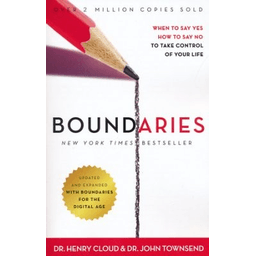 BoundariesCloud and Townsend's original five-million-copy framework on healthy limits across every relationship - the foundation volume this book applies to marriage, and the one to read first if you never have.
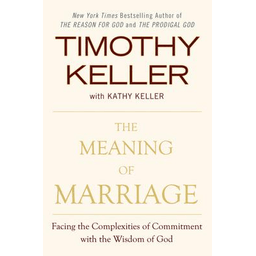 The Meaning of MarriageTim and Kathy Keller's exposition of Ephesians 5 - the most theologically anchored modern Christian marriage book, and the natural companion to read for the larger frame.
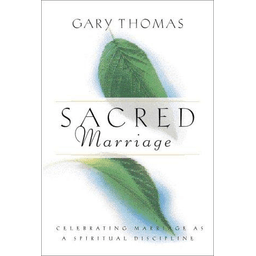 Sacred MarriageGary Thomas's "what if God designed marriage to make us holy more than to make us happy?" - a warmer, more devotional take on marriage as character formation.
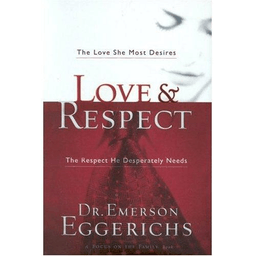 Love and RespectEmerson Eggerichs's widely-read take on Ephesians 5:33 - built on a single interpretive move, more polarizing than the others, but a common fixture in church marriage classes.
Frequently asked questions
Do I need to read the original Boundaries first?
It helps, but it is not strictly required. Boundaries in Marriage recaps the core property-line framework, so you can follow it without the first book. That said, the original builds the concept from the ground up across every kind of relationship, and a reader who starts there gets the full foundation rather than the compressed version. Many couples read the original first and reach for this one when marriage is the specific place the friction shows up.
Doesn't setting boundaries in marriage just justify selfishness?
This is the most common worry about the book, and the authors address it directly. Their central insistence is that a marital boundary is a limit you set on yourself - your own reactions and your own choices about what you will participate in - not a fence you put up to control, punish, or distance your spouse. A "boundary" set to manipulate or get your way, they argue, is not a boundary at all but a different problem wearing the word. The whole aim of the framework is more honest connection, not less relationship. Readers can still debate how cleanly that line holds in practice, but the book does not dodge the question.
Is Boundaries in Marriage a Christian book?
Yes. Henry Cloud and John Townsend are Christian clinical psychologists, and the book is written from within a broadly evangelical Protestant frame. Scripture is quoted throughout and the Christian grounding - that healthy ownership reflects how God designed human persons to live in relationship - runs through the book. It is not a verse-by-verse theology of marriage, though; it is a practical book that draws on both psychology and Scripture.
Will this book work if only one spouse reads it?
Partly. The framework is strongest when both spouses are engaged and reading, and much of the book assumes two willing participants. There is genuine guidance for a spouse trying to change a stuck pattern alone - chiefly by taking ownership of their own half rather than waiting for their partner to change - but it is thinner than the material for couples working together. If your spouse will not pick up the book, you can still get value from it, with realistic expectations.
Is Boundaries in Marriage a substitute for marriage counseling?
No, and the authors say so. When abuse, addiction, infidelity, or other serious dynamics are in play, the book is not a treatment plan, and professional help is needed in addition to - not instead of - the framework. Boundaries in Marriage is best read as a shared vocabulary and a practical starting point, not as couples therapy in paperback form.
Should I read this or the original Boundaries if marriage is my main concern?
If the friction is specifically inside your marriage - the same recurring fight, a controlling or avoidant spouse, an over-functioner-and-under-functioner dynamic - Boundaries in Marriage is the more targeted book. If the trouble has roots in family of origin, in-laws, work, or friendships as much as in the marriage itself, the original Boundaries gives the broader foundation. Many couples end up reading both, in that order.
Is there a workbook or small-group version?
Yes. A companion workbook turns the chapters into exercises a couple can work through together, and it is the format most often used in church marriage classes and counseling settings. It runs around $12 as a separate purchase. Most couples do not strictly need it to benefit from the main text, but couples who want to actually practice the framework rather than just read it find it useful.
More Marriage & Family Books
 The 5 Love LanguagesGary Chapman's slim paperback has quietly become the most-recommended marriage book of the last thirty years - and the rare Christian title that crossed fully into the secular mainstream.ParentingPaul David Tripp's 2016 parenting book reframes the whole project around 14 gospel principles - and argues that God is using your kids to change you as much as He's using you to change them.Habits of the HouseholdJustin Whitmel Earley’s field guide to forming Christian families one daily rhythm at a time - and why a Richmond lawyer’s parenting book quietly became the most-recommended title in young-parent small groups.Don’t Make Me Count to ThreeGinger Hubbard's 2003 toddler-discipline book has quietly become the go-to gift for new moms in evangelical circles - short, practical, and aimed at the child's heart rather than just the meltdown in aisle four.The Mission of MotherhoodSally Clarkson's 2003 book reframes motherhood as a high and intentional calling rather than a holding pattern - the vision-casting classic that launched a whole movement of home-discipleship writing.Family WorshipDonald Whitney's 2016 booklet makes the case that leading daily family devotions is simpler than you think - read the Bible, pray, sing - and gives the average household the lowest-friction way to actually start.