- Starting price
- $19.99 hardcover
- Free tier
- No
- Platforms
- Print · Kindle · Audiobook · Audible
- Developer
- Thomas Nelson
- Launched
- 2004
- Updated
- May 24, 2026
The verdict
A genuinely useful conflict-vocabulary book for a lot of low-stakes marriage friction, paired with a framework that needs serious caveats in high-stakes or abusive marriages. Read it with the critiques open in another tab.
Try Love & Respect ↗Opens loveandrespect.com
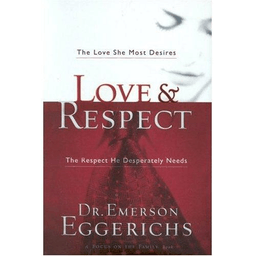
Love & Respect has quietly become the default marriage book on the shelf of evangelical pastors, counselors, and small-group leaders for the better part of two decades. Emerson Eggerichs’ central claim - that women primarily need love and men primarily need respect, and that most marriage conflict is a "Crazy Cycle" driven by one spouse withholding what the other most needs - has sold more than two million copies since Thomas Nelson published it in 2004. For a stretch in the 2010s it was the book a newly-engaged couple was most likely to be handed by their pastor.
It is also the most actively-critiqued evangelical marriage book of the last twenty years. It doesn’t hide its thesis. It doesn’t soften its gendered claims. It doesn’t back off the position that the wife is called to "unconditional respect" even when the husband is failing to love. That last point is where the substantive critique lives - most prominently in Sheila Wray Gregoire’s "Bare Marriage" research project, which has spent years documenting how the book’s framing has been received and applied, including in marriages where abuse was present.
This review takes the book seriously on both fronts. It has genuinely helped a lot of marriages - that part of the record is real and worth saying out loud. It has also been linked by survivor advocates to specific harms, and the critique is detailed enough that it has to be reckoned with rather than waved away. The goal here is not to tell you whether to read it. It is to make sure that if you do, you walk in with eyes open.
✓ The good
- Gives a vocabulary to a real dynamic - "we’re on the Crazy Cycle" is a phrase a lot of couples can actually use mid-conflict
- Grounded in a specific text - Ephesians 5:33 is the anchor verse, and the book stays close to it rather than wandering into pop psychology
- Practical to a fault - the "Energizing Cycle" gives clear behavioral steps for both spouses, not just abstract principles
- Accessible language - written in plain conversational prose, not seminary jargon, with stories from Eggerichs’ counseling practice
- Massive supporting ecosystem - workbook, devotional, video series, conferences, and small-group curriculum mean a couple can go as deep as they want
- Honest about the asymmetry it’s prescribing - Eggerichs doesn’t pretend the love/respect split is symmetric; he names it and defends it directly
✗ Watch out
- The unconditional-respect framing has been substantively critiqued - survivor advocates argue it can be weaponized in abusive marriages where a wife is told to keep respecting a husband who is harming her
- Thin on abuse exceptions - the book’s caveats about abuse exist but are brief, easy to miss, and not woven through the framework
- Gender essentialism is load-bearing - the entire model rests on the premise that men and women have categorically different primary needs, which not every reader (or counselor) accepts
- Light on mutuality - Ephesians 5:21 ("submitting to one another") gets less weight than 5:33, which several scholars have flagged
- Sheila Wray Gregoire’s "Bare Marriage" research is unflattering - her team’s analysis of the book’s claims, especially around sex and respect, is widely cited and worth reading alongside
- Dated in places - the 2004 cultural register shows, particularly in some of the husband-leadership examples
Best for
- Couples whose conflict is mostly miscommunication, not safety
- Pastors looking for shared vocabulary in low-stakes premarital counseling
- Readers who want one specific verse worked out in book length
- Small groups that will also read a critique alongside it
Avoid if
- You are in or recovering from an abusive marriage
- You want a marriage book that leads with mutuality and Ephesians 5:21
- You bristle at categorical gender-needs claims
- You want current research-backed advice on sex and intimacy
What Love & Respect is
Love & Respect is a 320-page marriage book built around a single verse - Ephesians 5:33 - and a single thesis: that women most need to feel loved, men most need to feel respected, and that most marriage conflict happens when one spouse fails to provide what the other most needs. Eggerichs, a former pastor with a doctorate in child and family ecology, structures the book around two cycles: the "Crazy Cycle" (the negative spiral when love and respect are withheld) and the "Energizing Cycle" (the positive feedback loop when both are present).
The book sits inside an enormous supporting ecosystem - a companion workbook, a daily devotional, a video curriculum, conferences, and the Love and Respect Ministries organization Eggerichs runs with his wife Sarah. For an evangelical reader picking up a marriage book between roughly 2008 and 2018, this was overwhelmingly the most likely book in their hands.
Why so many pastors handed this book to couples for fifteen years
The single biggest practical reason Love & Respect spread the way it did is that it gives couples a shared shorthand for naming a fight while it’s happening. "We’re on the Crazy Cycle right now" is a sentence a real couple can actually say to each other at 10pm on a Tuesday - and that kind of de-escalation language is what most marriage books fail to deliver. Eggerichs’ counseling-practice anecdotes also feel concrete in a way that thicker theology-of-marriage books often don’t.
For a pastor doing premarital counseling on a tight calendar, the book is also legible: one verse, two cycles, clear behavioral prescriptions for each spouse. You can teach the framework in a single session. That accessibility is the book’s superpower and, critics argue, also its weakness - a framework simple enough to teach in an hour is also simple enough to be applied without the nuance an actual marriage needs.
The Love/Respect framework and Ephesians 5:33
The book’s entire scaffolding hangs on Ephesians 5:33 - "Let each one of you love his wife as himself, and let the wife see that she respects her husband." Eggerichs reads this as Paul prescribing a gendered, asymmetric pattern: the command to love is given specifically to the husband, and the command to respect is given specifically to the wife, because (in his reading) those are the things each spouse most needs and most struggles to give. He stays close to this verse the entire book, which is one reason it has the texture of a long sermon rather than a self-help survey.
Whether you find this exegesis persuasive depends largely on how much weight you put on the verses immediately before it. Ephesians 5:21 - "submitting to one another in the fear of Christ" - frames the whole passage as mutual, and several scholars argue Eggerichs underweights it. The book is best read with a Bible open to the full passage rather than just the proof-text, so you can decide for yourself whether the asymmetric reading actually carries the weight Eggerichs puts on it.
The "Crazy Cycle" and "Energizing Cycle" model
The Crazy Cycle is the book’s most quoted concept: "without love, she reacts without respect; without respect, he reacts without love." Eggerichs argues that most marital conflict is this cycle running in a tight loop - wife feels unloved, withdraws respect, husband feels disrespected, withdraws love, repeat. The Energizing Cycle is the inverse: love motivates respect, respect motivates love, and the loop runs the other direction. Both cycles are presented with diagrams that have become genuinely well-known in evangelical marriage counseling.
In practice, this is the part of the book most couples actually use. The framework gives a non-blaming label for a recurring fight, which is no small thing - couples who couldn’t previously name what was happening can suddenly say "we’re on it again" and break the loop. The critique is not usually that this concept is harmful in itself; it’s that Eggerichs locates the entry point and the exit point of the cycle in gendered terms that critics argue don’t hold up across actual marriages - many men also primarily want to feel loved, many women also primarily want to feel respected, and forcing every conflict into the love-vs-respect frame can obscure what’s actually going on.
The abuse-context critique (Sheila Wray Gregoire and others)
The most-cited critique of Love & Respect is the work of Sheila Wray Gregoire and her team at the "Bare Marriage" project (formerly "To Love, Honor and Vacuum"). Gregoire is a Christian author who spent several years analyzing the book - its claims about sex, its prescription of "unconditional respect," and especially the implications for marriages where a wife is being abused or seriously mistreated. Her central argument is that telling a wife she is biblically obligated to show respect to a husband regardless of his behavior - and framing her safety concerns as a "respect" problem - has been used, in real cases, to keep wives in unsafe marriages longer than they should have stayed.
Eggerichs and Love and Respect Ministries have responded to these critiques over the years, and the book does include language acknowledging that abuse is wrong and that abused spouses should seek help. The critique is not that the book endorses abuse - it doesn’t - but that the framework, as written, makes the abuse exception easy to under-apply, and that the unconditional-respect language can land differently in a marriage where one spouse holds disproportionate power. Anyone reading this book, especially in a counseling or small-group setting, should read Gregoire’s research alongside it rather than pretend it isn’t there. Both perspectives are part of the actual conversation in 2026.
Pricing
Hardcover
$19.99
Standard edition from Thomas Nelson, the version most pastors hand out.
Paperback
$15
Trade paperback, same text as the hardcover at a lower price point.
Kindle
$13
Full digital edition, syncs across Kindle apps and devices.
Audible
$15
Audiobook edition narrated for Audible - useful for couples who commute together.
Workbook
$15
Companion workbook with discussion prompts, designed for couples or small groups.
Devotional
$15
Daily devotional spin-off - short readings keyed to the Love & Respect framework.
Hardcover is the version most pastors hand out and the one most likely to be referenced in church libraries; at around $19.99 it’s the default purchase. Paperback at around $15 is the same text in a more portable form - the right pick if you’re going through the book in a small group and want everyone holding the same edition.
Kindle at around $13 is the cheapest way in if you already read on a Kindle device or app. Audible at around $15 is worth considering specifically for couples who commute together - the book is conversational enough to work well in audio.
The Workbook and Devotional, each around $15, are best understood as extensions rather than alternatives. The Workbook is most useful for couples doing the book intentionally as a project - discussion prompts, exercises, a real structure. The Devotional is short daily readings keyed to the framework.
There is no free tier here in the way an app would have one - this is a book published by a mainstream Christian publisher, and you’re paying retail. The Love and Respect Ministries website does publish some free articles and short videos, but the actual content of the book is gated.
Where Love & Respect falls behind
Thin handling of abuse and power dynamics. The book’s acknowledgement that abuse is wrong is present but brief, and not woven into the framework itself. A modern marriage book - particularly one with this much reach - would be expected to handle this far more carefully than a 2004 publication does, and the failure to update it has been a recurring criticism.
Light engagement with Ephesians 5:21. The mutuality verse that opens the passage gets less weight in the book’s argument than the asymmetric verse that closes it. Several Christian scholars have argued this is a meaningful exegetical choice, not a neutral one, and that the book’s framework changes if 5:21 is given equal footing.
Dated cultural register. Some of the husband-leadership examples and gender stereotyping read as decidedly 2004. Readers picking it up now sometimes find the examples land awkwardly - not necessarily wrong, just clearly of an era.
No serious engagement with the research-backed critique. Sheila Wray Gregoire’s team published survey-based research analyzing the book’s claims about sex in particular, and that research has been widely circulated for years. The book itself, of course, predates the critique - but the surrounding ministry has not substantively folded the research into how the framework is taught.
Sex and intimacy chapters are the most-critiqued section. The book’s prescriptions on sex have aged the least well of any part of it, and Gregoire’s research has specifically documented how those passages have been received by women who read them. If you read the book, this is the section to read with the most care.
Love & Respect vs. Sacred Marriage vs. The Meaning of Marriage
These are the three marriage books most likely to be sitting on the same shelf in a church library - and they could not be more different in posture. Love & Respect is the most prescriptive: one verse, two cycles, clear behavioral steps. Sacred Marriage (Gary Thomas) is the most contemplative: its core claim is that God designed marriage to make you holy more than to make you happy, and the book reads as a long meditation on sanctification through the daily friction of being married to another person. The Meaning of Marriage (Tim and Kathy Keller) is the most theological: it works through a Reformed reading of Ephesians 5 in conversation with secular accounts of marriage.
Different strengths. Love & Respect is better at giving couples a vocabulary for a specific recurring fight. Sacred Marriage is better at reframing what marriage is for - particularly useful in the disillusionment phase a few years in. The Meaning of Marriage is broader (covers singleness, sex, friendship, mission) and stays closer to the full Ephesians passage, including the mutuality language Eggerichs underweights.
If you can only read one of the three in 2026, most counselors who follow the current critique conversation would point to The Meaning of Marriage as the safest default - it covers more ground, handles the text more carefully, and doesn’t carry the unresolved baggage Love & Respect carries. Love & Respect is still worth reading if you want to understand a framework that an enormous number of evangelical couples have already absorbed, whether they realize it or not.
The bottom line
Love & Respect is a real book with a real effect on a real number of marriages, and pretending otherwise would be dishonest. It is also a book whose framework has been substantively critiqued by survivor advocates and Christian researchers for nearly two decades, and pretending otherwise would also be dishonest. The right way to read it in 2026 is with both things held at once - accept the genuine usefulness of the Crazy Cycle vocabulary, take the abuse-context critique seriously rather than skipping past it, and treat the gendered framework as one reading of Ephesians 5 rather than the only one. Read it alongside The Meaning of Marriage, and read Sheila Wray Gregoire’s research on the side.
Alternatives to Love & Respect
 Sacred MarriageGary Thomas’ contemplative classic - marriage as a vehicle for sanctification rather than happiness. The thoughtful person’s marriage book.
 The Meaning of MarriageTim and Kathy Keller’s broader, more careful reading of Ephesians 5 - handles mutuality more fully and covers singleness, sex, and mission.
 The Five Love LanguagesGary Chapman’s perennial bestseller - the love-languages vocabulary that became its own cultural shorthand. Less prescriptive than Love & Respect.
 BoundariesCloud and Townsend’s framework for healthy limits - frequently recommended alongside or instead of Love & Respect for couples navigating power imbalance.
Frequently asked questions
Is Love & Respect still worth reading in 2026?
It depends on what you’re reading it for. If you want to understand the framework that shaped two decades of evangelical marriage counseling - yes, it’s worth reading. If you want the safest single marriage book to hand a newly-engaged couple today, most counselors who follow the current conversation would point to The Meaning of Marriage instead.
What is the "Crazy Cycle"?
Eggerichs’ term for the negative loop in marital conflict: without love, she reacts without respect; without respect, he reacts without love. The "Energizing Cycle" is the same loop running in the positive direction. It’s the book’s most quoted and most genuinely useful concept.
What is the main critique of the book?
The most-cited critique comes from Sheila Wray Gregoire’s "Bare Marriage" research project. The core objection is that the book prescribes "unconditional respect" from wives in a way that can be misapplied in marriages where the husband is abusive or seriously mistreating his wife. Eggerichs has responded to the critique; both sides of the conversation are worth reading.
Does the book say wives should stay in abusive marriages?
No - the book explicitly states that abuse is wrong and that abused spouses should seek help. The critique is not that the book endorses abuse, but that the framework as written makes the abuse exception easy to under-apply in practice, and that the unconditional-respect language can land differently in a marriage with a serious power imbalance.
Is this book Protestant, Catholic, or non-denominational?
Eggerichs writes from an evangelical Protestant background, and the book has been most widely used in evangelical and non-denominational church settings. Its core argument is anchored in a specific reading of Ephesians 5:33, so readers from any tradition who hold that text as scripture can engage with it on its own terms.
Should we read Love & Respect as a couple or in a small group?
If you do read it, a small group with at least one outside voice in the room is usually better than reading it solo as a couple - particularly if your marriage has any unresolved power imbalance. The Workbook is designed for this kind of group use.
What should I read alongside Love & Respect?
Sheila Wray Gregoire’s "Bare Marriage" research, available on her website and in her own books, is the most-cited critical companion. The Meaning of Marriage by Tim and Kathy Keller covers similar ground with more attention to mutuality. Sacred Marriage by Gary Thomas reframes the question of what marriage is for.
More Marriage & Family Books
The 5 Love LanguagesGary Chapman's slim paperback has quietly become the most-recommended marriage book of the last thirty years - and the rare Christian title that crossed fully into the secular mainstream.ParentingPaul David Tripp's 2016 parenting book reframes the whole project around 14 gospel principles - and argues that God is using your kids to change you as much as He's using you to change them.Habits of the HouseholdJustin Whitmel Earley’s field guide to forming Christian families one daily rhythm at a time - and why a Richmond lawyer’s parenting book quietly became the most-recommended title in young-parent small groups.Boundaries in MarriageCloud and Townsend take their five-million-copy Boundaries framework and point it straight at the marriage relationship - arguing that owning your own life is what makes loving your spouse possible.Don’t Make Me Count to ThreeGinger Hubbard's 2003 toddler-discipline book has quietly become the go-to gift for new moms in evangelical circles - short, practical, and aimed at the child's heart rather than just the meltdown in aisle four.The Mission of MotherhoodSally Clarkson's 2003 book reframes motherhood as a high and intentional calling rather than a holding pattern - the vision-casting classic that launched a whole movement of home-discipleship writing.