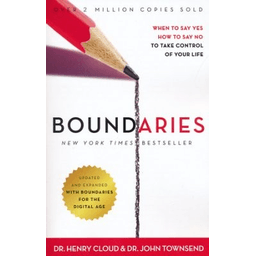
- Starting price
- $15.99 paperback
- Free tier
- No
- Platforms
- Print · Kindle · Audiobook · Audible
- Developer
- Zondervan
- Launched
- 1992 (Updated and Expanded 2017)
- Updated
- May 25, 2026
The verdict
Boundaries has quietly become the default Christian book people hand to a friend drowning in guilt, enmeshment, or a relationship they cannot say no to. It is not a perfect theological treatise - and it is not trying to be - but as a practical primer on healthy limits inside a Christian frame, nothing else has displaced it in 30+ years.
Try Boundaries ↗Opens boundariesbooks.com
Boundaries is the kind of book that gets pressed into your hands rather than recommended. A friend going through a hard family situation, a small-group leader sitting across from a burned-out volunteer, a counselor working with someone whose mother calls eleven times a day - at some point, one of them says, "You have to read Boundaries." It has sold over five million copies since 1992 and spawned an entire shelf of follow-ups (Boundaries in Marriage, Boundaries with Kids, Boundaries in Dating, Boundaries for Leaders). For a paperback that opens with a chapter called "A Day in a Boundaryless Life," that is unusual staying power.
Henry Cloud and John Townsend are Christian clinical psychologists who met in graduate school and built their careers translating therapeutic concepts - enmeshment, codependency, taking responsibility for your own life - into language a churchgoer would actually use. The book's big claim is simple. Christians, especially conscientious ones, have been taught a half-gospel where love means never saying no, never disappointing anyone, never letting another person feel a consequence. Cloud and Townsend argue that this is not the love the Bible actually describes. Healthy limits - what the book calls boundaries - are not selfish. They are what makes real love possible.
That message landed in 1992 and it has not stopped landing. It also has not stopped drawing critique. Some readers find the book life-changing; some pastors and theologians argue it leans too heavily on therapeutic categories and too lightly on Scripture. Both groups have a point, and we will give both their hearing. This review covers what the book is, what it actually says, where it has been most useful, where the critiques land, how the broader Boundaries series fits together, and who should - and should not - read it first.
✓ The good
- Genuinely practical - most chapters end with concrete language for the conversation you are dreading
- Names dynamics most people feel but cannot articulate - enmeshment, compliance, manipulation by guilt
- Christian frame is consistent throughout - boundaries are grounded in the image of God and personal responsibility
- The "10 Laws of Boundaries" middle section is the most-quoted, most-referenced part of the book for a reason
- Works across life domains - family of origin, marriage, parenting, work, dating, friendship, even with yourself
- Audiobook narration by Henry Cloud himself adds a warmth the print edition does not have
- Spawned a series that lets readers go deeper on whichever domain they actually need help in
✗ Watch out
- Therapeutic categories sometimes lead the exegesis rather than the other way around - a real critique, not a strawman
- Some scripture applications feel stretched if you come in expecting verse-by-verse argument
- Original 1992 examples can feel dated - the 2017 Updated and Expanded Edition helps, but only partly
- Light on church-tradition perspectives outside broadly evangelical Protestant categories
- Can be misread as license to cut people off - the book itself warns against this, but readers skim
- Not a substitute for actual counseling when trauma or personality-disorder dynamics are in play (the authors say so themselves)
Best for
- Conscientious Christians who feel guilty saying no
- Adult children navigating high-control or enmeshed family systems
- Pastors, leaders, and caregivers heading for burnout
- Anyone in a relationship where "love" has come to mean compliance
Avoid if
- You want a verse-by-verse biblical theology of personhood
- You are looking for a substitute for trauma-informed counseling
- You are already prone to cutting people off and need help staying engaged, not stepping back
- You are allergic to therapeutic vocabulary in Christian books
What Boundaries is
Boundaries is a 300-ish-page Christian self-help book about healthy limits - what they are, why people struggle to set them, and how to build them across the major relationships of adult life. The first third is conceptual: what a boundary is, where it comes from theologically, what a "day in a boundaryless life" looks like, and what symptoms suggest your own limits are unclear. The middle is the famous "10 Laws of Boundaries" - short, numbered chapters with names like the Law of Sowing and Reaping, the Law of Responsibility, the Law of Power, the Law of Envy. The last third walks the framework through specific domains: family of origin, friends, spouse, children, work, and yourself.
The 2017 Updated and Expanded Edition added material on digital life, social media, and changes in family and workplace norms since the early 1990s. The bones of the book - the 10 Laws, the case studies, the core framework - are unchanged. If you have an older copy you got from a relative in the late 90s, you have 90% of what the new edition contains. The new edition is worth it mostly for the freshened examples and a slightly less dated tone.
Why everyday Christians keep coming back to Boundaries
The reason this book has not been displaced in over three decades is that it solves a problem most Christian readers feel acutely and cannot name. They know something is wrong in how they relate to a parent, a spouse, a friend, a boss, a ministry leader, a grown child. They feel exhausted and guilty in roughly equal measure. They have read books about love and books about forgiveness, and the books made them feel worse, because they were already trying to love and forgive harder than was healthy. Boundaries names what is actually happening - that love without limits is not love, that taking responsibility for another adult's feelings is not the same as caring about them, that "no" is a complete sentence and a Christian one.
For a certain kind of reader - the responsible eldest child, the pastor's wife, the volunteer who keeps getting asked, the adult child of a difficult parent - this is genuinely revelatory. People describe the book the way they describe a counseling breakthrough. The framework is not subtle, the writing is not literary, and the categories are squarely therapeutic. None of that matters. The book gives them permission and language they did not have, inside a Christian frame they already trust.
The "boundaries" framework and the 10 Laws of Boundaries
The core idea is that every person has a kind of property line around what they are responsible for - their feelings, choices, behaviors, attitudes, values, and the consequences of all of these. Inside the line, they are responsible. Outside the line, someone else is. Most relational dysfunction, in Cloud and Townsend's telling, comes from people stepping over each other's property lines: taking responsibility for what is not theirs (compliance, codependency), or refusing responsibility for what is (control, manipulation, blame). The 10 Laws are short, memorable statements of how the property line actually works - the Law of Sowing and Reaping (consequences belong to the person making the choice), the Law of Responsibility (we are responsible to one another, not for one another), the Law of Power (you cannot change another adult), the Law of Envy, the Law of Activity, and so on.
The framework works because it is portable. Once you have the property-line image and the 10 Laws, you can map them onto almost any relationship that is making you miserable and see, often for the first time, where the lines are blurred. The book's case studies - a mother who calls every day in tears, a husband who pouts when told no, a boss who keeps assigning weekend work, a friend who turns every conversation into a crisis - are deliberately ordinary. Most readers see at least one of their own relationships in the first hundred pages, which is exactly when the framework starts to do its work.
Psychologically-informed Christian framing: the strength and the critique
Cloud and Townsend are practicing clinical psychologists, and Boundaries reads like it. The categories - enmeshment, codependency, compliance, controllers, avoidants, non-responsives - come from clinical literature, translated for a churchgoing audience. This is the book's biggest strength and its biggest weakness, depending on who is reading. For readers who have only ever encountered relational struggle through "you need to forgive more" or "you need to die to self more," the therapeutic vocabulary names dynamics the spiritual vocabulary had been obscuring. Many readers describe the book as the moment they realized that what they had been calling "humility" was actually compliance, and what they had been calling "love" was actually fear.
The critique, made most often by Reformed and confessional Protestant readers but also by some Catholic and Orthodox writers, is that the therapeutic frame sometimes drives the exegesis rather than the other way around. Specific verses are quoted in support of categories the verses are not obviously addressing - Galatians 6:2 and 6:5, for example, do a lot of structural work in the book - and a few critics argue that the resulting picture of the self owes more to mid-20th-century American psychology than to Scripture. This is a fair critique, not a strawman. It is also worth saying that Cloud and Townsend never claim to be writing a biblical theology of personhood. They are writing a practical book for a Christian audience, and the question of how to weight therapeutic insight inside a Christian frame is one readers will answer differently depending on their tradition. Honest review: both groups - the readers who find the book life-changing and the readers who find it under-scriptural - have something true to say.
The series ecosystem: Marriage, Kids, Dating, Leaders, and beyond
Boundaries spawned a series, and the series is now genuinely useful - not just publisher bloat. Boundaries in Marriage applies the framework specifically to the dynamics most likely to surface between spouses: the spouse who avoids conflict, the spouse who controls through anger, the spouse who refuses to take responsibility for their share. Boundaries with Kids works the framework backward into parenting - how do you raise a child who can accept limits, take consequences, and become a responsible adult, rather than the kind of adult who will need to read the original Boundaries at 35. Boundaries in Dating maps it onto courtship, especially the question of when to keep going and when to walk away. Boundaries for Leaders is the workplace version, written for managers and team leaders.
For most readers, the original Boundaries is the only book they need. The follow-ups are worth picking up only if the specific domain - marriage, parenting, dating, leadership - is where the friction actually is. The framework does not change between volumes; the examples and applications do. If you have read the first book and the marriage chapter felt incomplete, Boundaries in Marriage is the natural next step. If parenting is the live question, Boundaries with Kids. The 2017 Updated and Expanded Edition of the original incorporates lessons learned from the series, so a reader starting today with just that one volume is in much better shape than a reader who started with the 1992 first printing.
Pricing
Paperback
~$15.99
The standard Updated and Expanded edition. The way most people read this book, and the easiest to mark up.
Hardcover
~$22
Sturdier copy worth it if you plan to lend it out repeatedly - and you will.
Kindle
~$11
Cheapest entry point. Search and highlights sync across devices, useful for revisiting the 10 Laws.
Audible / Audiobook
~$15
Read by Henry Cloud. Adds warmth and pacing the print misses, especially in the case-study sections.
Workbook
~$12
Companion exercises if you want to actually work through the framework rather than just read it.
Boundaries in Marriage
~$15
The most popular follow-up. Same framework applied specifically to the marriage relationship.
Boundaries with Kids
~$15
Parenting application - building responsibility and limit-acceptance in children from toddler through teen.
Boundaries is not a free or freemium resource - this is a published book, and you pay for it once. The standard paperback runs around $15.99, the hardcover around $22, and the Kindle edition is usually under $12. None of those are dealbreaker prices for a book most readers describe as one of the most useful Christian books they have ever owned.
The audiobook, narrated by Henry Cloud, is around $15 on Audible and worth considering if you absorb books better that way. Cloud's pacing on the case studies - where most of the book's emotional work happens - adds something the print edition cannot. The workbook (around $12) is a separate purchase and is worth it only if you intend to actually do the exercises rather than just read.
If you are buying the broader series, plan on roughly $15 per volume. The most-bought follow-up by far is Boundaries in Marriage, which is the volume most readers reach for after finishing the original. Boundaries with Kids is a strong second. Boundaries in Dating and Boundaries for Leaders are narrower in audience and only worth it if the topic is live for you.
The bestValue tier - for a reader who has never read it - is the paperback. It is cheap, it is easy to mark up, and you will almost certainly lend it out within a year of finishing it.
Where Boundaries falls behind
Not a verse-by-verse biblical theology. Readers expecting a Grudem-style or Carson-style scriptural argument for the self, responsibility, and personhood will find Boundaries lighter on exegesis than they hoped. The book quotes Scripture often, but the structure of the argument is psychological, not exegetical. This is by design - it is a practical book for a general Christian audience - but it is worth knowing going in.
Light on tradition outside broadly evangelical Protestant categories. Boundaries assumes a generic evangelical frame and does not engage with Catholic, Orthodox, or Latter-day Saint traditions of personhood, vocation, or familial duty. Readers from those traditions will still find the practical framework useful, but the theological scaffolding will feel less native.
Therapeutic vocabulary can crowd the spiritual vocabulary. Some readers - and some critics - argue that the book ends up substituting therapeutic categories (enmeshment, codependency) for traditional spiritual categories (sin, sanctification, the call to bear one another's burdens). The 2017 update mitigates this in places, but a careful reader will still want to think for themselves about which category belongs where.
Older examples and tone. Even the Updated and Expanded Edition retains a 1990s cadence in places. Cell phones, social media, remote work, and modern family configurations get gestured at rather than fully integrated. The framework still applies - the examples sometimes feel like artifacts.
Risk of being misread. The most common pastoral concern about Boundaries is not what the book actually says - it is what people do with it. Readers who already lean toward cutting people off can use the book to justify exits that the authors themselves would not endorse. Cloud and Townsend repeatedly say that boundaries are about staying in relationship more honestly, not about exiting it. The reader has to be willing to hear that.
Boundaries vs. The 5 Love Languages vs. The Meaning of Marriage
Different strengths. Boundaries is about limits - how to say no, how to take responsibility for what is yours and stop taking responsibility for what is not. The 5 Love Languages is about expression - how the people in your life prefer to receive and give love, and why your "I love you" sometimes does not land. The Meaning of Marriage (Tim and Kathy Keller) is about theology - what marriage actually is, what it is for, and how the gospel reshapes how a husband and wife relate.
Boundaries is better at the conversations you are dreading. If the problem is a mother who will not stop calling, a spouse who pouts when told no, a friend who manufactures crises, a boss who keeps assigning weekend work - Boundaries is the book. The 5 Love Languages is better at the warmer maintenance work: understanding why your spouse feels unloved even though you are doing what you think love looks like. The Meaning of Marriage is broader and more theological - a single book that situates marriage inside a Christian vision of personhood, sin, grace, and covenant. It is the book to read once when you are getting married or thinking hard about marriage. Boundaries is the book to read when you are stuck in a specific painful pattern. They are not competing - most readers who recommend one will eventually recommend all three.
Practical pairing for most readers: Boundaries first (especially if there is family-of-origin or in-law friction), then Boundaries in Marriage if you are married, then The Meaning of Marriage for the theological frame, then The 5 Love Languages for the maintenance vocabulary. That is the order most pastors and counselors actually hand them out in.
The bottom line
Boundaries is the rare practical Christian book that has held up for over thirty years because it solves a real and very common problem inside a Christian frame. The framework is portable, the 10 Laws are memorable, the case studies still land, and the series ecosystem lets you go deeper into whichever domain is actually hurting. The critiques - that it leans too heavily on therapeutic categories and too lightly on exegesis - are honest critiques worth knowing about, not dealbreakers. Read it once. Mark it up. Lend it out. Most readers who hand this book to a friend describe a real before-and-after, and there are not many Christian living books from 1992 you can still say that about.
Alternatives to Boundaries
 The 5 Love LanguagesGary Chapman's warmer companion volume - about how the people in your life prefer to receive love, rather than how to set limits with them.
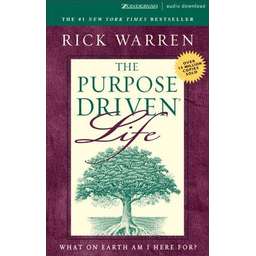 The Purpose Driven LifeRick Warren's 40-day framework on vocation and meaning. Different problem, similar shelf, similar staying power.
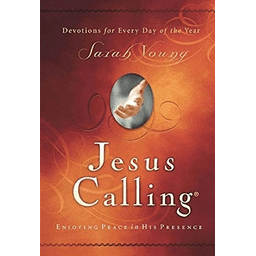 Jesus CallingSarah Young's first-person devotional. Loved by many readers, debated by some - a different category of book, but commonly recommended in the same conversations.
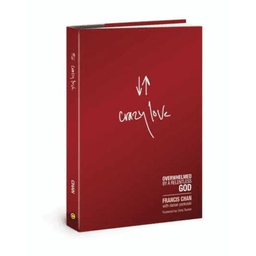 Crazy LoveFrancis Chan's call to wholehearted devotion. Where Boundaries is about limits, Crazy Love is about surrender - useful counterweight reading.
Frequently asked questions
Is Boundaries by Cloud and Townsend a Christian book?
Yes. Henry Cloud and John Townsend are Christian clinical psychologists, and the book is written from a broadly evangelical Protestant frame. Scripture is quoted throughout and the theological grounding - that healthy limits reflect how God designed human personhood - runs through the whole book. It is not, however, a verse-by-verse biblical theology; it is a practical book that draws on both psychology and Scripture.
Should I read the 1992 original or the 2017 Updated and Expanded Edition?
The 2017 Updated and Expanded Edition is the one to buy if you are picking it up new. The framework, the 10 Laws, and the case studies are essentially unchanged, but the newer edition refreshes examples and adds material on digital life and modern family/work norms. If you already own the 1992 edition, you have 90% of what is in the new one.
What is the "10 Laws of Boundaries"?
The middle section of the book - ten short chapters, each naming a principle of how healthy limits actually work. The most-quoted are the Law of Sowing and Reaping (consequences belong to the person making the choice), the Law of Responsibility (we are responsible to one another, not for one another), and the Law of Power (you cannot change another adult). The 10 Laws are the part of the book most readers come back to.
Is Boundaries a substitute for counseling?
No, and the authors are explicit about this. Cloud and Townsend repeatedly say that when trauma, abuse, addiction, or personality-disorder dynamics are in play, professional help is needed in addition to - not instead of - the framework. Boundaries is best read as a primer and a shared vocabulary, not as therapy in a paperback.
Which book in the Boundaries series should I read after the original?
Boundaries in Marriage is by far the most popular follow-up and the natural next step if marriage is where the friction is. Boundaries with Kids is the next most common pick, especially for parents of strong-willed children or teens. Boundaries in Dating and Boundaries for Leaders are narrower in audience - read them only if the topic is live for you. For most readers, the original Boundaries plus one domain-specific follow-up is plenty.
What are the main critiques of Boundaries?
The most common critique, from Reformed and confessional Protestant readers especially, is that the book leans on therapeutic categories (enmeshment, codependency, compliance) more than on careful exegesis, and that some scripture applications feel stretched. A separate pastoral concern is that readers prone to cutting people off can misuse the book to justify exits the authors themselves warn against. Both critiques are worth taking seriously, and neither cancels the book's practical usefulness for most readers.
Is the audiobook worth getting?
Yes, if audio is how you actually absorb books. The Audible edition is narrated by Henry Cloud, and his pacing on the case-study sections - where most of the book's emotional work happens - adds something the print edition cannot. Around $15 on Audible. The paperback is still the easiest to mark up and lend out, so many readers end up with both.
Sources & further reading
More Christian Living Books
 The Prodigal GodTim Keller’s 130-page reading of Luke 15 has quietly become one of the most-gifted Christian books of the last twenty years - and the reason is the title itself.
 Practicing the WayComer’s 2024 follow-up to The Ruthless Elimination of Hurry has quietly become the default spiritual-formation book in a thousand small groups - and the reasons are worth unpacking.
 Walking with God Through Pain and SufferingTim Keller’s most comprehensive book on suffering - part survey of how every culture has tried to explain pain, part biblical theology, part field manual for the people actually walking through it.
 FerventThe prayer book that turned “strategic, specific prayer” into a fill-in-the-blank battle plan - and rode the War Room moment to the top of the bestseller lists.
 A Grace DisguisedJerry Sittser lost his mother, his wife, and his four-year-old daughter in a single car crash - and the book he wrote about it has quietly become the one grieving people press into each other’s hands, because it refuses to tell you how to get over your loss.
 The Ruthless Elimination of HurryJohn Mark Comer’s 2019 breakout - a pastor’s case that hurry is the great spiritual enemy of our age - has quietly become the go-to slow-down book for an exhausted generation of Christians. Here’s what it actually delivers, and where it doesn’t.