- Starting price
- $17.99 paperback
- Free tier
- No
- Platforms
- Print · Kindle · Audiobook · Audible
- Developer
- Dutton (Penguin Random House)
- Launched
- 2011
- Updated
- May 25, 2026
The verdict
The Meaning of Marriage is the book most married Christians wish they had read at twenty-two - a sober, exegetically anchored, counseling-tested treatment that takes Ephesians 5 seriously without flinching from how hard marriage actually is. The chapter on singleness alone is worth the price.
Try The Meaning of Marriage ↗Opens penguinrandomhouse.com
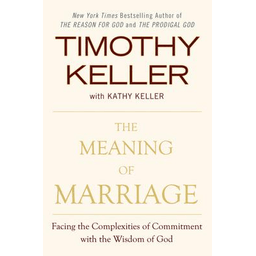
The Meaning of Marriage has quietly become the favorite of pastors who get asked, every other week, what marriage book they would put in a young couple’s hands. Published in 2011 by Dutton and built from a long-running sermon series at Redeemer Presbyterian Church in Manhattan, the book has sold more than 500,000 copies and shows no signs of fading. Co-written by Timothy Keller and his wife Kathy, it draws on Ephesians 5 as its spine and on decades of marriage counseling in New York City as its body - a combination that almost no other popular Christian marriage book attempts.
It is not a tips book. It does not promise five steps to a happier marriage. It does not lean on personality assessments. It does not coast on anecdotes about the Kellers’ own romance. What it does, almost relentlessly, is argue that marriage is a school for character formation under the gaze of God - and that the single secret to a marriage that lasts is whether both spouses are willing to be told the truth about themselves.
That framing - drawn from one of the book’s most quoted lines, that "marriage shows you a realistic, even harrowing picture of who you are" - is what separates The Meaning of Marriage from the pop-psychology shelf. The Kellers are working from inside a Reformed Presbyterian theological tradition, and readers will feel that, but the book has been adopted across Catholic, Anglican, Wesleyan, and broadly evangelical contexts because the argument runs through the biblical text rather than through any one denomination’s pastoral playbook.
✓ The good
- Anchored in Ephesians 5 rather than pop psychology - the exegesis carries the book and gives it staying power across traditions
- Built on decades of real counseling at Redeemer Presbyterian - almost every chapter feels road-tested against actual marriages, not theoretical
- Kathy Keller’s chapter on singleness - written by Kathy alone, and one of the most respectful treatments of singleness in a marriage book anywhere
- Treats marriage as character formation, not romantic fulfillment - reframes conflict and disappointment as part of the design rather than as failure
- Tone is sober without being heavy - the Kellers are warm, candid about their own friction, and never preachy
- Genuinely useful for unmarried readers - engaged couples, dating couples, and singles all get sections written for them rather than as footnotes
- Companion study guide and devotional edition extend it into a small-group or daily-reading rhythm without requiring a different book
✗ Watch out
- Complementarian reading of Ephesians 5 - readers in egalitarian or progressive Christian traditions will find chapter 6 ("Embracing the Other") less compatible with their own position
- Almost no engagement with same-sex marriage as a question - the book assumes a male-female frame throughout and does not argue the case
- Lightly footnoted for a Keller book - the counseling experience is implicit rather than cited, which some readers want spelled out
- Less practical on conflict mechanics than a workbook-style title - readers wanting scripts for hard conversations may pair it with something more tactical
- Pre-2015 cultural frame - the chapter on sex and gender reads as written before the cultural shifts of the late 2010s, though the underlying theology is unchanged
Best for
- Engaged couples preparing for marriage
- Married readers in the first ten years asking why it’s harder than expected
- Pastors and counselors looking for a single recommendable text
- Single readers who want a marriage book that takes their season seriously
Avoid if
- You want a tactical, exercise-driven workbook
- You are looking for a marriage book outside a complementarian frame
- You want light reading - this is dense for the genre
- You want a book that avoids theological argument
What The Meaning of Marriage is
The Meaning of Marriage is a 300-page work of pastoral theology by Timothy Keller, the late founding pastor of Redeemer Presbyterian Church in New York City, and his wife Kathy Keller, who served as one of Redeemer’s assistant directors of communications and a longtime women’s ministry teacher. It grew out of a nine-sermon series Tim preached on Ephesians 5 and the surrounding chapters of Paul’s letter, with Kathy contributing the section on singleness and a chapter on the so-called "headship and submission" passage.
Each chapter pairs an exegetical move with a counseling move - first what the biblical text says about marriage, then what the Kellers have seen in roughly forty years of pastoring couples through engagement, conflict, sexual disappointment, infertility, and divorce. The structure is closer to a long sermon than to a self-help book: argument, illustration, application, repeat.
Why pastors keep handing out this book
The single biggest practical difference between The Meaning of Marriage and almost every other popular Christian marriage book is the source material. The 5 Love Languages is built on Gary Chapman’s counseling categories. Love and Respect is built on Emerson Eggerichs’ reading of Ephesians 5:33. Sacred Marriage is built on Gary Thomas’s framing question. The Meaning of Marriage is built on the whole Ephesians 5 passage, read in its first-century context, with the cross of Christ as the controlling image.
That matters because it gives the book a different center of gravity. The Kellers are not trying to make your marriage happier. They are trying to convince you that marriage was designed to make you holy, that it does this primarily by showing you what you are actually like, and that the gospel is what makes that revelation survivable. Readers who came expecting tips often write later that the reframing did more for them than any tip would have - which is also why pastors keep handing it out.
The Ephesians 5 exposition - the differentiator vs. pop-psychology marriage books
The center of the book is a sustained exposition of Ephesians 5:21-33, the passage where Paul compares the relationship between husband and wife to the relationship between Christ and the church. The Kellers spend roughly a third of the book inside this passage - unpacking the call to "submit to one another out of reverence for Christ," the structure of self-giving love, the language of the husband as "head" in the way Christ is head of the church, and the controlling claim that human marriage is a sign pointing to a deeper marriage between Christ and his people.
In practice this means the book’s advice is downstream of its theology rather than the other way around. When the Kellers tell a couple how to handle resentment, they are not pulling from a list of techniques - they are reasoning from the cross. Readers across Reformed, Catholic, Anglican, and Wesleyan traditions have adopted the book in part because the exegesis is careful enough that you can disagree with the Kellers on some specifics of complementarianism and still come away with a robust theological framework for marriage. Readers in egalitarian or progressive Christian traditions will find the headship-and-submission chapter the least compatible with their position; the Kellers state their reading neutrally and at length, which makes it easier to engage with rather than skim past.
Kathy Keller’s chapter on singleness - the surprise of the book
Chapter 7, "Singleness and Marriage," is written by Kathy Keller alone, and it is the chapter most-cited by readers who picked up the book never intending to read it. Kathy was thirty when she married Tim, which is later than the cultural norm she grew up in, and she writes about that decade with a directness that the rest of the book’s genre tends to avoid. The chapter argues, briefly, that the New Testament treats singleness as a legitimate Christian calling rather than a holding pattern, that Christian community is the primary context in which singleness is meant to be lived, and that marriage is not the resolution to loneliness for which most singles are taught to wait.
The reason this chapter matters is that almost every other popular Christian marriage book treats singleness as either an afterthought or a problem to be solved. Kathy’s chapter treats it as a season with its own theological weight - one that, on the apostle Paul’s own argument in 1 Corinthians 7, can be a gift. Singles routinely report that this is the section they re-read; engaged readers report that it reframed how they saw the friends they were leaving behind in singleness. It is one of the reasons the book lands as well outside its target audience as inside it.
The Redeemer counseling experience baked into the writing
Tim Keller pastored Redeemer Presbyterian Church from 1989 until 2017, and Kathy was a steady presence in its women’s and singles ministries the entire time. Between them they walked through hundreds of marriages - engagement counseling, marriage-in-trouble counseling, divorce recovery, remarriage, infertility, late-life marriage, cross-cultural marriage. That experience is everywhere in the book, but rarely as case studies. Instead it shows up in the kinds of questions the chapters anticipate.
The chapter on "the mission of marriage" anticipates the early-thirties reader who feels their spouse is no longer the person they married. The chapter on "loving the stranger" anticipates the seven-year reader who feels they have discovered who their spouse really is and is alarmed. The chapter on sex anticipates the disappointment that most marriage books skip past. None of this reads as theoretical, and very little of it reads as autobiographical either - it reads like a book written by two people who have heard the same conversation a thousand times and finally sat down to answer it well.
Pricing
Paperback
~$17.99
The standard edition most readers buy - full text, the format used by most small groups and counseling pastors.
Hardcover
~$28
Original 2011 first-edition format. Still in print; mostly for gift or library use.
Kindle
~$13
Digital edition with highlights and notes - handy for couples reading on different devices.
Audible / Audiobook
~$15
Read by Tim Keller (with Kathy reading her own chapter) - the Kellers’ voices add a noticeable warmth, especially in the singleness section.
Devotional Edition
~$15
A 52-week daily-reading format derived from the same material - good for couples wanting a year-long rhythm.
Companion Study Guide
~$15
Small-group or couple’s workbook with discussion questions per chapter - the most-used format in church settings.
Paperback is the format almost everyone should pick - about $17.99 at most retailers, the same edition every small group will be holding, and easy to mark up.
Hardcover is around $28 and largely a gift or library purchase. The text is identical to the paperback; the only reason to choose it is durability or presentation.
Kindle runs about $13 and is the right pick for couples reading together on separate devices or for travelers - the highlights sync across the Kindle app, which makes it easy to compare notes later.
The audiobook on Audible is around $15 and is narrated by Tim Keller with Kathy reading her own chapter. For couples doing a road trip or a daily commute together, this is a surprisingly effective format - both Kellers’ voices add a warmth that doesn’t fully come through on the page. The devotional edition (~$15) and the companion study guide (~$15) extend the book into either a year-long daily rhythm or a small-group format; most readers do not need either to get the value of the main text.
Where The Meaning of Marriage falls behind
No same-sex marriage engagement. The book is written entirely within a male-female frame and does not argue that frame at length - readers wanting that conversation will need to go elsewhere.
Light on conflict mechanics. The Kellers are stronger on why marriage is hard than on the practical scripts for the next argument. Readers who want a "what do I actually say on Tuesday night" workbook will want to pair it with something like a Gottman title or a counselor-led format.
Pre-2015 cultural frame in places. The chapter on sex and gender was written before some of the cultural shifts of the late 2010s, and readers can feel the date occasionally. The underlying theological argument is unchanged, but a few of the examples read as of their moment.
No personality framework or assessment. Some readers want the book to tell them whether they are an introvert married to an extrovert, or which love language they speak. The Kellers actively avoid that style of analysis - they think it is downstream of more important questions - which is a feature for some readers and a frustration for others.
Lightly footnoted. For a book carrying this much counseling weight, the references are sparse. Readers who want to follow the Kellers’ academic sources will sometimes have to do the digging themselves.
The Meaning of Marriage vs. Sacred Marriage vs. The 5 Love Languages
These are the three books that show up on almost every "Christian marriage" reading list, and they are doing different things. The 5 Love Languages, by Gary Chapman, is a short and immensely practical framework - five categories of felt love, a quiz to find yours, and a path to communicate care more effectively. It has sold more than twenty million copies because the framework works at the kitchen-table level. It is the easiest of the three to read, and the one most likely to change a Tuesday night quickly.
Sacred Marriage, by Gary Thomas, is closer in spirit to the Kellers’ book - its driving question, "What if God designed marriage to make us holy more than to make us happy?", overlaps directly with the Kellers’ thesis. Thomas writes warmly and accessibly, with a wider devotional sweep and less exegesis. Many readers pair the two and find Sacred Marriage the gentler first read and The Meaning of Marriage the heavier second one.
Different strengths. The 5 Love Languages is better at the immediate, observable behaviors of love. Sacred Marriage is broader and devotionally warmer. The Meaning of Marriage is the most theologically anchored of the three - the one most likely to be cited by a pastor and the one most likely to reshape how a couple thinks about marriage as a whole, not just the next disagreement. Most thoughtful couples eventually read at least two of the three.
The bottom line
The Meaning of Marriage is the thoughtful Christian reader’s marriage book - the one that takes Ephesians 5 seriously, that has been pressure-tested by decades of real counseling, and that refuses to flatten marriage into either romantic fulfillment or behavior modification. The complementarian framing in the Ephesians 5 chapter will be more compatible with some readers’ traditions than others, and the book is light on tactical conflict scripts. Those are real gaps, but they are worth knowing about going in rather than dealbreakers. For engaged couples, early-married couples, single readers, and pastors, this is still the first book to recommend.
Alternatives to The Meaning of Marriage
 Sacred MarriageGary Thomas’s "what if God designed marriage to make us holy more than to make us happy?" - gentler and more devotional than the Kellers, with a similar core thesis.
 The 5 Love LanguagesGary Chapman’s twenty-million-copy framework for understanding how each spouse most readily receives love - the most practical of the popular Christian marriage books.
 Love and RespectEmerson Eggerichs’ widely-read take on Ephesians 5:33 - more polarizing than the Kellers and built on a single interpretive move, but a common pairing in church marriage classes.
 BoundariesCloud and Townsend’s classic on healthy limits in relationships - not strictly a marriage book, but the one most often paired with The Meaning of Marriage for couples working through patterns of overreach or avoidance.
Frequently asked questions
Is The Meaning of Marriage only for married readers?
No - Kathy Keller’s chapter on singleness is written for unmarried readers specifically, and the book’s overall theology of marriage is helpful for engaged couples, dating couples, and singles trying to think through what marriage is for. Many readers report picking it up before marriage and returning to it five years in.
Where do the Kellers stand theologically?
Tim Keller was a Presbyterian Church in America (PCA) minister, and the book is written from within that Reformed Presbyterian tradition. The exegesis of Ephesians 5 takes a complementarian position on the husband-wife relationship. Readers from egalitarian or progressive Christian traditions will find chapter 6 the least compatible with their position; readers from Catholic, Anglican, Wesleyan, and most evangelical traditions tend to find the book broadly usable.
How much of the book did Kathy Keller write?
Kathy is credited as co-author and is the sole author of the singleness chapter (chapter 7) and the chapter on "embracing the other," which handles the headship-and-submission passage in Ephesians 5. The introduction and the rest of the chapters are written by Tim, drawing on shared material from their decades together.
Is the audiobook worth getting?
For couples who commute together or want to read aloud, yes - Tim Keller narrates the bulk of the book and Kathy reads her own chapter. The Kellers’ voices add a warmth that doesn’t fully come through in print, especially in the singleness section. Around $15 on Audible.
Is there a workbook or small-group version?
Yes. The Meaning of Marriage: A Couple’s Devotional is a 52-week daily-reading format, and a separate Companion Study Guide provides discussion questions for each chapter. Both run about $15. Most readers do not need either to benefit from the main text, but small groups and engagement counselors use the study guide often.
How does it compare to Sacred Marriage and The 5 Love Languages?
The 5 Love Languages is the most practical and the easiest read - a behavioral framework you can apply on Tuesday night. Sacred Marriage shares the Kellers’ thesis that marriage is for holiness, in a warmer devotional register. The Meaning of Marriage is the most theologically anchored of the three, leaning on a long exposition of Ephesians 5 and decades of New York City counseling. Many couples eventually read at least two.
Does the book address divorce, remarriage, or infertility?
Briefly. The Kellers’ counseling experience touches on all three, and the book references them, but it is not a divorce-recovery book or an infertility book. Readers looking for sustained treatment of those specific situations should pair it with a more focused resource.
More Marriage & Family Books
The 5 Love LanguagesGary Chapman's slim paperback has quietly become the most-recommended marriage book of the last thirty years - and the rare Christian title that crossed fully into the secular mainstream.ParentingPaul David Tripp's 2016 parenting book reframes the whole project around 14 gospel principles - and argues that God is using your kids to change you as much as He's using you to change them.Habits of the HouseholdJustin Whitmel Earley’s field guide to forming Christian families one daily rhythm at a time - and why a Richmond lawyer’s parenting book quietly became the most-recommended title in young-parent small groups.Boundaries in MarriageCloud and Townsend take their five-million-copy Boundaries framework and point it straight at the marriage relationship - arguing that owning your own life is what makes loving your spouse possible.Don’t Make Me Count to ThreeGinger Hubbard's 2003 toddler-discipline book has quietly become the go-to gift for new moms in evangelical circles - short, practical, and aimed at the child's heart rather than just the meltdown in aisle four.The Mission of MotherhoodSally Clarkson's 2003 book reframes motherhood as a high and intentional calling rather than a holding pattern - the vision-casting classic that launched a whole movement of home-discipleship writing.