- Starting price
- $17.99 paperback
- Free tier
- No
- Platforms
- Print · Kindle · Audiobook · Audible
- Developer
- HarperOne
- Launched
- 2008
- Updated
- May 24, 2026
The verdict
The most influential popular-level book on Christian hope written in the last twenty-five years. Wright argues - with a scholar’s footnotes and a pastor’s tone - that the New Testament’s end is not souls floating in heaven but bodies raised in a renewed creation, and that this changes how the church lives now.
Try Surprised by Hope ↗Opens harpercollins.com
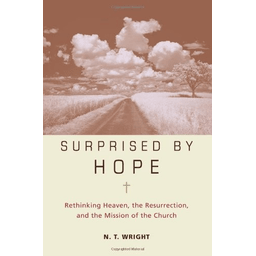
Surprised by Hope has quietly become the book pastors hand out at funerals. Published in 2008 by HarperOne, written by then-Bishop of Durham N.T. Wright, it set out to do something deceptively simple - recover what the New Testament actually says about life after death, and life after life after death. Almost twenty years on it is still the title most-recommended when someone asks "what should I read about heaven?"
It is not a memoir. It is not a comfort read in the soft-focus sense. It is not a systematic theology either. It sits in an unusual genre - a working scholar writing to ordinary readers without dumbing down, building a sustained argument across thirteen chapters that the Christian hope most Western believers were taught is half the story at best.
Wright’s thesis, repeated patiently throughout the book: the New Testament’s hope is bodily resurrection followed by new creation - heaven and earth joined, all things made new - not a permanent disembodied existence in a far-off heaven. The implications, he argues, are enormous: for evangelism, for justice work, for how Christians grieve, for how the church understands its own mission between now and then.
✓ The good
- A clear, sustained thesis - most popular theology books wander; this one builds one argument from chapter one to chapter thirteen and never lets go
- Scholar-grade footing without the academic prose - Wright is a major NT scholar and you can feel the weight, but the writing stays in reach of any motivated reader
- Reframes funerals, hospital visits, and grief in a genuinely pastoral way - the chapter on resurrection life changes how a lot of readers pray for the dying
- Closes the gap between "personal salvation" and "social justice" without flattening either - Part Three on church mission has shaped a generation of ministry leaders
- Short for what it does - around 300 pages to lay out an eschatology you could otherwise spend years assembling from a dozen academic volumes
- Anglican-flavored but readable across traditions - Catholic, Orthodox, Reformed, Wesleyan, and Anglican readers all find their own theology echoed somewhere in the argument
- The companion study guide (sold separately) is genuinely usable for small groups - questions that go past comprehension into application
✗ Watch out
- Wright’s broader project - the "New Perspective on Paul" - has been pushed back on by some Reformed writers (John Piper’s The Future of Justification is the best-known response), and readers from that tradition will sometimes feel that pushback hovering in the background
- The middle section on second-coming language assumes some patience with first-century context - readers who want a verse-by-verse devotional pace may bog down
- A few chapters circle the same point - the "not going to heaven, going to new creation" beat gets hammered, by design, but it can feel repetitive on a second read
- Light on practical "what do I do tomorrow" steps - Wright is an argument-builder, not a workbook author (the companion study guide partly fills this)
- British idiom and a few Anglican-liturgy references occasionally trip American readers - minor, but real
Best for
- Pastors and small-group leaders preparing teaching on heaven, death, or eschatology
- Thoughtful lay readers who suspect the "go to heaven when you die" framing is missing something
- Seminary students and ministry workers wanting a serious entry-point into Wright’s broader project
- Anyone working through grief who wants something more substantial than a comfort devotional
Avoid if
- You want a quick devotional pick-me-up - this is a sustained argument, not a daily reading
- You are looking for a step-by-step end-times timeline - Wright is uninterested in that genre
- You are firmly committed to a strict Reformed reading of Paul and want nothing that nudges against it
- You prefer your theology in bullet points and infographics - this is patient prose, paragraph by paragraph
What Surprised by Hope is
Surprised by Hope is a 300-page work of popular-level theology by N.T. Wright, published in 2008. Wright is one of the most-respected New Testament scholars alive - former Bishop of Durham in the Church of England, formerly Research Professor of New Testament and Early Christianity at the University of St. Andrews, now at St. Mary’s University - and the book grew out of lectures and sermons he had been giving for years on what the early church actually believed about resurrection.
The structure is three parts. Part One sets up the question - what is the Christian hope, and why has the Western church drifted into a Platonic "go to heaven when you die" answer that the New Testament does not actually teach? Part Two works through resurrection itself - Jesus’ bodily resurrection, the believer’s future bodily resurrection, and what "new creation" language means across the Pauline letters and Revelation. Part Three turns to mission - if the end is new creation, not escape from creation, what does the church actually do between now and then?
Why pastors and seminarians keep recommending Surprised by Hope
The single biggest practical difference between Surprised by Hope and most other popular books on heaven is that Wright takes the New Testament’s own categories seriously and refuses to translate them into the disembodied-soul framework most readers grew up with. He does not say "heaven is not real." He says - across hundreds of pages - that what the New Testament calls "the resurrection of the dead" and "the renewal of all things" is the actual promise, and that heaven, in the meantime, is a real but provisional waystation.
That move - small on paper, transformative in practice - is why pastors hand the book out. It reframes funerals (we grieve, but the hope is bodily resurrection, not just a soul "going home"). It reframes mission (the church builds for the kingdom now because that work carries into the new creation, not because earthly labor is throwaway). It reframes justice work, ecology, and art-making, all of which Wright argues belong inside Christian hope, not adjacent to it. Readers across Catholic, Orthodox, Anglican, Reformed, and Wesleyan traditions have found their own eschatology articulated more clearly here than in most resources from inside their own tradition.
The "not going to heaven, going to new creation" thesis
The headline argument of the book - repeated patiently, never apologized for - is that the New Testament’s end-state is not a permanent disembodied existence in heaven but the resurrection of the dead in a renewed heaven-and-earth. Wright traces the language across the Gospels, Paul, and Revelation, and argues that "heaven when you die" is real but is the intermediate state - Paul’s "with Christ, which is better by far" - while the final hope is bodily resurrection into new creation when Christ returns. He calls it "life after life after death," and the phrase stuck.
This sounds like a small thing. In practice it is transformative. If the end is new creation, then bodies matter, the physical world matters, justice in this world is not a distraction from the gospel but the leading edge of the kingdom. Wright is careful to insist this is not a new idea - it is, he argues, the historic Christian hope confessed in the creeds ("I believe in the resurrection of the body and the life everlasting") that Western evangelicalism had partly forgotten under the influence of Greek philosophy and nineteenth-century revivalist hymnody. Readers from older liturgical traditions often nod and say "yes, this is what we always said." Readers from low-church evangelical backgrounds often describe the book as genuinely paradigm-shifting.
Bodily resurrection theology and the mission of the church
Part Three is where the book turns from "what is the hope" to "so what." If the future is new creation rather than escape, Wright argues, the church’s mission in the present is not just to rescue souls for a different world but to plant signs of the new creation inside this one - through evangelism, yes, but also through justice, beauty, and the building up of human communities that mirror what the resurrected world will look like. He is careful here: the new creation is God’s work, not ours; we do not "build the kingdom" by social programs. But the works of love and justice we do now, he argues from 1 Corinthians 15:58, are "not in vain in the Lord" - they carry into what God will finally make.
For many readers this is the most consequential section of the book. It closes a gap that American Christianity has often struggled with - between "personal salvation" and "social justice" - by grounding both in the same resurrection hope. Pastors, missionaries, justice workers, and Christian artists have all found vocabulary here for what they were already doing. The book has been quietly assigned in seminary classes across denominational lines for the same reason: it gives a single coherent frame for the work, without flattening evangelism into activism or vice versa.
Wright’s accessible-yet-scholarly voice
Wright is, by trade, an academic - his three-volume Christian Origins and the Question of God series runs past 3,000 pages and is read in seminaries on multiple continents. Surprised by Hope is what happens when that same scholar deliberately writes for the person in the pew. The footnotes are restrained. The argument is built paragraph by paragraph rather than verse by verse. He uses analogies - the train station, the orchestra tuning up, the present-as-overture-to-the-symphony - that work for readers who would never crack a commentary.
The result is a book that pastors trust because the scholarship is there, and that lay readers actually finish because the prose stays in reach. There are stretches that ask patience - the chapter on what "second coming" language meant in the first century, for instance, assumes you will sit with some unfamiliar context - but Wright never talks down and never hides the ball. It is the model that respects the reader’s work. That voice is also why the book has aged well: nearly twenty years on it still reads as fresh writing, not as a snapshot of late-2000s church culture.
Pricing
Paperback
~$17.99
The standard edition - readable, lendable, what most readers actually buy. Around 300 pages.
Hardcover
~$28
Original hardback, still in print for collectors and gift-givers. Same text as the paperback.
Kindle
~$13
Full text, searchable, syncs across devices - handy if you plan to quote it in sermons or papers.
Audible
~$15 (or 1 credit)
Audiobook edition, about 10 hours. Works well for commuters; the argument tracks fine without the page.
Companion Study Guide
~$15
Separate workbook with chapter-by-chapter discussion questions - built for small groups and Sunday school classes.
Surprised by Hope is a paid book - no free tier, no library subscription, no Kindle Unlimited bundling (at least not reliably). The paperback at around $17.99 is the version most readers buy and the one we mark as best value: it is lendable, easy to mark up, and the same text as the hardcover.
Kindle at around $13 is the cheapest path in and the right pick if you plan to search or quote the book in sermons, papers, or small-group prep. Highlights sync across devices and the table of contents is hyperlinked. Audible at around $15 (or a credit) runs roughly ten hours; the argument tracks well in audio because Wright builds in paragraph-sized recaps that work for listeners.
The hardcover at around $28 is for collectors and gift-buyers - the text is identical. The companion study guide, sold separately at around $15, is genuinely useful for small groups: discussion questions that go past comprehension into application, organized by chapter. If you are buying for a Sunday school class, get one study guide per leader plus a paperback for each participant.
Used copies are everywhere. The book has been in print continuously since 2008 and the secondhand market is healthy - expect $5-10 in good condition. The text has not been revised, so a 2008 first printing reads identically to a current paperback.
Where Surprised by Hope falls behind
No end-times timeline. Readers coming from a dispensationalist background looking for a chart of the tribulation, the millennium, and the rapture will not find one here - Wright is uninterested in that genre and says so. That is a feature for some readers and a frustration for others; know which one you are before you buy.
No step-by-step application workbook in the main text. Wright builds an argument; he does not give you a thirty-day plan. The companion study guide partly fills this, but if you want a workbook-style devotional pace, this is not that book.
Light engagement with the Reformed critique. Wright’s broader work on Paul - what is usually called the "New Perspective" - has been pushed back on by writers including John Piper, whose The Future of Justification engages Wright directly. Surprised by Hope itself is not primarily about justification, but readers in the Reformed tradition will sometimes feel the wider disagreement hovering. Wright does not stop to defend that flank in this book.
Limited treatment of the intermediate state. Wright affirms it - believers are with Christ between death and resurrection - but he spends most of the book on the final hope rather than the in-between. Readers grieving a recent loss who want pages and pages on "where is my loved one right now" may find Randy Alcorn’s Heaven a better fit on that specific question.
The British idiom and a few Anglican-liturgy touches occasionally slow American readers. Minor, but real - the audio narration smooths some of this if it is bothering you on the page.
Surprised by Hope vs. Heaven (Randy Alcorn) vs. Mere Christianity
Different strengths. Surprised by Hope is the scholarly-yet-accessible argument that the Christian hope is bodily resurrection and new creation, written by one of the major NT scholars of the generation. Randy Alcorn’s Heaven is longer (around 500 pages), more devotional in tone, and answers the "what will heaven actually be like" question in much more concrete detail - many readers pair the two, using Wright for the framework and Alcorn for the imaginative filling-in. Wright and Alcorn agree on the big picture (bodily resurrection, new creation, not Platonic escape); they differ in pace, scope, and what they linger on.
Mere Christianity is a different category - Lewis is making the case for Christianity itself, not for a particular doctrine of last things. Where Lewis touches eschatology he is broadly compatible with Wright (the famous "further up and further in" of the Narnia ending reads as new-creation eschatology, not soul-escape), but the books are doing different jobs. Mere Christianity is the on-ramp; Surprised by Hope is a focused argument about one piece of the gospel.
If you only buy one and you want the big argument about Christian hope: Wright. If you want a longer, gentler, more detailed walk through what the new creation might be like: Alcorn. If you are looking for an entry-point to Christianity itself: Lewis. The three together - Lewis, Wright, Alcorn - is a strong personal library on this question.
The bottom line
Surprised by Hope is the book to read if you want to understand what the New Testament actually says about heaven, death, and the Christian future - and why that matters for how the church lives now. Wright’s thesis is mainstream historic Christianity (bodily resurrection, new creation, the renewal of all things) that he argues much of contemporary American evangelicalism had drifted from. The book is short for what it accomplishes, written with a scholar’s rigor and a pastor’s care, and almost twenty years on still the first title most thoughtful readers are pointed toward on this question. Worth the $18.
Alternatives to Surprised by Hope
 Mere ChristianityC.S. Lewis’s on-ramp to the Christian faith - broader scope than Wright, lighter on eschatology, and the natural pairing for any first serious Christian library.
 Knowing GodJ.I. Packer’s twentieth-century classic on the character and knowability of God - more devotional in pacing, complementary to Wright’s eschatology focus.
 The Cost of DiscipleshipBonhoeffer on what it actually costs to follow Christ - sharpens the "mission" half of Wright’s argument with a different (and more demanding) edge.
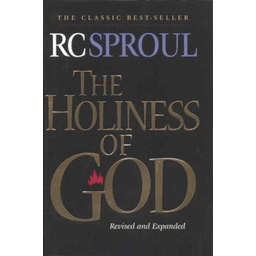 The Holiness of GodR.C. Sproul’s Reformed classic on the holiness of God - a different tradition and a different question, but in the same "popular theology that actually thinks" lane.
Frequently asked questions
Is Surprised by Hope saying heaven isn’t real?
No. Wright affirms that believers are with Christ after death - the traditional "intermediate state." His argument is that heaven in that sense is not the final destination; the final hope of the New Testament is bodily resurrection in a renewed heaven-and-earth when Christ returns. He calls it "life after life after death." Heaven is real and good; it is not the end of the story.
Do I have to be Anglican to get something out of this book?
Not at all. Wright is Anglican and the book has occasional Anglican-liturgy touches, but the core argument - bodily resurrection and new creation as the Christian hope - is mainstream historic Christianity confessed in the creeds. Catholic, Orthodox, Reformed, Wesleyan, and non-denominational readers have all found their own theology articulated here.
How does this fit with the "New Perspective on Paul" debate?
Wright is one of the major voices in the broader New Perspective conversation, which has been pushed back on by some Reformed writers - John Piper’s The Future of Justification is the best-known direct response. Surprised by Hope itself is not primarily about justification or about that debate; it is about eschatology and Christian hope. Readers from the Reformed tradition will sometimes feel the wider disagreement in the background, but the resurrection-and-new-creation thesis of this book is widely shared across traditions.
Is this a good book to give to someone grieving?
Sometimes. It is more substantial than a typical comfort book - sustained argument rather than gentle devotional - but for a thoughtful reader processing grief, it can reframe death itself in a hopeful and theologically serious way. If you want something purely consoling, pair it with a shorter devotional. If you want something that takes the question seriously, this is one of the best books in print.
Should I read it on Kindle, in paperback, or on Audible?
Paperback if you want to mark it up and lend it out - it is the version most readers buy. Kindle if you want to search or quote it in sermons or small-group prep. Audible (around ten hours) works well because Wright builds in paragraph-sized recaps; the argument tracks fine without the page. All three have the same text.
Is the companion study guide worth getting?
For small groups and Sunday school classes, yes. It is sold separately at around $15 and runs chapter-by-chapter with discussion questions that go past comprehension into application. For solo reading you can skip it - the main book stands on its own - but for any group setting it is worth the extra spend.
How long is the book and how long does it take to read?
Around 300 pages in paperback. Most motivated readers finish it in two to three weeks at a chapter a sitting. It is not a quick devotional read - the argument builds across the whole book and rewards reading the chapters in order - but it is not dense in the academic-monograph sense either.
Sources & further reading
More Modern Christian Classics
Knowing GodJ.I. Packer’s 1973 classic on the doctrine of God has sold more than 1.5 million copies and is still the book most pastors hand to laypeople who want theology that goes somewhere - here’s what it actually does and who it’s for.The Cost of DiscipleshipDietrich Bonhoeffer’s 1937 exposition of the Sermon on the Mount, written for pastors training under a regime that wanted them silent - and still the sharpest book in print on what following Jesus actually costs.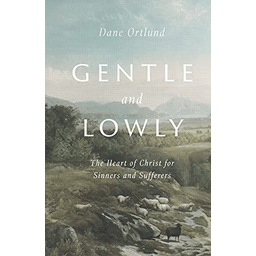 Gentle and LowlyDane Ortlund’s 23 short chapters on Matthew 11:29 have quietly become the most-given new Christian book of the decade - and the reason is not what you’d guess.The Holiness of GodR.C. Sproul’s career-defining book on the one attribute of God the church most forgets - and the vision in Isaiah 6 he believed everything else flows from.
 The Weight of GloryThe 1941 sermon many call Lewis's single finest piece of writing - "there are no ordinary people" - gathered with eight other addresses into one slim, uneven, unforgettable collection.
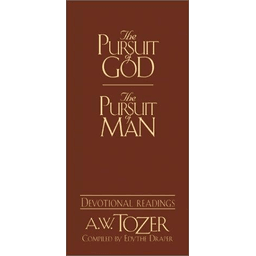 The Pursuit of GodA.W. Tozer’s ten-chapter wake-up call on knowing God personally - short, severe, and the one devotional Reformed, Wesleyan, Catholic, and Orthodox readers all seem to keep on the nightstand.