Head-to-head comparison
Logos Bible Software vs Verbum
Ratings, pricing, platforms, real-world strengths, and a clear pick for each kind of user.


Logos and Verbum are the same software engine, same original-language tools, same Sermon Builder. The difference is the library. Logos comes pre-curated for the broader Protestant audience: Reformed commentary sets, evangelical reference works, broader theological scope. Verbum comes pre-curated for the Catholic audience: the Vulgate alongside the NABRE, the Catechism as a first-class resource, patristic and magisterial documents integrated into the search graph.
For most users, the real question is which library matches your tradition better. Both are genuinely deep platforms. Both require investment. The answer usually depends on whether you want the Catholic-specific depth or the Protestant-broader scope.
The bottom line
Both are equally strong platforms: Logos if your study spans Protestant traditions or you want the broadest library, Verbum if you're Catholic and want the Vulgate, Catechism, and magisterial documents fully integrated. Same price, same learning curve, same engine. The library is the choice.
The core difference: Logos and Verbum are identical software with different default libraries. Logos emphasizes Protestant and academic reference works. Verbum emphasizes Catholic translations, the Magisterium, the Fathers, and the Doctors of the Church.
Logos Bible Software vs Verbum: at a glance
| Logos Bible Software | Verbum | |
|---|---|---|
| Rating (source) | 4.9 / 5 (App Store rating) | 4.8 / 5 (App Store rating) |
| Starting price | Free, then $9.99/mo (Logos Pro) | Around $9.99/mo Verbum Pro; library packages from ~$300 |
| Free tier | Yes | Yes |
| Platforms | Mac · Windows · iOS · Android · Web | macOS · Windows · iOS · Android · Web |
| Developer | Faithlife | Faithlife |
| Launched | 1992 | 2013 |
| Best for | Pastors writing weekly sermons | Catholic seminarians and priests writing homilies |
See them in action
Logos Bible Software
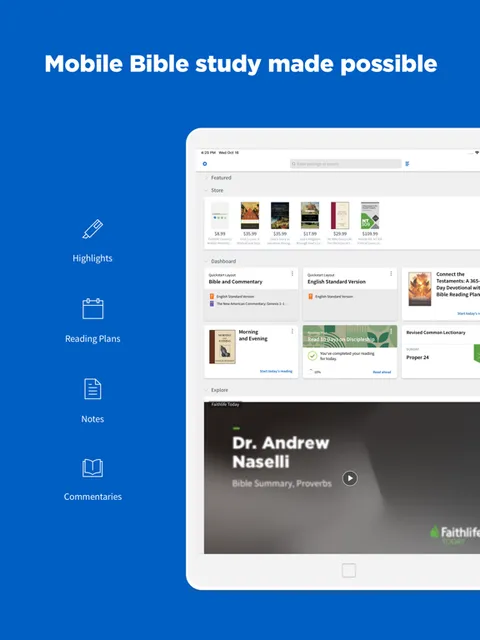
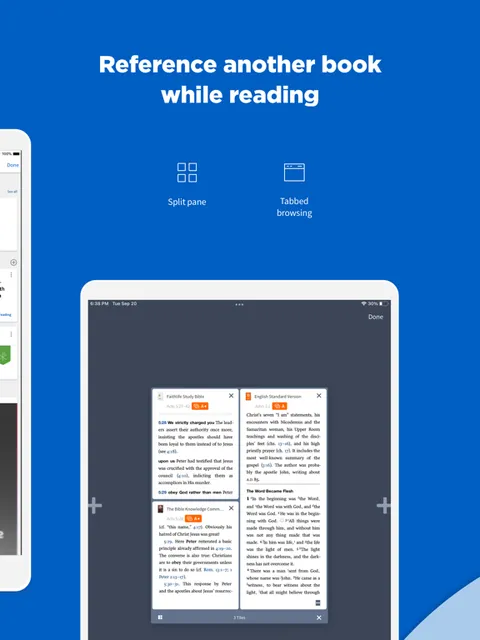
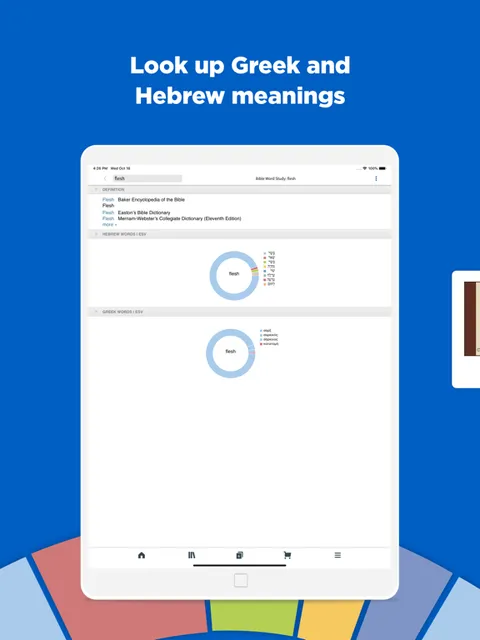
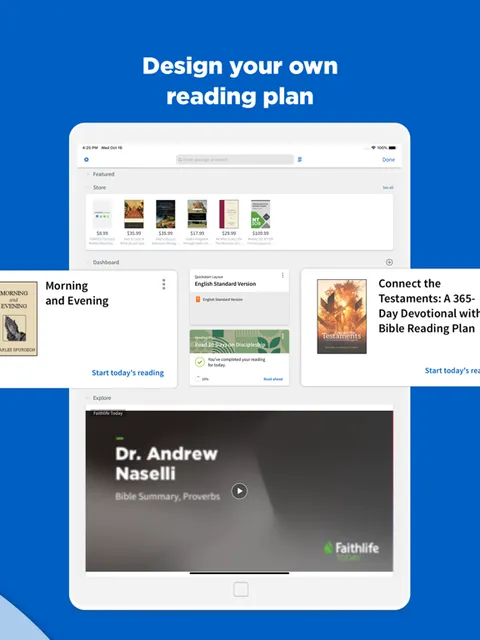
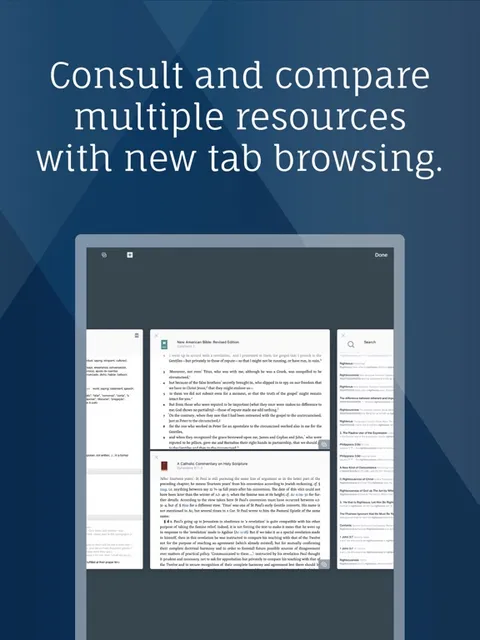
Verbum
How they compare, point by point
Core Bible translations included
Logos Bible Software
NIV, ESV, NKJV, KJV, the Protestant defaults; additional translations available as add-ons
Verbum
NABRE, RSV-2CE, Douay-Rheims, Latin Vulgate, all cross-linked; Catholic editions primary
Integrated reference layer
Logos Bible Software
Study notes, evangelical and Reformed commentaries, theological dictionaries, academic journals
Verbum
Catechism of the Catholic Church, Code of Canon Law, papal encyclicals, conciliar documents (Vatican II included), Fathers of the Church
Patristic and medieval depth
Logos Bible Software
Available as add-on purchases; not the default editorial priority
Verbum
Augustine, Aquinas, Jerome, Gregory, available at varying depths by tier; Aquinas treated as major resource with full cross-linking
Primary use case
Logos Bible Software
Pastors, seminarians, teachers across Protestant denominations; broader theological research
Verbum
Homilists, seminarians, priests, lay catechists; lectionary-driven Catholic study
Sermon prep workflow
Logos Bible Software
Sermon Builder works from any passage; not lectionary-tied
Verbum
Lectionary integration: open the day, pull the pericopes, start from there
Cost structure
Logos Bible Software
Logos Pro ~$9.99/mo + library packages from ~$300-$5,000+
Verbum
Verbum Pro ~$9.99/mo + Catholic library packages from ~$300-$5,000+
Which should you choose?
Logos Bible Software
Choose Logos if you study across Protestant traditions, want the broadest commentary and journal catalog, are doing academic biblical-studies work, or plan to add both Protestant and Catholic resources. It's the neutral default when denominational focus is not primary.
Verbum
Choose Verbum if you're Catholic and want the Vulgate, the NABRE, the Catechism, and magisterial documents fully integrated. If you're a priest prepping homilies from the lectionary, or a seminarian working out of the Magisterium, Verbum's editorial assumptions match your workflow exactly.
The files and notes format are compatible between the two. You can export highlights from Logos and import them into Verbum, or vice versa. If you're genuinely unsure, starting in one and learning it well matters more than picking the perfectly-aligned library.
Strengths at a glance
Logos Bible Software
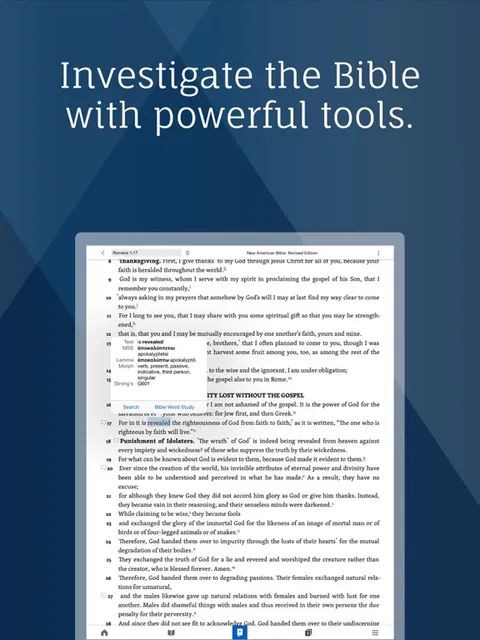
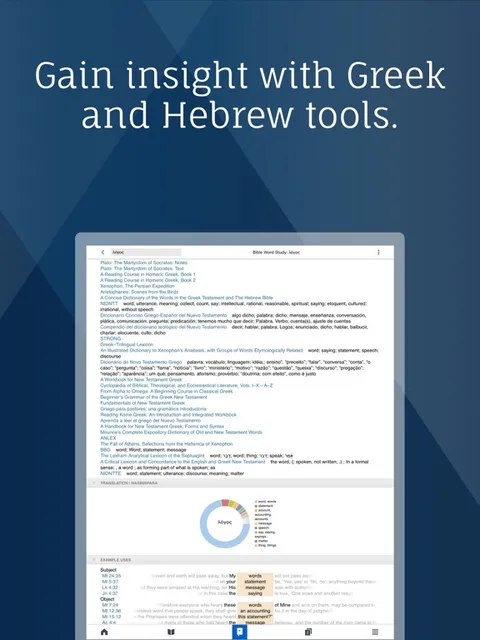
- Best-in-class original-language tools - interlinear, morphology, lemma search, and reverse interlinear all wired into every passage
- Factbook is the single best biblical encyclopedia interface on the market - a tap or click on any name, place, or theme pulls a structured dossier from your whole library
- Sermon Builder is a genuinely useful writing surface - slides, handouts, manuscript, and citations all stay linked to scripture and resources
- Cross-platform parity is excellent - your library and notes sync between Mac, Windows, iOS, Android, and the web app
Verbum
- Catholic library curation done by Catholic editors - the NABRE, RSV-2CE, Douay-Rheims, and Vulgate ship together, cross-linked at the verse level
- Catechism of the Catholic Church and Code of Canon Law integrated as first-class resources - paragraph references resolve like scripture references
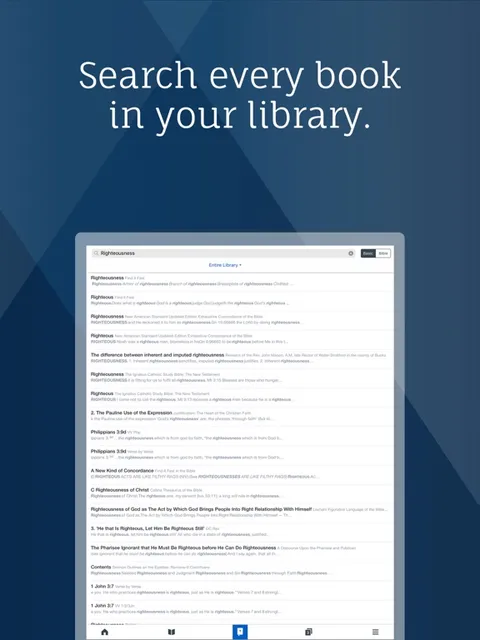
- Magisterial document library - papal encyclicals, conciliar documents, congregational instructions - searchable as a single corpus
- Patristic and medieval depth - Fathers of the Church, Ancient Christian Writers, Aquinas’s Summa and biblical commentaries available as add-on collections
Watch-outs
Logos Bible Software
- Sticker shock is real - full-fledged library packages run from a few hundred dollars to well over $5,000
- Learning curve is steep - the interface rewards investment but punishes casual visitors
- Logos Pro subscription overlaps confusingly with one-time library purchases - you can end up paying twice for the same capability
Verbum
- Library packages are expensive - the deeper Catholic collections cost more than a semester of seminary textbooks
- Steep learning curve - the workspace, layouts, and Passage Guide take real time to master
- Mobile apps are capable but not where the serious work happens - the desktop is the real workstation
Frequently asked questions
Can I use Logos if I want to study the Catechism?
Yes, but it requires buying the Catechism as an add-on resource. In Verbum, it's included from the Starter tier upward and integrated as a first-class resource, with paragraph references resolving like scripture references. If Catechism study is primary, Verbum's integration is worth the choice.
Is the original-language tooling the same?
Yes, identical. Reverse interlinear, morphological tagging, lexicon integration, lemma search, all the same in both platforms. The difference is the library and the default reference layers, not the Greek and Hebrew capabilities.
Which should I choose if I'm not sure about my tradition?
Start with Logos. It's the broader default and nothing you buy in it is wasted if you later switch to Verbum. The libraries are compatible, and you can always buy Catholic resources inside Logos and move them to Verbum later if needed.
Do I need Verbum Pro as well as a library package?
Yes. Like Logos, Verbum Pro is the subscription that unlocks the smartest features (Passage Guide, advanced search, Sermon Builder enhancements). A library package is your books. Most serious users pair both, same as with Logos.
Is Logos Bible Software free?
Yes - Logos Bible Software has a free tier (Free, then $9.99/mo (Logos Pro)).
Is Verbum free?
Yes - Verbum has a free tier (Around $9.99/mo Verbum Pro; library packages from ~$300).
Logos is the deepest Bible study software on the market, and the gap is not small. Verbum is the most thorough Catholic study platform money can buy - a Logos-grade engine wrapped around a curated Catholic library that runs from the Vulgate through Vatican II.