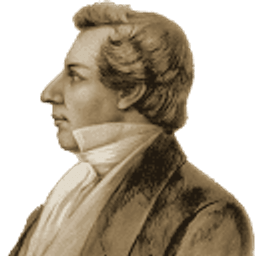
- Starting price
- Free
- Free tier
- Yes
- Platforms
- Web
- Developer
- The Church of Jesus Christ of Latter-day Saints (Church Historian’s Press)
- Launched
- 2008
- Updated
- May 24, 2026
The verdict
A landmark of religious documentary editing. The print series wrapped in 2023; the website now hosts the entire corpus - journals, letters, revelations, sermons, legal records, Council of Fifty minutes - fully transcribed, annotated, and searchable for free. There is nothing else like it in any tradition.
Try The Joseph Smith Papers ↗Opens josephsmithpapers.org
The Joseph Smith Papers has quietly become the gold standard for how a religious tradition can publish its own founder’s documents. Begun in the 1990s, formally launched in print in 2008, and now functionally complete with the close of the print series in 2023, the project set out to do something no faith community had attempted at this scale - publish every known document written by, to, or under the direction of Joseph Smith, with full scholarly apparatus, and put the whole thing online for free.
It doesn’t paraphrase. It doesn’t summarize. It doesn’t hide the awkward bits. The website hands the reader the actual documents - high-resolution images of the original manuscripts, careful diplomatic transcriptions, plus a clean reading transcript - with footnotes that identify every person, place, and reference. Marginal cross-outs, ink changes, scribal hands, dating uncertainties: all of it is described in the apparatus. This is documentary history of the kind academic presses do for the papers of Madison or Jefferson, applied to a 19th-century religious figure and underwritten by the church he founded.
For Latter-day Saint readers, it is the closest possible primary-source companion to the standard works and to Church history curricula. For non-LDS readers - historians, students of American religion, the curious - it is one of the most generous, transparent archives any religious institution has put online. Whatever a reader thinks about the theology, the editorial work itself has drawn praise from secular academic historians who would have no professional reason to be kind.
✓ The good
- Documentary completeness - virtually every extant Joseph Smith document is here, including ones that complicate the traditional narrative
- Scholarly apparatus that meets academic standards - footnotes, source notes, historical introductions, biographical directory, geographical directory, glossaries
- High-resolution manuscript images paired with both diplomatic and reading transcripts - you can compare the editorial choices yourself
- Completely free, no account required, no paywall, no ads - rare for any project of this scope, almost unheard of in religious publishing
- Powerful search across the entire corpus, with filters by date, document type, people, and places
- Council of Fifty minutes, the History Drafts, the Book of Abraham source materials - items previously hard to access are now a click away
- Stable, citable URLs and clean metadata - the site is built for researchers as well as casual readers
✗ Watch out
- Not a devotional resource - the apparatus is descriptive and historical, not pastoral, so newcomers may find it dry
- No commentary on doctrinal application - readers must bring (or seek elsewhere) the interpretive frame they want
- Print series is complete, which means active editorial expansion has slowed - corrections and digital improvements continue, but no new volumes are forthcoming
- Site search is solid but not as fast or fuzzy as a modern consumer search engine - exact-phrase queries work better than loose ones
- Mobile experience is functional but clearly built for desktop research workflows
Best for
- Latter-day Saint readers studying Church history at primary-source depth
- Historians of 19th-century American religion
- Seminary, institute, and Sunday School teachers preparing lessons
- Anyone who has read a secondhand claim about Joseph Smith and wants the document itself
Avoid if
- You want devotional reading rather than archival research
- You want a single editorial voice telling you what a document means
- You prefer audio or video to dense text and footnotes
- You are looking for a general LDS scripture-study app - Gospel Library is the better starting point
What The Joseph Smith Papers is
The Joseph Smith Papers is the documentary edition of the papers of Joseph Smith (1805-1844), the founding figure of the Latter-day Saint movement. Modeled on academic projects like the Papers of George Washington and the Papers of Thomas Jefferson, it gathers, transcribes, dates, contextualizes, and annotates every known document in six major series: Documents, Journals, Revelations and Translations, Histories, Administrative Records, and Legal Records.
The print series ran from 2008 to 2023 and totaled 27 volumes published by the Church Historian’s Press, an imprint of The Church of Jesus Christ of Latter-day Saints. The website launched alongside the print project and now hosts the complete, finalized corpus online - every document, every transcript, every footnote, every manuscript image - free to anyone with a browser.
Why historians and serious students of LDS history rely on it
The single biggest practical difference between The Joseph Smith Papers and any earlier publication of Joseph Smith’s documents is editorial transparency. Earlier 19th- and 20th-century printings - including the seven-volume History of the Church - silently smoothed grammar, harmonized dates, and in places reworded sermons reconstructed from listener notes. The Papers project flagged all of that, restored the original wording where it could be recovered, and explained in source notes exactly which manuscript a given reading comes from.
For Latter-day Saint readers, that means the standard documents they have heard quoted for a lifetime can now be checked against the manuscript - including dating, scribal hand, and revision history. For non-LDS historians, it means the corpus is finally usable in the way Madison’s or Lincoln’s papers are usable: as a documented archive with an apparatus they can interrogate, rather than a curated devotional anthology. That methodological honesty is the project’s real legacy.
Documentary completeness - every extant document, fully searchable
The project’s ambition was completeness. Every letter Joseph Smith sent or received that survives. Every journal - his own and those kept on his behalf by scribes. Every revelation manuscript, including the earliest drafts of texts later canonized in the Doctrine and Covenants. Every sermon for which a contemporary report exists, sometimes with multiple listeners’ accounts laid side by side. Every legal record from his many court appearances. Every business and administrative document from the Nauvoo period, up to and including the long-restricted Council of Fifty minutes, released in 2016.
In practice this means readers can search the full corpus by keyword, date range, document type, person, or place, and land on a page that gives them the actual document - manuscript image, diplomatic transcript with all crossings-out and insertions, plus a clean reading transcript. This sounds like a small thing. In practice it’s transformative. A claim someone makes online about what Joseph Smith said in 1843 can be checked against the actual surviving record in under a minute, with full context.
Scholarly apparatus - footnotes, biographies, dating, source notes
Each document on the site sits inside a thick layer of editorial apparatus. There is a historical introduction explaining what the document is, who wrote it, when, why, and how it survived. There are footnotes identifying every person, place, scripture reference, and historical event mentioned. There is a source note explaining the physical artifact - the paper, the ink, the scribal hand, the provenance from creation to the present archive - and a redaction note where dating or authorship is contested. The site also includes a biographical directory of more than 3,500 individuals, a geographical directory, a glossary of 19th-century terms, and a chronology of Joseph Smith’s life.
This is the model that respects the reader’s work. Anyone whose job involves producing serious writing about early Latter-day Saint history - academic, journalistic, devotional - can build on the editors’ identifications rather than redoing them from scratch. And because the apparatus is descriptive rather than interpretive, it serves readers from very different perspectives without picking a fight with any of them.
Free public access - rare for any project of this scope
Comparable documentary editions - the Papers of Washington, Madison, Jefferson, Adams - are mostly behind academic-database paywalls or sold as expensive print volumes. The Joseph Smith Papers website breaks that pattern. The full corpus is online, free, no account required, no advertising, no upsell, with permanent URLs and downloadable transcripts. The print series is a separate product for libraries and collectors; the website is the canonical edition for everyone else.
For a church that has historically been criticized for opacity around its earliest history, the decision to put the unfiltered documentary record online - including the records that complicate the traditional narrative - is its own statement. Whatever a reader concludes about the theology, the access is genuinely generous, and it has changed what serious conversation about Joseph Smith looks like, both inside and outside the Latter-day Saint community.
Pricing
Website access
Free
The entire corpus, all transcripts, all manuscript images, all reference materials, full search - no account, no subscription, no ads.
Print volumes
Varies (out of print to ~$60 per volume used)
The 27-volume print series (2008-2023) from the Church Historian’s Press. Useful for libraries and collectors; the website contains the same content.
Companion books
Varies (~$20-$40)
Related Church Historian’s Press titles - Saints, Revelations in Context, At the Pulpit - sold separately by Deseret Book and other retailers.
There is no pricing to speak of. The website is free, with no account, no subscription, no ads, and no upsell. That is the headline.
The 27-volume print series - published between 2008 and 2023 by the Church Historian’s Press - is a separate product. Some volumes are still in print through Deseret Book and academic distributors; others are out of print and trade on the used market at roughly $30-$60 per volume. Libraries that bought the set will get long use out of it, but for an individual reader the website contains identical content.
A handful of companion books - Saints (the multi-volume narrative history that draws heavily on the Papers), Revelations in Context, At the Pulpit, the Annotated Book of Mormon - are sold separately at typical book prices. These are interpretive or narrative works built on top of the documentary edition, not part of it, and they are optional.
Bottom line: the most important single piece of this project - the corpus itself - costs nothing to access. Most users do not need anything else.
Where The Joseph Smith Papers falls behind
No devotional layer. The apparatus is descriptive and historical by design. There are no application questions, no daily-reading framing, no audio devotionals. Readers who want a study path through the documents have to build it themselves or use a companion resource like Saints or Gospel Library’s Church history curricula.
No active expansion. With the close of the print series in 2023, the project has shifted into long-term maintenance mode. Corrections, metadata improvements, and digital-experience upgrades continue, but readers should not expect new document volumes - the corpus is, as far as the editors know, complete.
Search is functional, not consumer-grade. The site’s search is solid for exact-phrase and faceted queries, but it lacks the fuzzy-matching, typo-tolerance, and natural-language behavior of a modern app like Gospel Library or a tool like Scripture Central. Knowing how to construct a query helps a lot.
Mobile is usable, not optimized. The site is built for the kind of research session where you have a second window open for note-taking and you want to compare a manuscript image to a transcript side by side. On a phone, that workflow compresses. Most serious use will happen on a laptop or tablet.
No interpretive voice. By the project’s own choice, the editors do not adjudicate doctrinal questions. For some readers that neutrality is the whole point. For others - especially newcomers looking for a guide - the lack of a "here is what this means for you today" layer can feel cold.
Joseph Smith Papers vs. Maxwell Institute vs. Scripture Central
These three sites are the most-cited Latter-day Saint scholarly resources online, and they do quite different work. Different strengths.
The Joseph Smith Papers is the primary-source archive. It publishes the documents themselves, with apparatus, and lets the reader draw conclusions. It is the place to go when you want to check what Joseph Smith actually wrote or said, not what someone has written about him.
The Maxwell Institute, based at Brigham Young University, publishes long-form scholarship - peer-reviewed books, the BYU Studies Quarterly journal, the Living Faith essay series - that interprets the texts the Papers project publishes. It is the place to go for serious essay-length thinking on a topic, written from within the Latter-day Saint tradition but engaged with broader academic conversations.
Scripture Central (the rebranded Book of Mormon Central) is broader and more reader-facing. It covers the entire Latter-day Saint scriptural canon - Book of Mormon, Doctrine and Covenants, Pearl of Great Price, plus the Bible - with short articles, videos, podcasts, and the ScripturePlus app. It is the friendliest of the three for everyday study.
Most serious students of Latter-day Saint history end up using all three: Joseph Smith Papers for the primary documents, Maxwell Institute for the interpretive scholarship, Scripture Central for daily study and shareable explanations. They are complements, not competitors.
The bottom line
The Joseph Smith Papers is a landmark - possibly the single most important documentary publishing project any religious tradition has produced in the last fifty years. It is complete, it is honest about its sources, it is annotated to academic standards, and it is free. Latter-day Saint readers who want to know their own history at primary-source depth, and non-LDS historians who want to study early American religion seriously, both find the same archive waiting for them. There is nothing else like it.
Alternatives to The Joseph Smith Papers
 Maxwell InstituteBYU-based publisher of long-form Latter-day Saint scholarship - peer-reviewed books, BYU Studies Quarterly, the Living Faith series.
 Scripture CentralBroad scriptural-study site (formerly Book of Mormon Central) - short articles, videos, podcasts, and the ScripturePlus app.
 BYU Religious Studies CenterBYU’s in-house publisher for religious-education scholarship - full-text books and journal articles on Latter-day Saint history and scripture.
 ChurchofJesusChrist.orgThe official Church of Jesus Christ of Latter-day Saints site - scriptures, manuals, general conference talks, and Church history materials.
Frequently asked questions
Is The Joseph Smith Papers really completely free?
Yes. The entire website - all transcripts, manuscript images, footnotes, reference materials, and search - is free to use with no account, no subscription, and no advertising. The print volumes are sold separately by the Church Historian’s Press but contain identical content.
Is the project finished?
The 27-volume print series concluded in 2023 and the editors describe the documentary corpus as functionally complete. The website continues to receive corrections, metadata improvements, and digital-experience updates, but no new volumes of documents are expected.
Who publishes The Joseph Smith Papers?
The Church Historian’s Press, an imprint of The Church of Jesus Christ of Latter-day Saints. The editorial staff has included both Latter-day Saint historians and secular academic historians, and the project has been advised by non-LDS scholars from major universities.
Does the site include controversial or difficult documents?
Yes. The editorial commitment was to publish every extant document, and the corpus includes records that complicate traditional narratives - the multiple First Vision accounts, plural-marriage-era correspondence, the Council of Fifty minutes (released in 2016), and the legal records from Joseph Smith’s many court appearances.
Do I need to be a Latter-day Saint to use it?
No. The apparatus is descriptive rather than devotional, and the site is widely used by non-LDS historians of 19th-century American religion. The project has been praised by academic reviewers with no institutional connection to the Latter-day Saint community.
How is this different from Gospel Library or ChurchofJesusChrist.org?
Gospel Library and ChurchofJesusChrist.org are the official scripture-study and curriculum platforms for everyday Latter-day Saint use - they include the standard works, manuals, general conference talks, and devotional materials. The Joseph Smith Papers is a specialized documentary archive of one historical figure, intended primarily for research.
Can I cite the site in academic work?
Yes. The site provides stable URLs, clean metadata, and recommended citation formats for each document, and the editorial work has been peer-reviewed and published by an academic-quality press. Many history journals and university-press books now cite it as the authoritative edition.
Sources & further reading
More Latter-day Saint Websites
ChurchofJesusChrist.orgThe official home of the standard works, General Conference, and Come Follow Me - and the canonical starting point for any Latter-day Saint study workflow.Scripture CentralThe largest free archive of Latter-day Saint scriptural scholarship on the open web - and the one most serious readers eventually land on.BYU Religious Studies CenterThe faithful scholarship publishing arm of Brigham Young University, with hundreds of full books online for free - the quietest enormous library in Latter-day Saint study.The Neal A. Maxwell Institute for Religious ScholarshipBYU’s in-house center for faithful-but-academic Latter-day Saint scholarship - where peer-reviewed journals, scholarly monographs, and lecture series meet ancient-context study of LDS scripture.BYU Scripture Citation IndexA free scholarly tool that indexes how General Authorities of The Church of Jesus Christ of Latter-day Saints have cited scripture - so you can see every citation of a given verse across decades of teaching.FAIR Latter-day SaintsA volunteer Latter-day Saint organization that provides researched, faithful responses to questions and criticisms about the Church, its history, and its scripture - and the place many members turn when a hard question comes up.