Habakkuk 1
People in this chapter
Habakkuk begins where few books of the Bible dare to begin - with a complaint addressed not to the people but to God Himself. The burden which Habakkuk the prophet did see (v. 1) is the first line, and the burden turns out to be the prophet's own anguish over a world gone wrong. He looks at his own nation and sees violence, iniquity, spoiling, strife and contention; he sees the law itself grown slack and justice perverted, the wicked hemming in the righteous. And he says the thing that honest faith sometimes has to say: O LORD, how long shall I cry, and thou wilt not hear! (v. 2).
This is the language of a man taking his anguish to the only One who can do anything about it.1
Tap any highlighted phrase to jump to the commentary that unpacks it.
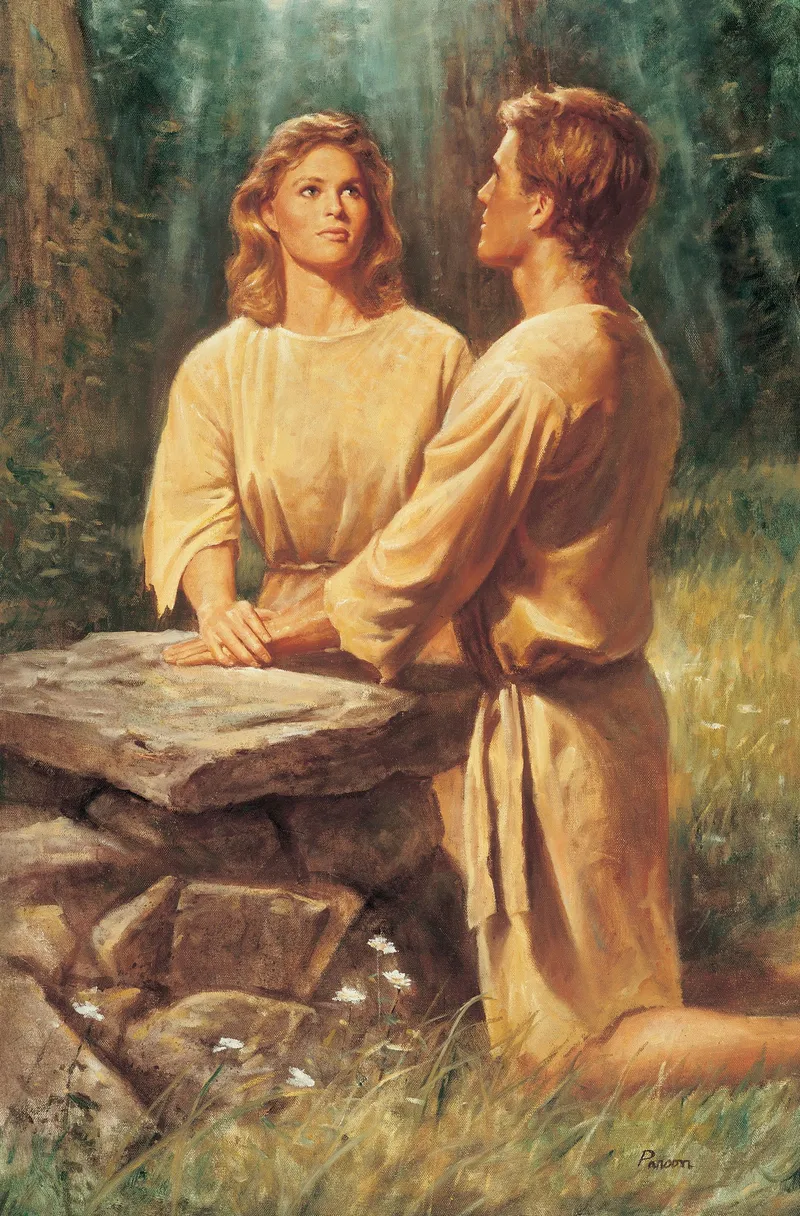
Habakkuk 1:1-4O LORD, How Long Shall I Cry?
1The burden which Habakkuk the prophet did see. 2O LORD, how long shall I cry, and thou wilt not hear! even cry out unto thee of violence, and thou wilt not save! 3Why dost thou shew me iniquity, and cause me to behold grievance? for spoiling and violence are before me: and there are that raise up strife and contention. 4Therefore the law is slacked, and judgment doth never go forth: for the wicked doth compass about the righteous; therefore wrong judgment proceedeth.
The book opens with a single heavy word: The burden which Habakkuk the prophet did see (v. 1). A burden is a weighty message, an oracle that presses down on the one who carries it - and from the very first line we learn this burden is something he saw, something he has been made to look at until it weighs on him past bearing. What follows is a word from the prophet to God, directed upward.
That alone makes Habakkuk unusual among the prophets. Most of them stand between God and the people and say, Thus saith the LORD. Habakkuk stands in the same place but faces the other way: he takes the people's agony, and his own, and carries it straight up to God. The book is, in large part, a recorded argument between a troubled man and his Maker - and the remarkable thing is that God lets it stand in Scripture, unedited, as a model of how faith may speak when it cannot understand.1
Then comes the cry itself, and it holds nothing back: O LORD, how long shall I cry, and thou wilt not hear! even cry out unto thee of violence, and thou wilt not save! (v. 2). Two things are worth pausing over. First, the honesty: the prophet does not dress his prayer in piety he does not feel. He says plainly that he has been crying out and it seems God will not hear, that he has begged to be saved and it seems God will not save.
This is not polite religious language; it is the raw speech of a man at the end of his patience. Second, and just as important, the direction of the cry. For all its anguish, every word is addressed to God. He does not complain about God to his neighbours; he does not stop praying in disgust. He brings the whole storm of it straight to the LORD. The phrase how long is the language of someone who still expects an answer - you do not ask how long of a God you have given up on.
This is faith at its most strained and, paradoxically, faith at its most genuine.
Habakkuk now names exactly what he is being forced to watch: Why dost thou shew me iniquity, and cause me to behold grievance? for spoiling and violence are before me: and there are that raise up strife and contention. Therefore the law is slacked, and judgment doth never go forth: for the wicked doth compass about the righteous; therefore wrong judgment proceedeth (vv. 3-4). This is a society coming apart at its moral seams.
The words pile up like a charge sheet - iniquity, grievance, spoiling, violence, strife, contention. But the deepest wound is to justice itself. The law is slacked - the very instruction meant to restrain evil has gone limp, gone numb, lost its grip. Judgment doth never go forth - the courts no longer deliver true verdicts. And the result is a world turned upside down: the wicked surround and corner the righteous, so that wrong judgment - crooked, perverted justice - is what comes out the other end.
Habakkuk's pain is not merely that bad things happen; it is that the institutions meant to set things right have themselves been captured by wrong. When the law goes slack and the courts go crooked, the righteous have nowhere left to turn but up. And that is exactly where the prophet turns.
Habakkuk 1:5-11Behold Ye Among the Heathen, and Wonder
5Behold ye among the heathen, and regard, and wonder marvellously: for I will work a work in your days, which ye will not believe, though it be told you. 6For, lo, I raise up the Chaldeans, that bitter and hasty nation, which shall march through the breadth of the land, to possess the dwellingplaces that are not theirs. 7They are terrible and dreadful: their judgment and their dignity shall proceed of themselves.
God breaks His silence - but His answer is harder to receive than the silence had been. Behold ye among the heathen, and regard, and wonder marvellously: for I will work a work in your days, which ye will not believe, though it be told you (v. 5). Notice first that God does not scold the prophet for his complaint. He does not say, How dare you question me. He answers. But the answer redirects Habakkuk's gaze outward, beyond the borders of his own troubled nation, to the heathen - the nations - and tells him to brace himself for a wonder.
The word marvellously here is double-edged: it can mean astonished delight or stunned horror, and the verse leans toward the latter. God promises a work so staggering that even when it is plainly told, the hearers will not believe it. There is a sober honesty in this. God does not flatter His prophet with an easy reassurance. He warns him that the answer to how long? is about to arrive in a form that will be almost impossible to accept - that the cure for the violence Habakkuk laments will look, at first, far worse than the disease.
Now the unbelievable work is named: For, lo, I raise up the Chaldeans, that bitter and hasty nation, which shall march through the breadth of the land, to possess the dwellingplaces that are not theirs. They are terrible and dreadful: their judgment and their dignity shall proceed of themselves (vv. 6-7). The Chaldeans were the rising power of Babylon, soon to be the terror of the ancient world - a bitter and hasty people, fierce and swift, who would sweep across the land seizing homes that were never theirs.
And the staggering claim is the first verb: I raise up. God Himself is the one putting this nation in motion, actively summoning it. Yet He also makes plain what kind of nation it is - terrible and dreadful, a law unto itself, deriving its judgment and dignity from no authority but its own arrogant will. Here is the knot the prophet cannot untie. The God of justice is raising up an instrument that recognizes no justice but its own power.
How both things can be true at once - that God is sovereign over this nation, and that the nation is genuinely, terribly wicked - is the very tension the rest of the chapter refuses to resolve cheaply.1
8Their horses also are swifter than the leopards, and are more fierce than the evening wolves: and their horsemen shall spread themselves, and their horsemen shall come from far; they shall fly as the eagle that hasteth to eat. 9They shall come all for violence: their faces shall sup up as the east wind, and they shall gather the captivity as the sand. 10And they shall scoff at the kings, and the princes shall be a scorn unto them: they shall deride every strong hold; for they shall heap dust, and take it. 11Then shall his mind change, and he shall pass over, and offend, imputing this his power unto his god.
The portrait of this army is built to overwhelm: Their horses also are swifter than the leopards, and are more fierce than the evening wolves… they shall fly as the eagle that hasteth to eat. They shall come all for violence… and they shall gather the captivity as the sand (vv. 8-9). Three predators are stacked one upon another - the leopard for speed, the wolf for ferocity, the eagle for the sudden killing dive - and the cumulative effect is of a force no one can outrun and no one can stand against.
They come all for violence; their faces are set forward like the scorching east wind that withers everything in its path; and they sweep up prisoners as countless as the sand. Then the contempt: they shall scoff at the kings, and the princes shall be a scorn unto them: they shall deride every strong hold; for they shall heap dust, and take it (v. 10). Kings are a joke to them, fortified cities a momentary amusement - they simply pile up an earthen ramp against the wall and take the place.
Nothing human stands in their way. The picture is meant to make the reader feel the prophet's vertigo: this is the instrument God says He is raising up, and from the ground it looks like sheer, unanswerable, godless power.
The section ends on the most revealing line of all: Then shall his mind change, and he shall pass over, and offend, imputing this his power unto his god (v. 11). Here the conqueror's heart is laid bare. Drunk on victory, his mind swells; he sweeps on and crosses the line into open guilt - and the precise nature of his offense is named. He credits his strength to his god. That is, he looks at all he has conquered and worships the very power that did the conquering.
He bows to his own might dressed up as a deity. This is the deep irony the prophet has been circling: the nation God is using as His rod refuses to acknowledge God at all, and instead deifies its own force. It is the oldest sin in a new uniform - the creature taking the glory that belongs to the Creator. And it quietly plants the seed of Babylon's own judgment, which the next chapter will spell out.
A power that makes a god of itself has already sealed its doom; the strength it worships will not save it. For now, though, the line simply deepens the difficulty: how can the holy God advance His purposes through a nation whose very confession is blasphemy? The prophet is about to ask exactly that.1
Habakkuk 1:12-17Art Thou Not from Everlasting, O LORD My God?
12Art thou not from everlasting, O LORD my God, mine Holy One? we shall not die. O LORD, thou hast ordained them for judgment; and, O mighty God, thou hast established them for correction. 13Thou art of purer eyes than to behold evil, and canst not look on iniquity: wherefore lookest thou upon them that deal treacherously, and holdest thy tongue when the wicked devoureth the man that is more righteous than he?
Habakkuk's second complaint begins in the most unexpected place - with worship: Art thou not from everlasting, O LORD my God, mine Holy One? we shall not die (v. 12). Before he presses his hardest question, the prophet plants his feet on what he is still sure of. He reaches back past the immediate crisis to the bedrock of who God is. From everlasting - God was God before Babylon was a kingdom and will be God long after it is dust.
O LORD my God - the covenant bond still holds; this is still my God. Mine Holy One - whatever is happening, the holiness of God is not in doubt. And out of that bedrock comes a quiet, astonishing confidence: we shall not die. Babylon may come like a flood, but the people of God will not be utterly destroyed, because the eternal, covenant-keeping, holy God has not changed. Then he adds the only sense he can yet make of the coming storm: O LORD, thou hast ordained them for judgment; and, O mighty God, thou hast established them for correction. The Chaldeans are not loose in the world by accident; God has appointed them, set them in place, for judgment and correction - for the chastening of His people, a purpose within His sovereign plan.
This is the anchor the prophet drops before he sails into the storm of his next question. He does not understand what God is doing, but he refuses to let go of who God is.
And now the question Habakkuk has been building toward, the one that has troubled honest believers in every generation: Thou art of purer eyes than to behold evil, and canst not look on iniquity: wherefore lookest thou upon them that deal treacherously, and holdest thy tongue when the wicked devoureth the man that is more righteous than he? (v. 13). Read how carefully he frames it. He begins again with what is certain - God's eyes are purer… than to behold evil; He cannot look on iniquity with the slightest approval.
That is not in question. The question is how to square that holiness with what God has just announced. If God is too pure to tolerate evil, why does He seem to stand and watch them that deal treacherously - the Chaldeans - and worse, why does He hold his tongue while a wicked nation devours a people more righteous than itself? This is the sharp edge of the whole chapter. It is one thing for God to judge a sinful people; it is another for Him to do it through a people more sinful.
The prophet feels the full weight of the contradiction and will not soften it. He does not say, Well, Judah deserved it, so never mind. He lets the difficulty stand at its hardest: a holy God seemingly silent while greater evil swallows lesser. He brings that unbearable tension and lays it directly before God - which is, in the end, the only honest thing faith can do with it.
14And makest men as the fishes of the sea, as the creeping things, that have no ruler over them? 15They take up all of them with the angle, they catch them in their net, and gather them in their drag: therefore they rejoice and are glad. 16Therefore they sacrifice unto their net, and burn incense unto their drag; because by them their portion is fat, and their meat plenteous. 17Shall they therefore empty their net, and not spare continually to slay the nations?
Habakkuk closes his complaint with a single, devastating image: the conqueror as a fisherman, and humanity as his catch. And makest men as the fishes of the sea, as the creeping things, that have no ruler over them? They take up all of them with the angle, they catch them in their net, and gather them in their drag: therefore they rejoice and are glad (vv. 14-15). It is a picture of total dehumanization.
Under Babylon's advance, people are reduced to fish - hauled up by the hook, swept into the dragnet, with no shepherd, no defender, no ruler to protect them. And the conqueror rejoices, glad at the size of his haul as a fisherman gloats over a full net. Then the image turns to its most chilling point: Therefore they sacrifice unto their net, and burn incense unto their drag; because by them their portion is fat, and their meat plenteous (v. 16).
The conqueror worships his own weapon. He offers sacrifice to the net - that is, he reveres the very means of his violence as the source of his prosperity. His religion is the worship of his own power, exactly as verse 11 foretold. And the prophet ends with one last open question, hanging in the air: Shall they therefore empty their net, and not spare continually to slay the nations? (v. 17). Is this to go on forever?
Will the dragnet simply keep emptying and refilling, the slaughter never stopping? The chapter closes there - on a question, not an answer. Habakkuk has brought his whole burden to God and now falls silent, waiting. He will not manufacture a comfortable ending. He leaves the tension where it belongs: in God's hands.1
Research trail
Sources & further study
These references support the historical, linguistic, manuscript, and contextual notes in this chapter. Scripture remains the primary text; external sources are provided so readers can inspect the research directly.
- Habakkuk 1 - Translators' NotesThe NET Bible's detailed footnotes on Habakkuk 1 - the legal language of the complaint in verses 2-4, the identity and ferocity of the Chaldeans in verses 5-11, the difficult clause about the conqueror imputing this his power unto his god (v. 11), and the fishing imagery of the net and the drag in verses 14-17.
- Habakkuk 1 · Hebrew + classical Jewish commentaryThe Hebrew text of Habakkuk 1 with Rashi, Ibn Ezra, and other classical commentators side by side - useful for the opening cry ad anah (v. 2, “how long?”), for miqqedem and qedoshi (v. 12, “from everlasting… mine Holy One”), and for the much-discussed sense of the prophet's charge that God seems to hold his tongue while the wicked devour the righteous (v. 13).
- Habakkuk 1 ↔ Psalm 13 · Revelation 6 · Romans 1Traces the threads tying Habakkuk 1 to the rest of Scripture - the cry how long? (v. 2) read alongside the lament psalms (Ps. 13:1) and the souls under the altar (Rev. 6:10), and the wrestling here read as the set-up for the word God answers with in the next chapter, the just shall live by his faith (Hab. 2:4; Rom. 1:17).
Where this echoes in Scripture
O LORD, How Long Shall I Cry?
- Psalm 13:1-2How long wilt thou forget me, O LORD? for ever? how long wilt thou hide thy face from me?The same cry as verse 2 - the faithful at their limit, asking how long, yet still addressing God.
- Revelation 6:10How long, O Lord, holy and true, dost thou not judge and avenge our blood on them that dwell on the earth?The cry of verse 2 echoing to the very end of Scripture - the longing for justice carried to the throne.
- Jeremiah 12:1Wherefore doth the way of the wicked prosper? wherefore are all they happy that deal very treacherously?Another prophet pressing the same question as verses 3-4 - why the wicked seem to win.
- Psalm 73:2-3my feet were almost gone... For I was envious at the foolish, when I saw the prosperity of the wicked.The stumbling Habakkuk feels in verses 3-4 - faith staggered by watching the wicked thrive.
- Luke 18:7-8shall not God avenge his own elect, which cry day and night unto him, though he bear long with them?The Lord's own answer to the how-long cry of verse 2 - God will surely avenge those who cry to Him.
Behold Ye Among the Heathen, and Wonder
- Acts 13:41Behold, ye despisers, and wonder, and perish: for I work a work in your days... which ye shall in no wise believe.Paul applies verse 5 to the gospel - God's greatest unbelievable work, the crucified and risen Christ.
- Isaiah 10:5-7O Assyrian, the rod of mine anger... Howbeit he meaneth not so... but it is in his heart to destroy.The same paradox as verses 6-11 - God using a proud nation as His rod, though it means only its own conquest.
- Jeremiah 25:9I will... take... Nebuchadrezzar the king of Babylon, my servant, and will bring them against this land.The Chaldeans of verse 6 named as God's instrument - raised up by the LORD against Judah.
- Daniel 4:30-31Is not this great Babylon, that I have built... by the might of my power...? there fell a voice from heaven.The pride of verse 11 - Babylon crediting its power to itself, and the judgment that followed.
- Isaiah 55:8-9For my thoughts are not your thoughts, neither are your ways my ways, saith the LORD.The lesson behind verse 5 - God works along paths higher and stranger than we would choose.
Art Thou Not from Everlasting, O LORD My God?
- Malachi 3:6For I am the LORD, I change not; therefore ye sons of Jacob are not consumed.The anchor of verse 12 - God's unchanging character is the reason His people are not destroyed.
- Hebrews 13:8Jesus Christ the same yesterday, and to day, and for ever.The everlasting, unchanging One of verse 12 - the steady ground when God's ways are baffling.
- Habakkuk 2:4the just shall live by his faith.The word God answers this wrestling with in the next chapter - the line the prophet is being set up to receive.
- Psalm 90:2Before the mountains were brought forth... even from everlasting to everlasting, thou art God.The truth Habakkuk leans on in verse 12 - God from everlasting, older than every kingdom that troubles him.
- Romans 1:17For therein is the righteousness of God revealed from faith to faith: as it is written, The just shall live by faith.The gospel flowering of the answer toward which all this wrestling leads - Habakkuk 2:4 at the heart of salvation.