Psalms 30
People in this chapter
Psalm 30 carries a superscription - A Psalm and Song at the dedication of the house of David - and it is, at its heart, a thanksgiving: the song of someone who was at the very edge of death and got pulled back. You can feel the relief in the opening word. I will extol thee, O LORD; for thou hast lifted me up.
Something terrible has happened - a sickness, a danger, a brush with the grave - and it is over, and the singer is so glad to be alive that the praise comes pouring out before he has even told us the story. The whole psalm is built on a memory: I was nearly gone, and You brought me back.1
Tap any highlighted phrase to jump to the commentary that unpacks it.
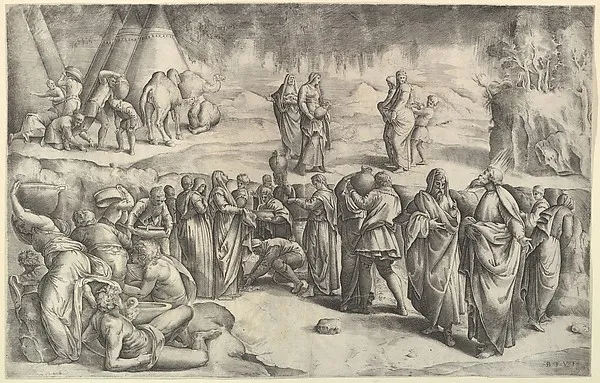
Psalm 30:1-5 · A Psalm and Song at the dedication of the house of DavidJoy Cometh in the Morning
1I will extol thee, O LORD; for thou hast lifted me up, and hast not made my foes to rejoice over me. 2O LORD my God, I cried unto thee, and thou hast healed me. 3O LORD, thou hast brought up my soul from the grave: thou hast kept me alive, that I should not go down to the pit. 4Sing unto the LORD, O ye saints of his, and give thanks at the remembrance of his holiness. 5For his anger endureth but a moment; in his favour is life: weeping may endure for a night, but joy cometh in the morning.
The psalm cannot wait to begin praising. I will extol thee, O LORD; for thou hast lifted me up. Before any explanation, before the story of what went wrong, there is a burst of gratitude - and the reason given is wonderfully concrete: thou hast lifted me up. This is not an abstract thank-you for blessings in general; it is the relief of a particular rescue, the cry of someone who was down and is now up.
The verb pictures something being hauled bodily out of the depths, and the singer adds a detail that tells you how close the thing came to going the other way: and hast not made my foes to rejoice over me. There were enemies waiting, hoping, watching for him to fall - and his fall would have been their triumph. To be lifted up, then, is not only his own deliverance; it is the silencing of every voice that wanted to gloat over his ruin.
He begins, in other words, exactly where a rescued person begins: not with himself, but with the One who reached down.
Verse 2 compresses the entire crisis into a single line: O LORD my God, I cried unto thee, and thou hast healed me. Two words carry it - cried and healed - and between them lies everything the psalm will later unfold. The crying was real: this was no polite request but the shout of a person in extremity, calling out because there was nothing else left to do. And the healing tells us what kind of trouble it was - a sickness, very likely, something that had brought the singer near enough to death that recovery felt like resurrection.
Notice the simple, settled possessiveness of the address: O LORD my God. In the worst of it he did not cry to the sky in general; he cried to the One he knew, the God who was already his. And the result is stated as plain fact: thou hast healed me. There is no hedging, no “perhaps it was coincidence.” The singer traces his recovery straight back to the hand of God and to the cry that reached Him.
The line is almost a whole theology of prayer in miniature: trouble drives us to cry; the cry reaches a God who hears; and the healing, when it comes, sends us back to thank the One who gave it.
Then the singer does something generous: he turns and calls everyone else in. Sing unto the LORD, O ye saints of his, and give thanks at the remembrance of his holiness. His rescue is too large to keep to himself; private gratitude swells into a summons to the whole worshipping community. The saints here are the LORD's faithful ones, those bound to Him in covenant love - and the singer wants them all singing, because what God has done for one is a window onto what God is like for all.
And mark what he asks them to remember: not chiefly the rescue itself, but his holiness. The deliverance has taught him something about the character of God, and that is what he wants the congregation to dwell on - that the God who saves is holy, set apart, utterly trustworthy in His goodness.
This is how thanksgiving works at its best. It does not stay locked in the heart of the one who was helped; it spills outward, gathers others, and points past the gift to the Giver. One person's morning becomes the whole congregation's song.
Verse 5 is the line the whole world has memorised, and it earns its place: For his anger endureth but a moment; in his favour is life: weeping may endure for a night, but joy cometh in the morning. It works by a series of contrasts, and each one tips the scales toward hope. Anger is set against favour - and the anger is measured in a moment while the favour is measured in life. Weeping is set against joy - and the weeping is given a single night while the joy belongs to the morning. The asymmetry is the whole point.
The hard thing is real but brief; the good thing is lasting.
And the image is one anyone who has lain awake in grief will recognise instantly: sorrow has a way of feeling permanent at two in the morning, as if the dark will simply go on forever. The psalm answers that exact lie. It does not pretend the night away - weeping may endure, it grants, for the whole night through. It simply locates the weeping inside a night, and reminds the weeper that nights, by their nature, end.
Morning is not a possibility the singer hopes for; it is a certainty built into the structure of time itself. The sun has never once failed to rise. And the God whose favour is life is more dependable than the dawn.
Psalm 30:6-12Mourning Into Dancing
6And in my prosperity I said, I shall never be moved. 7LORD, by thy favour thou hast made my mountain to stand strong: thou didst hide thy face, and I was troubled. 8I cried to thee, O LORD; and unto the LORD I made supplication. 9What profit is there in my blood, when I go down to the pit? Shall the dust praise thee? shall it declare thy truth? 10Hear, O LORD, and have mercy upon me: LORD, be thou my helper. 11Thou hast turned for me my mourning into dancing: thou hast put off my sackcloth, and girded me with gladness; 12To the end that my glory may sing praise to thee, and not be silent. O LORD my God, I will give thanks unto thee for ever.
Now the singer looks honestly backward and tells the part of the story he is least proud of: And in my prosperity I said, I shall never be moved. When things were going well - secure, settled, comfortable - a quiet presumption crept in. I shall never be moved. It is a sentence that sounds almost like faith, and that is precisely its danger. The Psalms can use those very words rightly - the one who trusts the LORD shall not be moved. But here the singer admits he had begun to lean on the wrong thing.
His security had quietly shifted off of God and onto his own circumstances; the calm was no longer trust in the LORD but confidence in the smoothness of his own life.
Prosperity has a way of doing this. When the mountain feels solid under our feet, we forget to ask who holds the mountain up. The very gifts of God can become a substitute for God - until something cracks, and we discover how much weight we had placed on ground that was never meant to bear it. The singer is not confessing some dramatic rebellion. He is confessing the much more common sin of the comfortable: forgetting, in the good times, that every good time is on loan.
The next line is the turning point of the whole story, and it is startlingly honest about where the trouble came from: LORD, by thy favour thou hast made my mountain to stand strong: thou didst hide thy face, and I was troubled. First he gives the credit where it always belonged - the mountain stood strong by thy favour, not by his own merit. And then he names what undid him: thou didst hide thy face. Notice that the catastrophe is not described as the loss of health or wealth in the first place, but as the loss of the felt presence of God.
The face of God, in the Scriptures, is the warmth of His attention and favour turned toward you; to have it shine upon you is blessing (Num. 6:25), and to have it hidden is the deepest desolation a soul can know. The singer does not pretend he understands why it happened. He simply reports the bare experience: God's face went hidden, and I was troubled - the word carries the sense of being thrown into confusion, dismayed, undone.
This is one of the most pastorally precious admissions in the Psalms: that even the faithful can pass through seasons when God seems to withdraw, when the sense of His nearness goes dark. The psalm does not scold that experience or explain it away. It validates it - and then shows the way through it, which is not to figure it out but to cry.
From the hidden face the singer turns straight to prayer, and the praying is raw: I cried to thee, O LORD; and unto the LORD I made supplication. What profit is there in my blood, when I go down to the pit? Shall the dust praise thee? shall it declare thy truth? This is not a calm, composed petition; it is the urgent, almost-bargaining cry of a man arguing for his life. He puts a question to God that sounds bold to the point of audacity: what does God gain by letting him die?
A dead man cannot praise. The dust - the body returned to the ground - cannot declare thy truth. So the singer turns his very desperation into an appeal: keep me alive, and You keep a worshipper; let me go down, and one more voice falls silent.
There is something deeply human and deeply faithful in this. He is not pretending to a serenity he does not feel. He is doing business with God in the language of a man who badly wants to live - and yet even his bargaining is God-centred. The reason he gives for wanting to live is not comfort or pleasure but praise: let me live, that I may go on declaring Your truth. Then comes the plainest cry of all, stripped of argument: Hear, O LORD, and have mercy upon me: LORD, be thou my helper. When everything else is said, prayer comes down to this - help me.
And then, without a transition, the answer lands - and it lands as transformation: Thou hast turned for me my mourning into dancing: thou hast put off my sackcloth, and girded me with gladness. The verb is the key: God did not merely end the mourning, He turned it - took the very grief and flipped it over into its opposite. Mourning becomes dancing, the whirling, leaping joy of a festival.
And the change is pictured as a change of clothes. Sackcloth was the coarse, rough garment of grief, the thing you put on to mourn the dead or to lament disaster; it scratched, it announced your sorrow to everyone who saw you. God puts it off - strips the grief-clothes away - and in their place girds the singer with gladness, wraps him round as if dressing him for a celebration. The image insists that the joy is not a thin smile pasted over the old grief; it is a total reclothing, grief taken right off the body and gladness put on in its place.
This is what the rescue of verse 1 looked like from the inside. The man who was hauled up out of the pit is now dancing, and the rough cloth of his weeping has become the festival robe of someone who has been given his life back.
The psalm ends by telling us what the whole rescue was for: To the end that my glory may sing praise to thee, and not be silent. O LORD my God, I will give thanks unto thee for ever. Against the fear that the dust cannot praise and the grave is silent, here is the answer - a voice that will not be silent. The singer's glory - his soul, his innermost self, the noblest part of him - was made to sing, and now it will.
God kept him alive, and so God keeps a worshipper; the rescue completes itself in praise.
And notice the time-stamp on that praise: for ever. A single deliverance has opened onto an endless gratitude. The man who once said in his comfort I shall never be moved has learned a better permanence to speak of - not the false security that his own circumstances would never change, but the settled resolve that his thanksgiving never will. The psalm that began with a sudden burst of praise (I will extol thee) ends with praise stretched out to the horizon (I will give thanks… for ever).
The morning, once it comes, does not merely stop the weeping. It opens a song with no end.
Research trail
Sources & further study
These references support the historical, linguistic, manuscript, and contextual notes in this chapter. Scripture remains the primary text; external sources are provided so readers can inspect the research directly.
- Psalm 30 - Translators' NotesThe NET Bible's detailed footnotes on Psalm 30 - the “drawing up” sense of the opening verb, the range of she'ol and “the pit,” the legal-sounding argument of verse 9, and the contrast of sackcloth with the garment of gladness in verse 11.
- Psalm 30 · Hebrew + classical Jewish commentaryThe Hebrew text of Psalm 30 with Rashi, Ibn Ezra, and other classical commentators side by side - useful for the verbs of rescue 'alah / dalah (vv. 1, 3, “to bring up, to draw up”), for she'ol (v. 3, “the grave, the pit, the realm of the dead”), and for the festival word machol (v. 11, “dancing”).
- Psalm 30 ↔ Psalm 16 · Isaiah 61 · the GospelsTraces the verbal threads tying Psalm 30's soul brought up from the grave to the “thou wilt not leave my soul in hell” of Psalm 16, its mourning turned to dancing to the “garment of praise for the spirit of heaviness” of Isaiah 61, and its morning of joy to the sorrow turned to joy that Jesus promises His disciples.
Where this echoes in Scripture
Joy Cometh in the Morning
- Psalm 40:1-2He brought me up also out of an horrible pit, out of the miry clay, and set my feet upon a rock.The same rescue from the depths as verses 1-3 - drawn up out of the pit and set on solid ground.
- Acts 2:27Thou wilt not leave my soul in hell, neither wilt thou suffer thine Holy One to see corruption.The soul “brought up from the grave” (v. 3), read by Peter as fulfilled in the resurrection.
- Lamentations 3:22-23They are new every morning: great is thy faithfulness.The morning of verse 5 - daybreak as the reliable arrival of God's mercy.
- Isaiah 54:7-8For a small moment have I forsaken thee; but with great mercies will I gather thee.The brief anger and abiding favour of verse 5 - the moment set against the lasting mercy.
Mourning Into Dancing
- Numbers 6:25-26The LORD make his face shine upon thee... The LORD lift up his countenance upon thee.The blessing of the shining face - the opposite of the hidden face that troubled the singer (v. 7).
- John 16:20-22Ye shall be sorrowful, but your sorrow shall be turned into joy... your joy no man taketh from you.Mourning turned into dancing (v. 11) - promised to the disciples and kept on resurrection morning.
- Isaiah 61:2-3To give unto them beauty for ashes, the oil of joy for mourning, the garment of praise for the spirit of heaviness.The very exchange of garments in verse 11 - sackcloth put off, gladness girded on.
- Revelation 21:4God shall wipe away all tears from their eyes; and there shall be no more death, neither sorrow, nor crying.The morning of verse 5 made final - every night of weeping ended for ever.